What this tool does
Turns a word count into an estimated page count. Enter the words, pick 10, 11 or 12 point, and choose single, one-and-a-half or double spacing. It divides by a realistic words-per-page figure for that combination and rounds up to whole pages, which is enough to plan a booklet, check an essay against a limit, or work out how much paper to buy.
People also used
Booklet Page Order Calculator
Work out saddle-stitch page imposition for any booklet.
Print Cost Estimator
Estimate the per-job cost of printing based on pages, paper, ink, and quantity.
Paper Sizes Calculator
Compare paper sizes and convert dimensions to pixels for accurate print design at any resolution.
Feedback
Spotted something off with this tool?
How many pages is five thousand words
It depends. By a factor of two.
Give it a word count, a font size and a line spacing, and it divides by a realistic capacity and rounds up. The figures it works from are 600 words a page at 10 point, 550 at 11, and 500 at 12, each single spaced, then divided by the spacing you choose. So 12 point double spaced comes out at 250 words a page, and 12 point at one-and-a-half comes out at about 333.
Four things move the number, and one of them dominates
Line spacing is the big one. Double spacing halves the words on a page. That single setting is why academic requirements are almost always written in words rather than pages, and why a page limit with no stated format is close to meaningless.
Font size is smaller than people think between neighbouring sizes. 11 to 12 point is roughly a tenth of the capacity. 10 to 14 point is an entirely different document.
Font choice is invisible in any estimate. Times New Roman is narrower than Arial at the same point size and fits noticeably more on a line, which is a fact worth knowing when a brief specifies a size but not a face.
Margins. Going from 2.5 cm to 2 cm all round adds several lines to every page, and over forty pages that is a chapter.
One outlier is worth naming: dialogue-heavy fiction. Short paragraphs and constant line breaks mean far fewer words on a page than the same length of continuous prose, and any estimate here will overshoot badly.
Numbers to work from
On A4 or US Letter with 2.5 cm margins in a 12 point serif face: about 500 words a page single spaced, about 333 at one-and-a-half, about 250 double.
Those three cover most academic and professional writing. A 2,000-word essay is about eight pages double spaced and about four single spaced, which is the conversion people most often need and most often guess wrong.
Books are a different arithmetic entirely, because a paperback page is much smaller than A4 and holds roughly 250 to 300 words. That is why a 90,000-word novel runs to around 300 pages and not the 180 an A4 calculation would predict.
Words or pages, and which one is binding
Words are the fair measure for anything being assessed, which is precisely why essays and dissertations and journal submissions specify them. A page limit can be gamed with margins and spacing in about ninety seconds. A word limit cannot be gamed at all.
Pages are the practical measure when the physical object is what matters: how much paper to buy, how long the print job runs, whether the thing fits an envelope or a binding, what the print shop will charge for it.
Where a brief gives both a page limit and a required format, the format is binding and you convert from there. Where it gives a page limit and no format, ask, because the honest answer spans a factor of two and nobody wants to find that out afterwards.
Getting the page count down without cutting text
In order of how much they save against how much they show:
- Reduce the line spacing. Much the largest saving available, where the brief permits it at all.
- Trim the margins to 2 cm. Below about 1.5 cm many printers clip.
- Drop one point size, if there is a stated minimum and you are above it.
- Remove page breaks before headings that nobody asked for.
- Print double-sided. Halves the sheets, changes nothing.
If the goal is paper rather than page count, do the last one first. It costs nothing and it is invisible.
What the estimate leaves out
- Body text only. Headings push the real count up, so do lists and images, so do tables, and so does every deliberate piece of white space on the page.
- Margins, font face and paragraph spacing all change the capacity and none of them is an input here. Treat the answer as a planning figure.
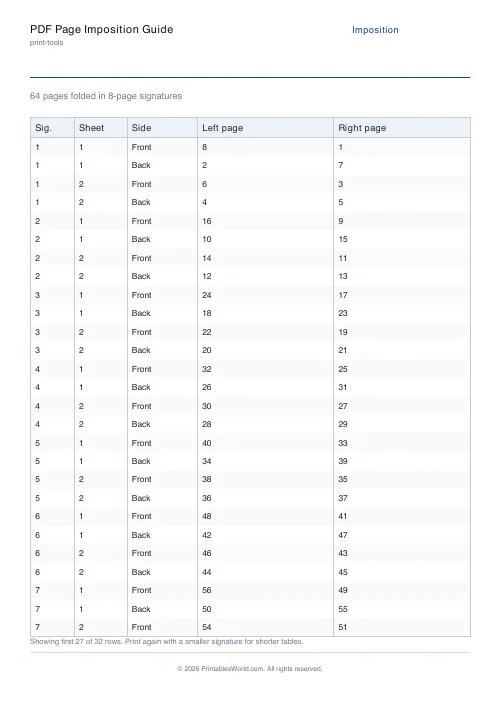
- For a booklet, the final page count has to round up to a multiple of four, because that is how folded sheets work.
FAQs
Quick answers
How many pages is 1,000 words?
About 2 pages single-spaced or 4 pages double-spaced in a 12pt font with normal margins. Smaller fonts fit more words per page.
Does font size really change the page count?
Yes, significantly. Dropping from 12pt to 10pt fits roughly 20% more words per page, so the same document takes noticeably fewer pages.
Why is my real document longer than the estimate?
The estimate counts body text only. Headings, images, tables, lists, and spacing between paragraphs all add pages that a pure word count can't predict.
What spacing do schools usually require?
Many essays are double-spaced in 12pt, which fits about 250 words per page. Always check the specific assignment's formatting rules.
Related tools
Booklet Page Order Calculator
Work out saddle-stitch page imposition for any booklet.
Print Cost Estimator
Estimate the per-job cost of printing based on pages, paper, ink, and quantity.
Paper Sizes Calculator
Compare paper sizes and convert dimensions to pixels for accurate print design at any resolution.