Handwriting
Handwriting
Free printable handwriting practice sheets: tracing, copying, cursive, left-handed, dotted thirds and more. A4 or US Letter, ready to print.
-
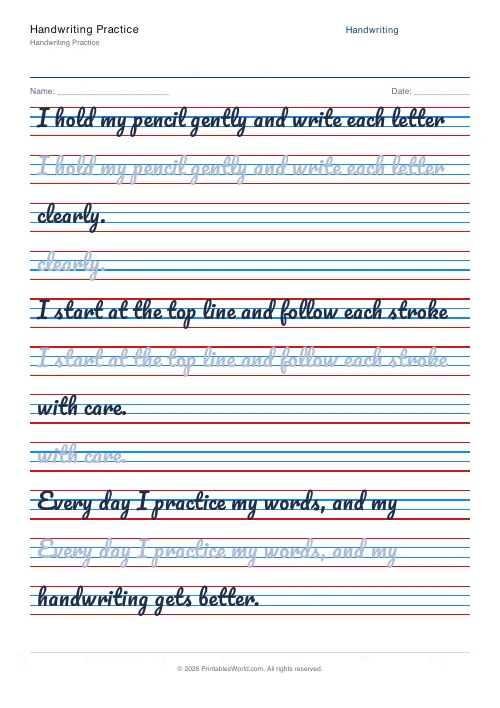 Handwriting Practice Generator
 -
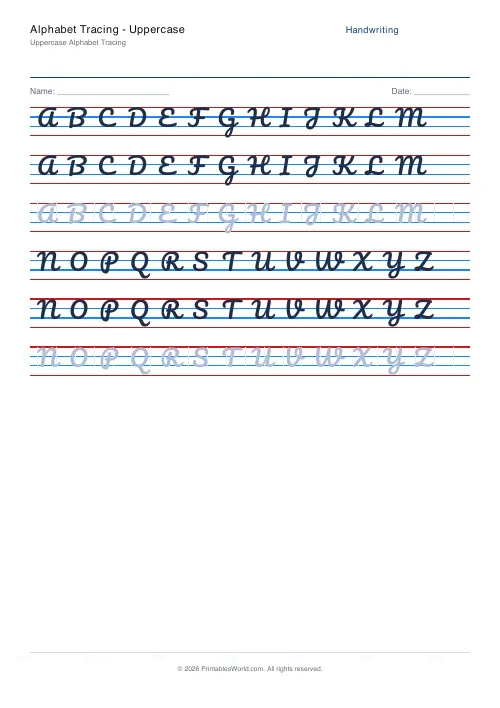 Alphabet Tracing: Uppercase
 -
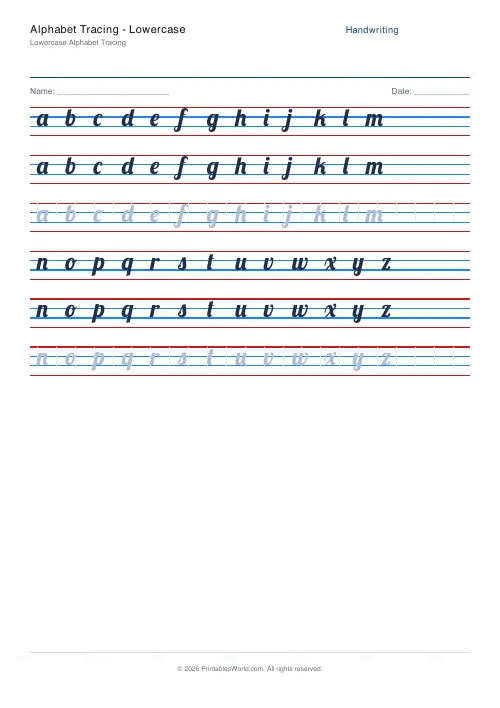 Alphabet Tracing: Lowercase
 -
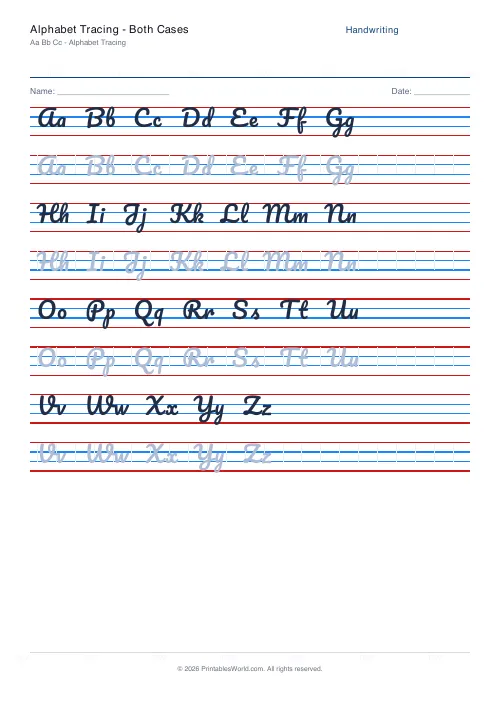 Alphabet Tracing: Both Cases
 -
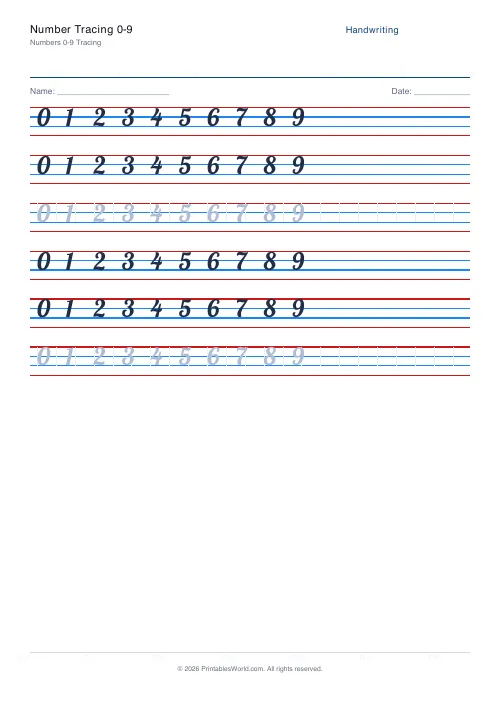 Number Tracing 0-9
 -
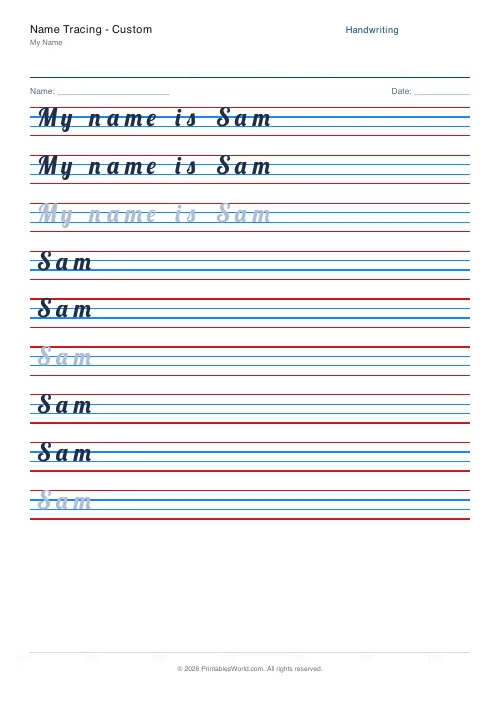 Name Tracing: Custom
 -
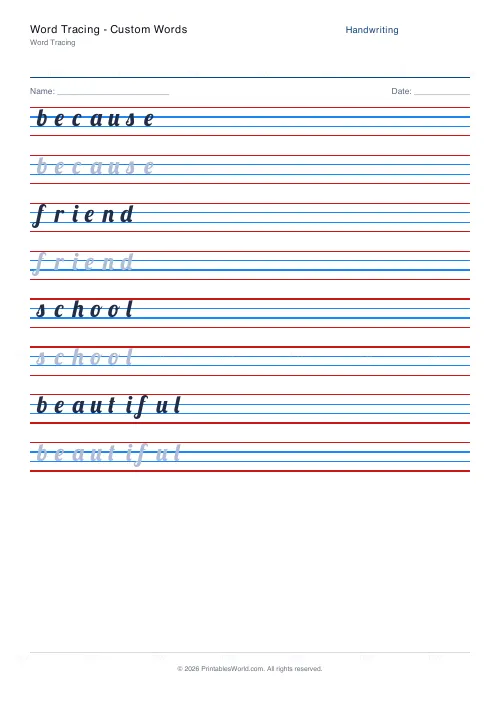 Word Tracing: Custom Words
 -
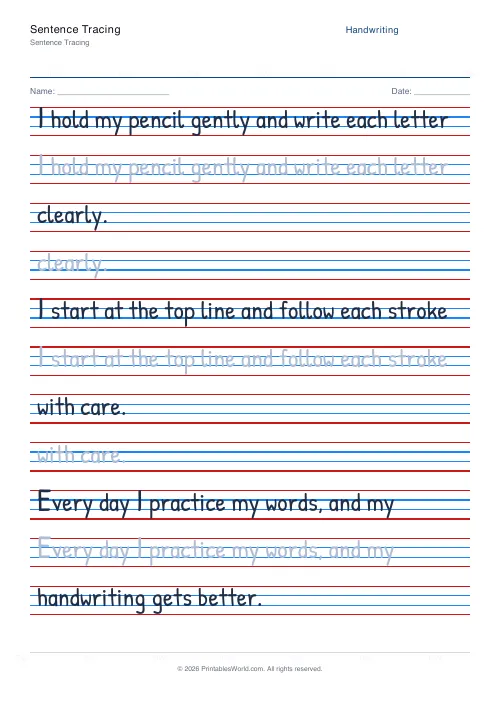 Sentence Tracing
 -
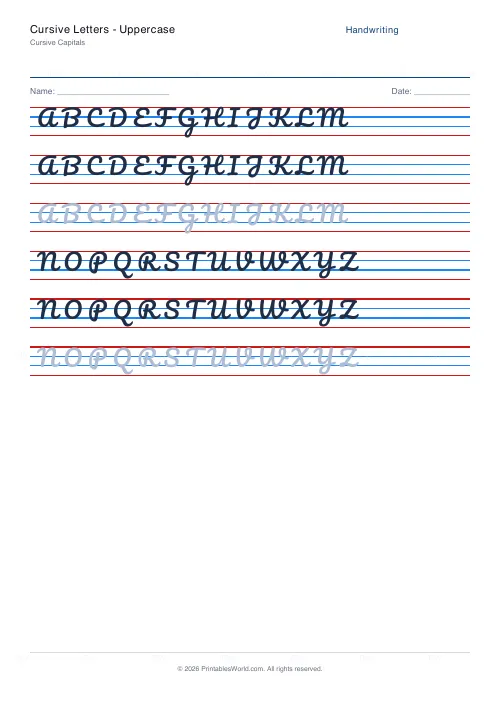 Cursive Letters: Uppercase
 -
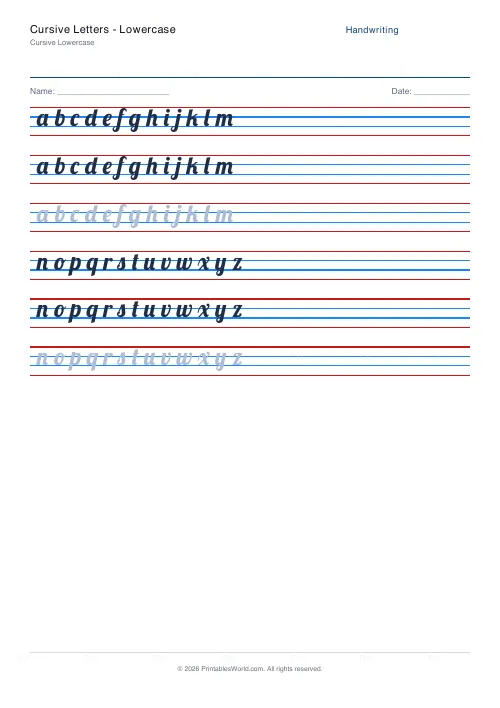 Cursive Letters: Lowercase
 -
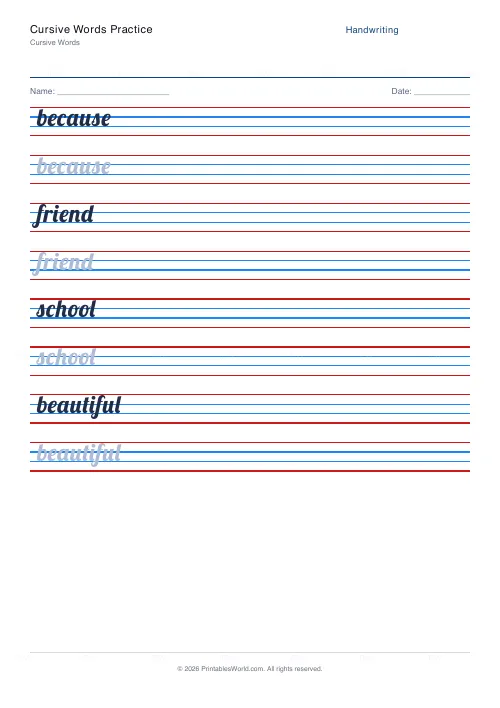 Cursive Words Practice
 -
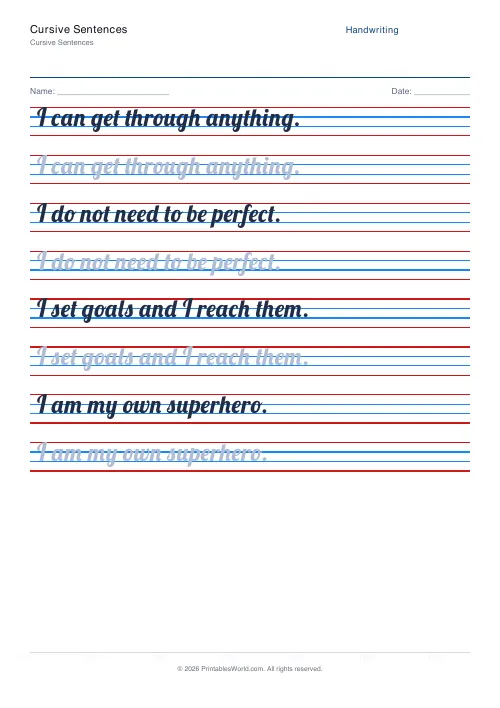 Cursive Sentences
 -
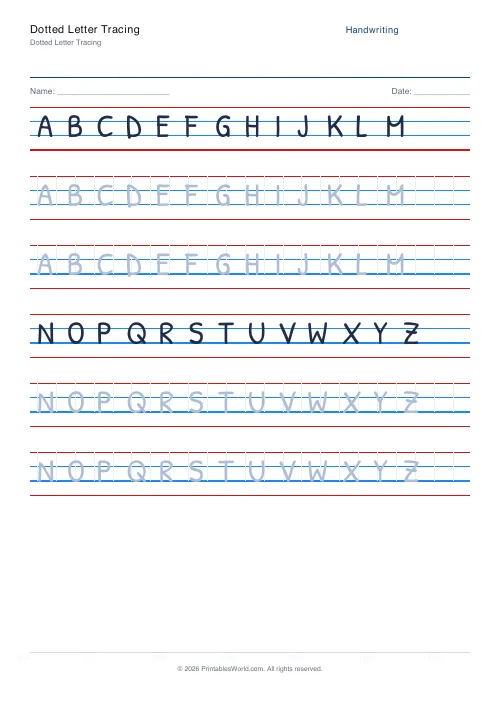 Dotted Letter Tracing
 -
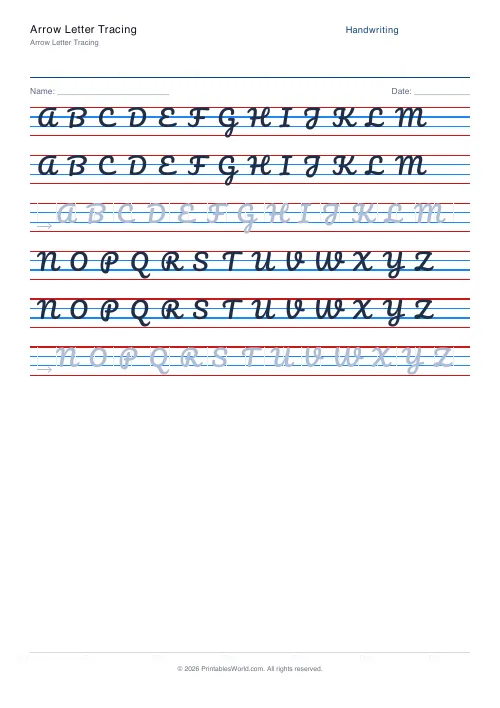 Arrow Letter Tracing
 -
 Blank Handwriting Lines
 -
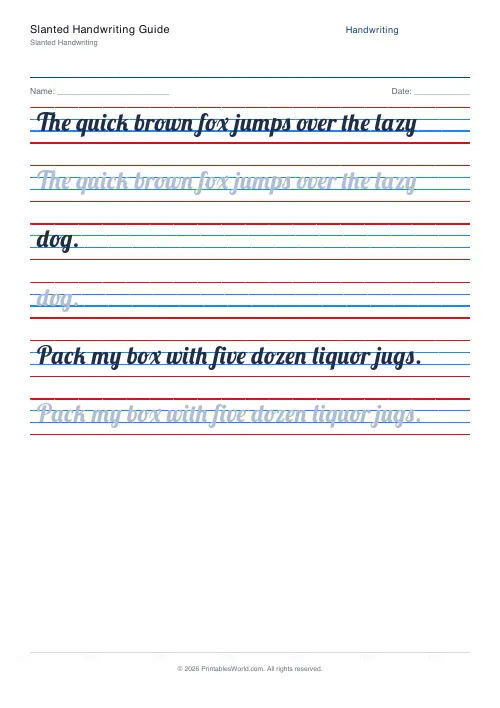 Slanted Handwriting Guide
 -
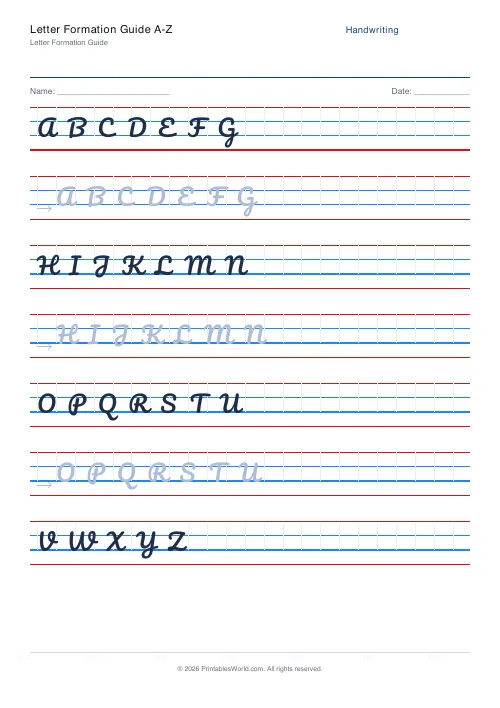 Letter Formation Guide A-Z
 -
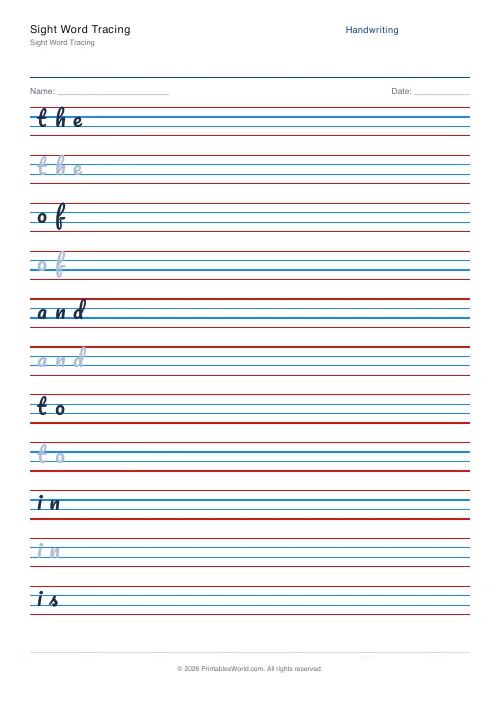 Sight Word Tracing
 -
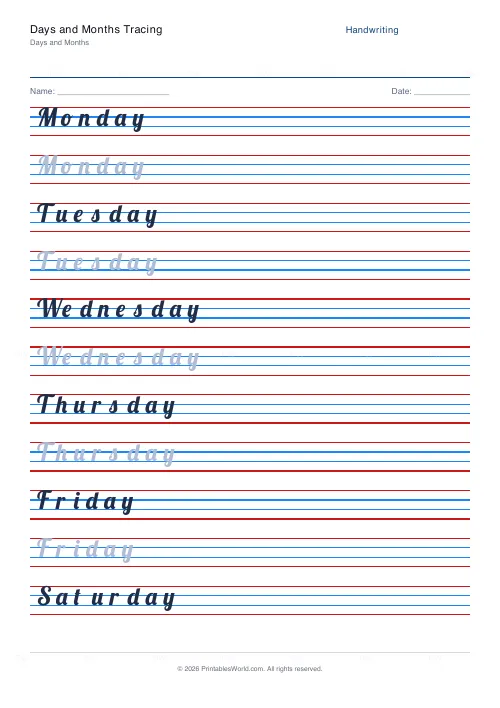 Days and Months Tracing
 -
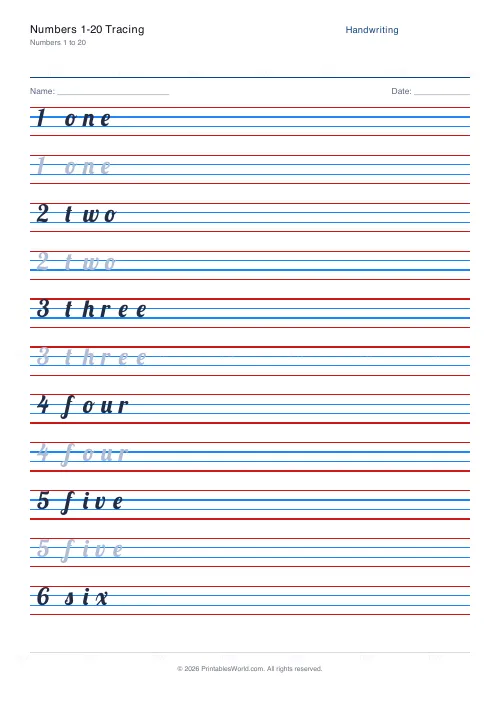 Numbers 1-20 Tracing
 -
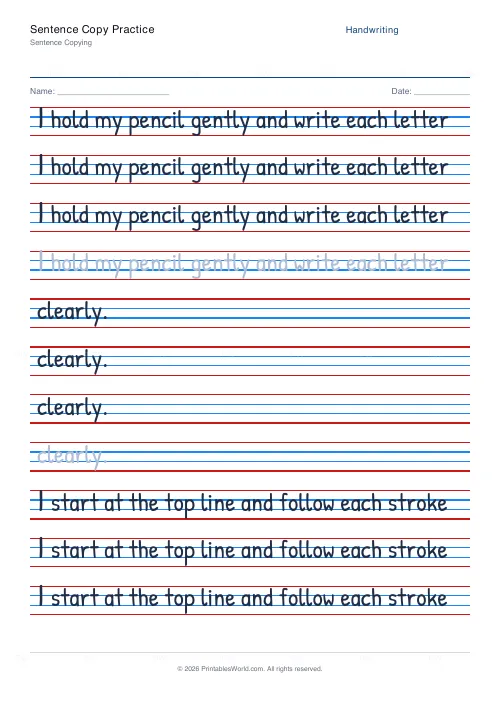 Sentence Copy Practice
 -
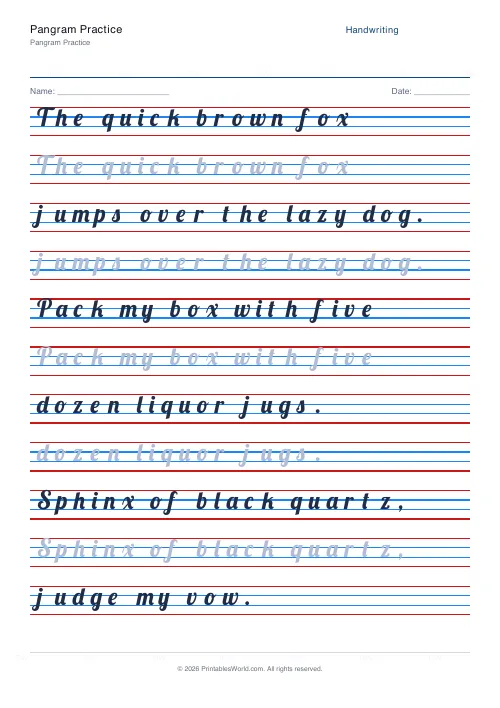 Pangram Practice
 -
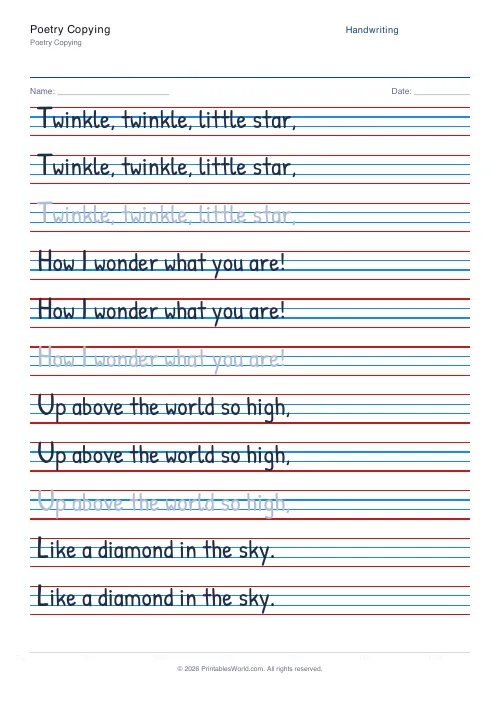 Poetry Copying
 -
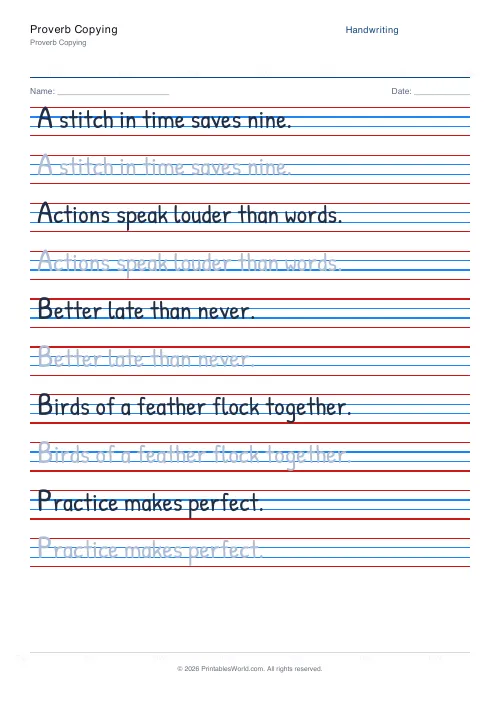 Proverb Copying
 -
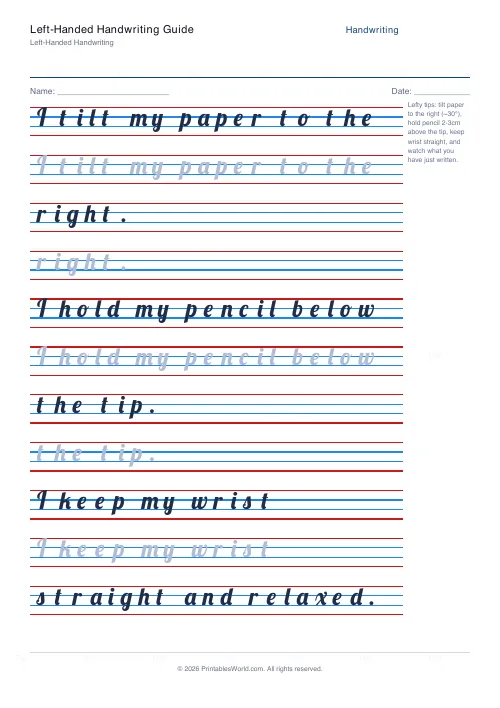 Left-Handed Handwriting Guide
 -
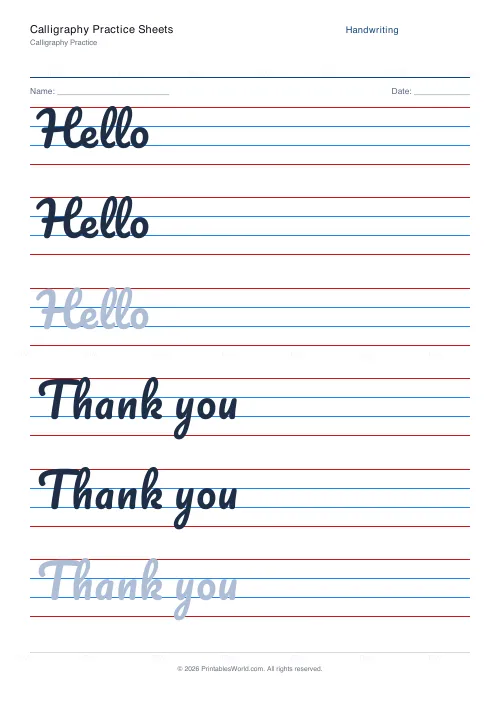 Calligraphy Practice Sheets
 -
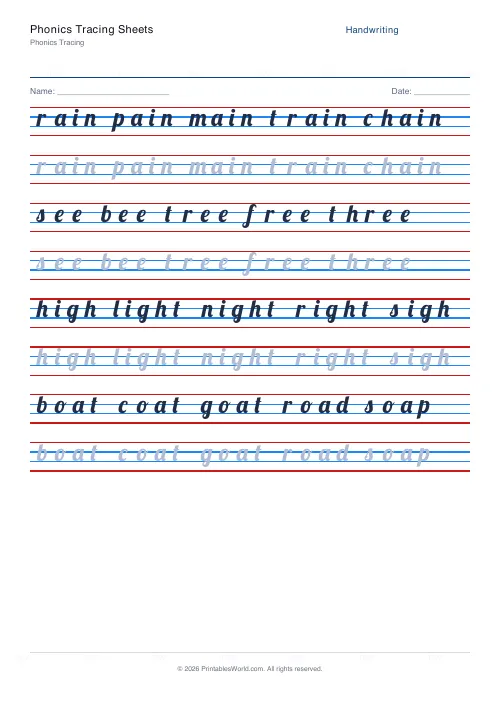 Phonics Tracing Sheets
 -
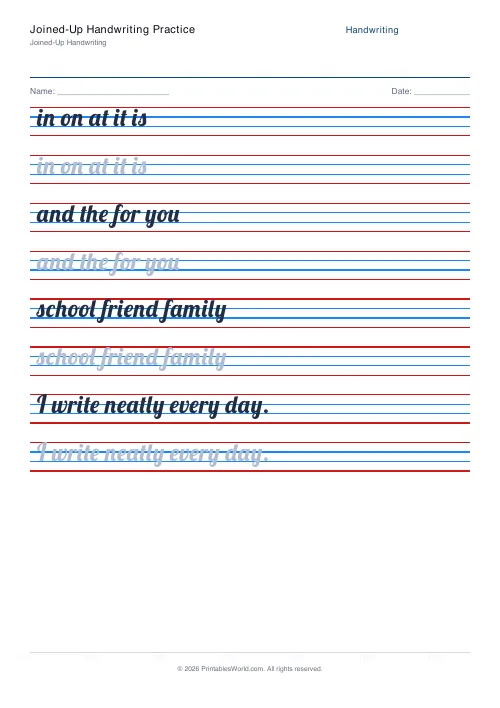 Joined-Up Handwriting Practice
 -
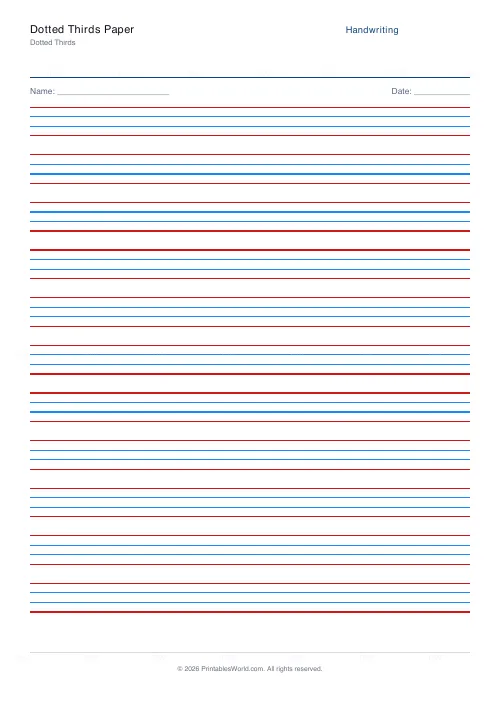 Dotted Thirds Paper
 -
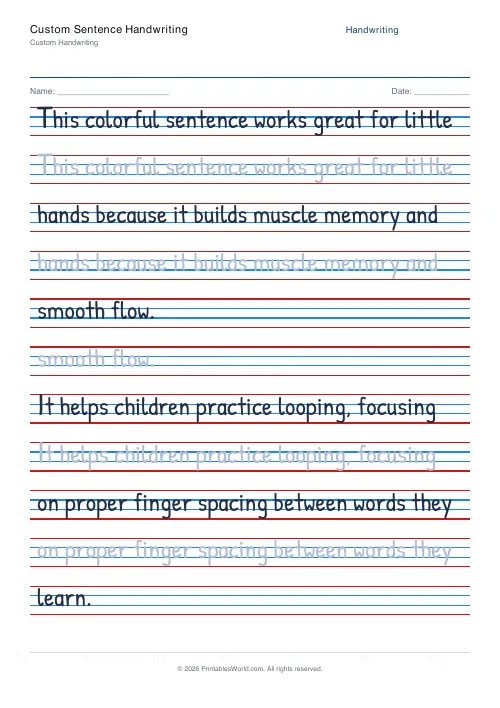 Custom Sentence Handwriting
 -
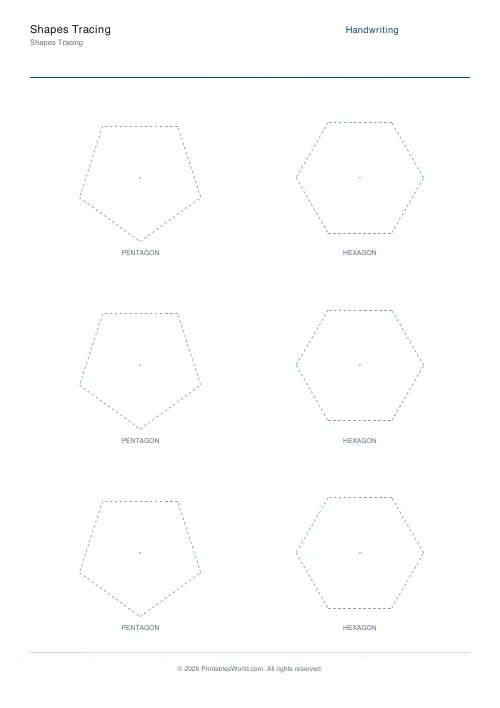 Shapes Tracing
 -
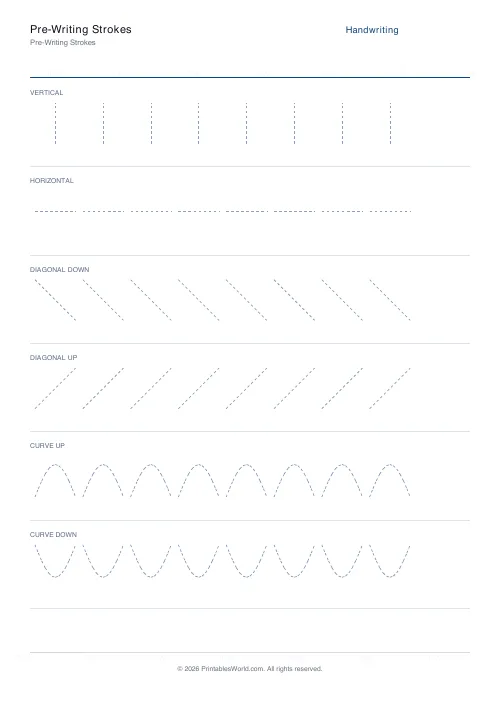 Pre-Writing Strokes
 -
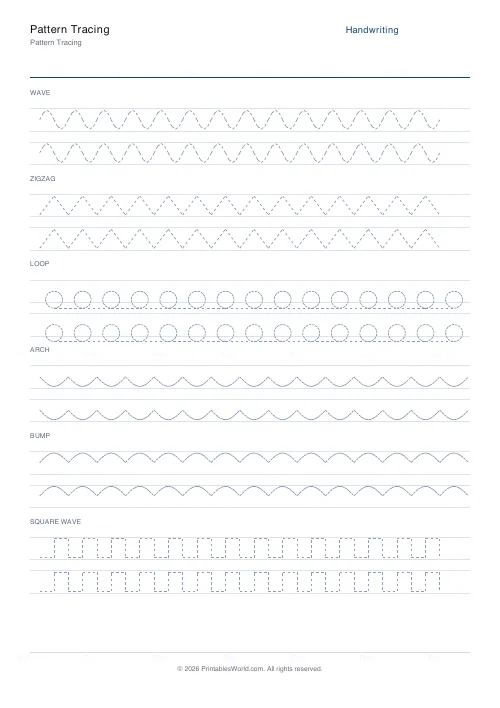 Pattern Tracing
 -
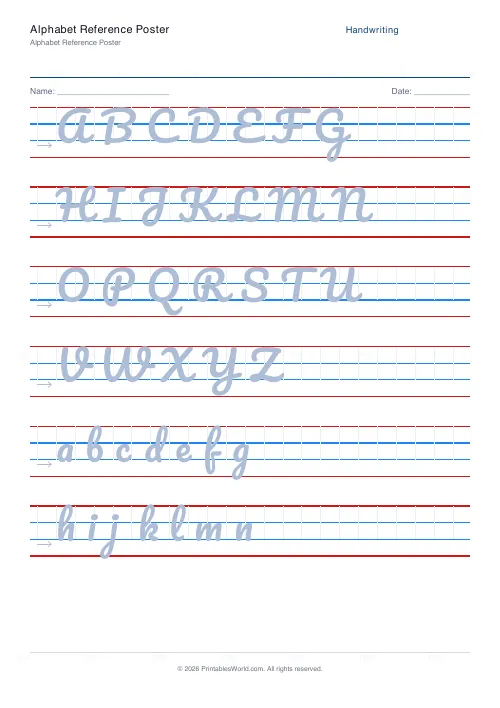 Alphabet Reference Poster
 -
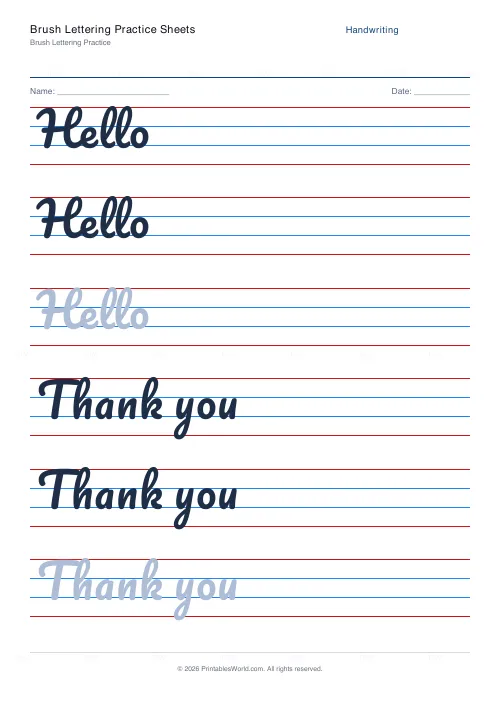 Brush Lettering Practice Sheets
 -
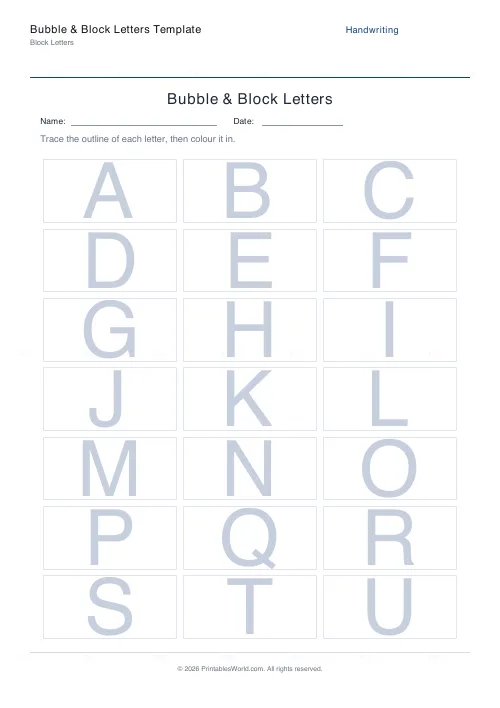 Bubble & Block Letters Template
 -
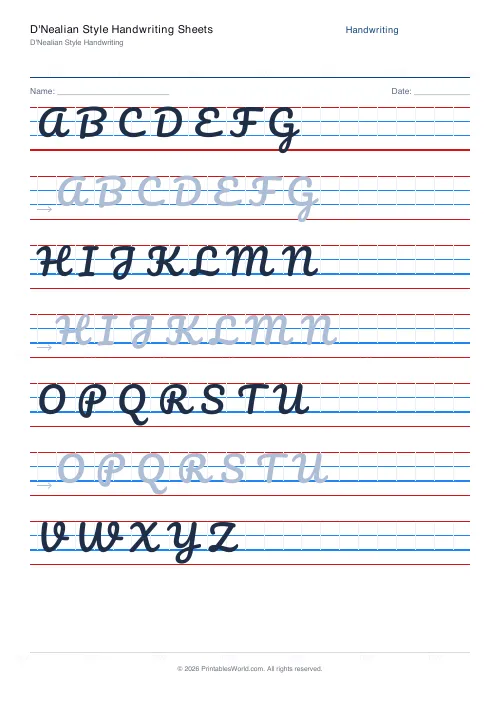 D'Nealian Style Handwriting Sheets
 -
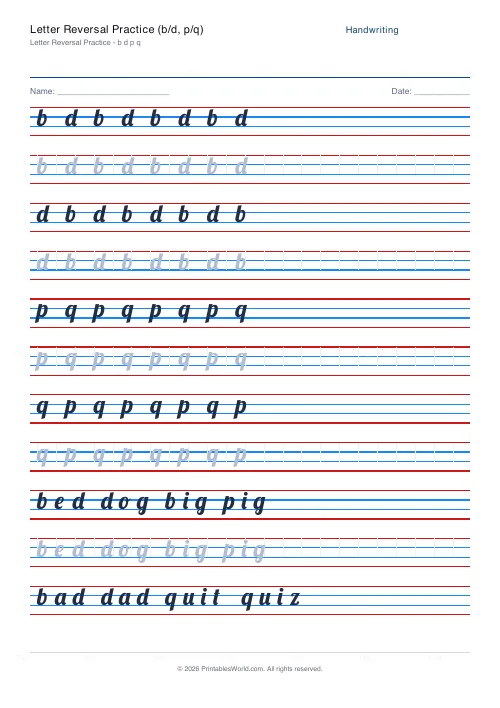 Letter Reversal Practice (b/d, p/q)
 -
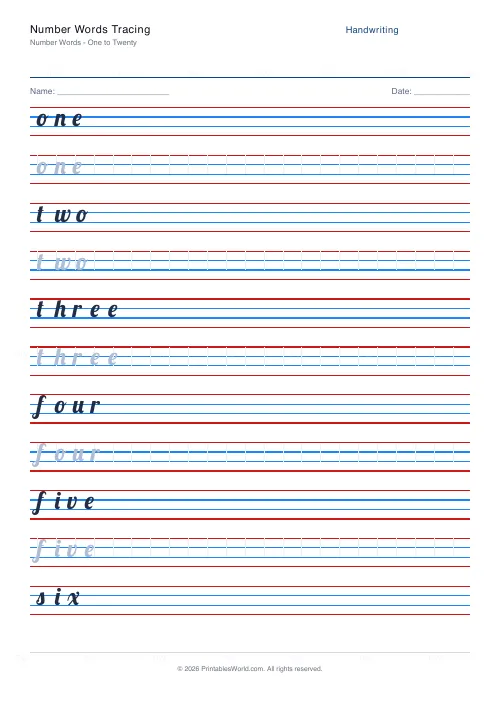 Number Words Tracing
 -
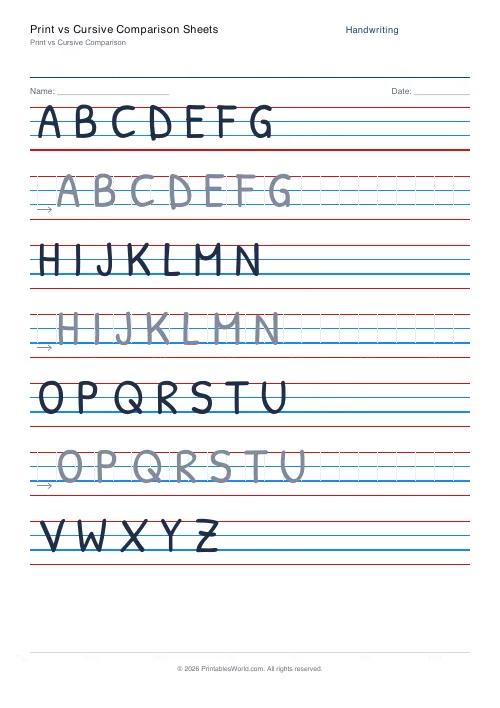 Print vs Cursive Comparison Sheets
 -
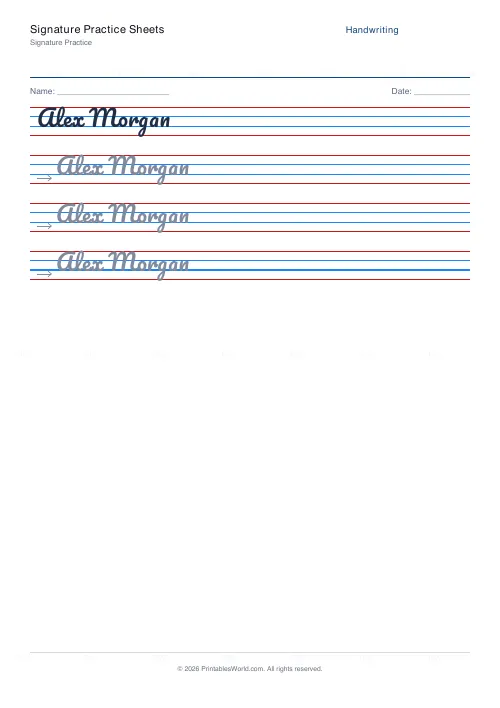 Signature Practice Sheets
 -
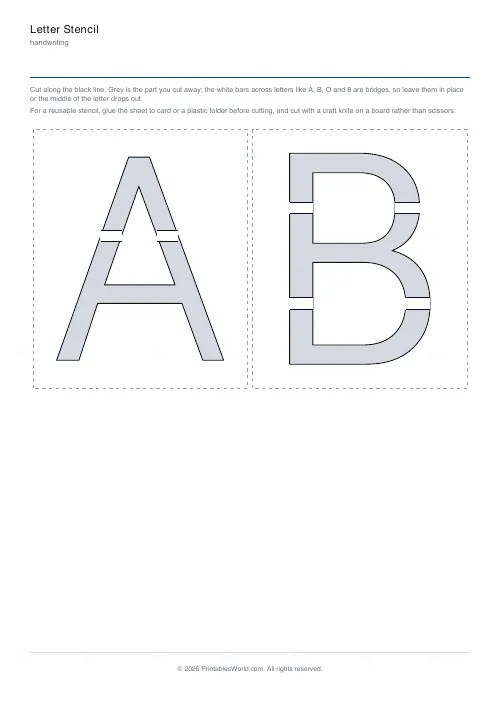 Letter Stencil Generator
Trace, then copy, then write
Handwriting practice works in a sequence, and skipping a step is the usual reason it stalls. Pre-writing patterns come first, loops, zigzags and waves that build the movements before any letter is attempted. Then dotted tracing, where the letter shape is given and the child follows it. Then arrow tracing and letter formation, which add the starting point and direction, because a letter drawn correctly-looking but in the wrong order becomes a problem later when writing needs to speed up. Only then copying from a model, and finally writing unaided on lines.
The sheets here cover each of those stages separately, so you can stay at one for as long as it takes rather than moving on because the worksheet ran out.
Print, cursive and the styles in between
Which style to teach depends entirely on where you are. The print-vs-cursive comparison sheet is a useful thing to put in front of a parent who is unsure. D'Nealian sheets suit US schools teaching a slanted print that transitions into cursive; the joined-up and cursive sets, lowercase, uppercase, words and full sentences, suit UK and Australian schools that teach a connected hand early. Dotted thirds are the standard ruling in Australian classrooms.
The cursive sheets use genuinely connected letterforms rather than print letters pushed together, which is the detail that makes most free cursive worksheets useless for teaching an actual joined hand.
Practice with the right words
Practising letters in isolation stops paying off fairly quickly. The custom sentence sheet takes any text you type, which lets handwriting practice double as spelling practice, sight-word practice or copying a line of poetry. The name-tracing sheet is the one most often wanted for a child just starting school.
There are also sheets for specific difficulties, left-handed practice with the page and guide positioned for a left-handed writer, and letter-reversal practice for the b/d and p/q confusion that is entirely normal in early writing and worth targeting directly rather than correcting in passing.