What this tool does
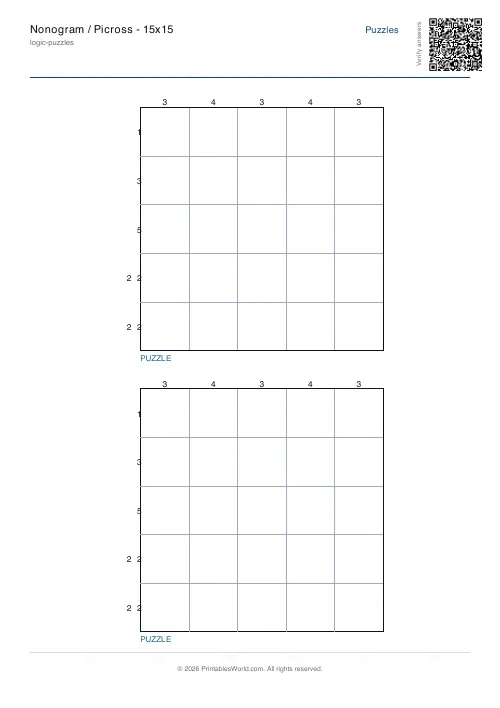
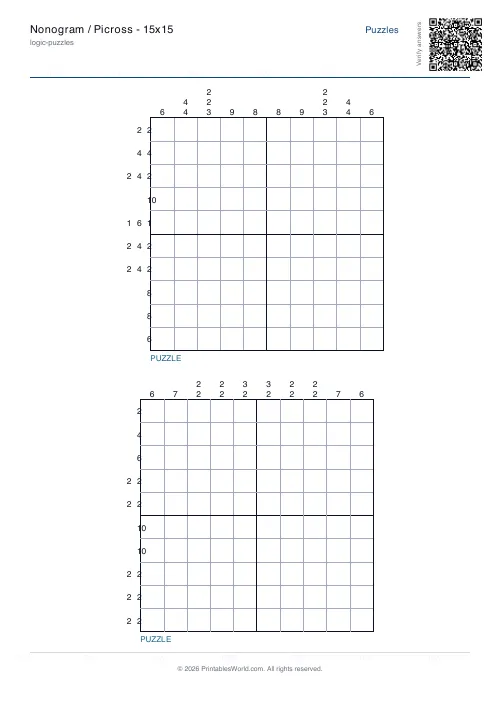
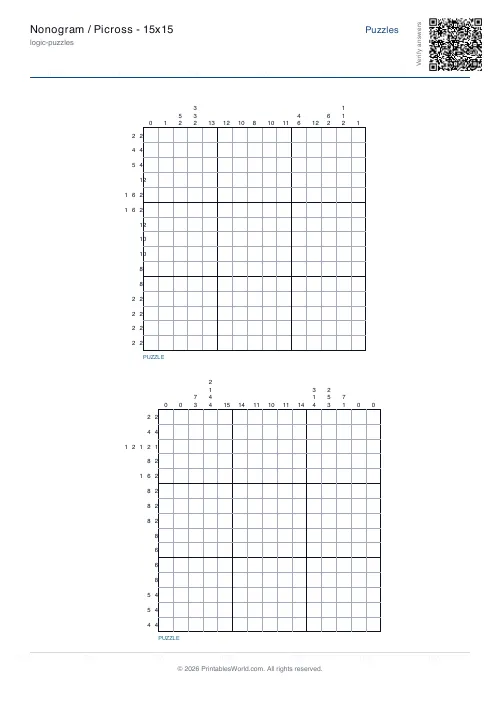
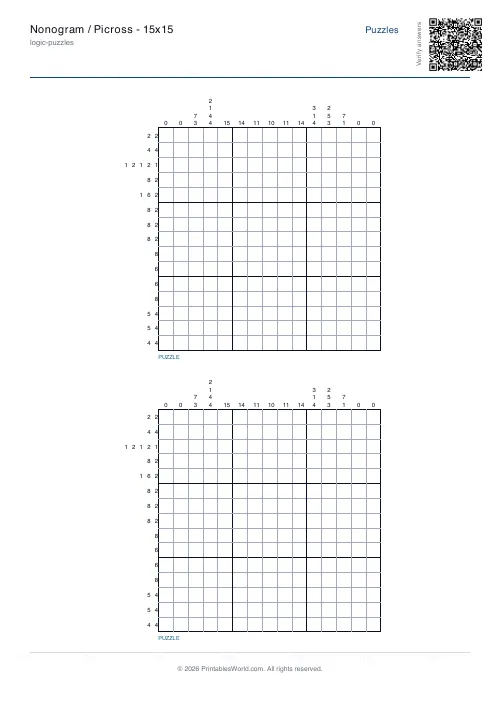
Full-size 15×15 nonograms: 225 cells and clue strings long enough that no line can be read on its own. Ten pictures in the pool, one or two puzzles a page, solutions optional.
People also used
Nonogram: 10x10
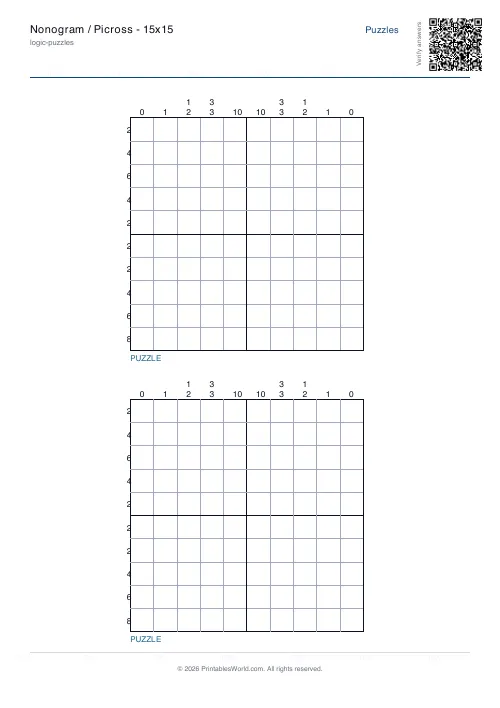
Print 10×10 Nonogram puzzles with recognisable pictures. Hearts, cats, sailboats and more.
Nonogram: 5x5
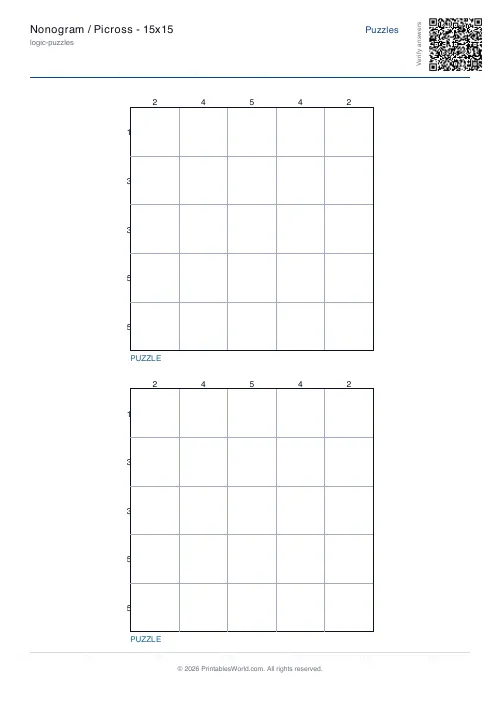
Simple nonogram pixel art puzzles. Reveals a picture when solved.
Sudoku Generator
Generate printable Sudoku puzzles with six per page, multiple difficulty levels, and optional solutions.
Feedback
Spotted something off with this tool?
Full-size nonograms, 225 cells each
The rules are the ones you know. Numbers beside a line give the lengths of its shaded runs in order, separated by at least one blank. What changes at this size is that hardly any line can be read on its own.
Ten pictures in the pool — a cat, a sailboat, a castle, an owl, a heart, a star, a rocket, a mushroom, an umbrella and a key — drawn at random. One or two puzzles to a page.
What is actually harder about 15×15
Not the arithmetic. A clue of 8 on a 15-cell line still forces the middle cell either way, exactly as a 4 does on a 5-cell line.
What changes is that a small grid lets you finish a line outright and this one almost never does. Nearly every line here has several possible arrangements, so progress comes from the intersections instead: one cell forced in a row resolves a column, which forces two more rows, which resolve another column. You are holding a partial picture rather than a queue of solved lines, and that is a different mental job entirely.
It is also why crossing off blanks stops being optional. On a 5×5 grid you can carry the empties in your head. At 225 cells you cannot, and a solver who only shades will lose their place and start guessing.
Techniques that pay at this size
Start with the longest clues, wherever they are. A line whose numbers plus gaps almost fill the width has very little freedom, and forced cells fall out of it immediately.
Then look at whatever the crossings have already filled in. One confirmed cell in a row clued 6 will normally force several more.
Pencil, and never guess. A nonogram is solvable by pure deduction, so a wrong guess costs ten minutes of rubbing out, and unlike sudoku there is no quick way to find the cell where it all went wrong.
Single-solution guarantee
Each design's clue set is checked against a solver before it ships, so every puzzle here has exactly one valid picture. Reached a position that seems to allow two? Then one of your earlier cells is wrong.
What you set
Puzzles per page from 1 to 6 — but at this size, two is the practical maximum for a readable grid, and one prints comfortably large. Solutions page on or off, plus a seed.
Ten designs means a reprint eventually repeats. Note the seed of one you liked and the same seed rebuilds it exactly.
Print at 100% on A4 or US Letter. Do not let the printer scale it — clue numbers at 15×15 are already small.
FAQs
Quick answers
How long does a 15x15 take?
Anywhere from 30 minutes to over an hour depending on the image and your experience.
How many per page?
Two puzzles per page so the clue strings stay legible.
Are images themed?
Not in v1. Images are randomly generated. Solving is the same logic either way.
Want a smaller warm-up?
Try the 5x5 or 10x10 variants first.
Related tools
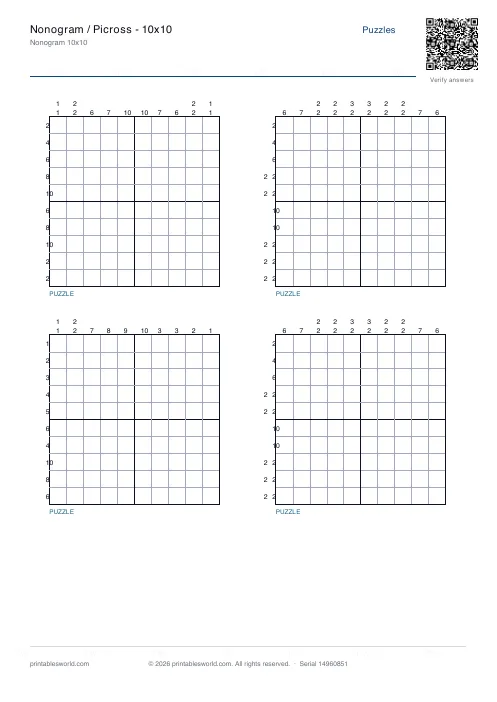
Nonogram: 10x10
Print 10×10 Nonogram puzzles with recognisable pictures. Hearts, cats, sailboats and more.
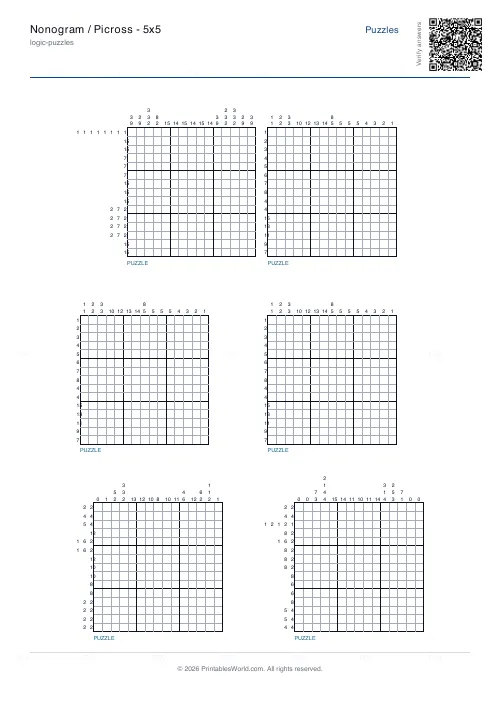
Nonogram: 5x5
Simple nonogram pixel art puzzles. Reveals a picture when solved.
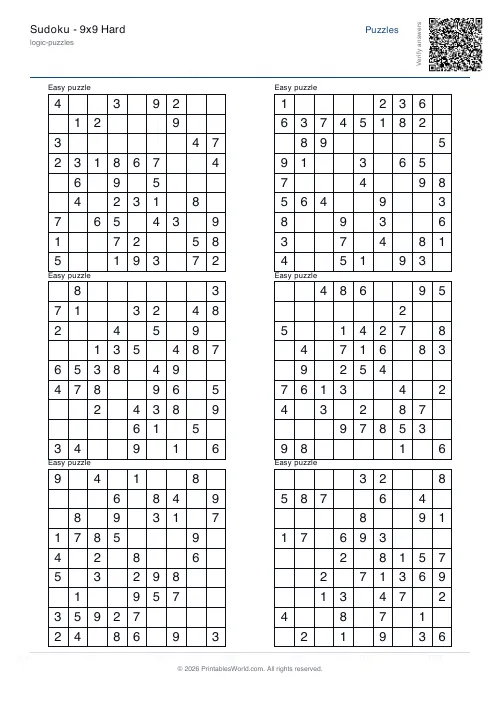
Sudoku Generator
Generate printable Sudoku puzzles with six per page, multiple difficulty levels, and optional solutions.
Further reading
Puzzles & Brain Games
Printable brain games for seniors: a free puzzle pack
A free printable puzzle pack for older adults, with a sample seven-day plan, large-print and easier-difficulty tips, and how to use the Logic Puzzles collection.
7 min read
Logic Puzzles
The benefits of logic puzzles for developing brains
Logic puzzles teach deduction and persistence, which are worth having. The claim that they make children generally smarter is weaker than the marketing suggests.
5 min read
Logic Puzzles
Kakuro, killer sudoku and other number puzzles explained
If sudoku has stopped being a challenge, these are the natural next steps. And unlike sudoku, most of them genuinely involve arithmetic.
5 min read