Logic Puzzles
The benefits of logic puzzles for developing brains
By Jobi · Creator & Maintainer, PrintablesWorld · Updated 2026-07-22 · 5 min read
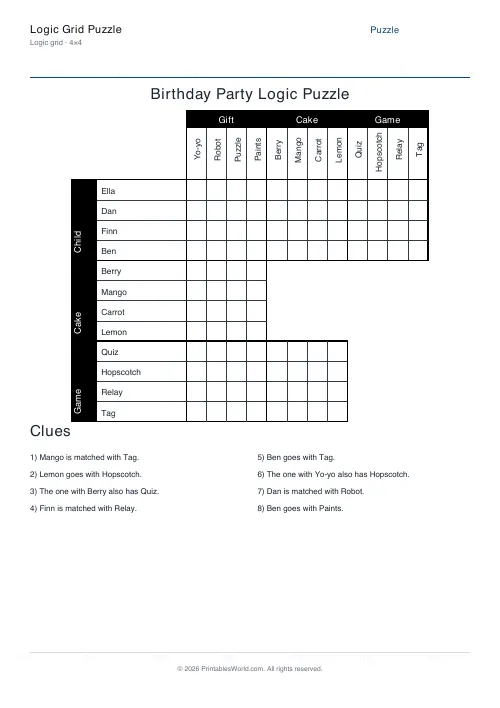
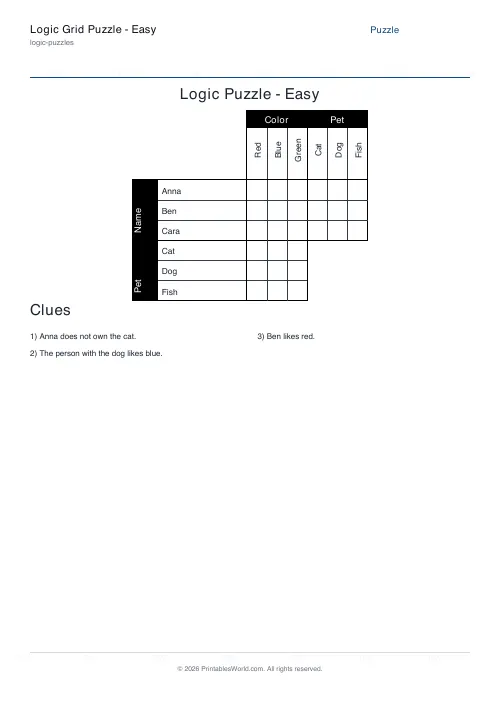
Logic puzzles get sold with fairly large claims about brain development. Some of what they do is real and worth the time; some of the marketing is not supported. Being clear about which is which makes them more useful, not less. Free printable logic grid puzzles are the most structured form of the genre.
What logic puzzles genuinely develop
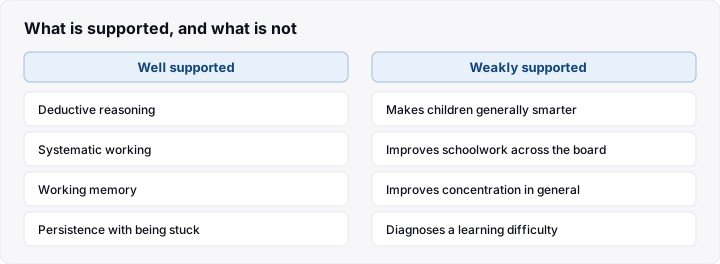
Deductive reasoning. Working from given facts to a necessary conclusion, and, the harder half, recognising what does not follow. A logic grid puzzle makes this explicit: each clue eliminates possibilities, and the answer emerges from what is left.
Systematic working. Puzzles punish random guessing and reward method. Children who start by trying things and end by working through possibilities in order have learned something transferable.
Working memory. Holding several constraints in mind at once while testing a possibility is genuinely demanding, and puzzles exercise it directly.
Persistence with productive struggle. Possibly the most valuable. A puzzle is a problem with no adult to ask, where being stuck is normal and temporary. Children who learn that stuck is a stage rather than a verdict carry that well beyond puzzles.
Precision in language. Logic clues turn on exact wording. "immediately before" is not "before", "either… or" may or may not exclude both. Reading that carefully is a skill in itself.
What the evidence does not support
The strong claim. That puzzles make children generally smarter, or improve schoolwork across the board. Is not well supported. Research on brain-training more broadly has repeatedly found that people get better at the trained task, with limited transfer to unrelated abilities.
So the honest position is that logic puzzles are excellent at developing the skills they exercise, and there is little reason to expect large general gains elsewhere. That is still a good reason to do them; it is not a reason to treat them as a substitute for teaching maths or reading.
Two smaller claims also deserve care. Puzzles do not reliably improve concentration in general. A child who focuses for forty minutes on a puzzle they enjoy may not transfer that to a task they do not. And they are not a diagnostic: struggling with logic puzzles is not evidence of a problem, since they are an unfamiliar and specific skill.
Types, and what each demands
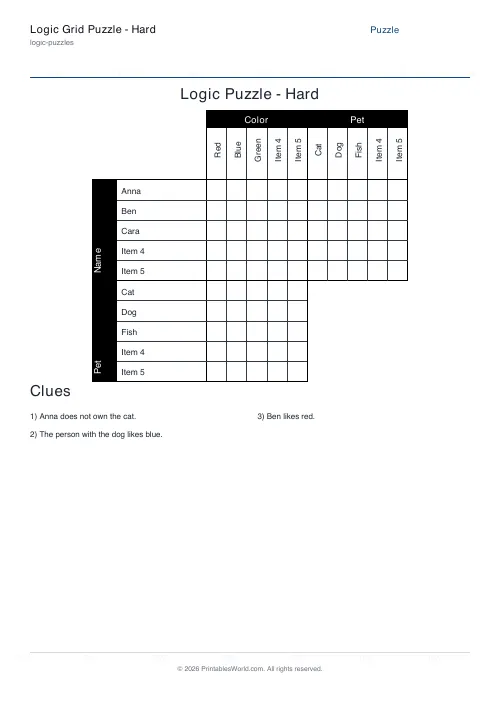
- Logic grids: the purest deduction. Clues, a grid, elimination. Demands careful reading and systematic method.
- Sudoku: constraint satisfaction with no reading at all, which makes it accessible to children whose reading is behind their reasoning.
- Binary puzzles: three simple rules, applied repeatedly. A good bridge for children who find sudoku's nine symbols too much.
- Nonograms: logic plus a visual payoff, which motivates children who find abstract grids dry.
- Number pyramids and magic squares: arithmetic inside a logical structure, so they practise two things at once.
Variety matters. Each type rewards a slightly different approach, and a child who only ever does sudoku is practising one narrow skill well.
Matching puzzle to age
Roughly, and with wide variation:
- Ages 5–7: 4×4 sudoku with shapes or colours, simple pattern sequences, odd-one-out.
- Ages 7–9: 6×6 sudoku, easy binary puzzles, three-by-three logic grids with short clues.
- Ages 9–11: 9×9 easy sudoku, 8×8 binary, four-category logic grids, nonograms.
- Ages 11+: full-size grids, five-category logic puzzles, harder variants.
Pitch slightly below where you think they are. A puzzle abandoned in frustration teaches the opposite of persistence, and the first experience of a new puzzle type sets whether they will try another.
Getting the benefit out of them
Teach the method, do not just hand over the sheet. Solve one together, narrating: "we know it isn't the blue one, so I'll cross that off". The narration is the transferable part.
Ask how, not what. "How did you know?" is where the reasoning becomes conscious and repeatable.
Let them be stuck. Wait longer than feels comfortable before helping. The struggle is the exercise; rescuing removes it.
Give a method hint, not an answer. "Have you used the third clue yet?" keeps the puzzle theirs.
Keep it optional where you can. Puzzles are unusual in being genuinely enjoyable schoolwork. Making them compulsory and marked is a reliable way to spend that.
For a gentler entry point with no reading load, binary puzzles have only three rules and are easier to explain than sudoku.
Frequently asked questions
Do logic puzzles make children smarter?
They develop the specific skills they exercise. Deduction, systematic working, persistence. Evidence for broad transfer to general intelligence or unrelated schoolwork is weak, so the honest claim is narrower than the marketing.
What age can children start?
Simple pattern and matching puzzles work from about four or five. Structured logic grids usually need reading fluency, so around eight upwards.
My child gets frustrated and gives up. What should I do?
Drop the difficulty until they succeed a few times, and solve some together while narrating your reasoning. Frustration usually means the puzzle is above their current method, not that puzzles are wrong for them.
Are digital puzzle apps as good as paper?
For the logic itself, largely yes. Paper has two advantages worth noting: no hints button to reach for, and space in the margin to work things out, which encourages the systematic notation that is half the skill.
Before you print
Pitch below where you think they are, solve the first one together while narrating your reasoning, and ask "how did you know?" rather than checking the answer. Start with binary puzzles if sudoku feels like too much, and move to logic grids once reading is fluent.
Related tools
Logic Grid Puzzle Generator: Printable
Create custom logic grid puzzles with your own categories, items, and clues. Print-ready PDFs in seconds.
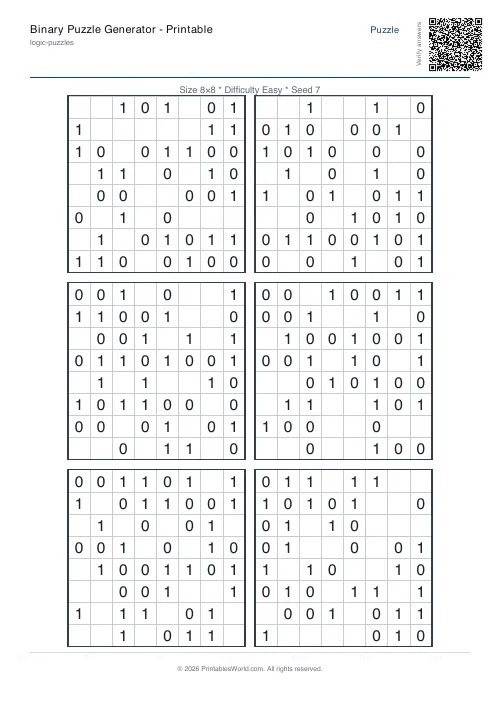
Binary Puzzle Generator: Printable
Create printable binary logic puzzles (Takuzu/Binairo) with customisable grid sizes and difficulty levels.
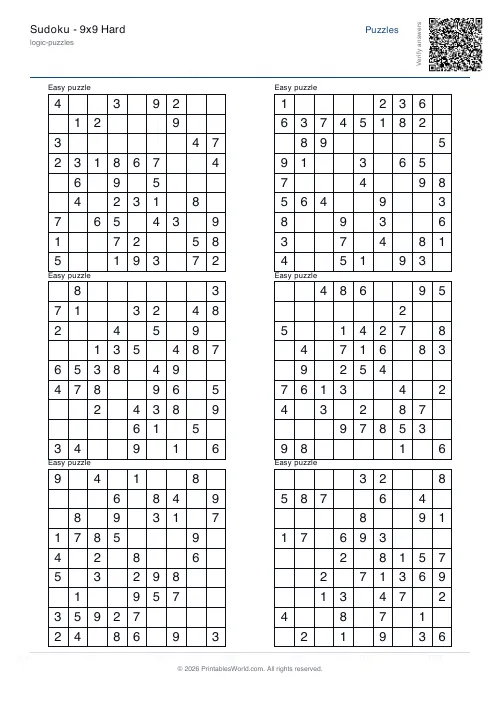
Sudoku Generator
Generate printable Sudoku puzzles with six per page, multiple difficulty levels, and optional solutions.
Continue reading
Puzzles & Brain Games
Sudoku for kids: which difficulty to start at, by age
A practical guide to picking the right sudoku difficulty for a child by age, with a copyable first session and free printable grids in seconds.
7 min read
Logic Puzzles
How to solve Sudoku: a beginner's step-by-step guide
Four techniques, learned in order, solve almost every easy and medium Sudoku: scanning, the last free cell, pencil marks and naked pairs. Here is each one with a worked example.
6 min read