Puzzles & Brain Games
Printable brain games for seniors: a free puzzle pack
By Jobi · Creator & Maintainer, PrintablesWorld · Updated 2026-07-30 · 7 min read
In a care home one morning, a coordinator prints a single puzzle sheet for each resident, and within a few minutes the room has gone quietly busy over pencils. That small ritual is where printable brain games for seniors earn their place, calm to set up and easy to repeat, whether the setting is a care home, a community centre, or a kitchen table at home. The free printable logic puzzles collection was built for exactly this kind of low-fuss routine.
This guide covers what these puzzles are, why older adults enjoy them, how to build a varied week, and how to set larger print and a gentler difficulty.
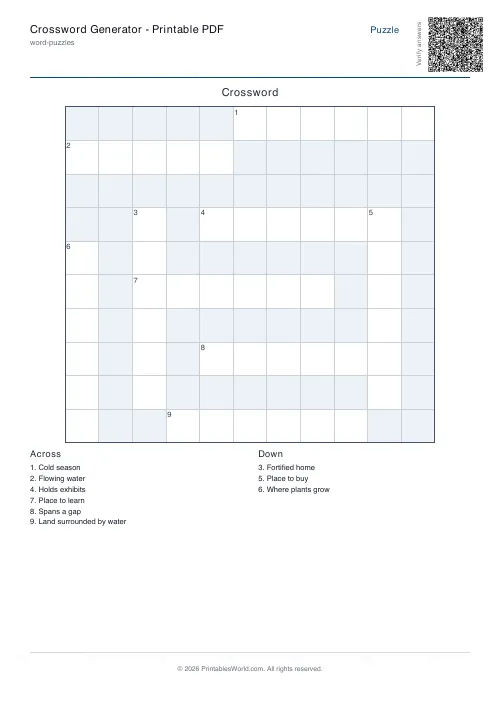
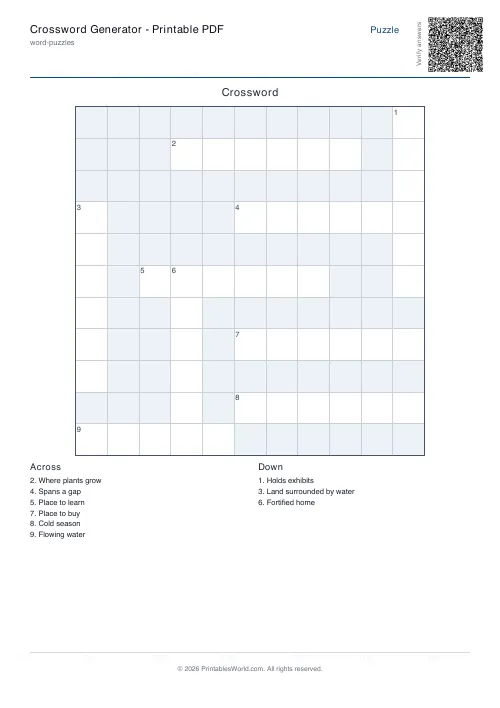
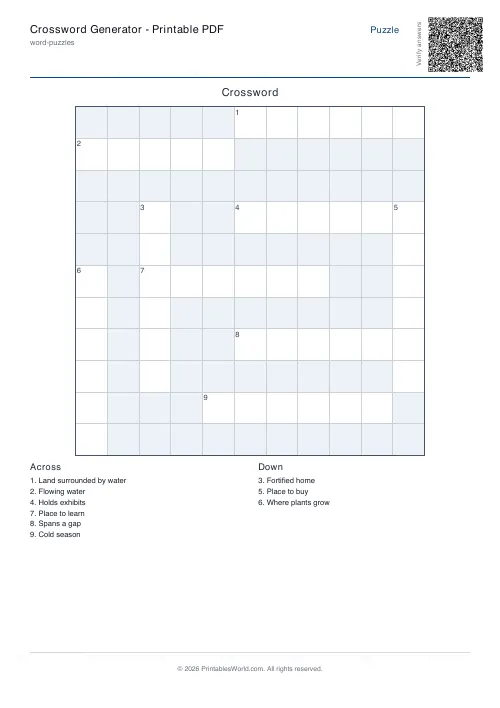
What counts as a printable brain game?
A printable brain game is any puzzle you can produce on a single sheet, work through with a pencil, and check at your own pace. Think Sudoku grids, word searches, crosswords, mazes, and number sequences. Nothing needs a screen, a login, or a subscription. The format matters as much as the puzzle: clear spacing, wide margins, and bold print turn an ordinary grid into something comfortable to read. Because each sheet is self-contained, it suits a single sitting, which is part of why these pages fit a daily routine.
Why printable brain games for seniors have such appeal
Paper is forgiving. There is no battery to charge, no font that resizes unexpectedly, and no notification to break a train of thought. A printed sheet removes a layer of friction and lets the puzzle itself take over. There is also the quiet pleasure of a contained task with a clear beginning and end, satisfying in a way that open-ended scrolling rarely is.
Research on healthy ageing tends to emphasise variety, social connection, and enjoyable routines rather than any single activity. Puzzles sit comfortably inside that picture as one pleasant option among many. The aim is engagement and enjoyment, not performance.
How to build a varied weekly puzzle pack
Assembling a week of sheets is quick once you follow a simple order.
- Pick a gentle difficulty floor. Start easier than you think you need, since a pack that feels slightly too easy gets used while one that feels like an exam gets set aside.
- Choose one puzzle type per day. Variety keeps the week interesting and gives different kinds of thinking a turn.
- Set the print size first. Decide on large print before generating anything so every sheet matches.
- Label each sheet. A small day name in the corner keeps the week tidy and easy to hand out.
- Print answer keys separately. Keep solutions on their own pages so the puzzle sheets stay clean.
A sample seven-day printable puzzle pack
Here is one week that balances variety with a familiar rhythm. Each day uses a single sheet, set to large print and an easier difficulty band.
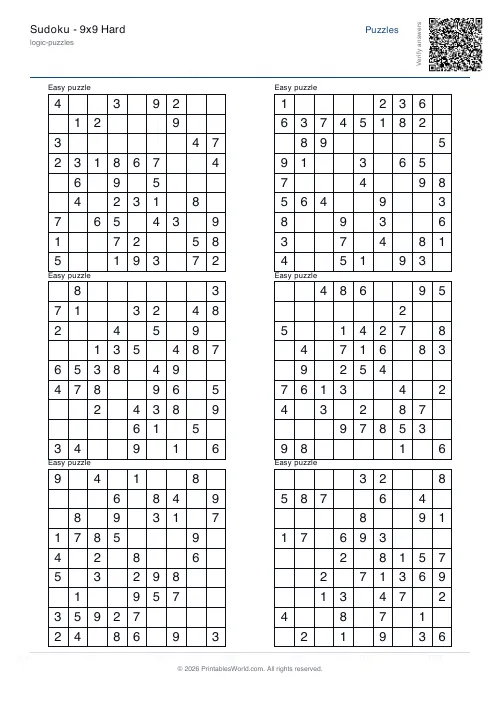
- Monday, Sudoku. A gentle six-by-six or easy nine-by-nine grid from the printable Sudoku generator.
- Tuesday, word search. A themed grid such as garden flowers, set with bold letters using the large print word search generator.
- Wednesday, maze. A simple open maze with wide paths.
- Thursday, number sequence. A short pattern such as counting in threes.
- Friday, crossword. A small grid with everyday clues rather than cryptic ones.
- Saturday, spot the difference. A pair of pictures with a few changes to find.
- Sunday, free choice. Repeat the week's favourite for a relaxed finish.
How to use the Logic Puzzles collection
The printable logic puzzles collection makes all of this quick. You choose a puzzle type, set the difficulty, pick a print size, and download a ready-to-print PDF with no sign-up. Page size can be set to A4 or US Letter to match the paper in your printer, which matters whether you are in London, Toronto, or Sydney. Where a puzzle has a solution, an optional answer key prints on its own page, so the sheet stays clean and you decide whether to share it. The puzzle comes first and any answer key follows, so you can print puzzles alone or the full file for self-checking.
Choosing puzzles for different needs
A small adjustment often decides whether a sheet gets used or set aside.
Limited grip or dexterity
Choose large answer spaces and few tiny boxes. Word searches and mazes ask less of fine pencil control than a dense crossword.
Lower vision
Set the largest print and favour bold, high-contrast grids with plenty of white space.
Shorter attention or fatigue
Pick small grids that finish in a few minutes, since a short completed puzzle feels better than a long one set aside midway.
Group settings
Print the same puzzle for everyone so the room can compare notes, which turns a quiet task into a sociable one.
Common mistakes to avoid
- Starting too hard. A difficult first sheet can put someone off entirely, so begin gentle and raise the difficulty only once packs are finished happily.
- Print that is too small. Standard print strains tired eyes, and a larger size from the start saves squinting and reprinting.
- Crowding the page. Too many puzzles on one sheet feels like work, so keep it to one puzzle per page.
- Sharing answer keys by default. Some solvers prefer to sit with a puzzle, so keep keys separate and offer them only when asked.
Frequently asked questions
Are printable brain games for seniors free to use?
Yes. The puzzle sheets described here are generated and downloaded at no cost, with no account and no sign-up. You choose the puzzle type, difficulty, and print size, then save or print the PDF. Because the files are ordinary printable pages, you can produce as many as you like, for one person or a whole group. Where a solution exists, the optional answer key is included in the same free download rather than locked away, so a full pack costs nothing but paper and ink.
What size print works best for older eyes?
The largest comfortable size usually wins. A large band means bolder lines, bigger letters, and more space between items, all of which reduce eye strain. A useful test is to hold the sheet at a normal reading distance and check whether the numbers or letters are easy to read without leaning in. If a page still feels tight, reduce the number of items rather than shrinking the print, since fewer puzzles with generous spacing almost always read better than a crowded grid.
How often should the puzzles be done?
There is no required schedule, and a relaxed approach tends to last longer than a strict one. Many people enjoy one short sheet a day as part of a gentle routine, often with a morning drink, while others prefer a few puzzles spread across the week. The aim is enjoyment rather than a target, so a missed day is perfectly fine and the page simply waits. A pack of seven sheets gives a natural rhythm without pressure, and comfort matters far more than frequency or speed.
Which puzzle type is easiest to start with?
Start with word searches or a simple maze. Both are gentle: a word search asks you to scan and recognise rather than calculate, every answer is already sitting somewhere on the page, and a wide-path maze is quick enough to finish before attention flags. That early success matters. Once the routine feels comfortable, an easy Sudoku or a small crossword adds a little more challenge, and rotating between types keeps each sheet feeling like a change rather than a chore.
Sources and further reading
This article draws on general guidance about healthy ageing and engagement rather than any single study, and frames puzzles only as enjoyable activity.
- World Health Organization guidance on healthy ageing, which highlights variety, social connection, and enjoyable routines.
- Cochrane Library reviews on activity and cognition, peer-reviewed summaries for readers who want the underlying evidence.
Before you print
A good puzzle pack is less about difficulty and more about comfort: large print, one puzzle per sheet, a gentle level, and enough variety to keep the week interesting. Build it once, keep the answer keys separate, and treat it as a pleasant routine rather than a test. When you are ready, the free printable logic puzzles collection lets you set the type, size, and difficulty and download ready-to-print sheets in a couple of minutes. Start gentle, print large, and let the favourites earn their repeat appearances.
Related tools
Continue reading
Logic Puzzles
How to solve Sudoku: a beginner's step-by-step guide
Four techniques, learned in order, solve almost every easy and medium Sudoku: scanning, the last free cell, pencil marks and naked pairs. Here is each one with a worked example.
6 min read
Logic Puzzles
Kakuro, killer sudoku and other number puzzles explained
If sudoku has stopped being a challenge, these are the natural next steps. And unlike sudoku, most of them genuinely involve arithmetic.
5 min read