What this tool does
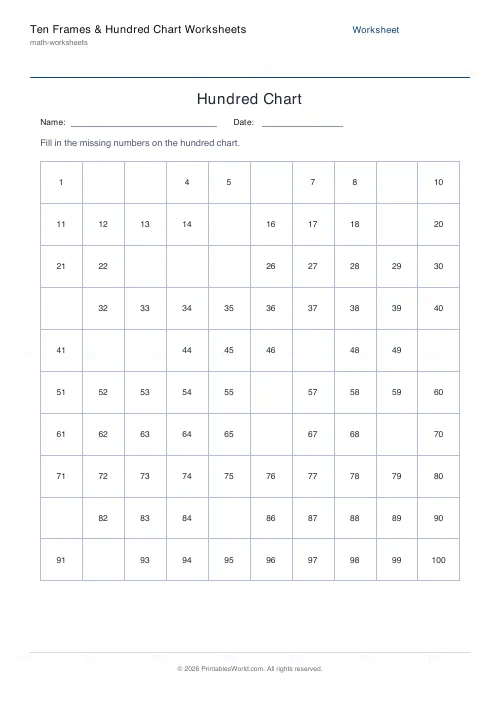
Generate printable ten-frame or hundred-chart worksheets. In ten-frame mode students count the dots; in hundred-chart mode they fill the missing numbers on a 1-100 grid. Includes an answer key.
People also used
Feedback
Spotted something off with this tool?
Two classic number-sense tools
Ten frames and hundred charts are staples of early maths. This generator makes both. In ten-frame mode, each frame is filled with a random number of dots and the student counts them. Building instant recognition of numbers to ten. In hundred-chart mode, a 1–100 grid has some numbers blanked for the student to fill in, reinforcing counting, place value, and number patterns.
Why these help
Ten frames make the structure of numbers visible: pupils quickly see 7 as "five and two more" or "three less than ten," which underpins mental addition and subtraction. The hundred chart reveals patterns. Counting in tens goes straight down a column, counting in ones moves across a row. And missing-number puzzles turn that structure into active practice.
Adjustments
- Mode: ten-frames or hundred chart.
- Number of frames (ten-frame mode) or blanks (hundred-chart mode).
- Answer key, Name & Date: for marking and classroom use.
Putting it to work
- Choose ten-frame or hundred-chart mode.
- Set the number of frames, or how many cells to blank on the chart.
- Toggle the answer key and Name/Date fields.
- Preview, press Generate New for a fresh sheet, then download or print.
Teaching ideas
Use ten-frames for subitising drills. Flash a frame and ask for the count without counting one-by-one. On the hundred chart, ask pupils to describe the pattern they used to fill a blank ("it's ten more than the one above"), which makes the place-value structure explicit.
Two tools, two different jobs
These sheets cover two formats that are often grouped together and are used for quite different things.
A ten frame — ten boxes in two rows of five — is for quantities up to ten and the relationships inside them. Its value is that seven can be seen as a full row plus two, and as three short of ten, without any counting.
A hundred chart — ten rows of ten — is for the structure of two-digit numbers. Moving one square right adds one; moving one square down adds ten. That single fact makes adding ten visible rather than procedural.
Use frames first and the chart afterwards. The chart assumes ten is already understood as a unit, which is exactly what the frame builds.
Getting the most from a ten frame
One rule matters more than any activity: fill it the same way every time — left to right, top row first. A randomly filled frame is a scatter of counters and loses the whole benefit, because the arrangement is what makes the quantity recognisable at a glance.
The highest-value activity is asking how many more to ten? The empty boxes are the answer, so the number bond is visible rather than calculated. Repeating that until the answer arrives without looking is how the bond becomes a fact.
Two frames side by side then handle teen numbers: thirteen is one full frame and three, which is the clearest early demonstration of place value available on paper.
Patterns worth colouring on a hundred chart
The chart earns its keep when children colour sequences on it, because the patterns are unmistakable.
- Twos — five clean columns.
- Fives — two columns.
- Tens — a single column, which is the point at which the chart's structure clicks.
- Threes and sevens — diagonal stripes, and much more interesting than the tidy ones.
Other uses: cover a number and work out what it must be from its neighbours, find the number ten more or ten less than a given one, or mark a starting square and count on in steps. All of them practise the same underlying idea — that position on the chart encodes place value.
FAQs
Quick answers
What is a ten frame?
A 2-by-5 grid of ten cells. Filling it with counters shows a number's relationship to five and ten, which builds strong early number sense.
What does the hundred chart mode do?
It prints a 1–100 grid with some numbers blanked out. Students fill the missing numbers, practising counting and spotting number patterns.
Can I control the difficulty?
Yes. In hundred-chart mode, more blanks make it harder. In ten-frame mode, choose how many frames to include.
Is there an answer key?
Yes. Toggle the answer key and the PDF adds a completed version. Counts under each ten-frame, or every number filled on the chart.
Related tools
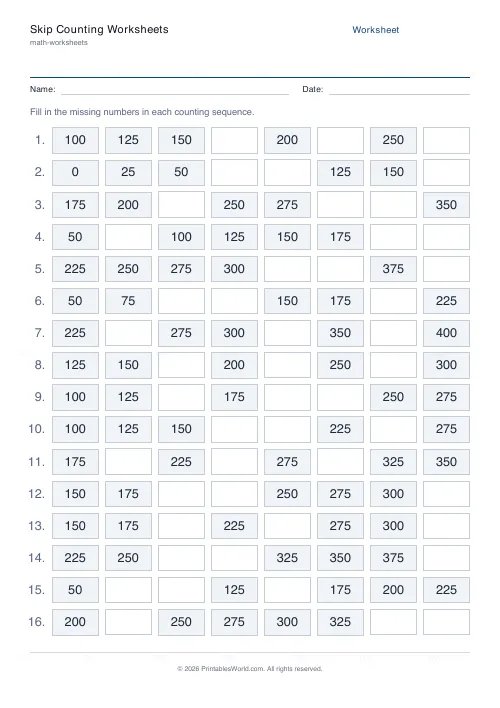
Skip Counting Worksheets
Practise counting in 2s, 5s, 10s, and beyond.
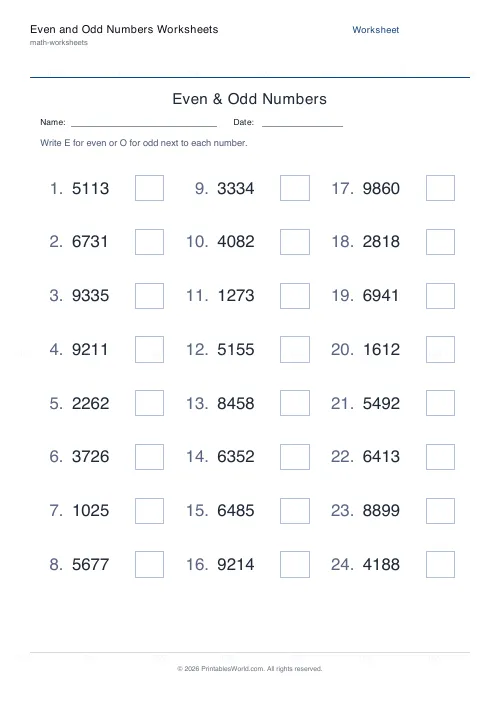
Even and Odd Numbers Worksheets
Identify and sort even and odd numbers.
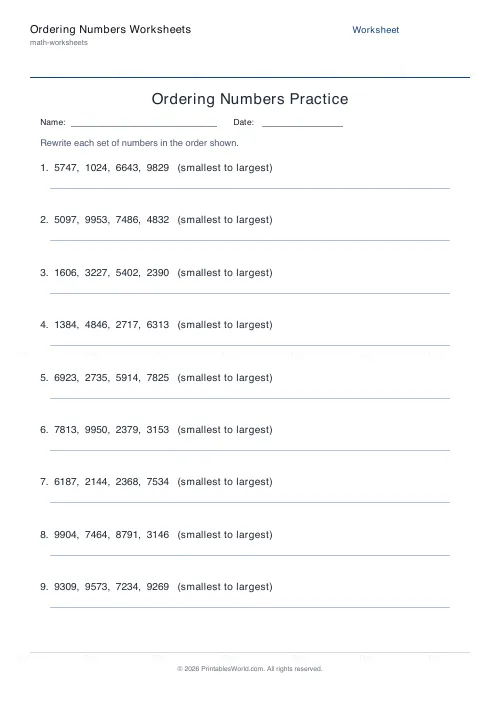
Ordering Numbers Worksheets
Arrange numbers in ascending and descending order.
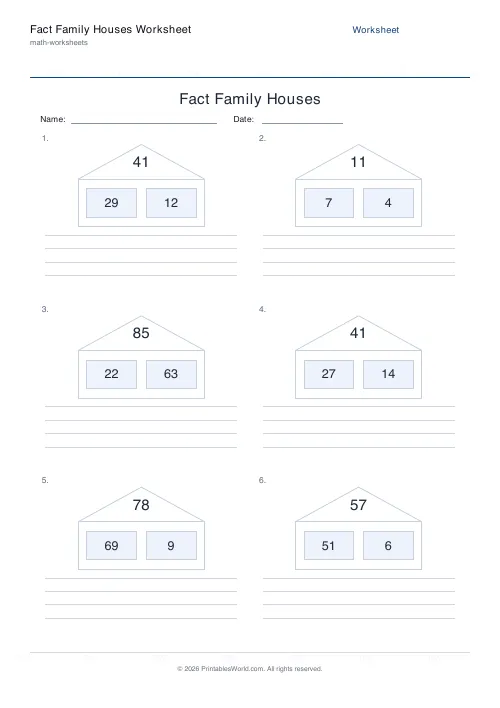
Fact Family Houses Worksheet
Printable fact family house worksheets. The whole number lives in the roof, the two parts live in the windows, and students write the four related facts below.
Further reading
Math Worksheets
Addition strategies: number lines, regrouping and more
Column addition is the destination, not the route. Here are the strategies that come before it, why each matters, and how to tell which one a child is actually using.
5 min read
Math Worksheets
Ten frames and number bonds: early maths foundations
A ten frame is two rows of five. That arrangement does something a row of counters cannot. It makes quantities visible without counting, which is where number sense starts.
5 min read
Math Worksheets
How to read and interpret bar charts with kids
Reading a bar chart is easy; interpreting one is not. Four questions turn a chart from something children decode into something they can reason about.
4 min read
More like this
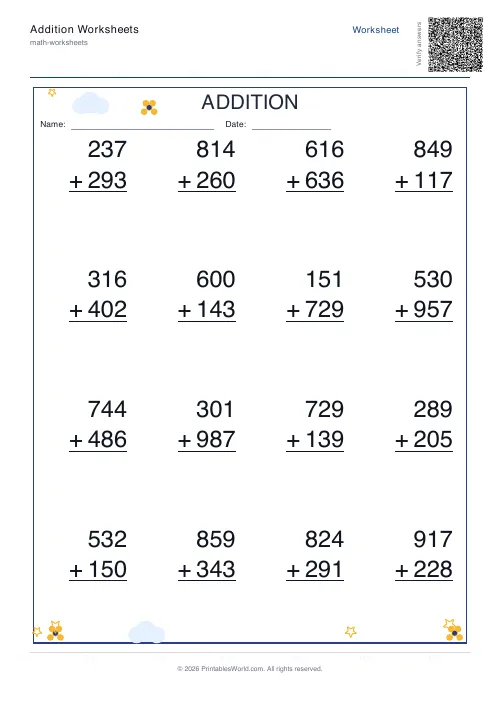 Addition Worksheets Generator
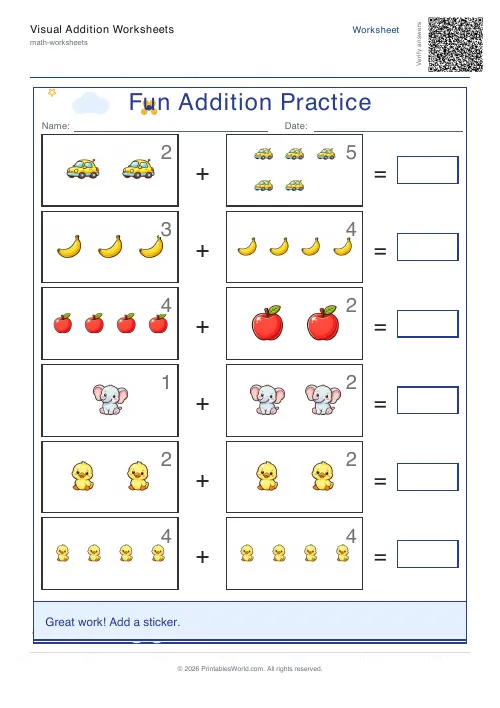 Visual Addition Worksheets Generator
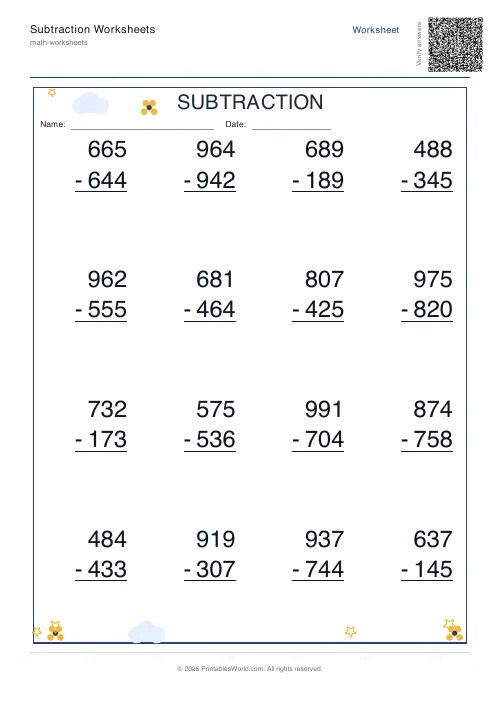 Subtraction Worksheets Generator
 Multiplication Table Generator
 Mixed Tables Generator
 Fractions Practice Sheets Generator
 Math Word Problems Generator
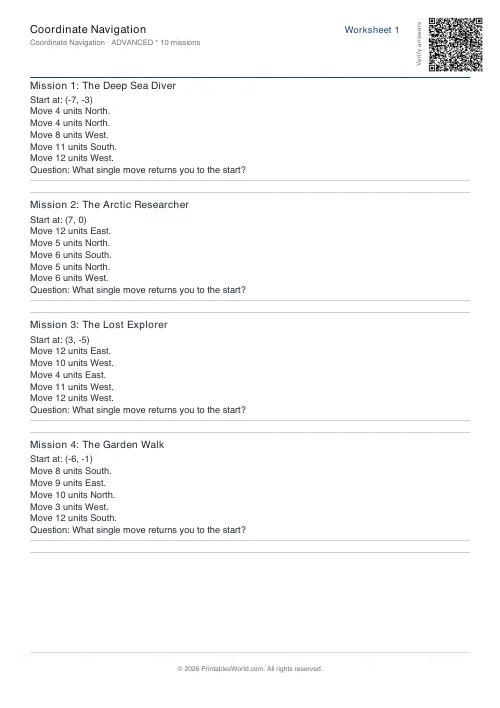 Coordinate Navigation Generator
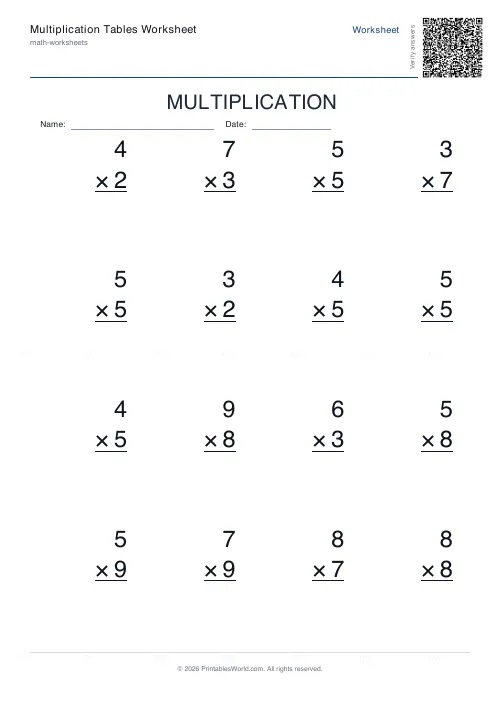 Multiplication Tables Worksheet
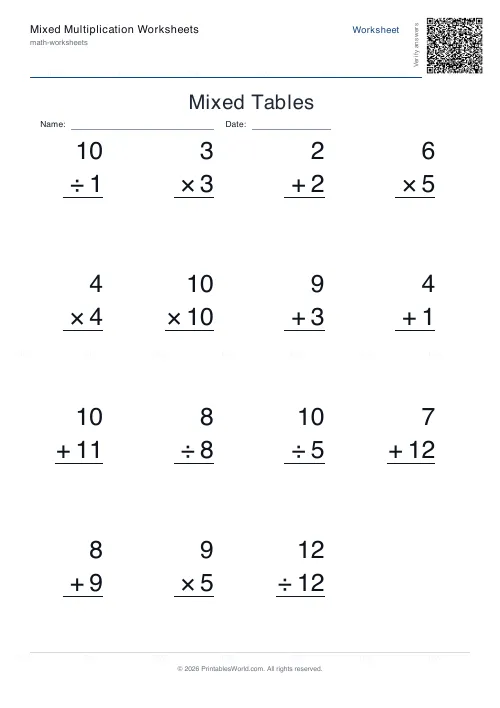 Mixed Multiplication Worksheets
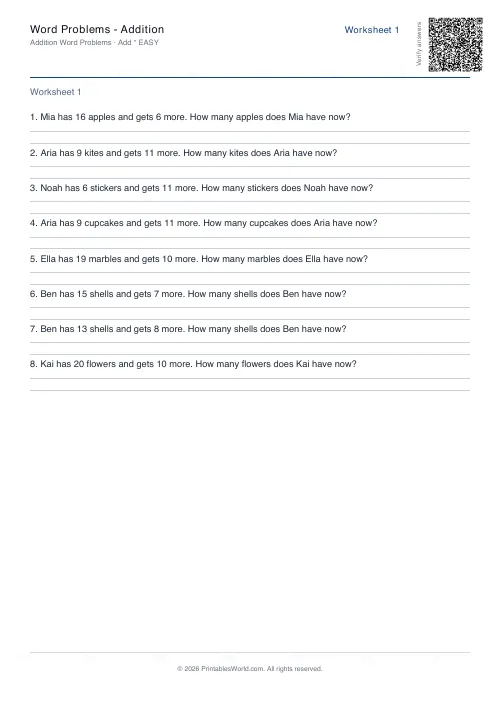 Word Problems: Addition
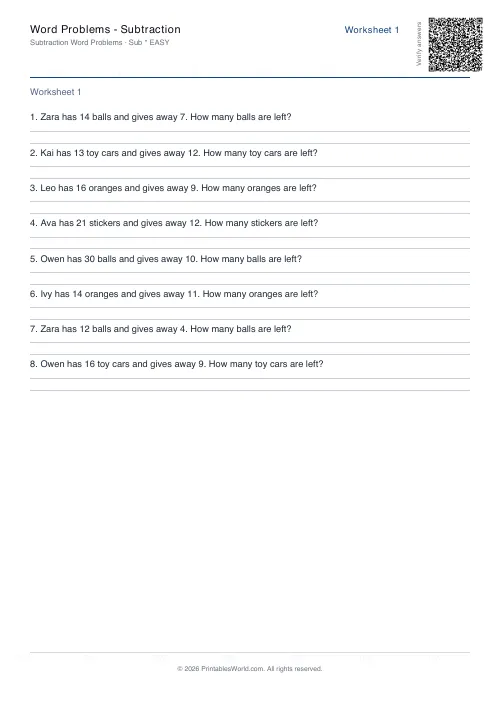 Word Problems: Subtraction
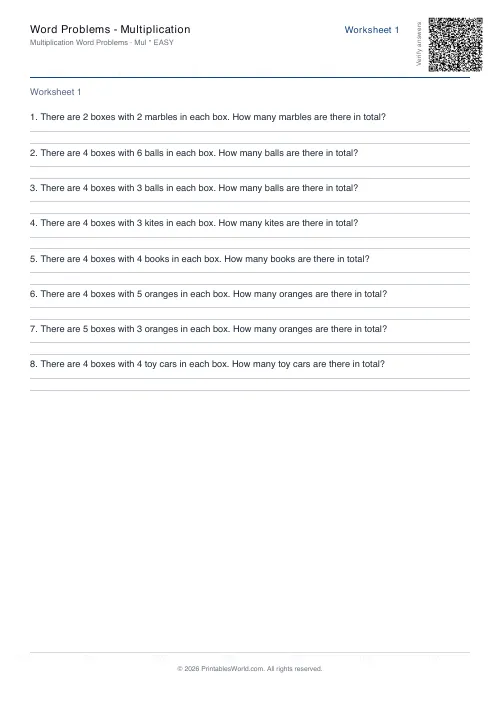 Word Problems: Multiplication
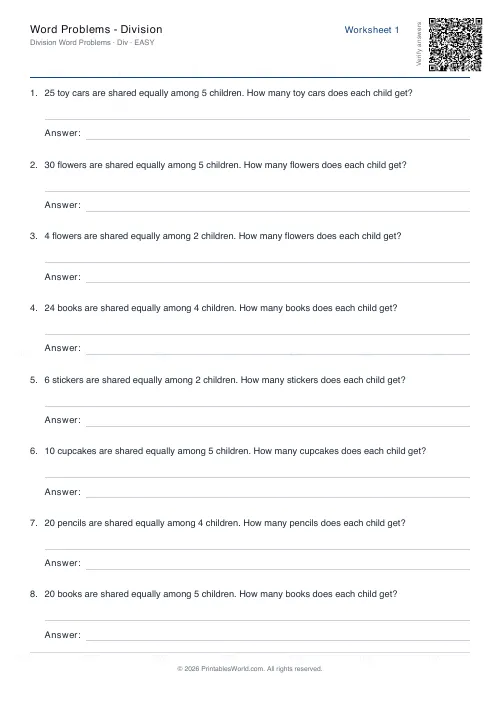 Word Problems: Division