What this tool does
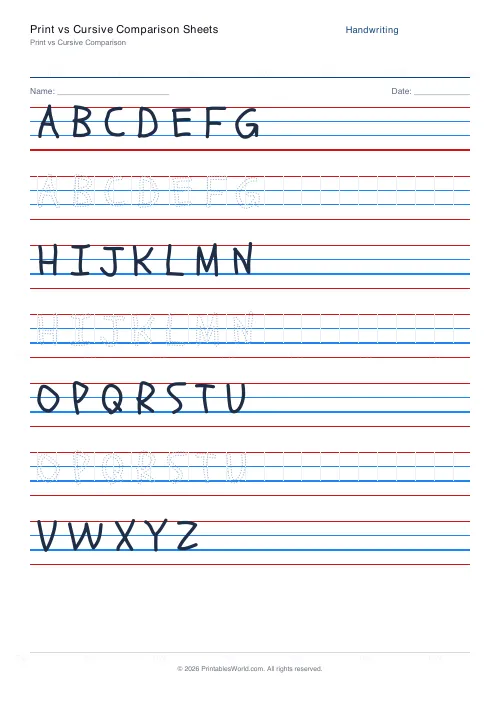
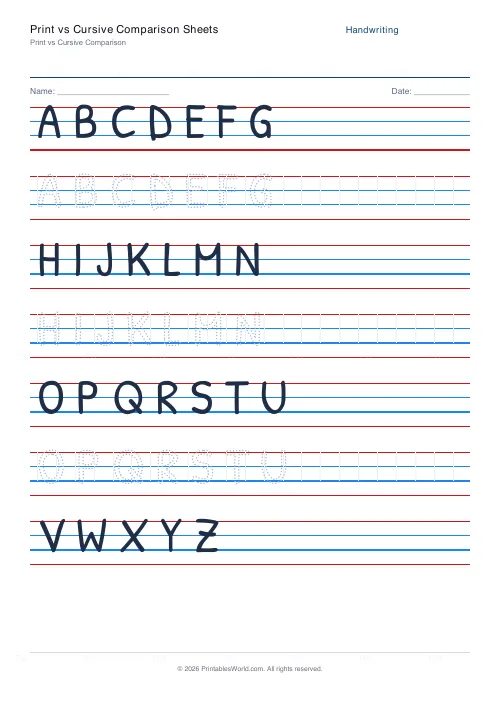
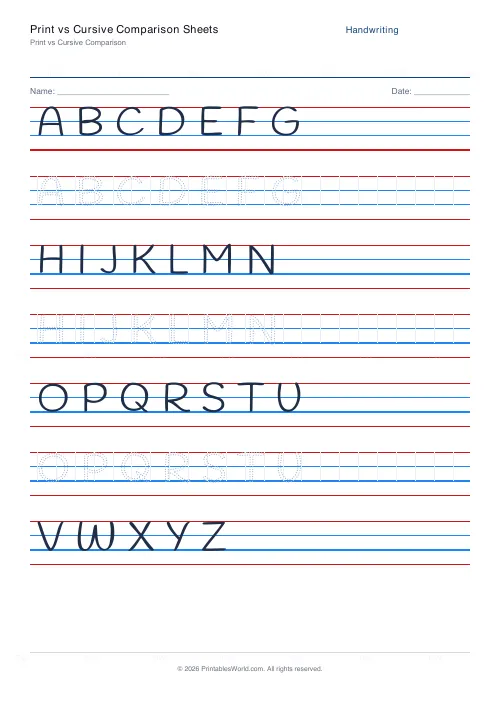
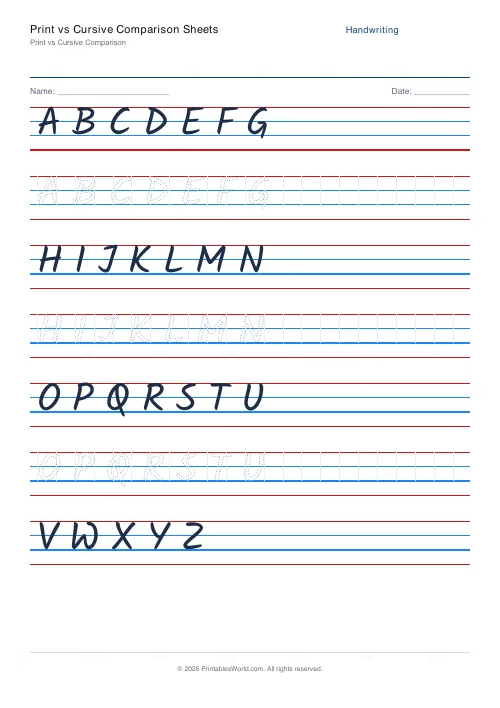
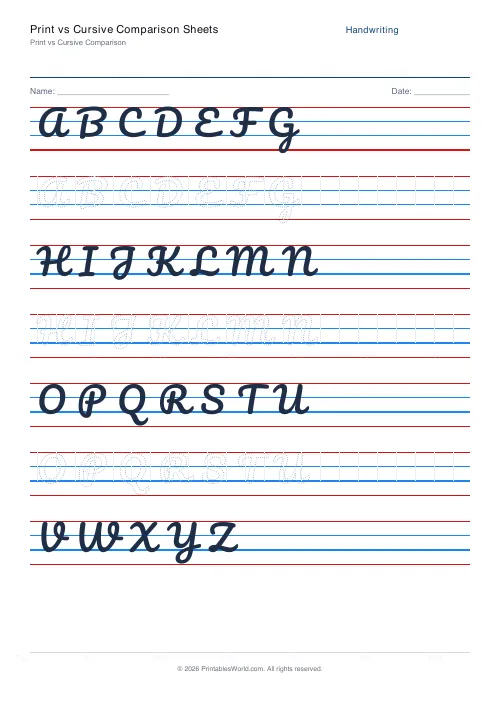
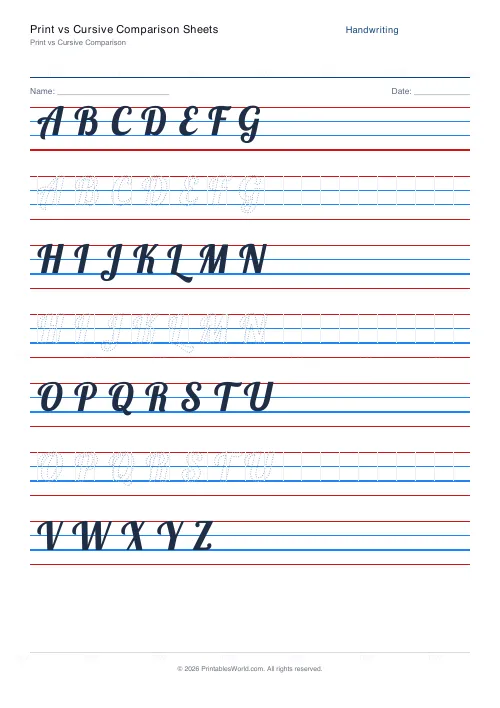
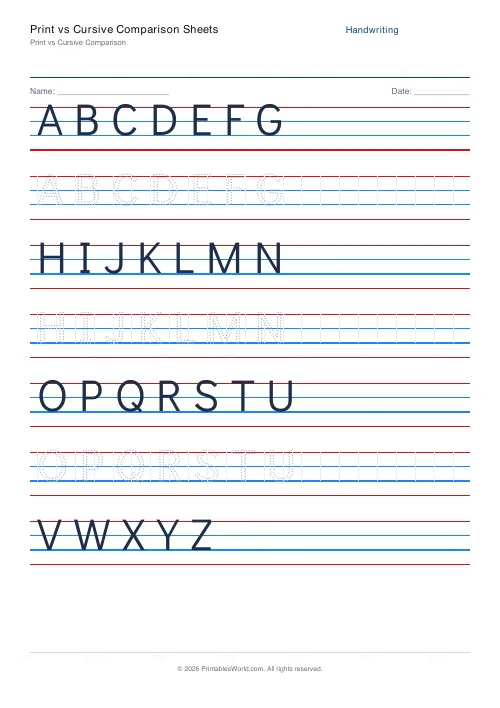
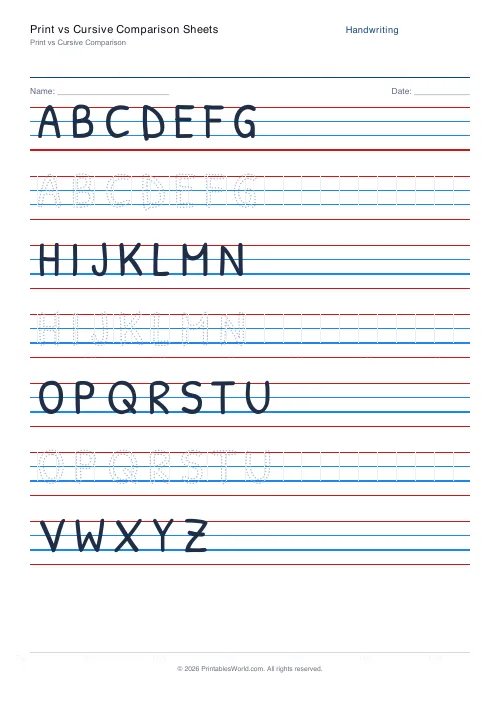
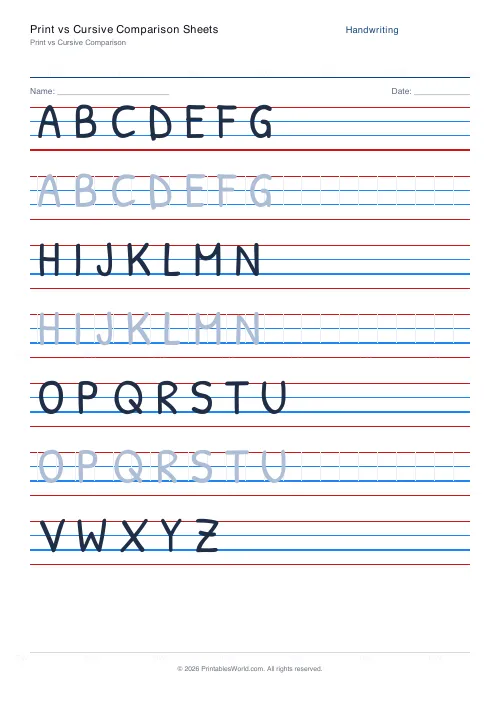
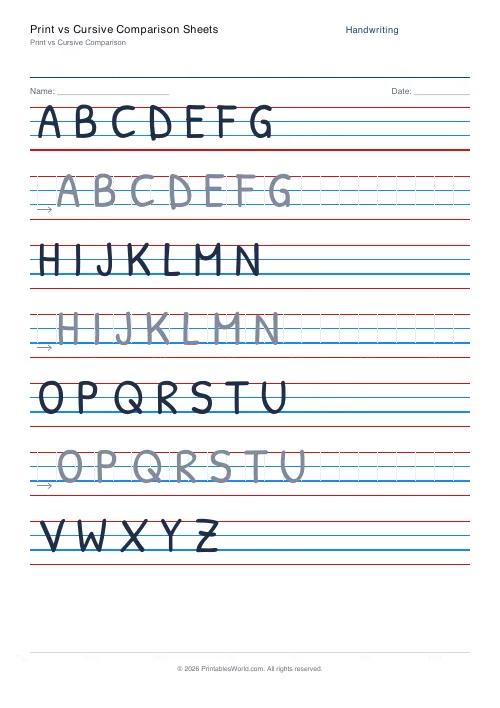
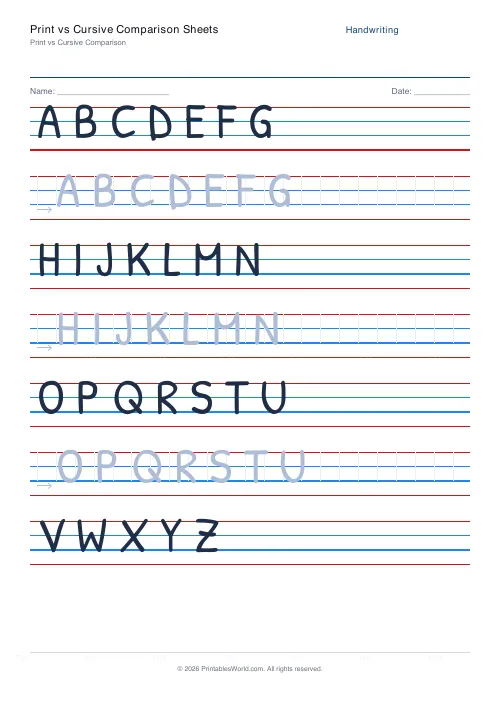
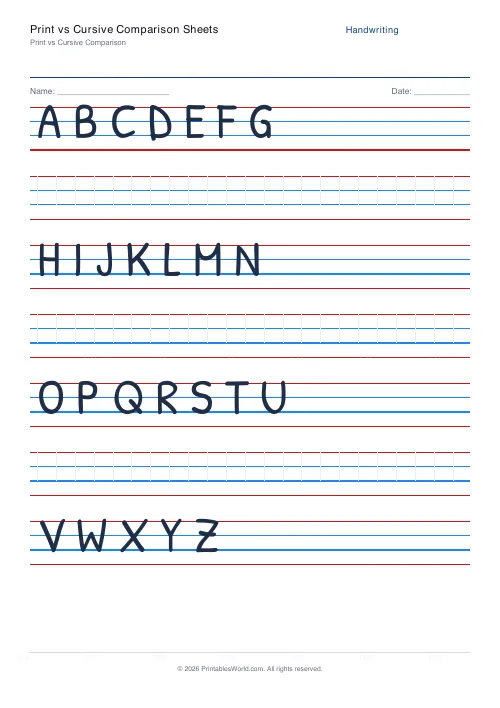
A tracing sheet for comparing the two scripts. It prints one style at a time — run it once in print and once joined, and put the two sheets side by side.
People also used
Feedback
Spotted something off with this tool?
How to get the comparison
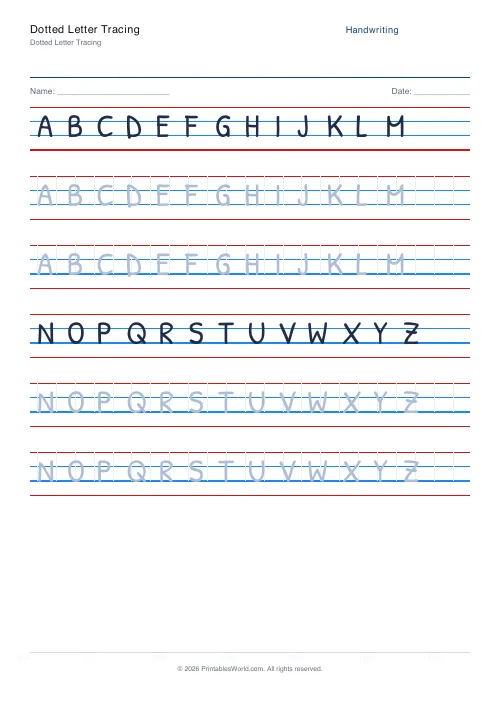
Print this sheet as it comes and you get the alphabet in a print hand, dotted for tracing, inside character boxes. Then change two settings — writing style to joined, font to one of the cursive faces — and print it a second time.
Two sheets, same letters, side by side on the desk. That is the comparison, and it is worth stating plainly: the generator renders one script per page, so the side-by-side happens on the table rather than on the paper.
What the two sheets show
Laid out together, the differences stop being abstract.
Some letters are identical in both — c, o, m, n barely change. Some gain an entry or exit stroke and nothing more. A handful are other shapes altogether — cursive f, r, s, and the capitals, half a dozen of which have to be learnt from scratch as new characters rather than as variations on something the child already writes every day.
Knowing which is which tells you where to spend the time. A child moving to cursive is not relearning twenty-six letters. They are relearning about six and adding joins to the rest.
The joins are the real content
Letters are the smaller half of the problem. Cursive is a system of connections, and four families of them are worth teaching explicitly.
Diagonal joins from a baseline letter, as in in. Horizontal joins from a letter finishing at the top, as in ov. Joins climbing into a tall ascender. And the letters that traditionally do not join out at all, which in most teaching hands are the descenders.
None of that is visible on an alphabet chart. These two sheets are a starting point, not a curriculum.
The argument about which to teach
It is unsettled, and worth saying so.
The case for cursive is fluency. Fewer pen lifts, so in principle faster writing, and continuous letters may help with word-level spelling. Against it: the evidence for the speed and legibility advantages is thinner than either camp usually admits, and hours spent on script are hours not spent on composition.
English schools mostly teach a joined hand and many require it; American practice varies by state and by district. If the choice is yours, take whichever the child's school uses. A child writing one hand while everyone around them writes another has an obstacle, not an advantage.
Print first, either way
Nobody disagrees about this part. Print letters are simpler shapes and they match what a child reads, so they come first everywhere. Cursive follows once print is secure, at seven or eight.
Related: the handwriting practice generator, where both styles and all the fonts live.
FAQs
Quick answers
How do I compare print and cursive with this tool?
Generate the sheet with writing style set to separate for the print version, then switch the style to joined and generate again. Print both and lay them side by side to compare the same letters in each style.
Which letters change most between print and cursive?
Lowercase letters such as f, r, s and z change shape most when they join up, while many capitals stay close to their printed form. Edit the practice text to focus on the letters your learner finds trickiest.
Which font is used?
Patrick Hand. A clear, child-friendly print font that gives a tidy manuscript model to trace before discussing the cursive equivalent.
Why are character boxes shown?
The boxes between the top and base lines keep letter sizing consistent and make it easier to point out which letters keep their width and which stretch when they join.
Related tools
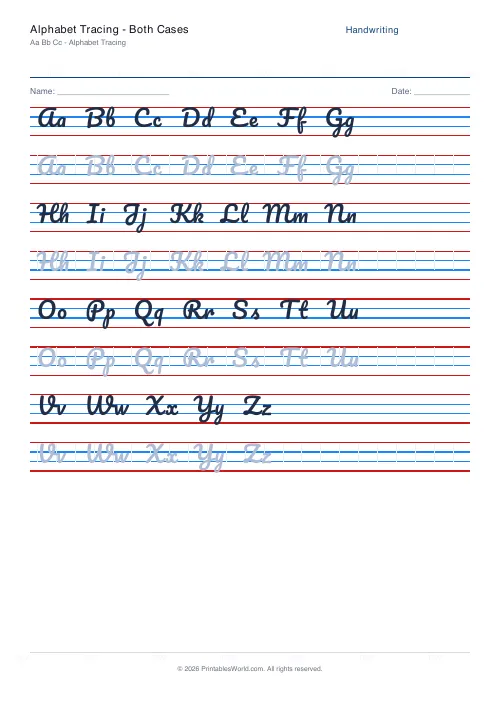
Alphabet Tracing: Both Cases
Uppercase and lowercase letters paired on one sheet for comparison.
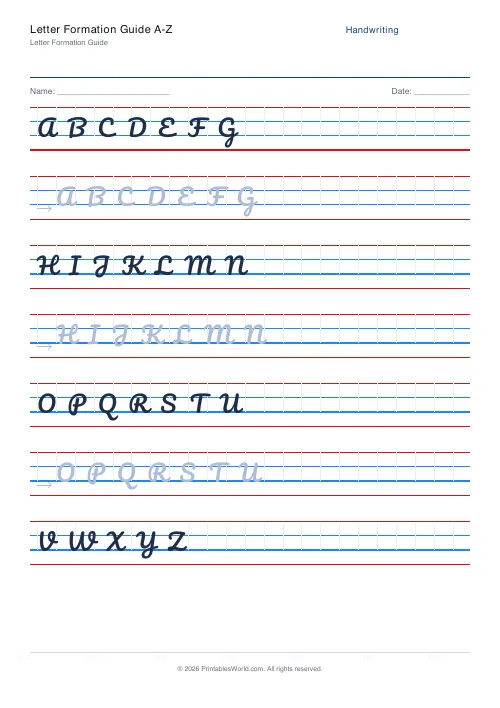
Letter Formation Guide A-Z
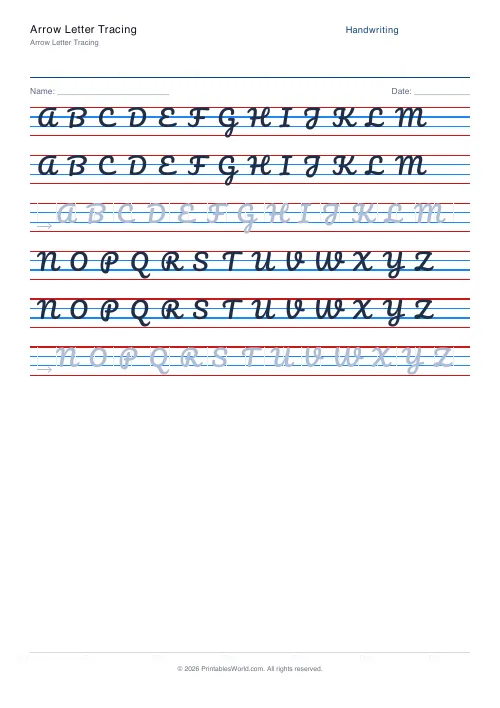
Full alphabet with directional arrows for stroke-order learning.
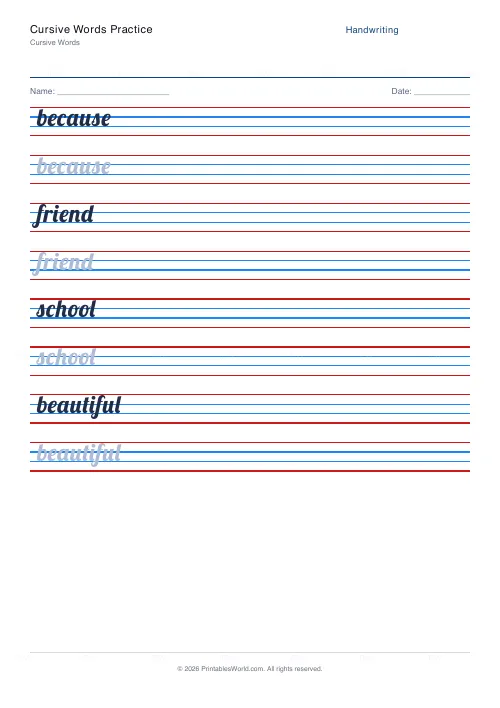
Cursive Words Practice
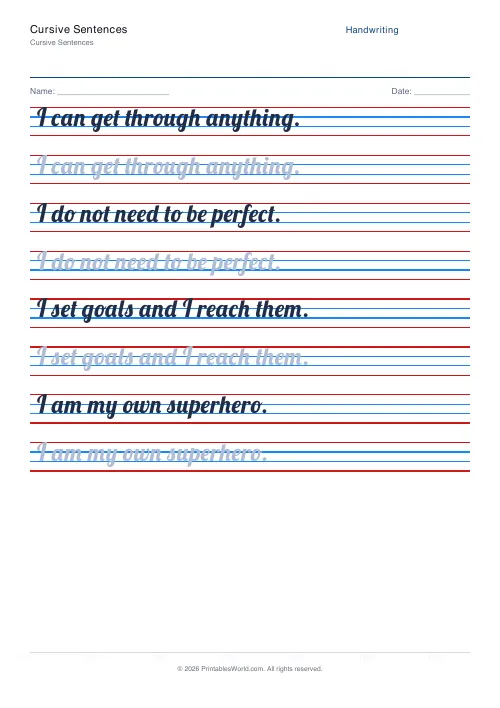
Practise writing common words in cursive script. Custom word input.
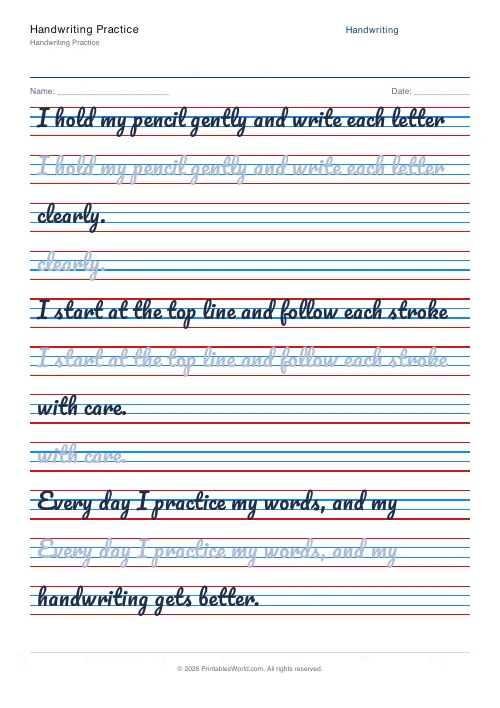
Handwriting Practice Generator
Create custom 4-line handwriting practice sheets with trace rows, adjustable guides, and your own text.
Further reading
Handwriting
Print vs cursive: which should children learn first?
Countries disagree, schools disagree, and the research is thinner than either side suggests. Here is what print and cursive each actually do well, and a practical way to decide for one child.
6 min read
Handwriting
How to teach cursive at home: a step-by-step plan
A simple step-by-step plan for teaching cursive at home, with letter families grouped by stroke, a four-week practice sequence, and free printable sheets to download.
8 min read
Handwriting
Dotted vs solid trace lines: what works best for beginners
Each trace style removes a different amount of support. The mistake is staying on one too long. Tracing feels productive and teaches less than copying.
4 min read
More like this
- Handwriting Practice Generator
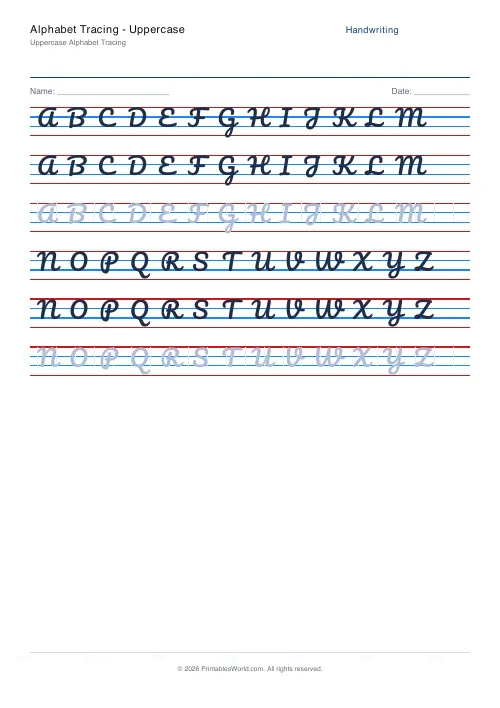 Alphabet Tracing: Uppercase
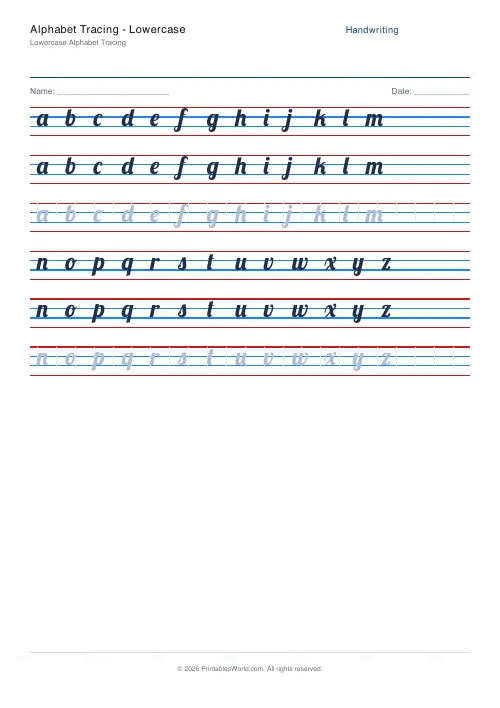 Alphabet Tracing: Lowercase
- Alphabet Tracing: Both Cases
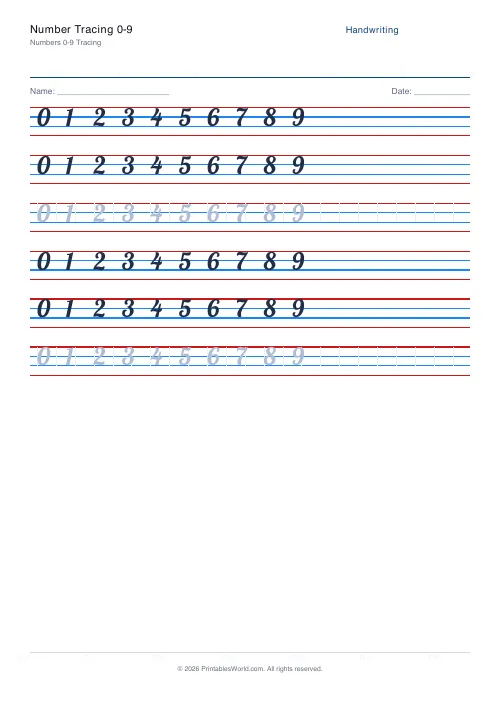 Number Tracing 0-9
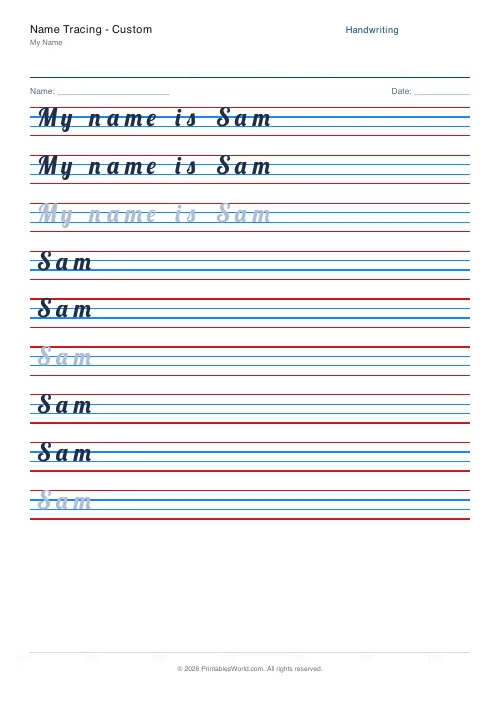 Name Tracing: Custom
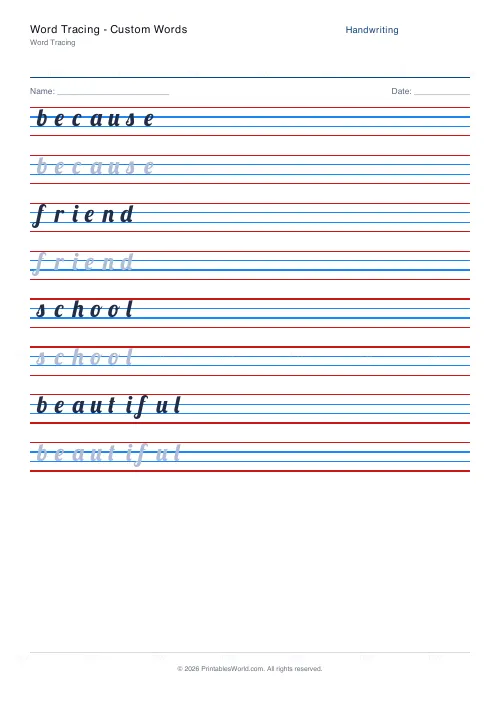 Word Tracing: Custom Words
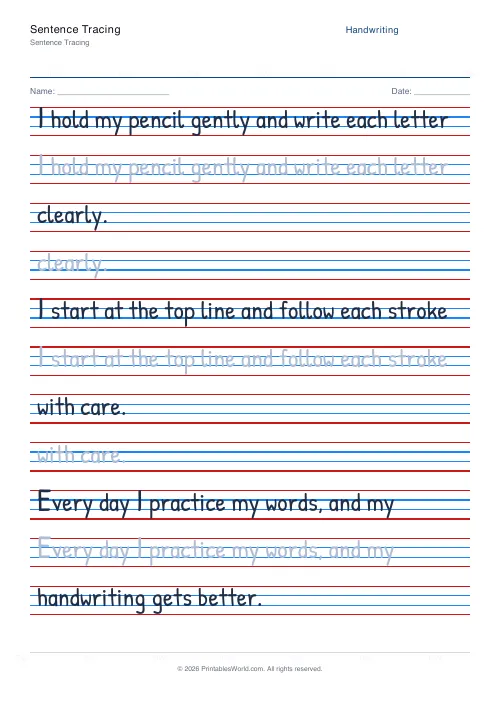 Sentence Tracing
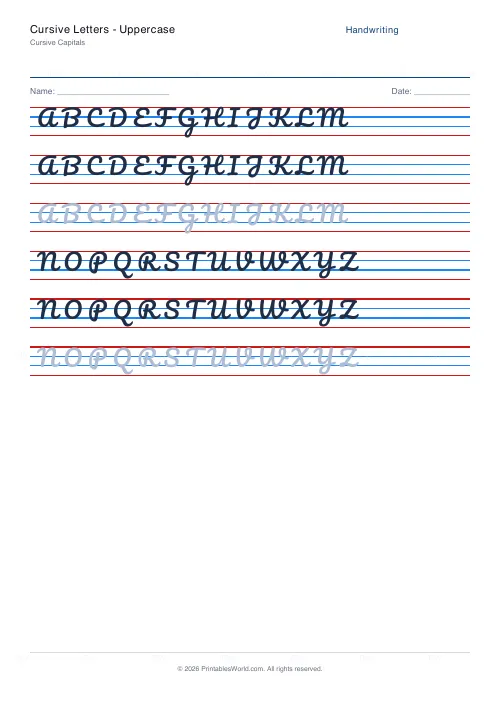 Cursive Letters: Uppercase
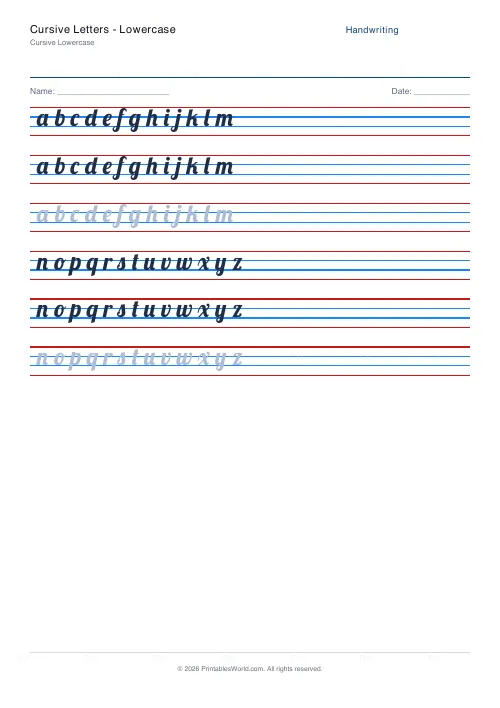 Cursive Letters: Lowercase
- Cursive Words Practice
 Cursive Sentences
 Dotted Letter Tracing
 Arrow Letter Tracing