What this tool does
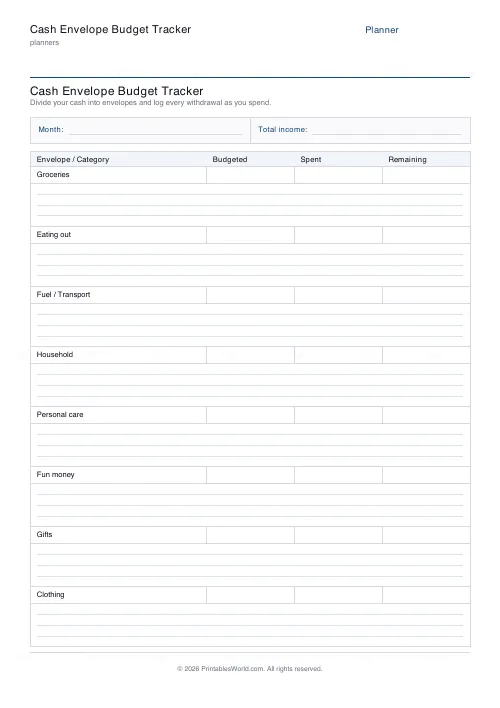
Envelope budgeting on one page: 6 to 12 envelope blocks, each showing budgeted, spent, remaining, plus a few ledger lines underneath for logging withdrawals.
People also used
Feedback
Spotted something off with this tool?
One block per envelope
A header strip for the month and the total income. Then a stack of envelope blocks, each with a summary row across the top — category, budgeted, spent, remaining — and a couple of ruled ledger lines under it where individual withdrawals get logged as they happen.
Eight envelopes by default, six to twelve available. The starting categories are deliberately ordinary: groceries, eating out, fuel, household, personal care, fun money, gifts, clothing.
What envelope budgeting is
You decide before the month starts how much each category gets. Envelope empty, category stops.
The traditional version used literal envelopes with actual cash in them, and the physical constraint was the entire mechanism, since you cannot spend money that is not in your hand. This sheet is the paper version of the same idea. It works with a card, provided you are honest about the numbers.
Why the constraint works
Because it moves the decision to a calmer moment.
Deciding at the start of the month that eating out gets £120 is a rational choice made on a Sunday morning. Deciding at 7pm on a Thursday, hungry, is not the same decision, and the budget exists precisely to remove it from that moment. An envelope with £9 left in it settles the question before it is asked.
The ledger lines matter
The summary row says where you stand. The lines underneath say how you got there.
Without them, "spent £140 on groceries" is a fact with no explanation attached, and next month you make the same choice again. Add three entries underneath and the pattern shows. It is usually one big shop, not the small ones people blame.
Setting the amounts
Base them on the last two months of actual spending rather than on what you would like to be true. A budget that quietly assumes you will halve the grocery bill fails in week two, and it takes the whole system down with it when it goes.
Total the envelopes against the income figure at the top. If the envelopes come to more, something has to give now rather than on the 23rd.
Running one dry
Borrowing from another envelope is allowed, and it has to be written down: unrecorded borrowing is exactly how a system like this quietly stops meaning anything at all. Mark the transfer in both blocks.
Related: expense tracker for recording what actually happened, and sinking funds for the bills that do not arrive monthly.
FAQs
Quick answers
How many envelopes can I fit on one sheet?
Between 6 and 12 envelope blocks per page. The default of 8 suits most households; the engine scales the row heights so each envelope still has room for its ledger lines.
What is the cash envelope budgeting method?
You divide your income into category envelopes of physical cash and spend only what is inside each one. When an envelope is empty, that category is done for the month. A simple, effective way to enforce spending limits.
What are the ledger lines under each envelope for?
They are for logging individual withdrawals. Date, what you bought, and the amount. Keeping this running record means the Remaining figure always matches the cash still in the envelope.
Is this a fillable PDF?
No. It prints as a clean worksheet you complete by hand. That keeps it universal, works offline, and needs no PDF editor or app.
Can I use it with any currency?
Yes. The amount columns are blank, so write figures in any currency you like. Pounds, dollars, euros or anything else.
Do I have to use physical cash?
The sheet is designed for real cash envelopes, but it works just as well as a 'virtual envelope' tracker if you prefer to keep the money in one account and simply cap each category on paper.
Does it print on A4 and US Letter?
Yes. Choose A4 or US Letter before you download and print at 100% scale so the columns line up correctly.
Related tools
Monthly Budget Planner
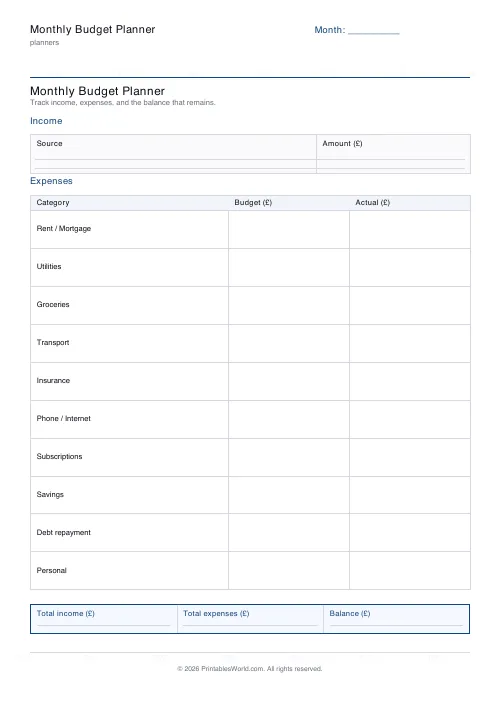
One-page printable budget: income, categorised expenses, balance summary.
Grocery List
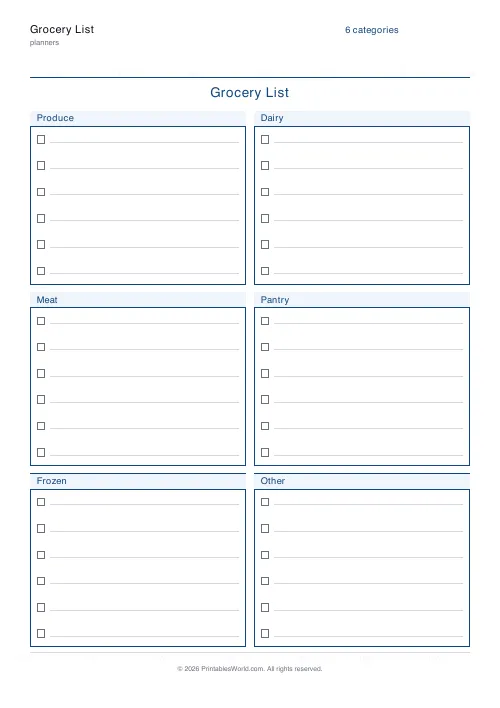
Printable categorised grocery list with tick boxes for every item.
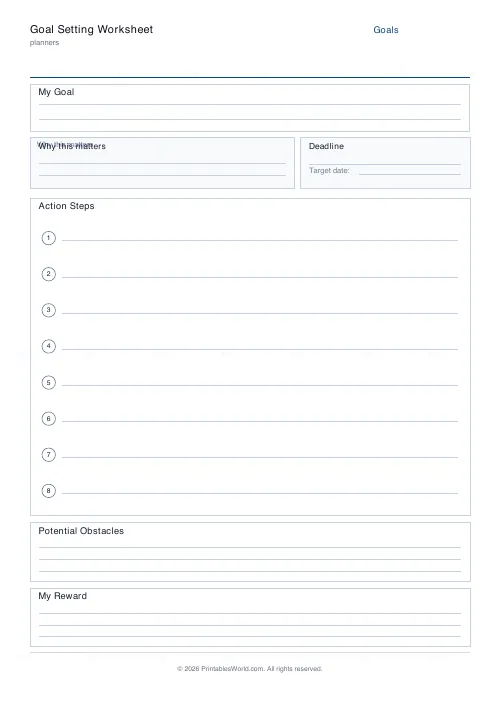
Goal Setting Worksheet
One-page goal worksheet: goal, why, deadline, steps, obstacles, and rewards.
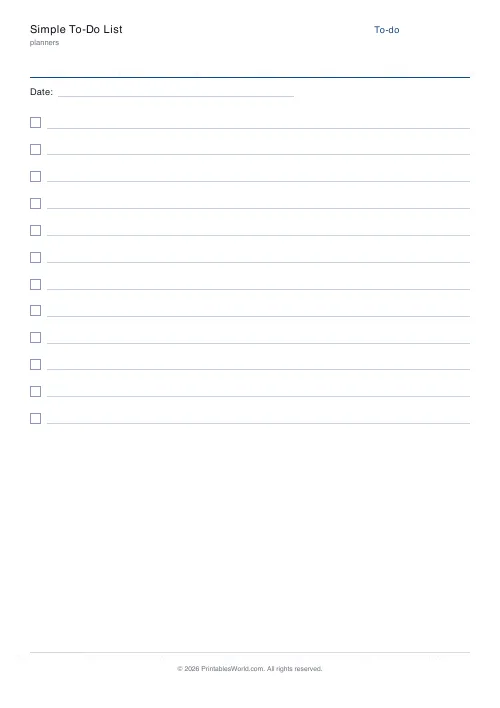
Simple To-Do List
Minimal printable to-do list with tick boxes and a configurable item count.
Further reading
Planners
How to pay off debt faster with a payoff tracker
One method costs less; the other is easier to stick to. Here is how to choose between them honestly, and why a visual tracker changes the odds either way.
5 min read
Planners
Meal planning 101: save time and money every week
A weekly meal plan saves money mainly by changing how you shop. Here is a thirty-minute method, the shortcuts that keep it going, and the mistake that ends most plans in week three.
5 min read
Planners
Time blocking for beginners: a complete guide
Time blocking is deciding when each task happens, not just what. Here is how to size blocks realistically, what to do when the day breaks, and why most beginners over-schedule.
5 min read