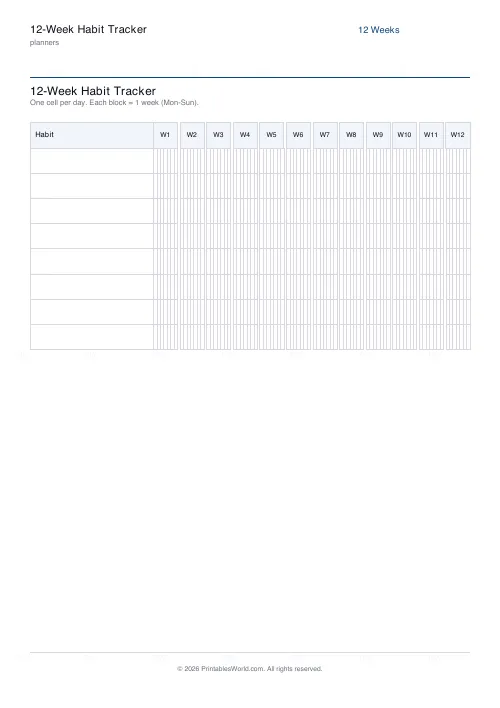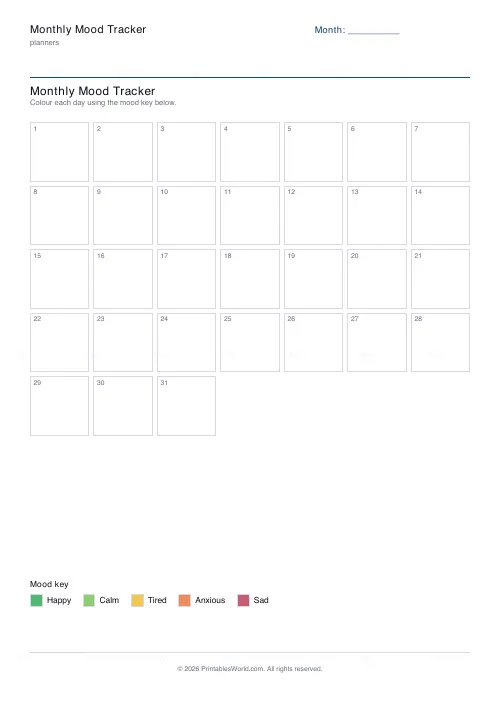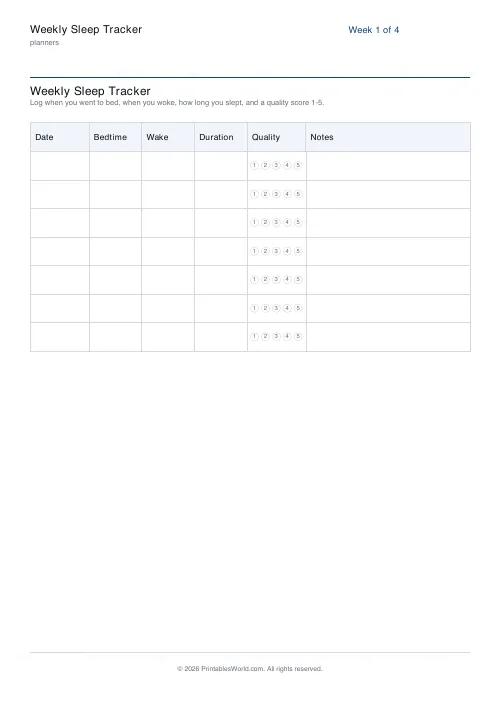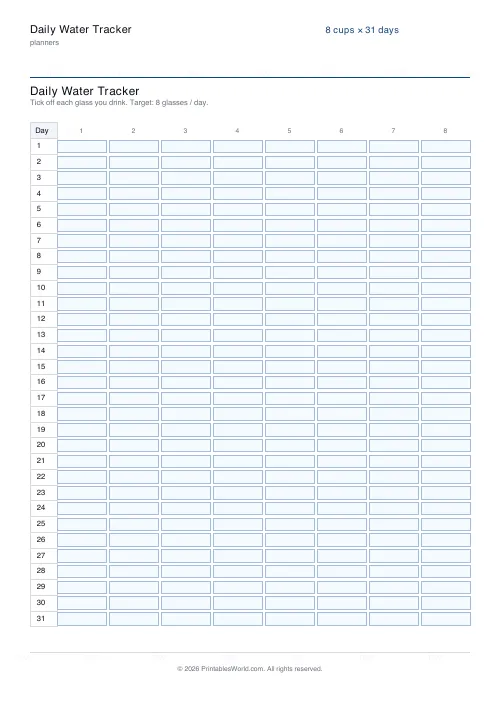
What this tool does
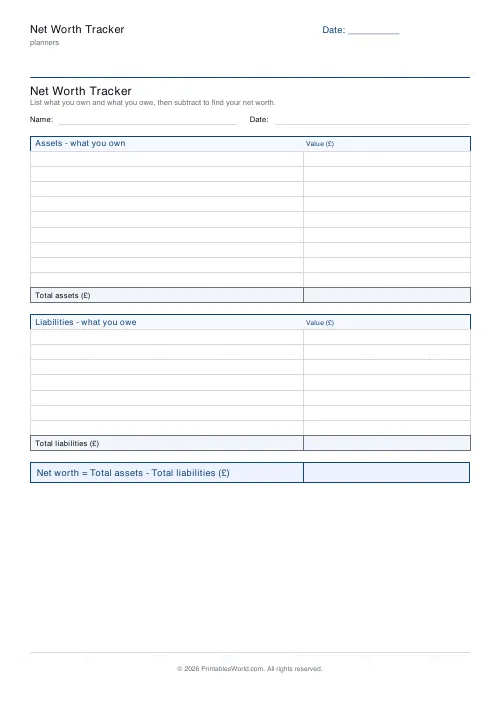
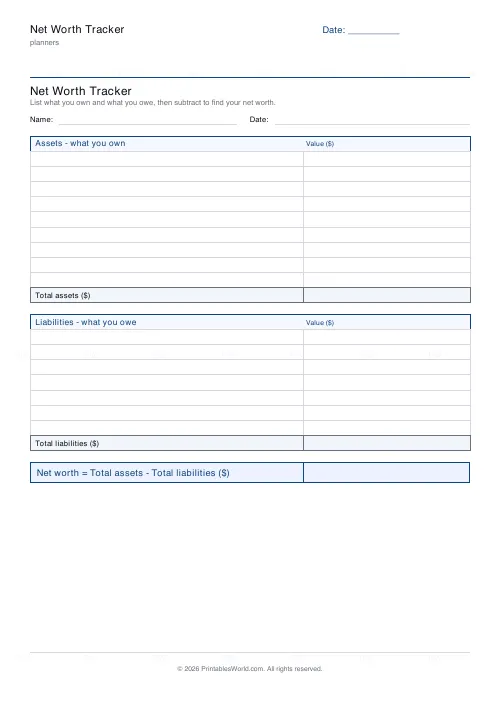
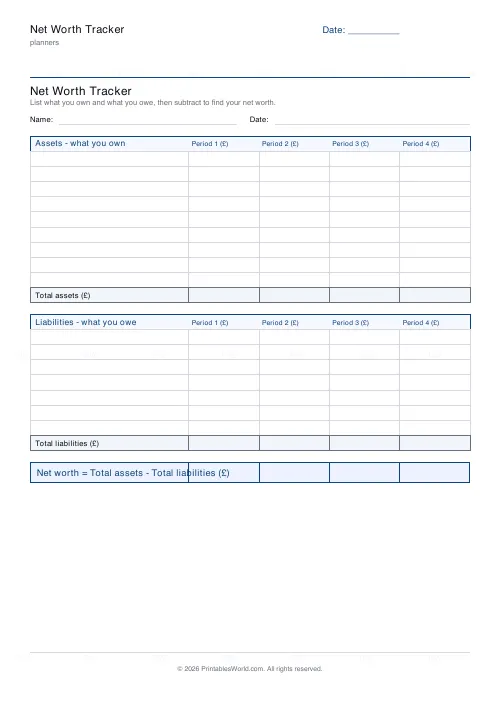
Assets on one side, liabilities on the other, and the difference between them. 5 to 15 rows each, and up to four month columns so you can track the same items across the year.
People also used
Monthly Budget Planner
One-page printable budget: income, categorised expenses, balance summary.
Monthly Bill Tracker
Printable bill tracker: due date, amount, paid check, payment method, notes.
Debt Payoff Tracker
Debt snowball chart: starting balances, minimum payments, monthly progress, running total.
Feedback
Spotted something off with this tool?
Two lists and a subtraction
An assets list, a liabilities list, and a net worth row. Five to fifteen rows a side. Sterling, dollars, euros.
Add up to four month columns and the same items get tracked across the year on one sheet, which is where the number starts to mean something.
What net worth actually measures
Everything you own, minus everything you owe. Not income — which is what most people track instead, and it answers a different question.
The distinction matters because a large income and a large net worth are only loosely related. Someone earning well and spending it all has a flat net worth; someone on a modest salary paying down a mortgage has a rising one. Income tells you about this month. This number tells you about the direction.
Listing assets honestly
Current accounts. Savings and ISAs, investments, pensions, the house at what it would actually sell for, a car at trade value.
Two cautions. Pensions are usually the largest single asset for anyone over forty and are routinely left off because they do not feel like money yet — put them in, at the current transfer value. And value the house conservatively; the figure you would like it to be worth makes the whole exercise decorative.
Liabilities are easier and less pleasant
Mortgage balance, loans, credit cards, car finance, overdraft, student loan, anything on a buy-now-pay-later arrangement.
Include everything, including the card you clear monthly. A liability you leave off does not stop existing, and the point of the sheet is to be the one place the whole picture is written down.
Quarterly is often enough
Monthly is fine if you enjoy it. Quarterly is plenty, and it has an advantage. Markets move, and anyone checking investments every month is watching noise and, worse, occasionally acting on it.
The four month columns are there so you can see the trend rather than the reading. A single net worth figure tells you almost nothing; four in a row tells you whether what you are doing is working.
Expect it to be negative for a while
Anyone with a student loan and a new mortgage is starting from below zero, and that is entirely normal rather than a failure.
The direction is the thing to watch. A number improving by a few hundred a quarter is a household that is fine; one going the other way for three quarters running is a signal worth acting on while it is still small.
Related: the expense tracker for where the money goes, and the sinking funds tracker for the bills that arrive annually.
FAQs
Quick answers
How do I work out my net worth?
Add up everything you own (assets), add up everything you owe (liabilities), then subtract the second total from the first. The bottom band of the sheet is where you write that final figure.
Can I track my net worth over several months?
Yes. Choose 1 to 4 period columns. With more than one column you reuse the same asset and liability rows and write a fresh value in each period to see the trend.
What value should I put for my house or car?
Use a realistic current resale or market value, not what you originally paid. For liabilities, always use the outstanding balance rather than the amount first borrowed.
Which currencies are supported?
GBP (£), USD ($) and EUR (€). The chosen symbol appears in every value column header.
Related tools
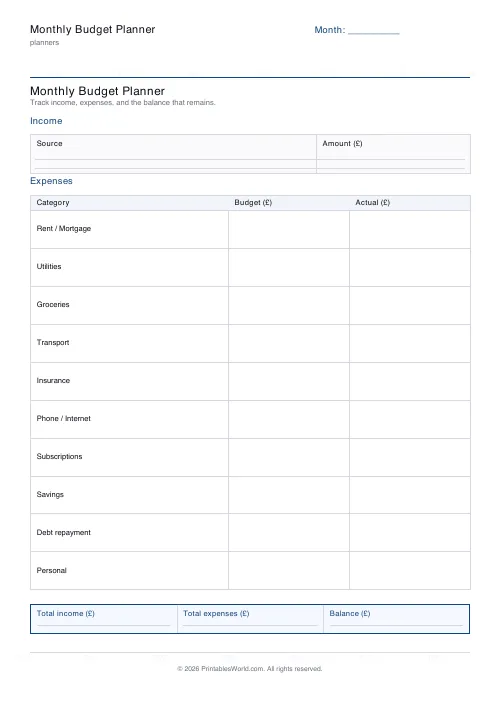
Monthly Budget Planner
One-page printable budget: income, categorised expenses, balance summary.
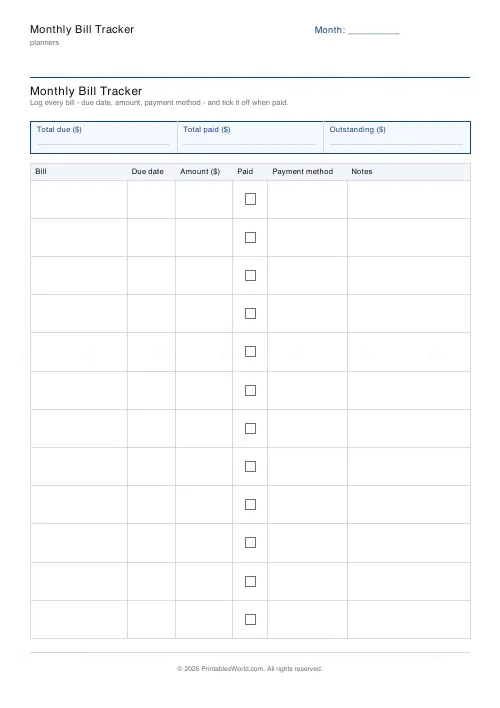
Monthly Bill Tracker
Printable bill tracker: due date, amount, paid check, payment method, notes.
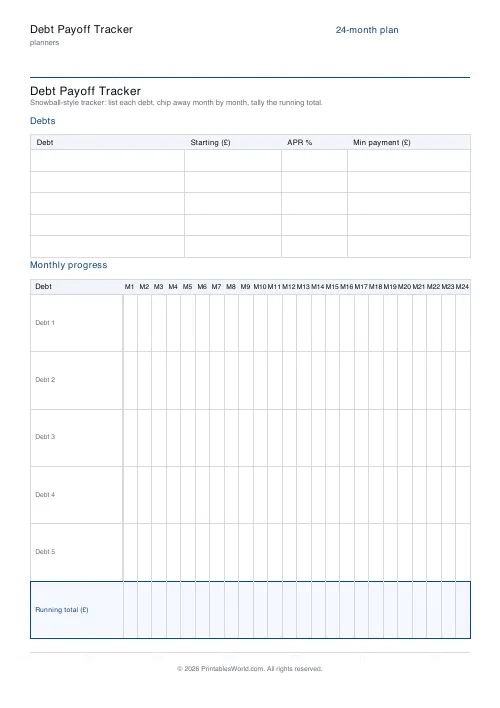
Debt Payoff Tracker
Debt snowball chart: starting balances, minimum payments, monthly progress, running total.
Further reading
Planners
How to pay off debt faster with a payoff tracker
One method costs less; the other is easier to stick to. Here is how to choose between them honestly, and why a visual tracker changes the odds either way.
5 min read
Planners
Baby's first year: tracking sleep, feeds and milestones
Tracking helps most in the early weeks and can become a burden after them. Here is what is genuinely worth logging, why, and when to stop.
5 min read