What this tool does
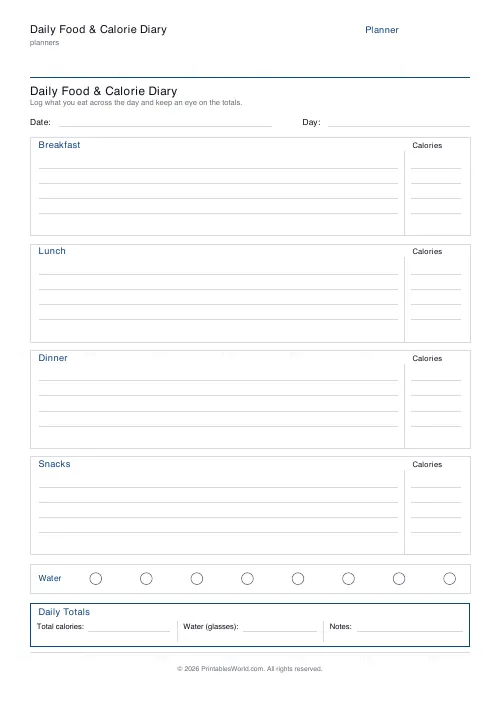
A day of eating on one page: breakfast, lunch, dinner, snacks, each with ruled lines, an optional calories column, eight water droplets to tick, and a totals box.
People also used
Feedback
Spotted something off with this tool?
Four meals, water, totals
A date at the top. Then four sections — breakfast, lunch, dinner, snacks — each with ruled lines and a calories column running down the right. Eight droplets to tick for water. A totals box at the foot.
Both the calorie column and the water row can be switched off, which turns the sheet into a plain food journal.
Writing it down changes what you eat
This is one of the better-established findings in the area, and it does not depend on counting anything.
The act of recording introduces a pause before eating, and the pause is where the effect lives. People who keep food diaries eat somewhat differently from people who intend to eat differently, and the sheet does not have to be shown to anyone for that to hold.
It also fails in a specific way: unrecorded days. A diary kept on the good days and abandoned on the bad ones is worse than none, because it tells you a flattering story you will believe.
The snacks section is the honest one
It has its own section rather than being folded into meals, deliberately.
Most people can recount their three meals accurately and lose everything else — the biscuit with coffee, the handful from a colleague's desk, what was finished off a child's plate. That is often where the real difference between two people's days sits, and it is invisible unless there is a line for it.
Calories, if you want them
The column is optional because the sheet works either way.
Counting adds precision. It also adds friction, and for some people a preoccupation that does no good at all. Leave it off and you still get the pattern, which for most purposes was the useful part. Use it and treat the numbers as approximate: packet figures carry real tolerances, and portions estimated by eye are commonly out by a quarter.
The water row
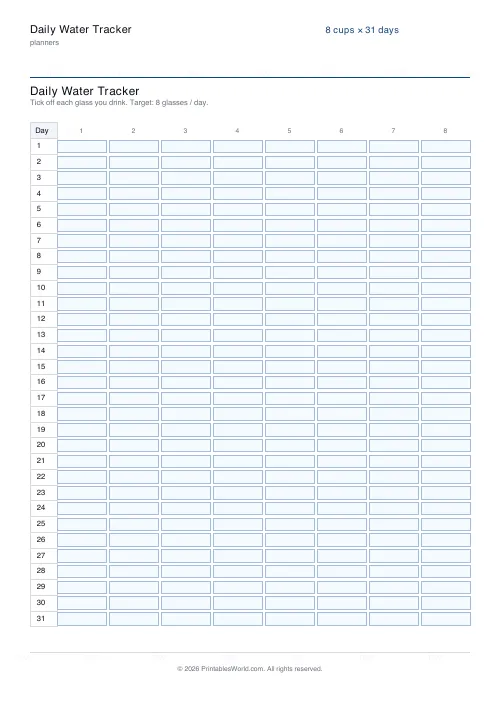
Eight droplets, one per glass. It is a rough target rather than a medical requirement — needs vary with body size, with activity, with the weather, and a good deal of your intake arrives through food and other drinks anyway.
Ticking a box is nevertheless an effective reminder, and dehydration is a common and easily fixed cause of an afternoon slump.
A note
This is a journal, not clinical advice. If you are managing a condition, an allergy or a prescribed diet, keep it alongside your dietitian or doctor rather than instead of them — and if food tracking is something that has caused you difficulty in the past, this may not be the right tool for you.
FAQs
Quick answers
Can I hide the calories column?
Yes. Turn off "Show Calories column" and each meal section becomes a plain food log with full-width ruled lines, ideal if you just want to record what you ate.
What does the water row do?
It prints eight droplet circles you tick off as you drink through the day. You can switch it off if you would rather not track hydration.
Does the diary calculate calories for me?
No. It is a printable worksheet, not a calorie database. You write in the calorie figures from a label or app and add up the total yourself in the Daily Totals box.
Which meals are included?
Four sections: Breakfast, Lunch, Dinner and Snacks. Each gets a titled band with several ruled writing lines that scale to fill the page.
Is this a fillable PDF?
No. It prints as a clean sheet you complete by hand. That keeps it universal, works offline and needs no PDF editor or account.
How many days fit on a page?
One day per page, with room to write a few items per meal. Print seven copies for a full week and clip them together.
What paper sizes are supported?
A4 and US Letter. Print at 100% scale so the meal boxes and the calories column stay aligned.
Related tools
Weekly Meal Planner
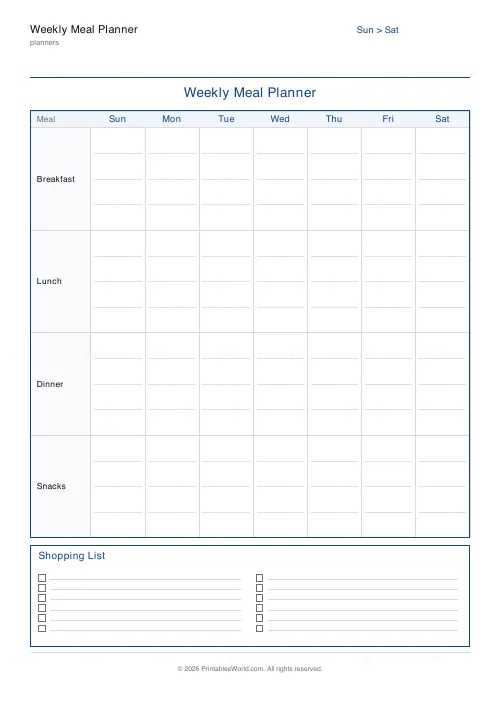
Plan seven days of breakfast, lunch and dinner on one printable page.
30-Day Habit Tracker
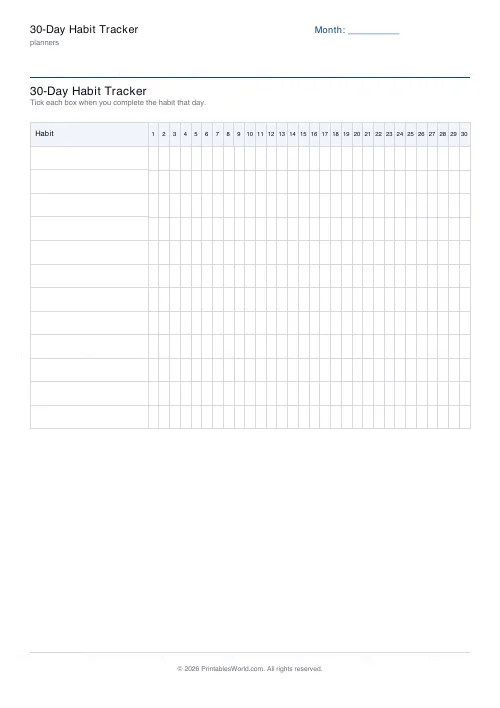
A printable 30-day habit grid to tick off every morning. One row per habit.
Grocery List
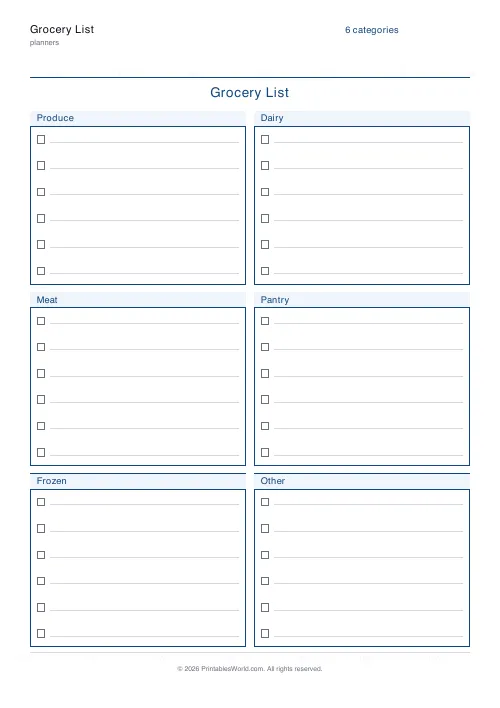
Printable categorised grocery list with tick boxes for every item.
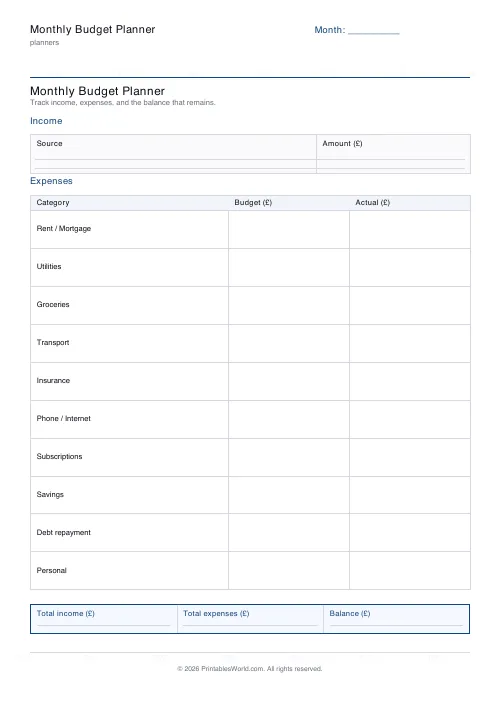
Monthly Budget Planner
One-page printable budget: income, categorised expenses, balance summary.
Further reading
Planners
How to build a daily routine that actually sticks
Most routines fail in week two, when motivation runs out and nothing has replaced it. The fix is structural: fewer items, fixed anchors, and a plan for the day you miss.
6 min read
Planners
Study planning for exams: a student's complete guide
A revision timetable is only as good as what goes in the slots. Here is how to build one backwards from the exam date, and which study methods the evidence actually supports.
5 min read
Planners
How to pay off debt faster with a payoff tracker
One method costs less; the other is easier to stick to. Here is how to choose between them honestly, and why a visual tracker changes the odds either way.
5 min read