What this tool does
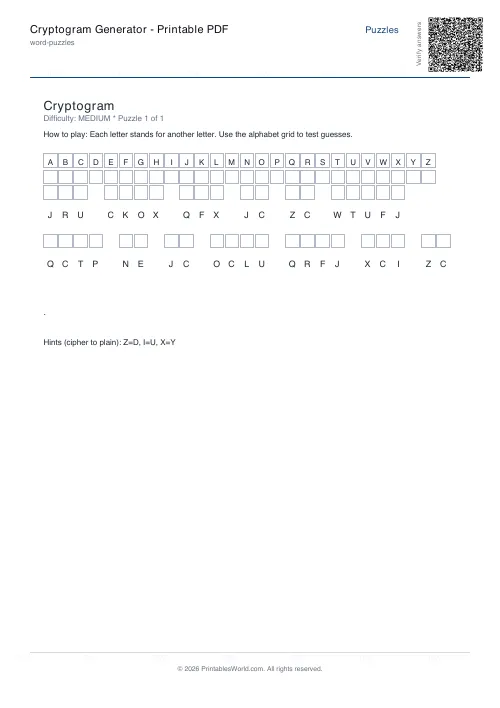
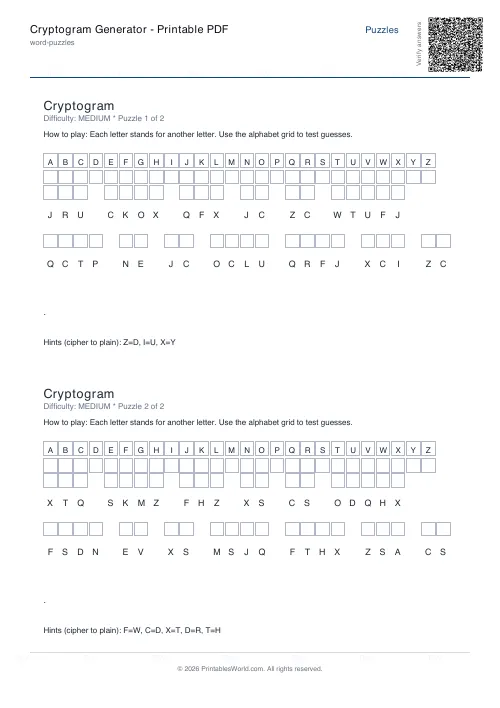
Substitution-cipher puzzles from a bank of 220 quotes across ten categories, or from your own text up to 350 characters. Three difficulty levels controlling how many starter letters are revealed, one or two puzzles a sheet, three font sizes, an optional solution page and a full cipher key. Seeded, so the same seed reproduces the same cipher exactly.
People also used
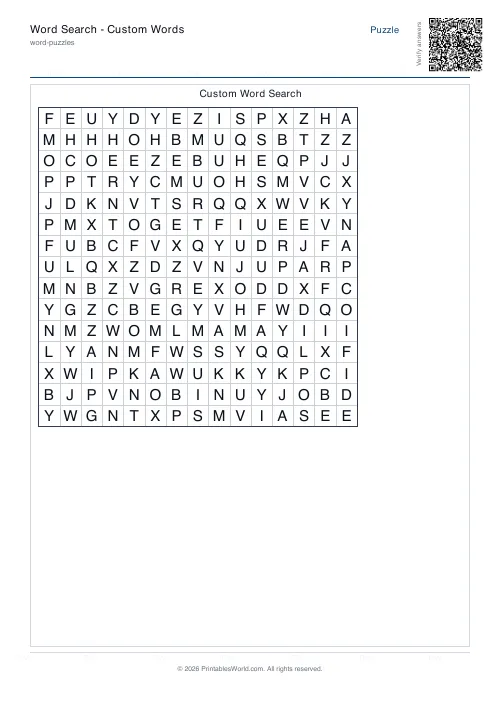
Word Search: Custom Words
Enter your own word list and generate a printable word search.
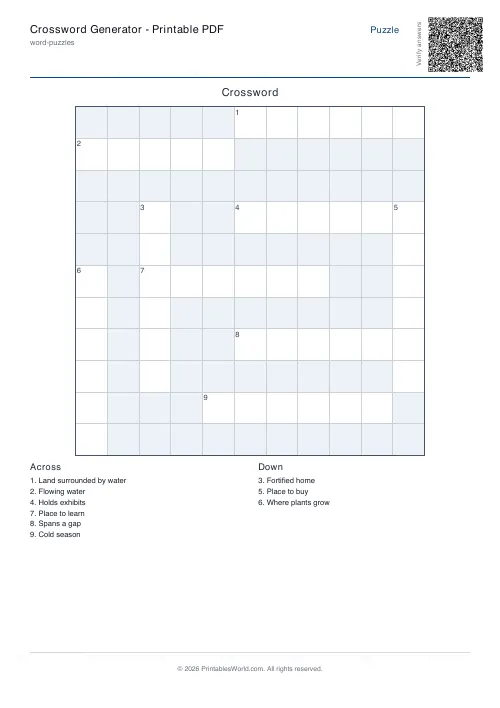
Crossword Generator: Printable PDF
Custom word lists into printable crossword puzzles with numbered clues.
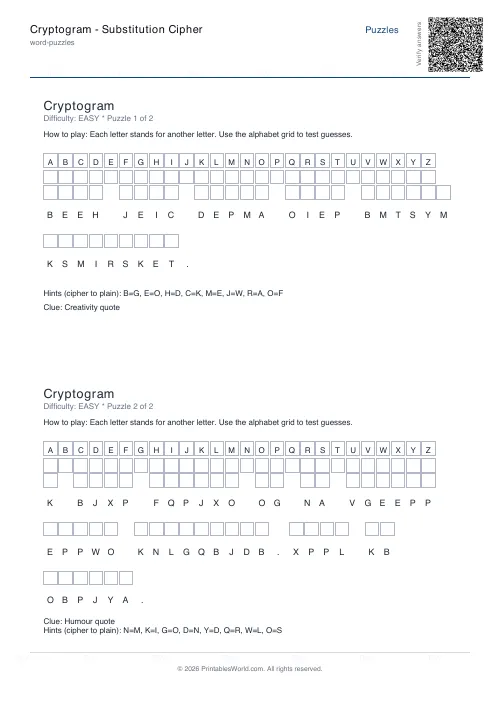
Cryptogram: Substitution Cipher
Random-quote substitution ciphers with optional hints and a solution page. A code-breaking sheet you can print without typing anything.
Feedback
Spotted something off with this tool?
Every letter stands for another one
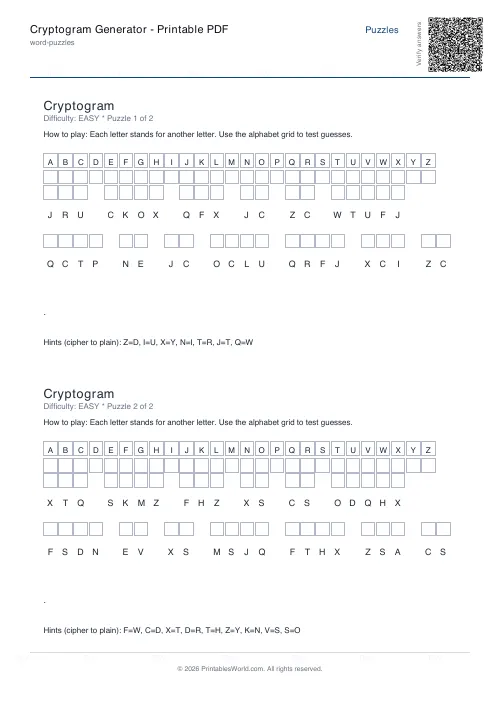
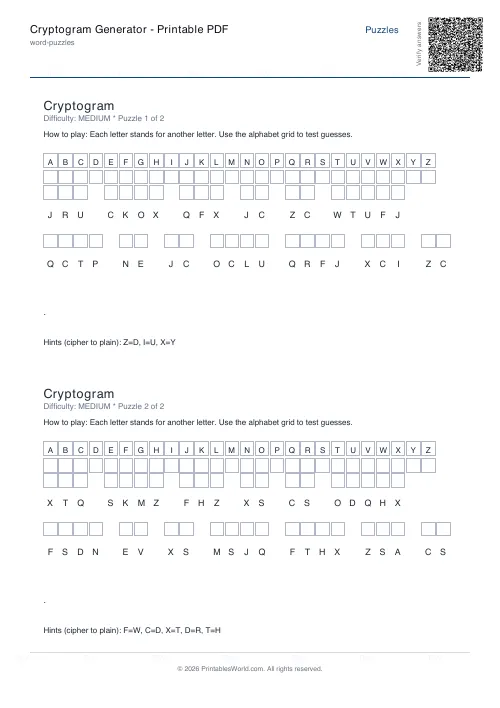
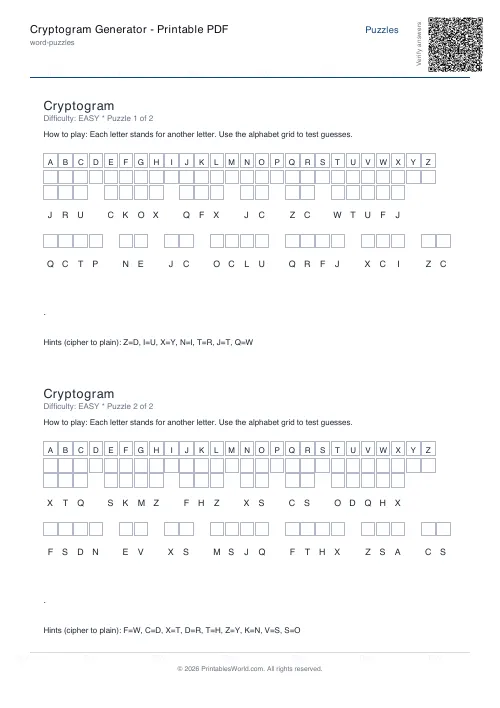
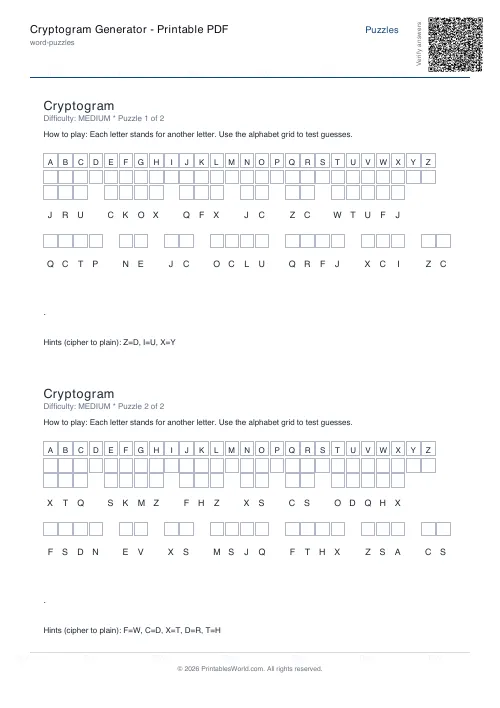
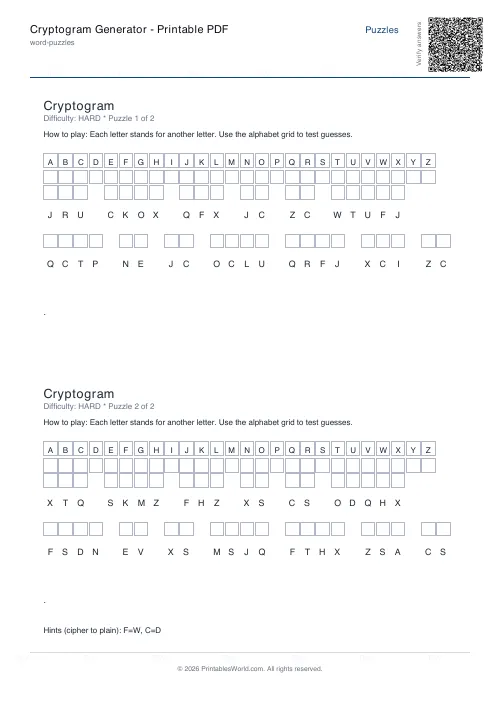
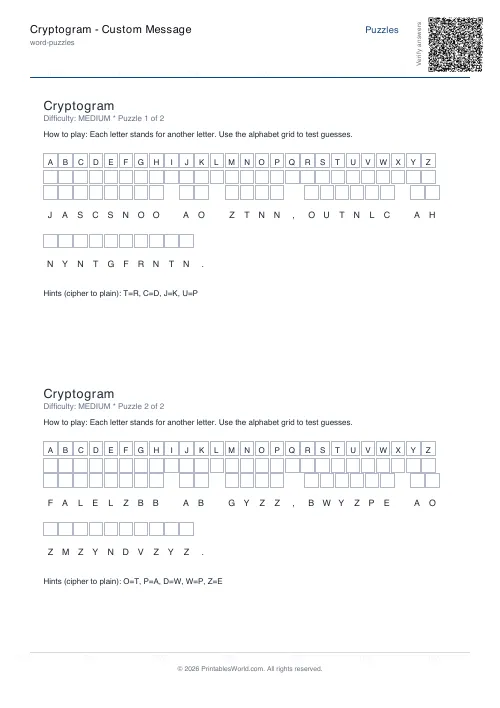
The tool builds a random one-to-one mapping of the alphabet, encodes the message with it, and prints the result with blank spaces underneath each letter for the solver to write in.
Take the message from the built-in bank or paste your own. Either way you get a branded PDF with the puzzle, optional how-to-play instructions, optional frequency hints, and the solution and key on separate pages if you want them.
Ten categories, 220 quotes
Calm, Creativity, Humour, Kindness, Learning, Motivation, Nature, Perspective, Productivity, Wisdom. Twenty-two quotes in each, or pick All and draw from the lot.
Twenty-two per category is enough for a term of weekly puzzles from a single theme before anything repeats, which is worth knowing if you are running a club rather than a one-off lesson. Choosing a category that matches what the class is reading about turns a filler into something connected.
Your own text, up to 350 characters
Paste a line from the class novel, a message to the group, a clue in a treasure hunt. Anything longer than 350 characters is truncated rather than refused, so check the preview if you are near the limit.
One thing to know about length: a longer message is an easier puzzle, not a harder one, because frequency analysis needs data to work on. A six-word cipher can easily contain no E at all and defeat the standard opening move, while a thirty-word one gives a solver plenty to count.
Difficulty is how much you are given
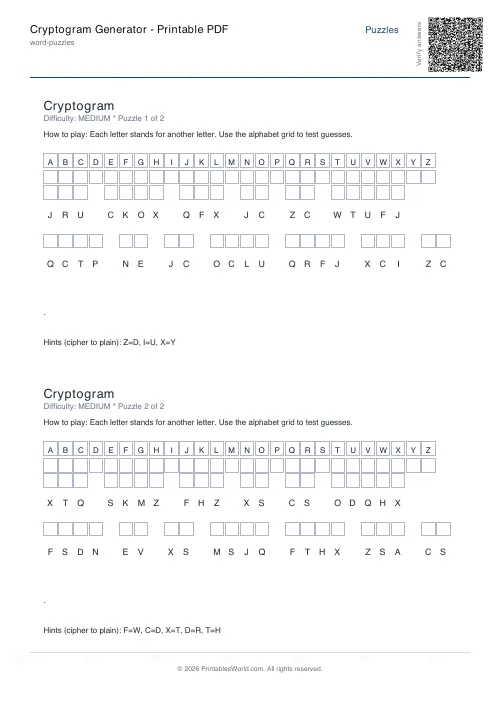
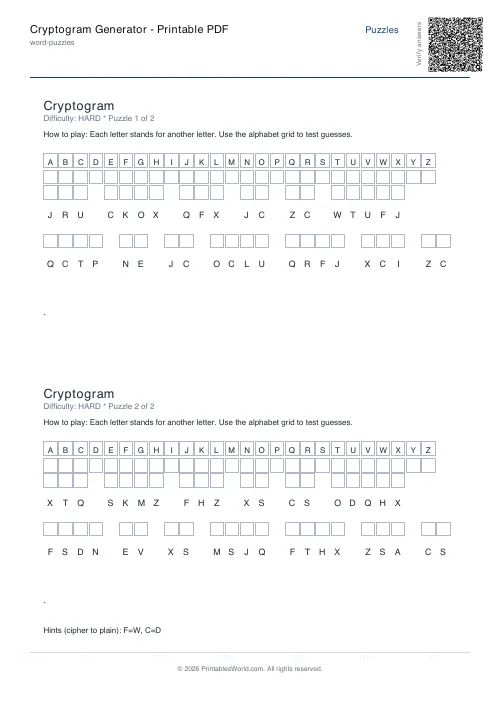
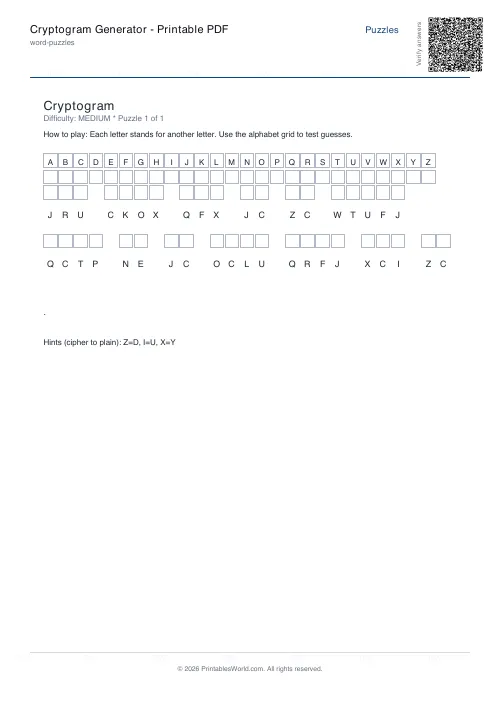
Easy reveals several starter letter pairs. Medium reveals fewer. Hard gives you almost nothing at all.
This is a better differentiator than message length, because it changes how hard it is to start rather than how hard it is to finish. A child who cannot make the first move gives up; a child given two letters for free will usually get to the end. Hints on for a mixed class, off for a puzzle group, and the solution page kept back either way.
The frequency-hint box and the how-to-play block both toggle separately, which is how you wean a group off the scaffolding week by week.
The seed makes it shareable
Type a seed and that exact cipher comes back forever. Leave it blank and you get a new one every time.
Which means two people in different places can solve the identical puzzle, or a class can all be given the same cipher and the discussion afterwards is about one board rather than thirty. It also lets you reprint a lost sheet without hunting for the file.
A Friday puzzle for Year 6
Custom text, a short line from the class novel pasted in, medium difficulty. How-to-play left on because two pupils have never met a cryptogram, frequency hints on, solution page and answer key both included.
Fifteen copies, pairs work for twenty minutes, and the review at the end projects the key so the whole room can see how the mapping fell out. Three pages come out of one generate: puzzle, solution, key.
Worth knowing
- Only A to Z is substituted. Numbers print as they are, so do spaces and punctuation, and that is what keeps the word shapes visible and the puzzle solvable at all.
- Custom text is clamped at 350 characters.
- Nothing checks solvability at the edges. A very short message with few distinct letters can produce an unfair puzzle, and most natural sentences do not.
- Seed reproduction needs the identical string. A blank field means a fresh cipher every time.
FAQs
Quick answers
How many starter hints do I get at each difficulty level?
Easy mode reveals several common-letter pairs (typically E, T, A, O); Medium shows a couple of hints; Hard gives you one or none. The exact count depends on the unique letters in your text.
Can I use the same cryptogram puzzle again next week?
Yes. Copy the seed value from the current session (or invent your own string or number), paste it into the seed field on your next visit, keep all other settings identical, and click Generate. You'll get the exact same cipher mapping and puzzle layout.
What happens if my custom text is longer than 350 characters?
The generator trims it to 350 characters and truncates mid-word if necessary. You'll see the clipped version in the PDF. For longer passages, split them into multiple puzzles or edit down to the key sentence.
Do I need special paper or ink to print cryptograms?
No. Standard A4 or US Letter copy paper works fine. The layout is black-and-white line art, so any home or office printer will produce clean results. If you want to save ink, choose a smaller font size and fewer puzzles per page.
Can I include the answer key on the same page as the puzzle?
Yes. Toggle <strong>Include answer key</strong> on, and the full cipher-to-plain letter mapping prints at the bottom of the puzzle page. If you also enable <strong>Include solution page</strong>, the decoded text appears on a separate sheet, so you can hand out puzzles without revealing answers immediately.
Why does the quote I selected not appear in my PDF?
If you left <strong>Random quote</strong> toggled on, the generator picks from the chosen category at generation time. Toggle it off to cycle sequentially through the pool, or switch to <strong>Custom text</strong> mode and paste the exact quote you want.
Are frequency hints the same as starter letter pairs?
No. Starter hints (controlled by difficulty) give you a few solved letters in the puzzle grid. Frequency hints (toggled separately) print a table showing how often each cipher letter appears, which helps solvers guess common letters like E and T without revealing the actual mapping.
Related tools
Word Search: Custom Words
Enter your own word list and generate a printable word search.
Crossword Generator: Printable PDF
Custom word lists into printable crossword puzzles with numbered clues.
Cryptogram: Substitution Cipher
Random-quote substitution ciphers with optional hints and a solution page. A code-breaking sheet you can print without typing anything.
Further reading
Classroom Activities
Escape room activities for the classroom: a how-to
A classroom escape room is a sequence of puzzles with a story on top. The design decision that matters most is whether groups work through them in order or all at once.
5 min read
Word Puzzles
Crosswords for kids: age-by-age difficulty guide
The grid size matters less than the clues. Here is what suits each age, and the four clue types that work with children. Plus the one that does not.
5 min read
More like this
- Crossword Generator: Printable PDF
 Word Scramble Generator: Printable
 Missing Letter Generator
- Word Search: Custom Words
 Cryptogram: Custom Message
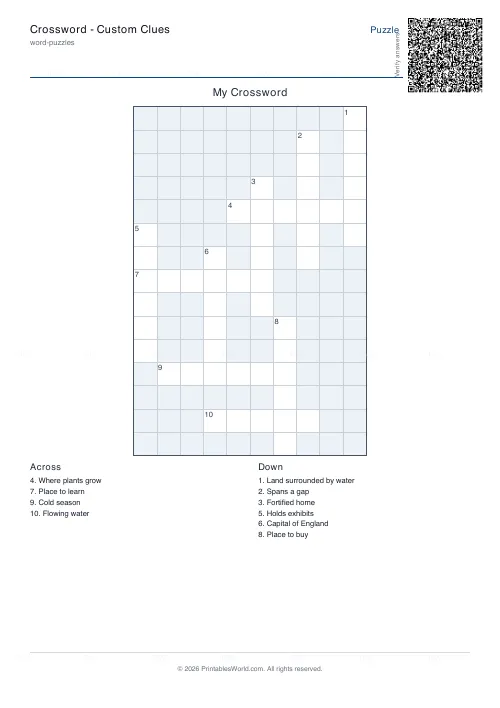 Crossword: Custom Clues
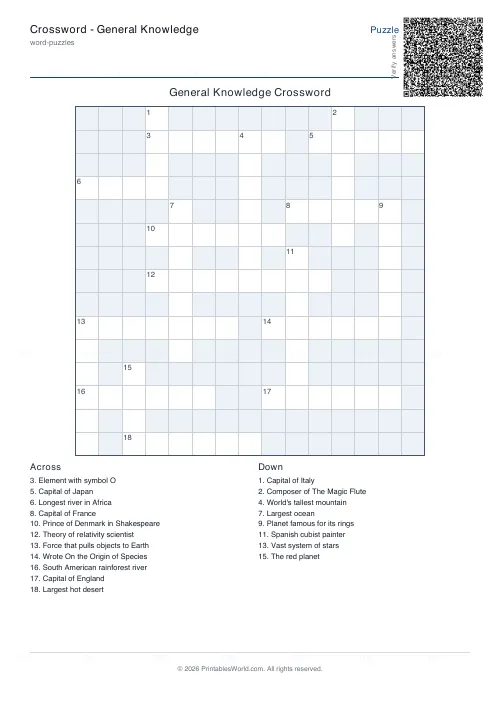 Crossword: General Knowledge
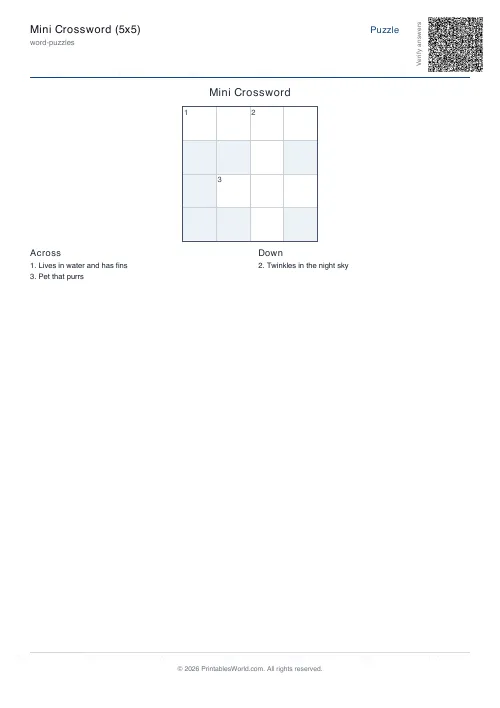 Mini Crossword
- Cryptogram: Substitution Cipher
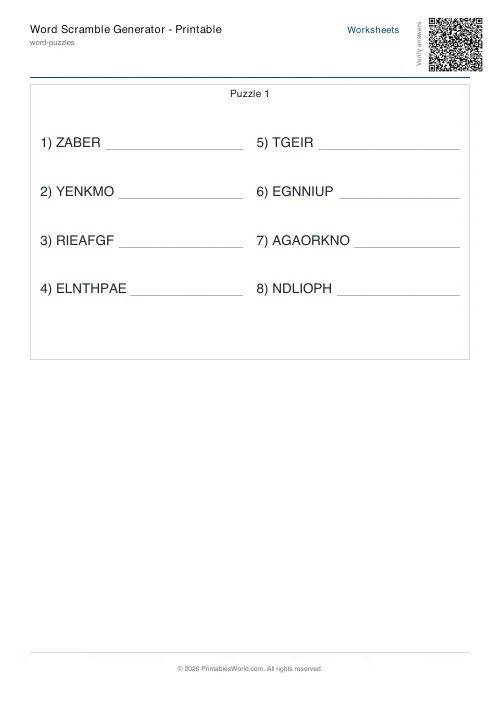
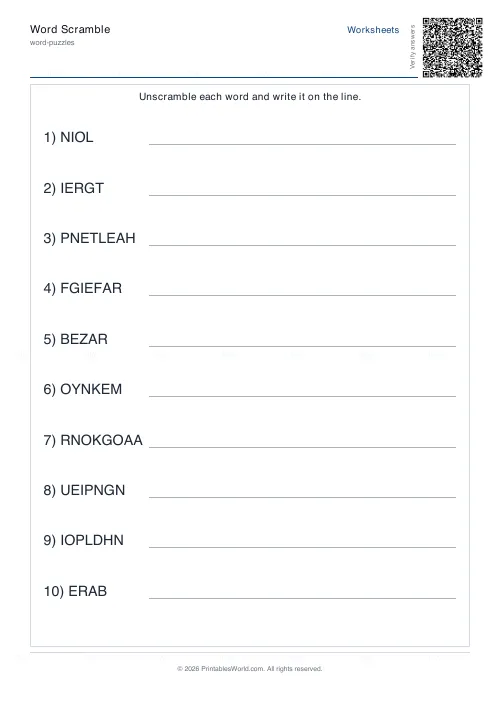 Word Scramble Generator
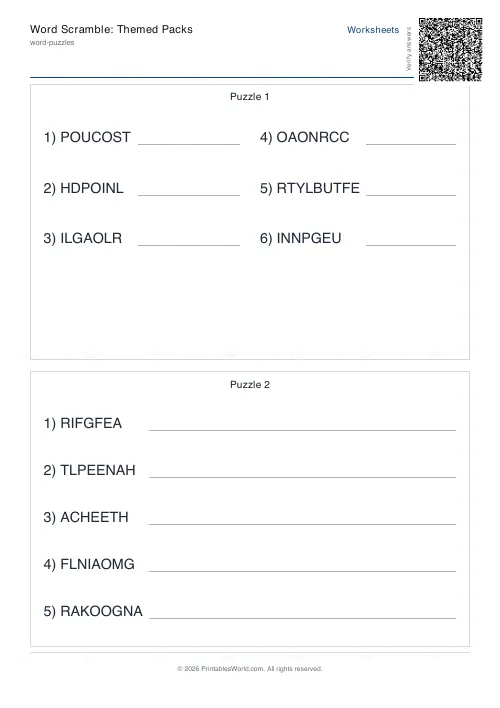 Word Scramble: Themed Packs
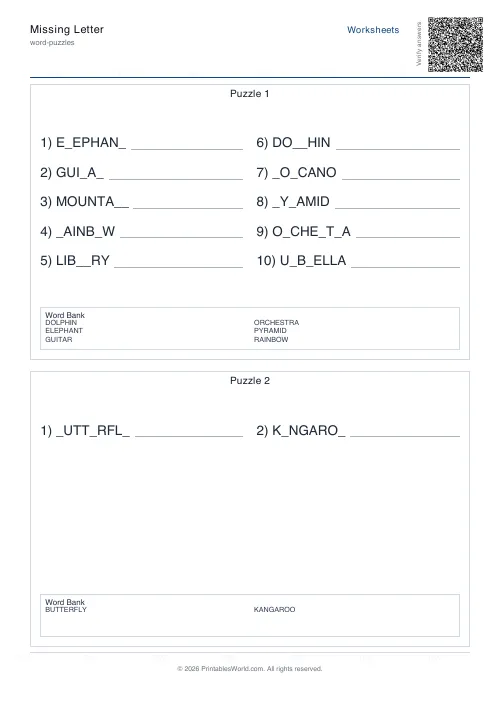
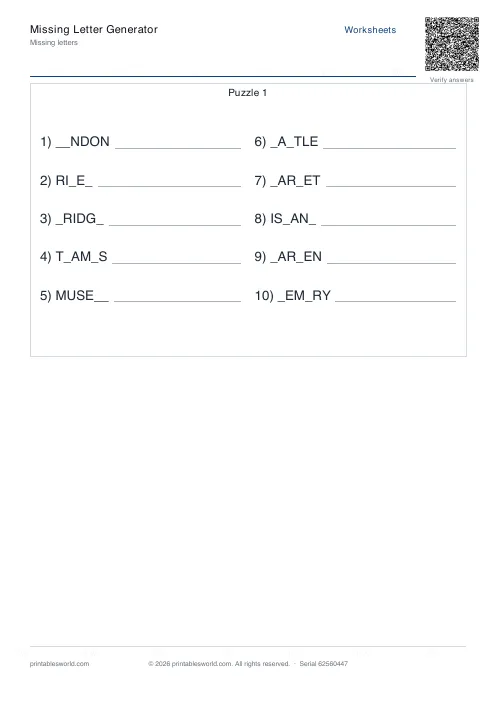 Missing Letters Puzzle
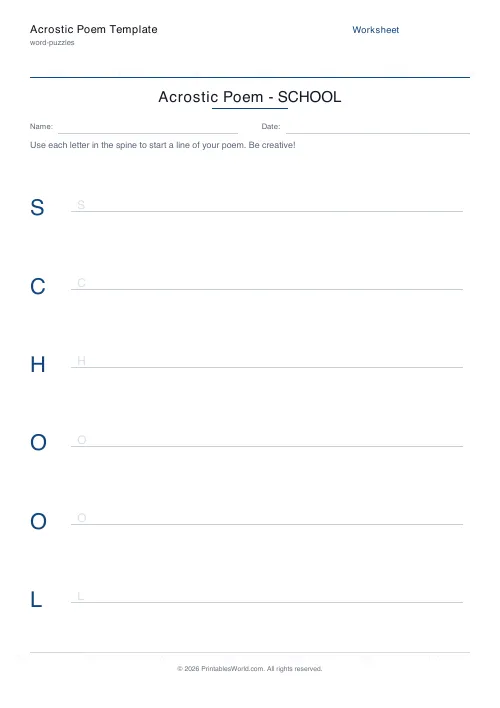 Acrostic Poem Template
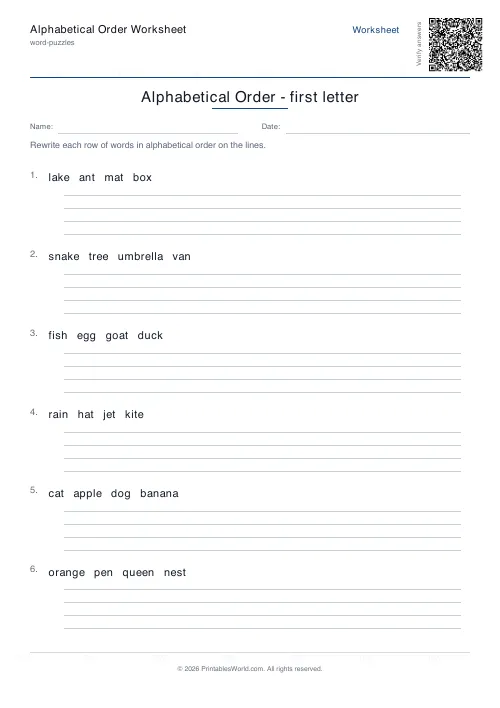 Alphabetical Order Worksheet