Classroom Activities
Escape room activities for the classroom: a how-to
By Jobi · Creator & Maintainer, PrintablesWorld · Updated 2026-07-08 · 5 min read
A classroom escape room is a set of puzzles that unlock something. A box, a final code, a door that was never actually locked. The theatre is free; the value is that children will do far more work inside a story than on the same questions presented as a worksheet. A free printable escape room kit gives you the scaffolding.
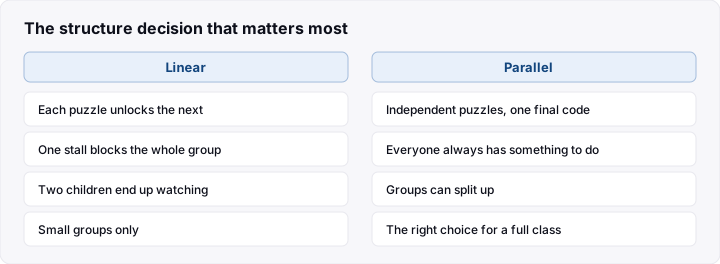
Linear or parallel: the key decision
Everything else follows from this.
Linear: puzzle one gives the code to puzzle two, and so on. Easy to build, tells a clean story, and has one serious flaw in a classroom: if a group stalls on puzzle two they are stuck with nothing to do, and in a group of five, two children will end up watching.
Parallel: four or five independent puzzles, each yielding one digit or letter of a final code. Groups can split up, everyone has something to work on, and one hard puzzle does not block the whole activity.
For a full class, parallel is almost always the better choice. It is more robust, more inclusive, and finishes closer to on time. Use linear only for a small group or a short activity where you can watch and intervene.
A good hybrid: parallel puzzles producing four digits, then one final linear puzzle everyone does together.
Puzzle types that work
- Ciphers: letter substitution, a key on another sheet. Reliable, and children love them.
- Word puzzles: a word search where the unused letters spell the answer works particularly well.
- Maths chains: a series of calculations producing a number that is the padlock code.
- Jigsaw reassembly: cut a sheet into pieces; the assembled image shows the clue.
- Hidden in plain sight: a clue written on a display already on your wall. Consistently the favourite.
- Physical search: an envelope taped under a chair. One of these is plenty; more becomes a scavenger hunt.
- Invisible-ish ink: white crayon revealed by colouring over it. Cheap and effective.
Vary the type so different strengths get a turn. Four ciphers rewards the same child four times.
Making it actually teach something
An escape room built from generic riddles is a nice afternoon. Built from your current topic, it is a revision lesson children ask to repeat.
The straightforward method: take the questions you would have put on a revision worksheet, and make each answer produce a code. Ten times-tables questions where the answers, in order, give a padlock combination. A set of vocabulary definitions whose initial letters spell the next clue.
The content is identical to the worksheet. The engagement is not, because the questions are now instrumental. They are in the way of something the children want.
It also works well as pre-assessment at the start of a topic, where getting stuck is informative rather than discouraging.
Timing and difficulty
Aim for 40–45 minutes in an hour lesson: five to set up and explain, forty to solve, ten to debrief. Groups of four; three to five works, six means passengers.
Pitch it so the fastest group finishes with about ten minutes spare. That sounds generous and is not. Escape rooms always take longer than the designer expects, because you know all the answers.
Have something ready for the group that finishes early: a bonus puzzle, or the job of writing a hint for a struggling group, which keeps them thinking without giving the answer away.
When a group gets stuck
Plan the hints before the lesson rather than improvising while five groups need you.
Write three levels per puzzle: a nudge ("have you looked at everything on that sheet?"), a stronger clue ("the numbers relate to the alphabet"), and the answer. Printed on cards, they can be handed over without a conversation, which matters when several groups stall at once.
A common device is to make hints cost something. One minute added to their time. It keeps groups trying a little longer, and turns asking into a decision rather than a failure.
Watch for the group that is stuck but not asking, which is usually the one that most needs the nudge.
Running it on the day
- Set the story in one minute, not five. Children want to start.
- Show the final lock at the beginning so the goal is visible.
- Use real padlocks if you have them. A physical click is worth a great deal of engagement; envelopes work fine if not.
- Display a countdown on the board.
- Debrief properly. Which puzzle was hardest, who worked out what, what was the trick? This is where the content gets consolidated, and it is the part most often cut for time.
For a longer collaborative activity in the same spirit, a blank board game template lets groups build a game about the topic, which teaches through design rather than solving.
Frequently asked questions
How long does it take to prepare?
The first one takes a couple of hours. Subsequent ones take far less, because the structure is reusable. Swap the questions and keep the codes, locks and hint cards.
What age does this suit?
It works from about age seven upwards. Younger classes need fewer puzzles, more adult support and a simpler final lock; older students can handle multi-stage ciphers and longer chains.
Do I need actual locks?
No. Envelopes marked with the code, or a folder a child checks with you, work perfectly well. Physical locks add atmosphere rather than function.
What if nobody escapes?
Plan for it. Either extend the time, or release a strong hint near the end so every group finishes. The point is the thinking, and a class that all fail have had a frustrating lesson rather than a memorable one.
Before you print
Choose parallel over linear for a full class, build the puzzles from your current topic rather than generic riddles, and write three levels of hint per puzzle before the lesson. The escape room kit gives you the structure; the questions should be yours.
Related tools
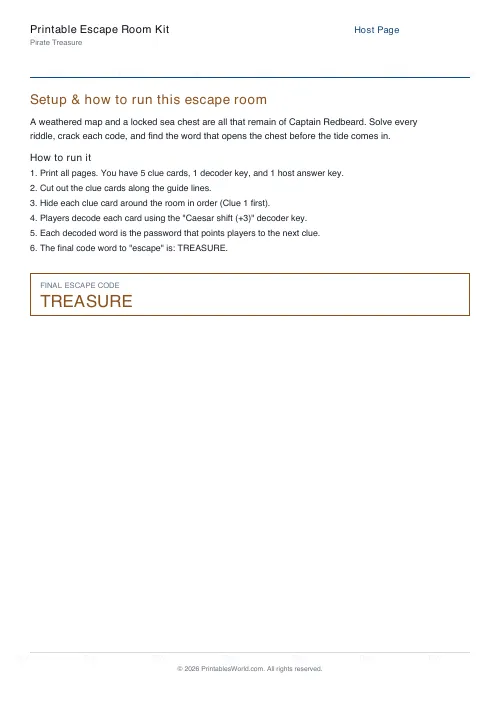
Printable Escape Room Kit
Print a ready-to-run escape room: themed clue cards, a cipher decoder key, and a host answer sheet.
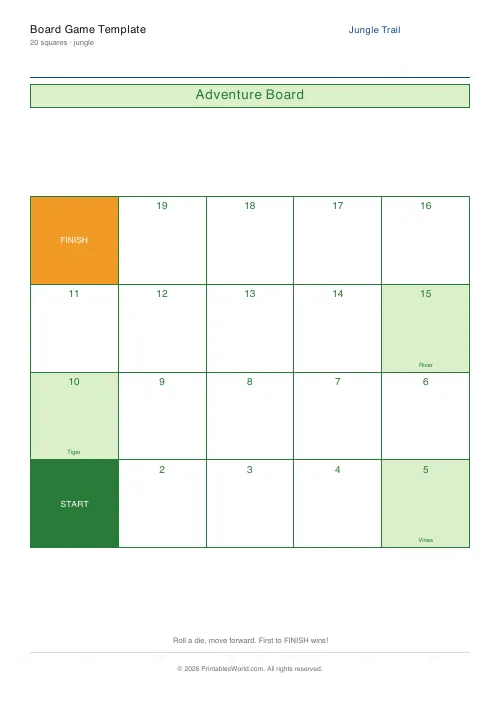
Board Game Template
Printable snaking board game with Start, Finish, and themed milestone squares.
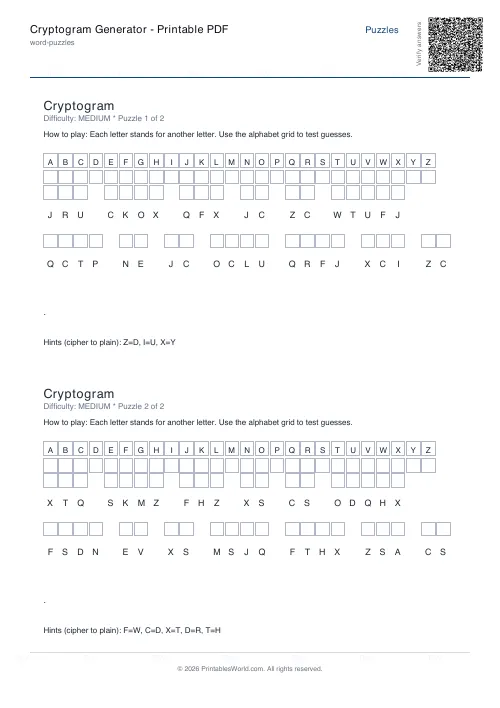
Cryptogram Generator: Printable PDF
Create printable cryptogram puzzles from famous quotes or your own text with customisable difficulty and hints.
Continue reading
Classroom Activities
20 classroom games that need zero prep
Games organised by the gap they fill: two minutes at the end of a lesson, ten minutes before assembly, or a whole wet lunchtime. Almost all need nothing but a voice.
6 min read
Classroom Activities
Back-to-school printables every teacher needs
Sorted by when you will actually need them: the two things to print before the children arrive, the week-one set, and the routines worth establishing while everyone is still compliant.
5 min read