What this tool does
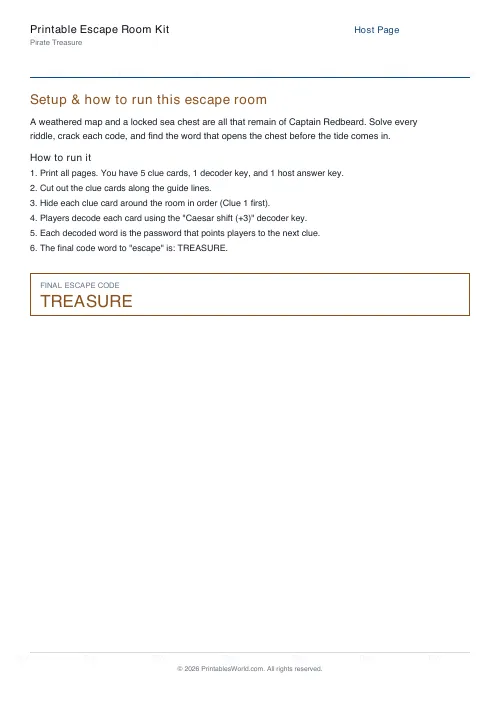
A complete printable escape room from one PDF. Pick a theme and a cipher, choose three to eight clue cards, and out comes a host setup page, the coded clue cards two to a page, a decoder key, and a hidden answer sheet. Each decoded word is the password that points at the next clue.
People also used
Feedback
Spotted something off with this tool?
A chain, not a pile of puzzles
That is the structural thing that makes this work. Each clue card carries a riddle and a coded message, the players decode it with the printed key, and the decoded word tells them where the next card has been hidden. Solve the last one and you have the escape code.
A chain keeps everybody moving together at one pace, which is the difference between a game one host can run and a game that needs three adults. Nobody races ahead, because they cannot find clue four without solving clue three.
Three to eight cards, five by default, printed two to a page.
Four themes, and who each one suits
Pirate Treasure
A locked sea chest, a torn map, and Captain Redbeard. The escape code is TREASURE and this is the one for younger players and parties.
Space Station Lockdown
The station computer has sealed the airlocks and the override sequence has to be decoded before the oxygen runs out. Ends on LIFTOFF, and it fits a STEM week without anybody having to pretend it does.
Detective Mystery
A stolen painting and a trail the thief left behind. The final word is CULPRIT, and this is the one for older pupils who want deduction rather than adventure.
Jungle Expedition
An ancient temple, a hidden chamber, carved glyphs. Ends on EXPLORER and slots into an explorers or geography unit.
You can override the final code with anything you like, which is how you make the last word the name of the room or the school or the birthday child.
The cipher is the difficulty dial
- Caesar shift. Every letter moves the same distance along the alphabet, and players shift back. The friendliest first cipher and the right one for anyone under about nine.
- Atbash. The alphabet reversed, so A swaps with Z. A satisfying middle step: the pattern is obvious the instant somebody spots it and completely invisible until then.
- A1Z26. Each letter becomes its position number. Adds arithmetic to the decoding and slows a group down noticeably, which is useful when you have more time than clues.
The decoder key page redraws itself for whichever cipher you chose, with a full letter-by-letter lookup table, so nobody has to work out the method as well as the message.
What comes out of the printer
- Host setup page. The story, the step-by-step instructions, and the escape code itself. Read this one before the players arrive rather than while they are watching you.
- Clue cards, two to a page. A riddle, a coded message, and a line for the answer.
- Decoder key. The cipher, explained, with the full lookup table under it.
- Host answer sheet. Every code and its word. Keep it out of sight.
Running one on a Friday
Detective theme, Caesar cipher, five cards. Printed on card and cut, then Clue 1 goes under the whiteboard, Clue 2 inside a library book, and so on down the chain.
Groups decode, write the password on the answer line, and go looking. The last card gives up CULPRIT and the first team to say it wins. Total preparation: one print run and five minutes hiding things.
Making it go well
- Card stock, because these get handled by every child in the room and a paper card is illegible by the time it reaches clue three.
- Hide the cards in order and write each location onto the host sheet as you go. You will forget where clue four went.
- Start young groups on Caesar with three or four clues. A chain that is too long collapses in the middle rather than at the end.
- Give a hint after a few minutes. The failure mode of a chain is one group stuck at clue two while the rest of the room finishes, and it is a miserable way to spend a Friday afternoon if you are in that group.
- Use a timer. It adds more tension than it has any right to.
Everything is drawn from a seeded shuffle, so the same seed rebuilds exactly the same deck. Useful when one group needs a rerun and you want the identical game.
FAQs
Quick answers
How many players is this escape room for?
It scales easily. One to six players can work through the chain together, or split a larger class into small teams that each race through their own printed set of clue cards.
Do I need anything besides a printer?
No. Print the PDF, cut the clue cards along the guide lines, and hide them. Card stock and scissors are the only extras, and a timer adds extra tension if you want one.
Can I make every print different?
Yes. Leave the seed blank for a fresh clue order each time, or enter a seed to reproduce the exact same deck whenever you reprint it.
Which cipher should I choose for younger children?
Start with the Caesar shift. It is the most intuitive. Atbash and A1Z26 are slightly harder and suit older players or a second round.
Related tools
Story Starter Cards
Creative-writing prompt cards to spark a story in one sentence.
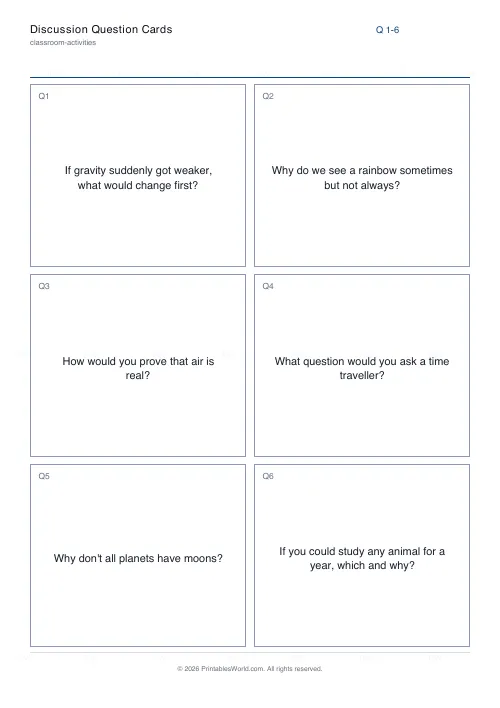
Discussion Question Cards
Open-ended question cards to spark a classroom conversation.
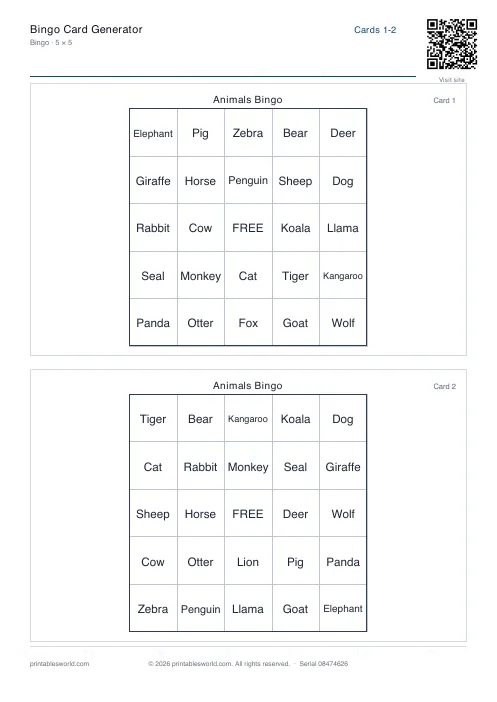
Bingo Card Generator
Generate unique printable bingo cards with custom words, FREE centre toggle, call sheet, and seeded shuffles.
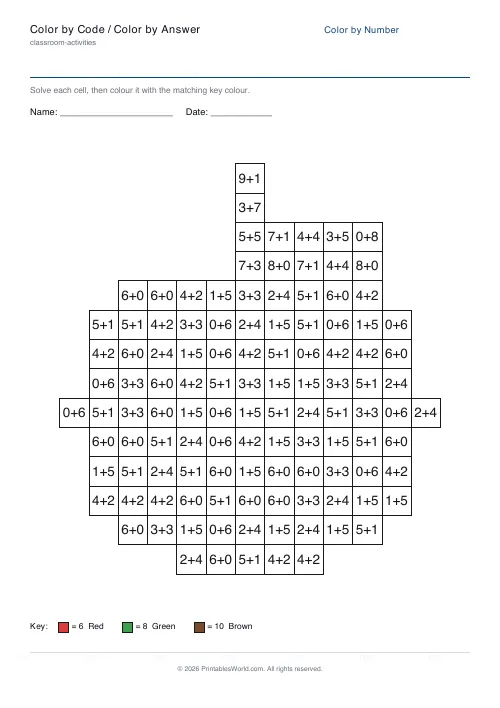
Color by Code / Color by Answer
Solve the problem, find the code, colour the cell. Printable color-by-answer worksheets with a key.
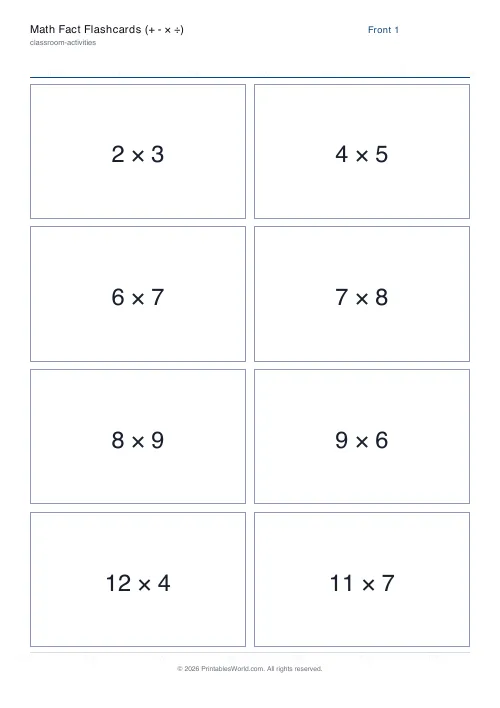
Math Fact Flashcards (+ − × ÷)
Arithmetic fact cards with the answer on the back. Built for timed recall practice rather than reading.
Further reading
Classroom Activities
Escape room activities for the classroom: a how-to
A classroom escape room is a sequence of puzzles with a story on top. The design decision that matters most is whether groups work through them in order or all at once.
5 min read
Classroom Activities
How to run a classroom economy (free printables)
A classroom economy teaches money, work and choice at once. But it collapses if the maths is wrong. Here is how to set the numbers, and the four pitfalls to avoid.
5 min read