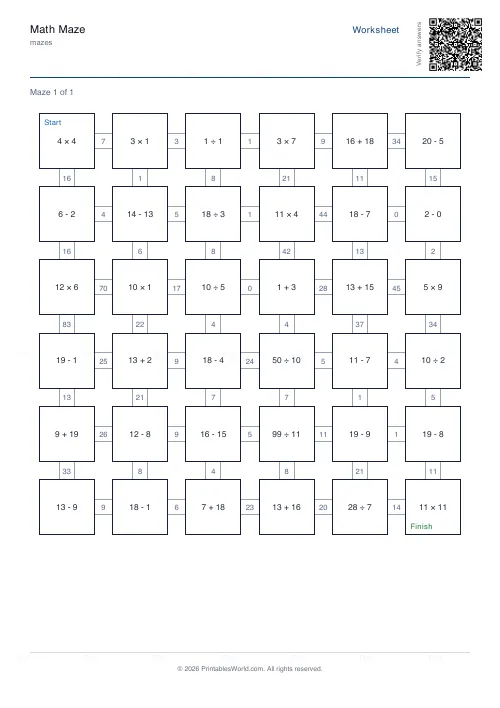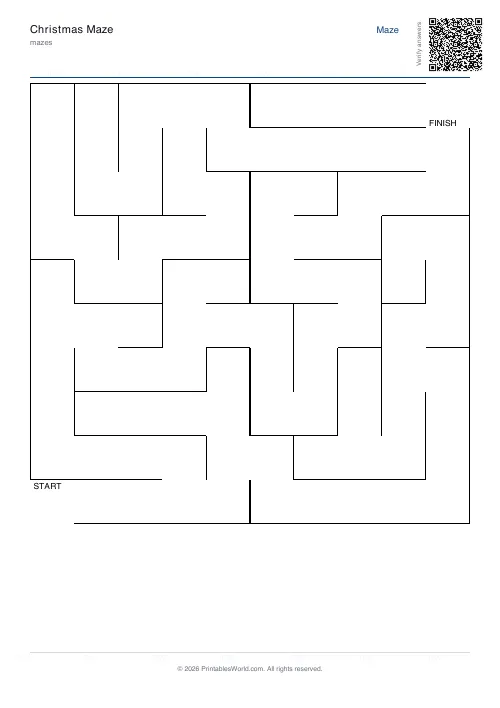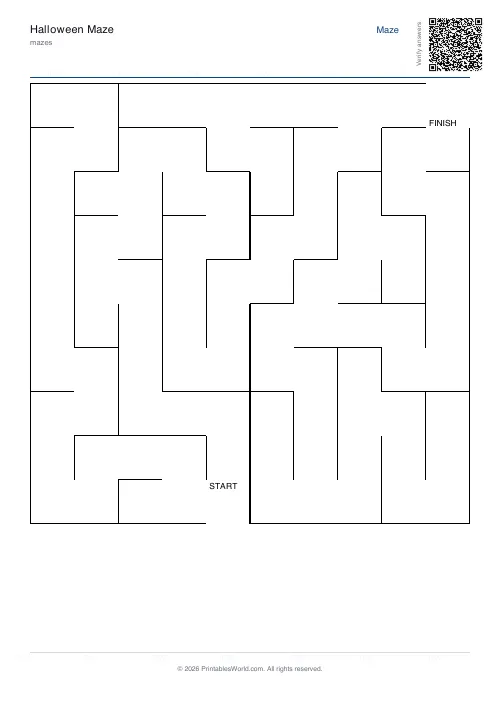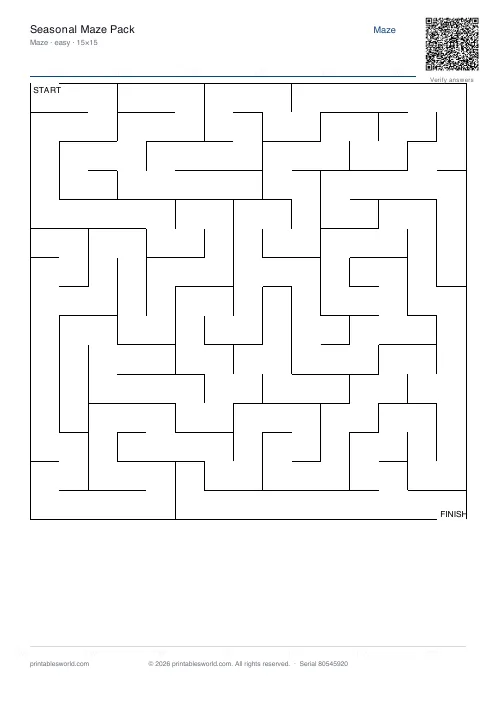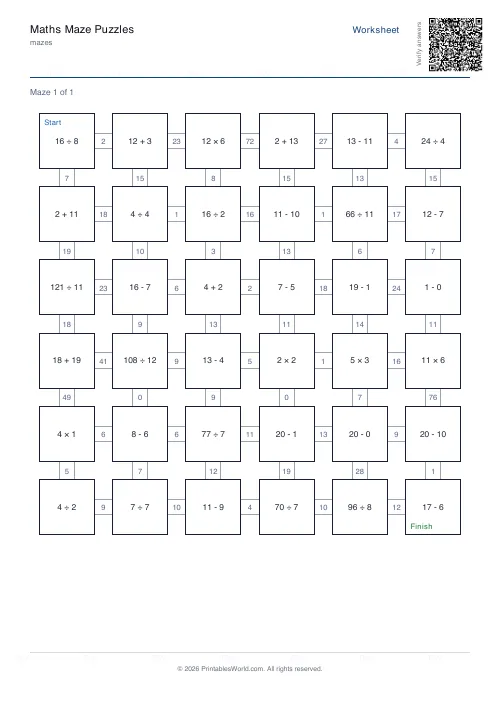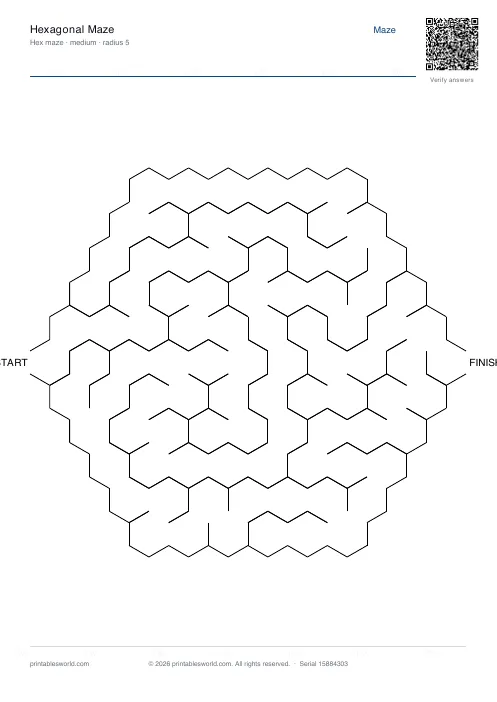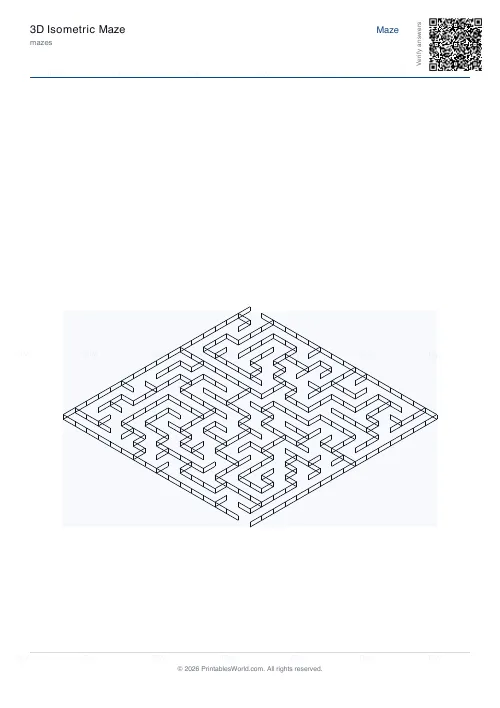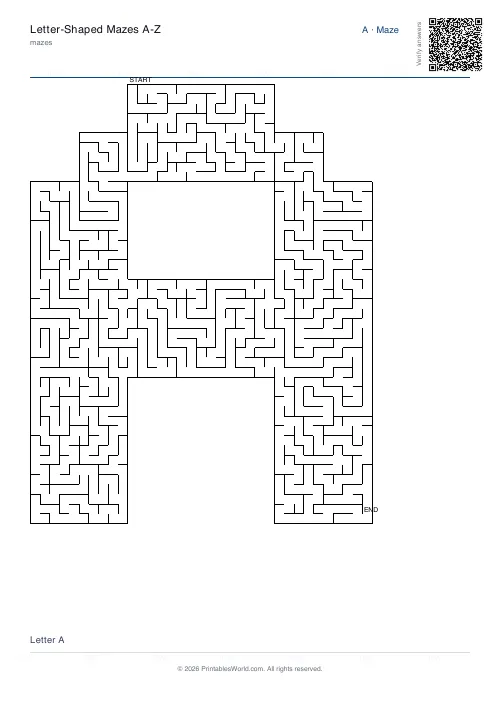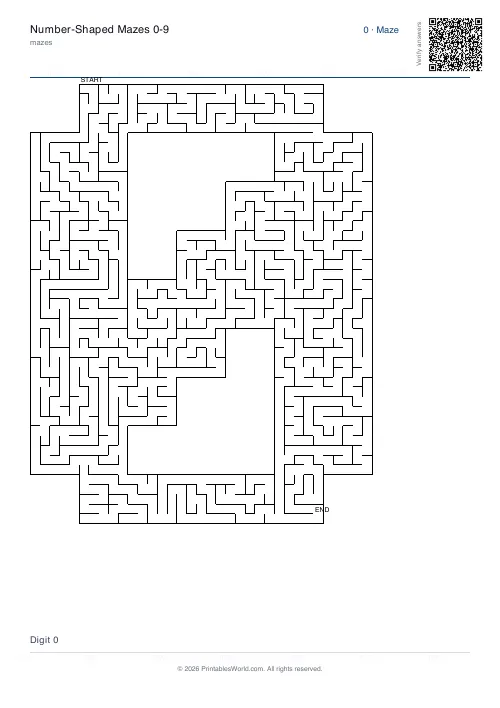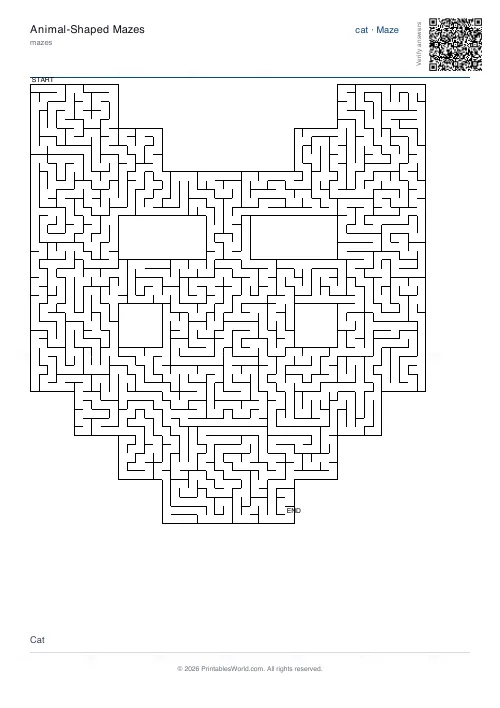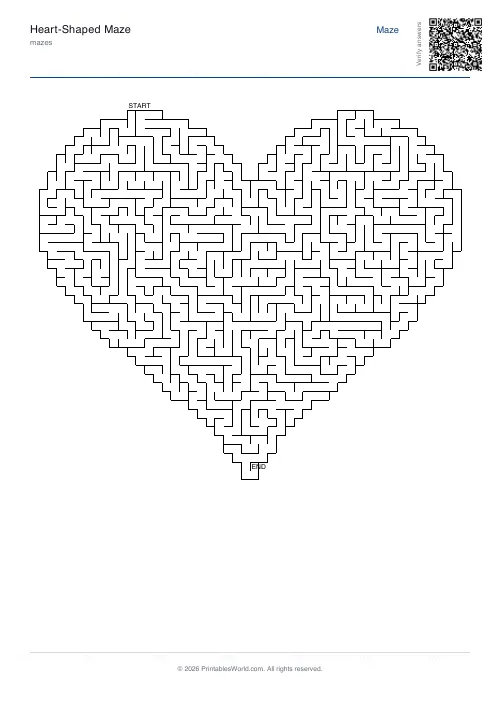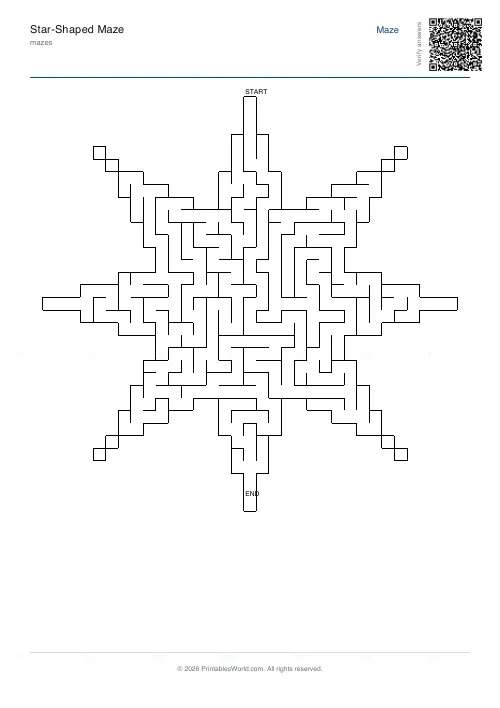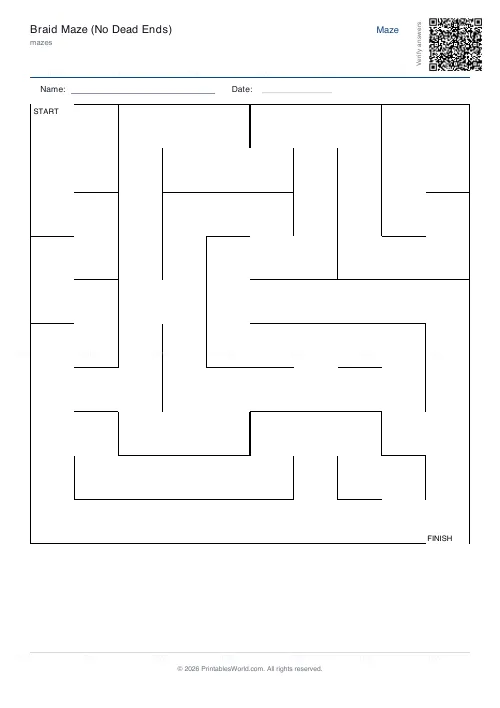
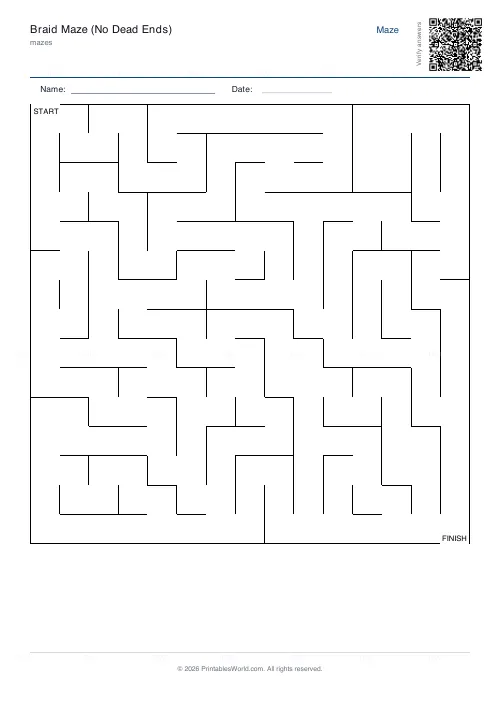
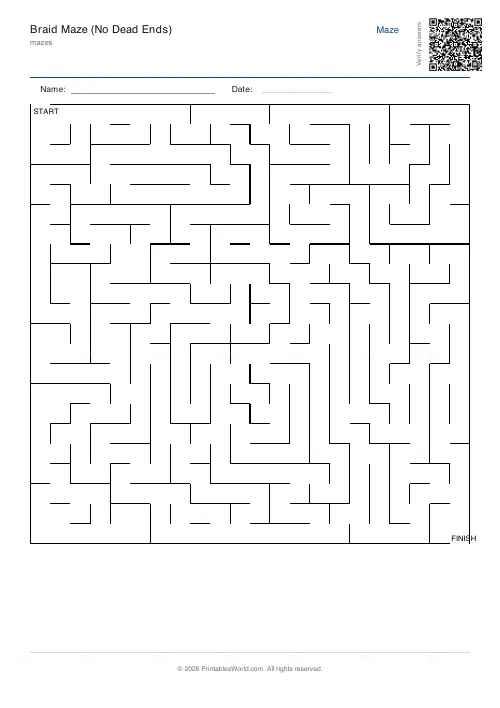
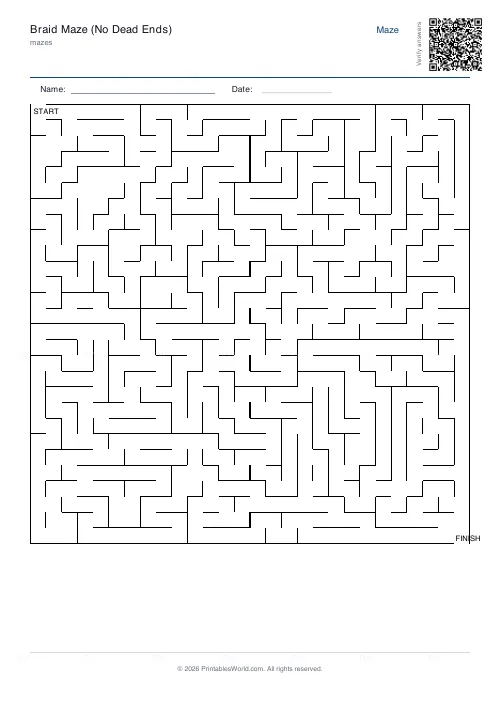
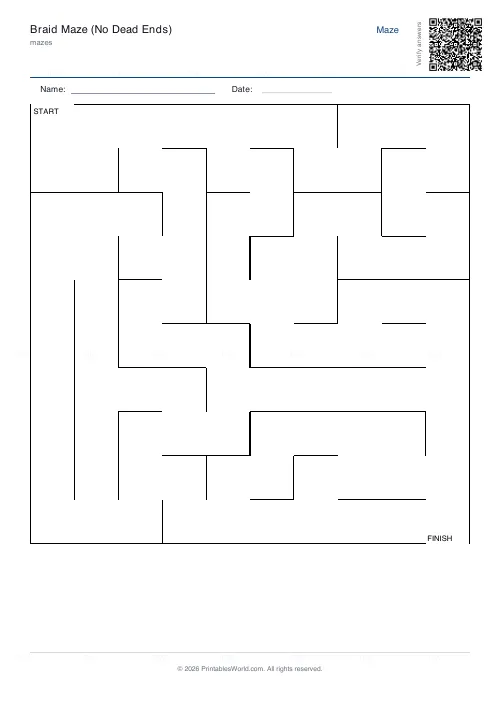
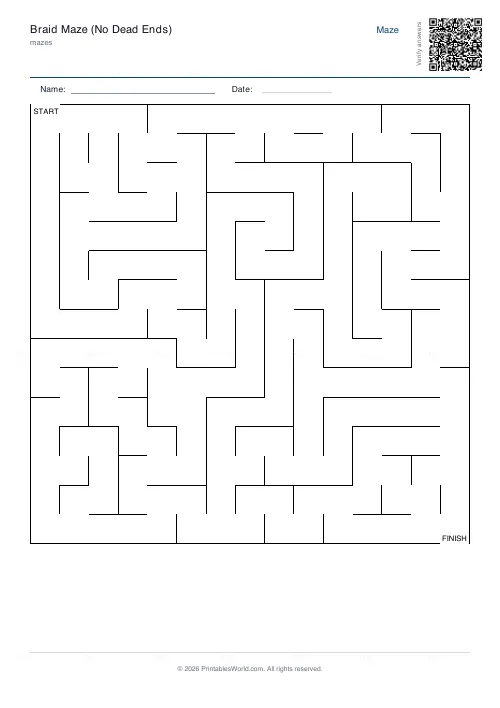
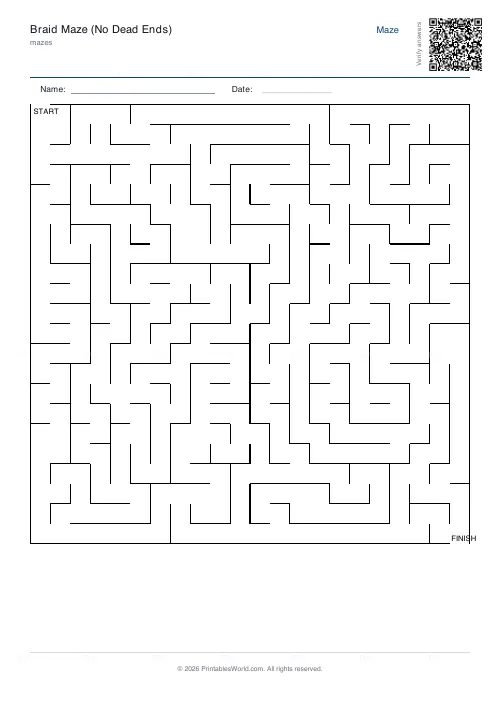
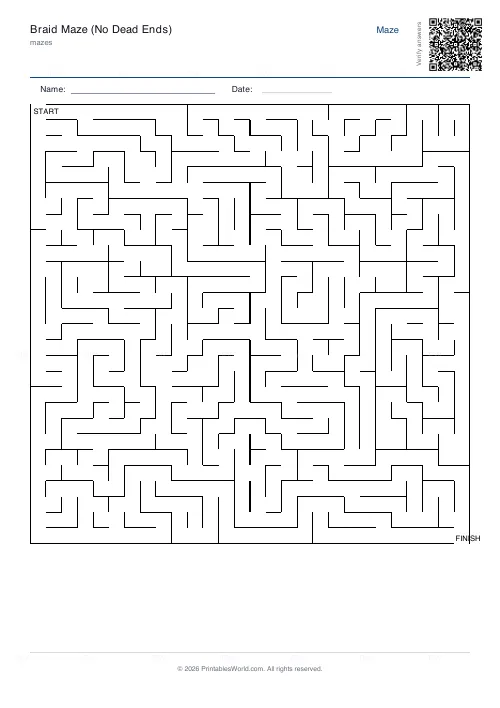
What this tool does
Generate a braid maze. A maze with no dead ends at all. Every cell has at least two openings, so the passages loop back on themselves and there are many possible routes from start to finish. Choose the grid size, add an optional solution page, and download a branded A4 or US Letter PDF.
People also used
Maze Generator: Printable PDF
Generate printable maze PDFs with custom grid size, difficulty, and layout. Perfect, braided, or room-based.
One-Way Maze
Arrows restrict movement to one direction only, adds extra complexity.
Spiral Maze Puzzles
Navigate a spiralling path from outside to centre or vice versa.
Feedback
Spotted something off with this tool?
Create free printable braid mazes with no dead ends
A braid maze is a maze with no dead ends. Where an ordinary perfect maze is full of short stubs that lead nowhere, a braid maze removes every one of them, so each cell has at least two openings and the passages flow into continuous loops. The result is a maze that feels smooth to solve, you are never stopped dead and forced to retrace a long stub, but it is far from easy, because the loops create many plausible routes and it is genuinely tricky to tell which way actually reaches the finish.
Each maze is generated fresh, so you can print a different puzzle for every child or every page of a puzzle book. Download as an A4 or US Letter PDF and add the optional solution page if you want a quick marking copy.
What is a braid maze?
Mazes fall on a spectrum from "perfect" to "braided". A perfect maze has exactly one route between any two points and is riddled with dead ends. A braid maze sits at the opposite end: it has been processed to remove every dead end, which means walls are knocked through so that no cell is a dead stop. Removing dead ends inevitably creates loops, and loops mean multiple paths. So although there are no dead ends to trap you, there are plenty of inviting wrong turns that circle back on themselves.
How the generator builds it
The tool first carves a perfect maze using a recursive-backtracker (depth-first search) over a square grid. It then runs a braiding pass: it scans every cell, and wherever it finds a dead end, a cell with only one opening, it knocks through one of the surrounding walls to give that cell a second exit. Where possible it merges two adjacent dead ends in one move. After the pass, no cell has fewer than two openings. A breadth-first search then finds one valid route from start to finish for the optional solution page.
What is adjustable
- Grid size: small for younger solvers, larger for a tougher looping challenge.
- Solution page: add a second page with one valid route highlighted in red.
- Title: add your own heading for a worksheet or puzzle book.
- Name & date fields: turn on for classroom use.
- Paper size: A4 or US Letter PDF output.
Who braid mazes are for
Braid mazes suit solvers who find dead-end mazes frustrating, including younger children who get discouraged by long blind alleys. They are also a favourite of puzzle enthusiasts because the loops make the maze deceptively hard despite never trapping you. Use them for classroom activity stacks, puzzle-book pages, rainy-day printables, or a flowing alternative to the standard maze.
FAQs
Quick answers
What makes a braid maze different from a normal maze?
A braid maze has no dead ends. Every cell has at least two openings, so instead of getting trapped in blind alleys you always have somewhere to go. Removing the dead ends creates loops, which is what makes the puzzle interesting.
Is a braid maze easier than a normal maze?
Not necessarily. You never hit a dead end, but the loops create several tempting routes that circle back, so working out which path actually reaches the finish can be surprisingly tricky.
Can I print the solution?
Yes. Toggle the solution option and the PDF adds a second page with one valid route from start to finish highlighted in red.
How do I make it harder?
Increase the grid size. A larger grid means more cells, more loops, and more decisions, which makes the maze considerably harder to solve.
Related tools
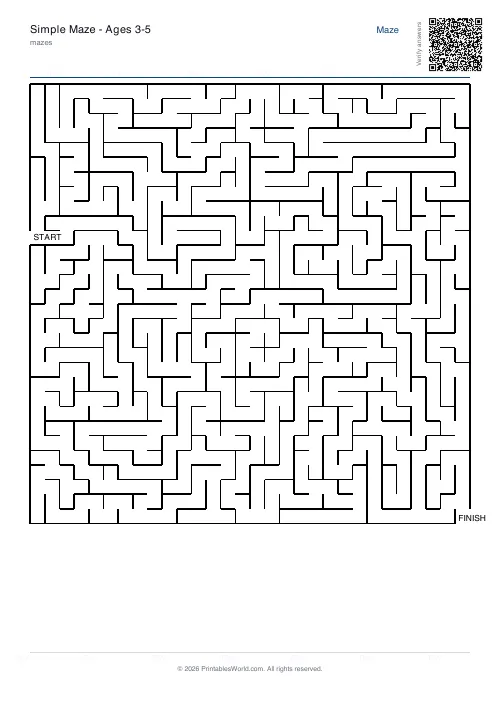
Maze Generator: Printable PDF
Generate printable maze PDFs with custom grid size, difficulty, and layout. Perfect, braided, or room-based.
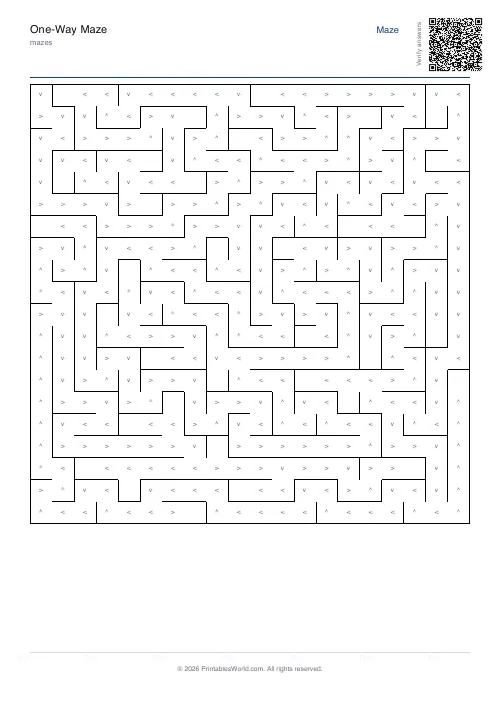
One-Way Maze
Arrows restrict movement to one direction only, adds extra complexity.
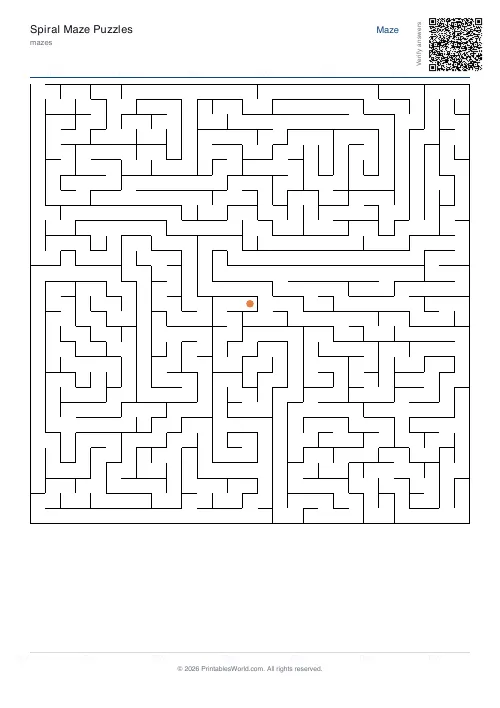
Spiral Maze Puzzles
Navigate a spiralling path from outside to centre or vice versa.
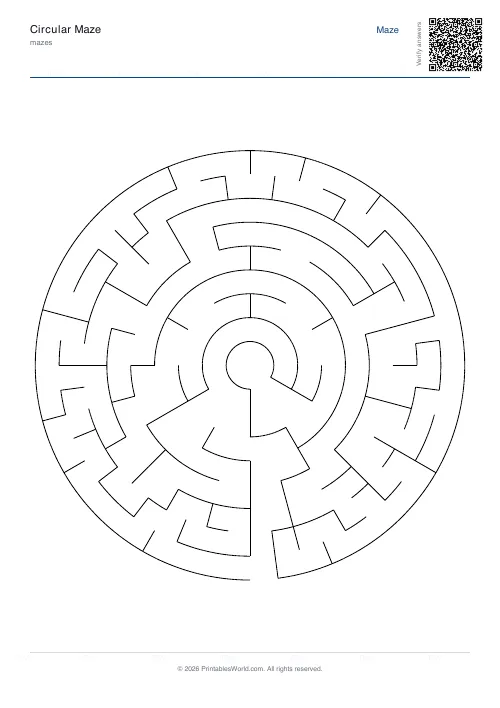
Circular Maze
Concentric ring maze. Navigate from the outside ring to the centre.
Further reading
Mazes
Printable maze difficulty: matching mazes to ages
Maze difficulty has two independent dials, and confusing them is why a maze is either too fiddly or too easy. Here is which to turn for which child.
4 min read
Mazes
Why mazes are great for kids' development
Mazes are one of the few activities that exercise pencil control and forward planning at the same time. Which is why they suit the years just before formal handwriting.
4 min read