What this tool does
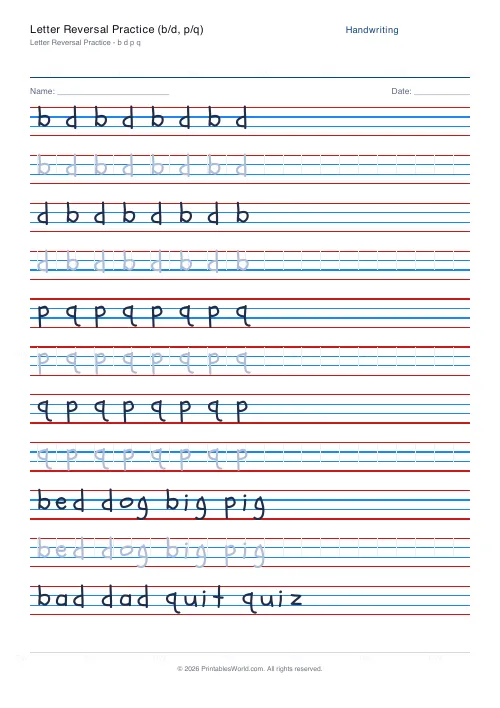
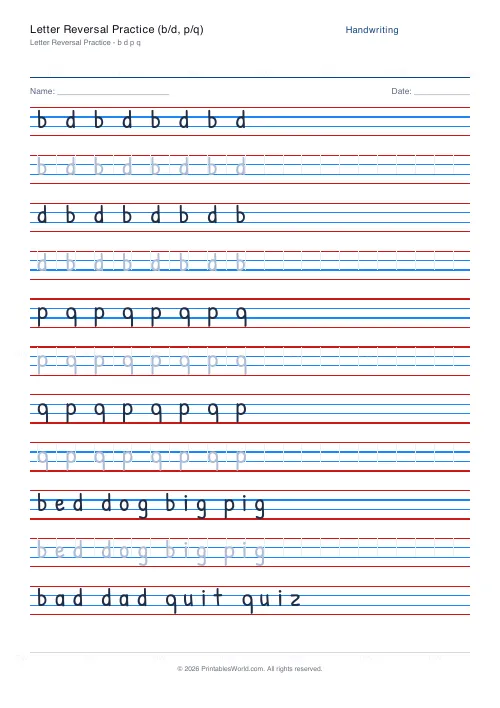
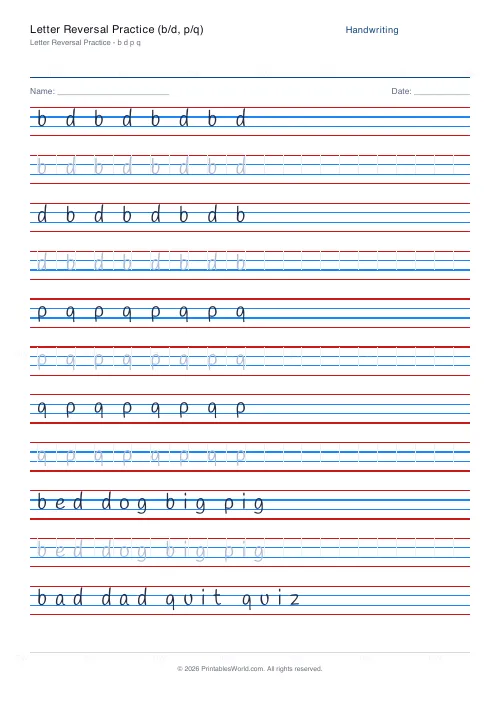
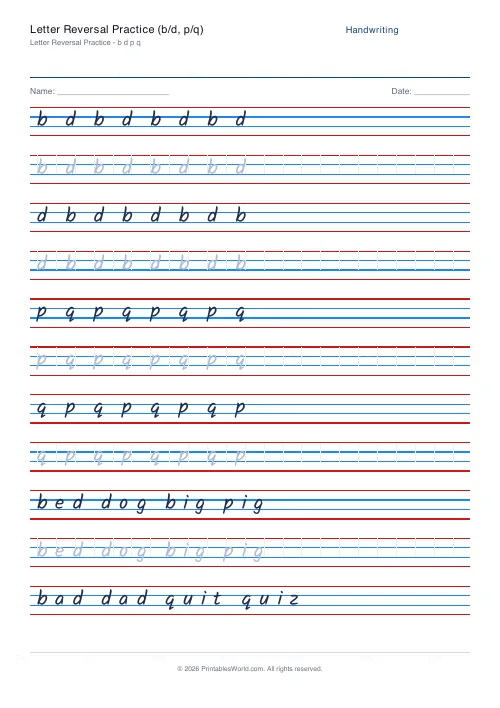
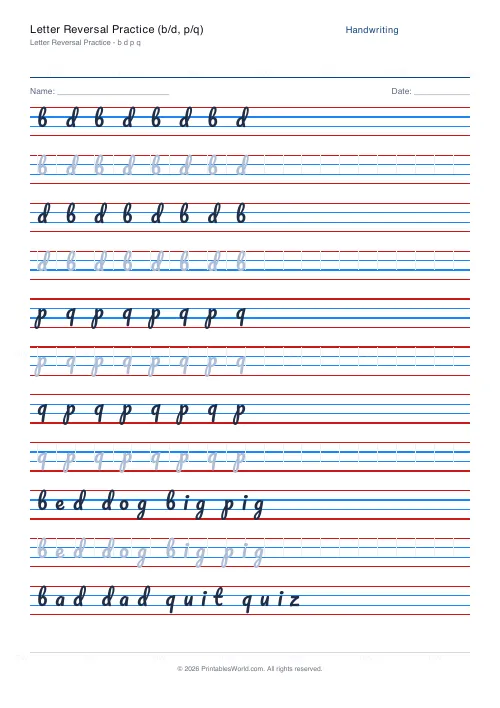
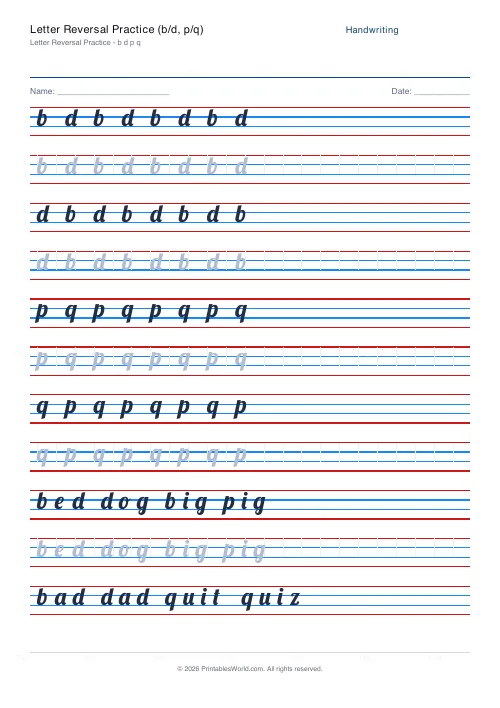
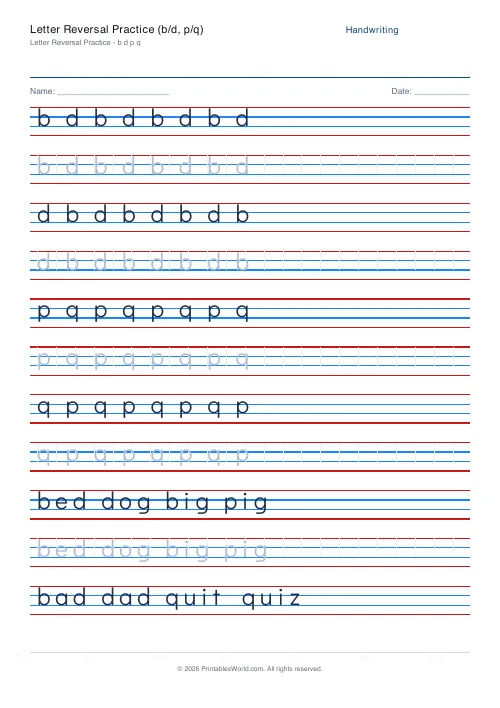
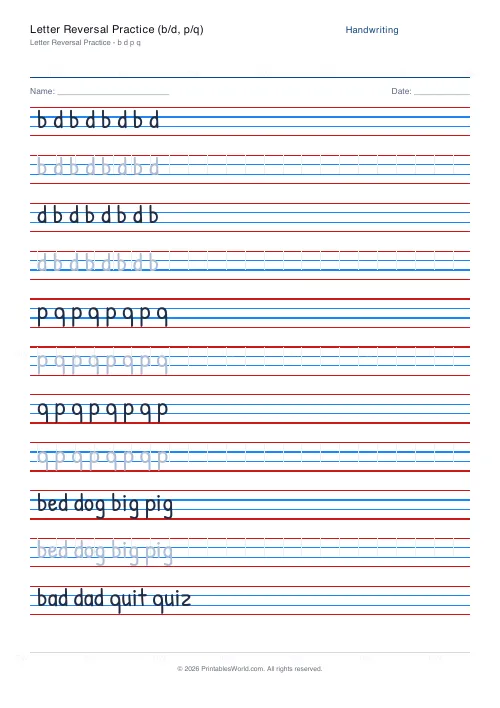
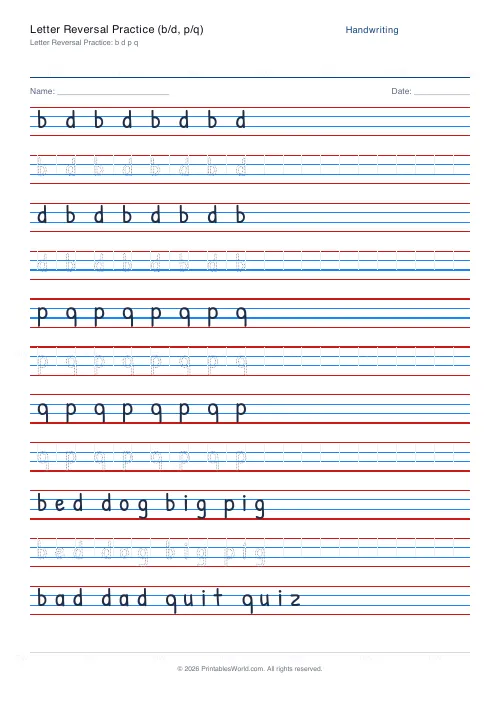
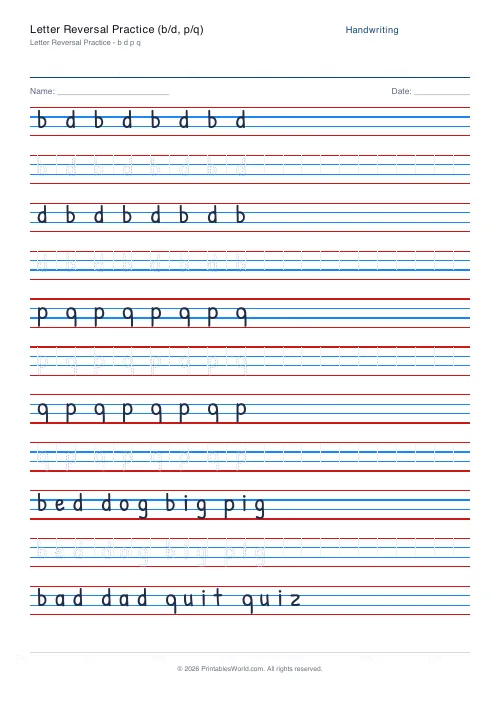
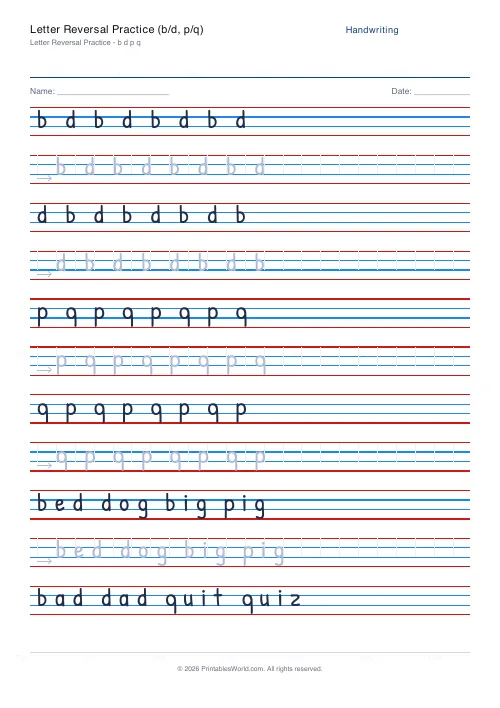
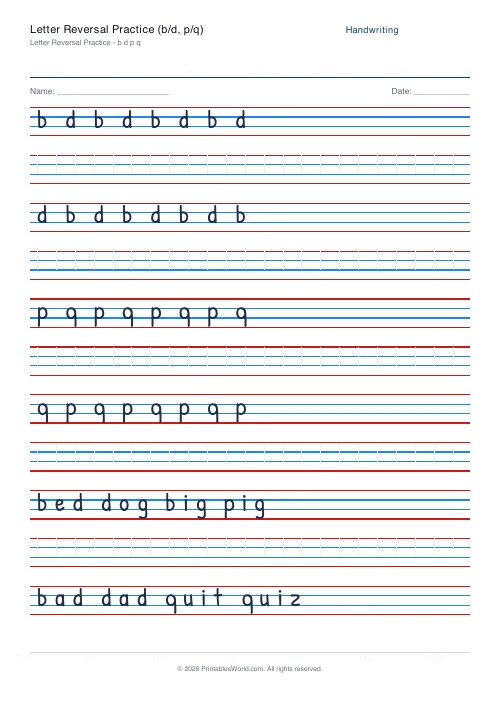
Targeted practice for b, d, p and q: alternating pattern rows, then real words that contrast the confusable pairs. Solid letters to trace inside character boxes.
People also used
Feedback
Spotted something off with this tool?
What is on the sheet
Rows alternating the confusable pairs — b d b d, then d b d b, then p q p q, then q p q p — followed by words that put them in context: bed, dog, big, pig, bad, dad, quit, quiz.
Solid letters to trace, one tracing row, and character boxes around the traced letters. Everything is editable if your child confuses a different pair.
Reversals are normal, up to a point
Worth saying first, because parents worry about this more than they need to.
Writing b for d is extremely common up to about seven, and it is a consequence of how children learn to recognise objects. A cup is a cup whichever way it faces, and that mirror-invariance is useful for everything except letters, where orientation is the only difference between two of them. Children have to unlearn a rule that served them well.
Persistent reversals past eight, or reversals alongside other literacy difficulties, are worth raising with the school. On their own, before then, they are usually just development.
Why the pairs are practised together
The instinct is to drill b on its own until it is secure. That is the wrong approach and it is what most worksheets do.
The difficulty is not forming b. It is choosing between b and d, and a child can only practise choosing when both are present. Alternating rows force the discrimination on every single letter, which is the skill that actually transfers.
The words matter more than the rows
Pattern rows build the motor habit. The words are where it is tested.
"bed" is the useful one — it contains both letters, and the classic mnemonic is that the word "bed" looks like a bed, with b and d as the headboard and footboard. "dog" and "big" isolate one letter each in a real context. Once a child can write those without hesitating, the discrimination has landed.
Teaching the difference
Stick to one cue and use it consistently. Mixing three mnemonics is worse than using one imperfect one.
The stroke order cue works well: b starts with the tall line down, then the circle; d starts with the circle, then the line. That is a difference in how the letter is made rather than how it looks, and motor memory is more reliable than visual memory here.
The two-fists cue — thumbs up, left hand makes b, right makes d — is the other one worth knowing, and it travels, since a child can use it in an exam.
How much to do
Five minutes daily beats twenty minutes weekly, and stop before frustration. This is a discrimination that resolves with exposure rather than effort, and pushing a tired child through a fourth row does nothing except attach anxiety to the letters.
Related: the handwriting practice generator for any other letters or words.
FAQs
Quick answers
Which letters does this sheet target?
It focuses on the most commonly reversed letters, b and d, then p and q, by placing each pair side by side and reinforcing them inside short words.
Why pair the letters instead of practising them alone?
Reversals are mirror-image mistakes, so writing b directly next to d makes the difference in ball position and stroke order obvious. Contrast fixes the habit faster than isolated repetition.
Why include words like bed, dog and quit?
The short, decodable words check that the correct orientation transfers into real writing and tie the practice to early phonics.
Can I focus on just b and d?
Yes. Edit the practice text to keep only the b/d rows and words, and remove the p/q lines.
Related tools
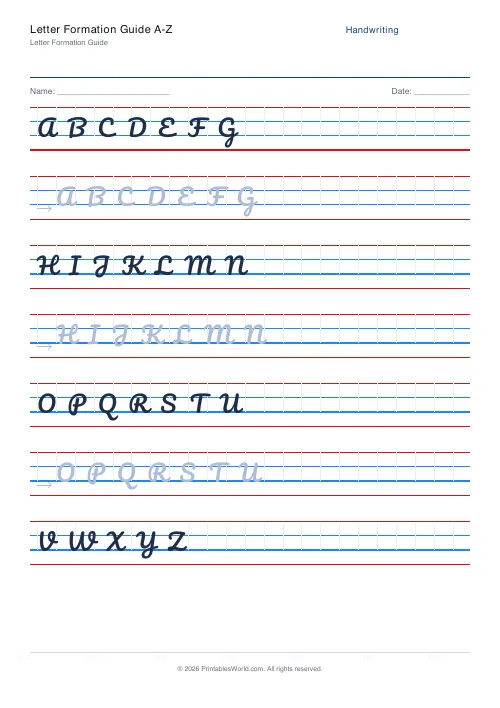
Letter Formation Guide A-Z
Full alphabet with directional arrows for stroke-order learning.
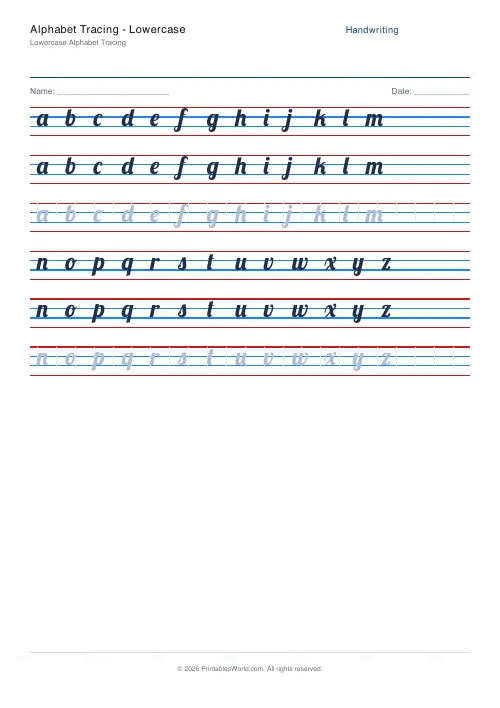
Alphabet Tracing: Lowercase
Trace all 26 lowercase letters with formation guides and practice lines.
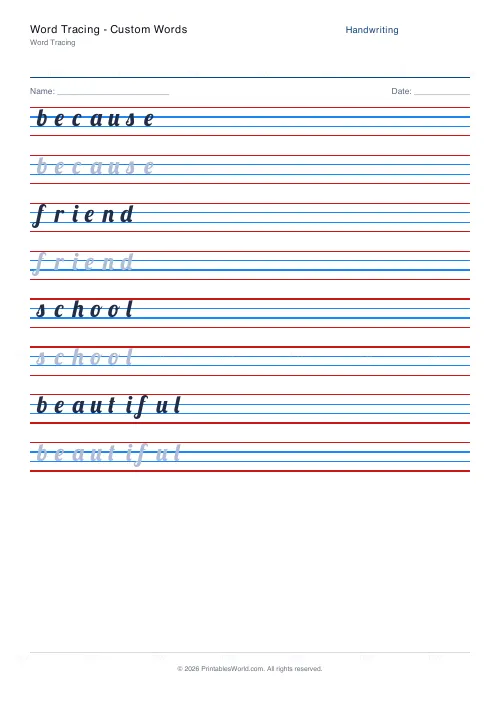
Word Tracing: Custom Words
Enter a word list and generate a tracing sheet on 4-line ruling.
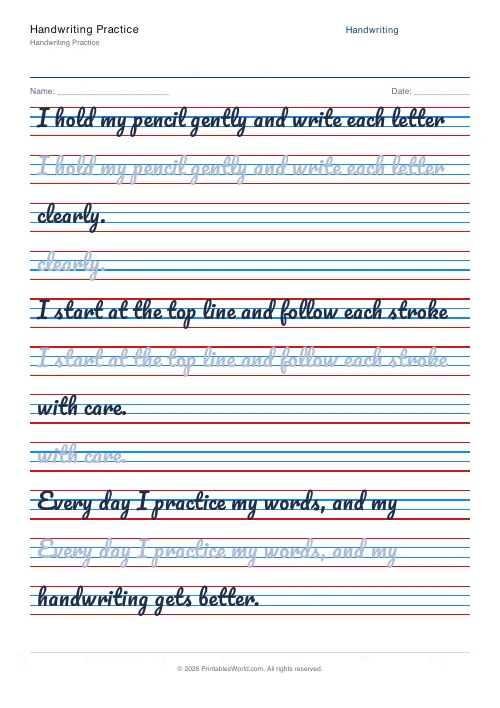
Handwriting Practice Generator
Create custom 4-line handwriting practice sheets with trace rows, adjustable guides, and your own text.
Further reading
Handwriting
How to fix reversed letters (b and d) in young writers
Reversing b and d is normal up to around seven. The fix is not more practice of both together. It is teaching them apart, by movement rather than by shape.
5 min read
Handwriting
Left-handed handwriting practice: free printable sheets
How to set up left-handed handwriting practice for comfort: paper angle, grip and page layout, plus free printable sheets designed for lefties.
7 min read
Handwriting
The best age to start handwriting practice
Age is the wrong question. Three readiness signs predict whether handwriting practice will help or frustrate. And what to do with the child who is not there yet.
5 min read
More like this
- Handwriting Practice Generator
 Alphabet Tracing: Uppercase
- Alphabet Tracing: Lowercase
 Alphabet Tracing: Both Cases
 Number Tracing 0-9
 Name Tracing: Custom
- Word Tracing: Custom Words
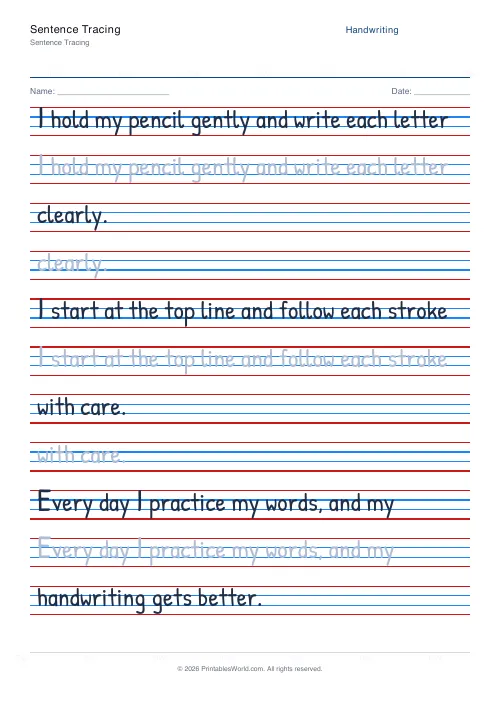 Sentence Tracing
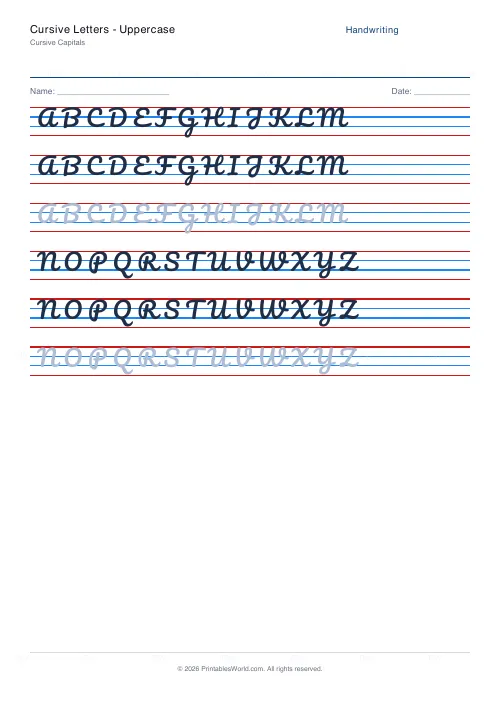 Cursive Letters: Uppercase
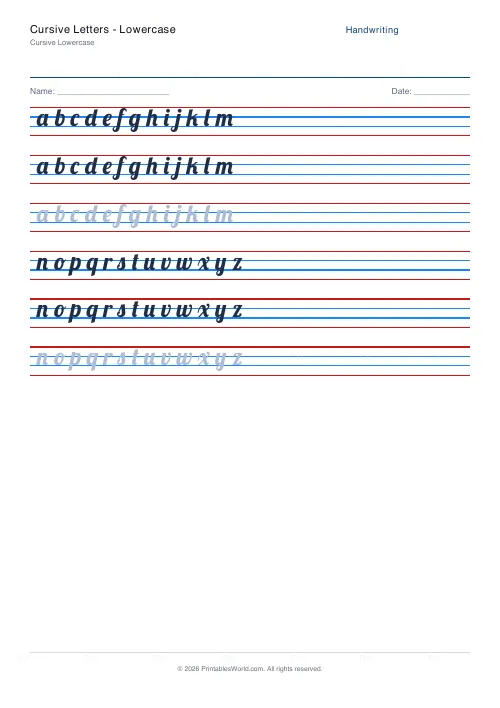 Cursive Letters: Lowercase
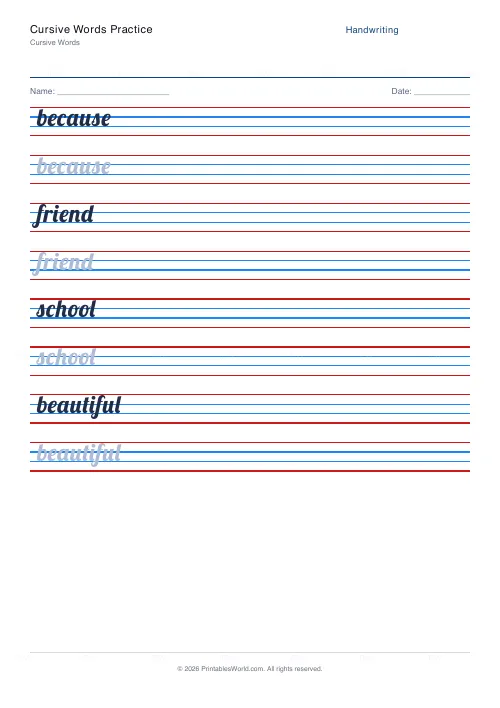 Cursive Words Practice
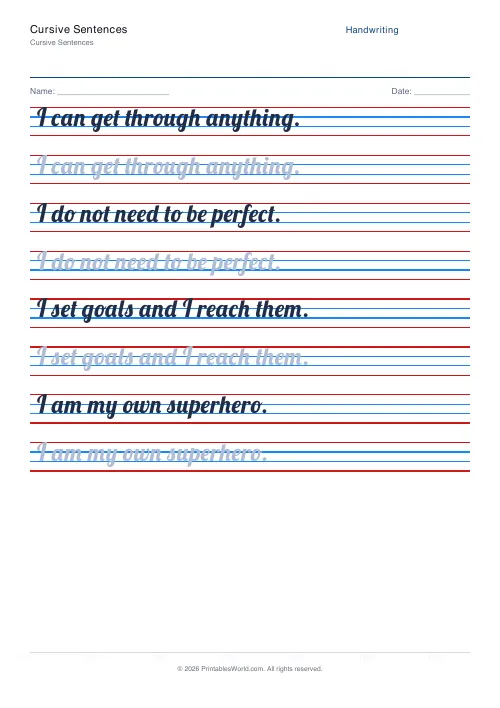 Cursive Sentences
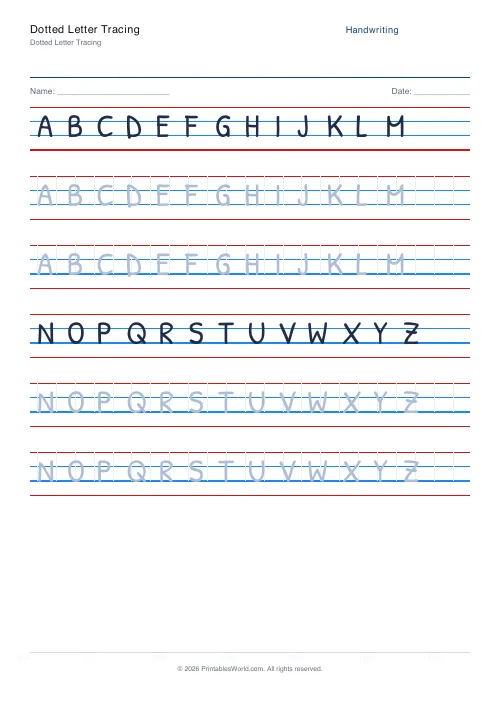 Dotted Letter Tracing
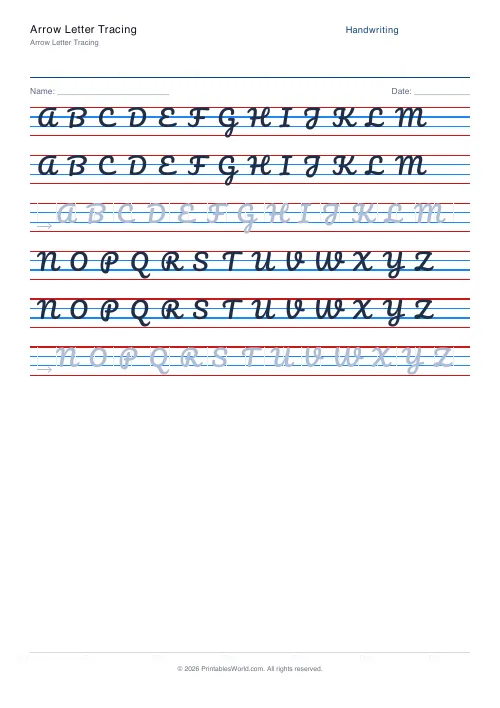 Arrow Letter Tracing