Handwriting
The best age to start handwriting practice
By Jobi · Creator & Maintainer, PrintablesWorld · Updated 2026-06-01 · 5 min read
Parents usually ask this as a question about age, and the honest answer is that age predicts it poorly. Children of the same age vary enormously in hand strength and control, and starting a child before they are ready mostly teaches them that writing is difficult. Free printable letter formation sheets are the right tool once the signs below are present. And the wrong one before.
What the typical ages actually are
Broad patterns, with wide normal variation and differences between school systems:
- Around 2–3: scribbling, then vertical and horizontal lines. Mark-making, not writing.
- Around 3–4: copying a circle, then a cross. Often the first recognisable letter, usually the initial of their own name.
- Around 4–5: writing their name, many letters formed with support.
- Around 5–6: most letters formed independently; formal handwriting teaching in most systems.
Note the range. Formal schooling starts at four in parts of the UK and at six or seven in much of Scandinavia, and children in both end up writing perfectly well. The starting age is not the determining factor people assume.
Three readiness signs that matter
These predict readiness far better than a birthday.
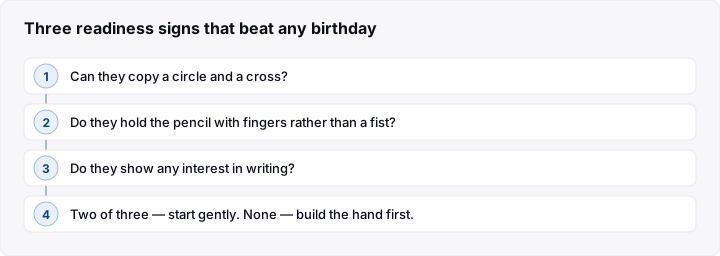
1. Can they copy a circle and a cross? The classic check. A circle needs continuous curved control; a cross needs two intersecting strokes with a deliberate stop and start. Nearly every letter is built from those movements. A child who cannot yet copy them will find letters genuinely hard, not merely unfamiliar.
2. Do they hold the pencil with their fingers rather than their fist? A whole-hand grip means the shoulder is doing the work. Letters need finger movement. The grip does not have to be a textbook tripod, but the fingers should be involved.
3. Do they show interest? Underrated and genuinely predictive. A child asking to write their name will practise willingly; one who has no interest will experience it as a chore, and chores at four leave a mark on attitude that lasts.
Two of the three is usually enough to begin gently. None of the three means wait, and the waiting is productive if you spend it on the activities below.
What to do before letters
Everything here builds the hand that will hold the pencil, and none of it looks like handwriting.
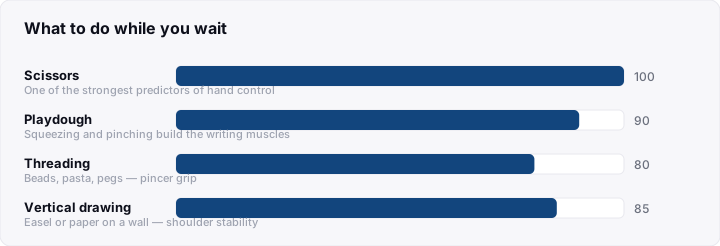
- Playdough: squeezing, rolling and pinching build exactly the small muscles writing needs.
- Threading and pegs: beads, pasta, laundry pegs on a line. Pincer grip practice.
- Scissors: cutting is a strong predictor of hand control, and one of the best preparations there is.
- Tearing and scrunching paper, tweezers, tongs, spray bottles, all hand strength.
- Drawing at a vertical surface: easel, chalkboard, paper taped to a wall. Working upright builds shoulder stability, which is what steady fingers rest on.
- Big mark-making: chalk outside, a stick in mud, a finger in sand. Large movements first, always.
A child doing these daily is preparing to write more effectively than one being made to trace letters they cannot yet control.
How to start once they are ready
- Their own name first. It is the most motivating word there is. Capital first letter, lower case for the rest. Teaching all capitals means unteaching it later.
- Big, then smaller. Large letters, wide spacing, gradually reducing.
- Two or three letters a session, grouped by the stroke they share rather than alphabetically.
- Five minutes. A four-year-old's hand tires quickly, and tired practice rehearses poor formation.
- Stop while it is going well. Always.
An alphabet reference poster on the wall or table is worth more than a stack of worksheets at this stage. It answers "which way round is it?" without a child having to ask, which protects their independence.
The cost of starting too early
It is not neutral, which is why the question matters.
A child who cannot yet control the pencil will compensate, and the compensations stick: a fist grip, pressing hard enough to tear the paper, forming letters from the bottom up because it is easier. All three take far longer to correct than the wait would have taken.
The other cost is attitude. A child who concludes at four that writing is difficult and unpleasant carries that into school, and it is a harder problem than any letter formation issue.
If a child resists strongly, the useful response is to stop and return to the pre-writing activities for a month or two. That is not falling behind. It is building the thing that was missing.
Frequently asked questions
My child is four and not interested. Should I worry?
Usually not. Interest at four varies enormously and is a poor predictor of eventual handwriting. Keep offering drawing, cutting and playdough, and let letters wait. If there is no interest in any mark-making at all by school age, mention it to their teacher.
Should they learn capitals or lower case first?
Lower case, apart from the initial of their name. Most text is lower case, and children taught all capitals first typically write in capitals for a year or more afterwards.
Is it too late if a child is behind at six or seven?
No. Handwriting responds to short, regular practice at any age, and children who start later often progress quickly because their hand control has matured. Later starts are the norm in several school systems.
How much practice at this age?
Five minutes, most days, is plenty for a four- or five-year-old. Frequency matters much more than the length of the session.
Before you print
Check the circle and cross, the finger grip and the interest before starting letters. And if they are missing, spend a month on scissors, playdough and vertical drawing instead. When you do begin, start with their name and print an alphabet reference poster alongside the letter formation sheets.
Related tools
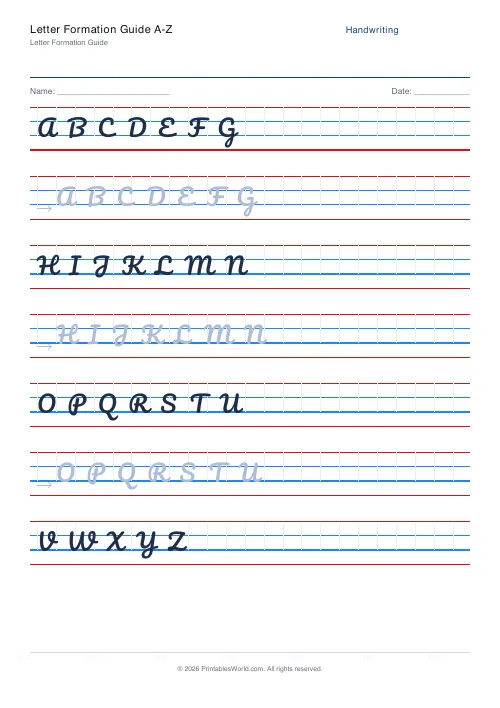
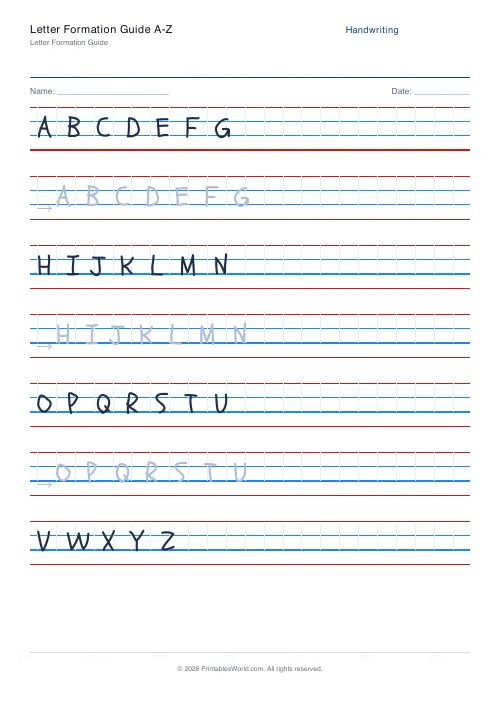
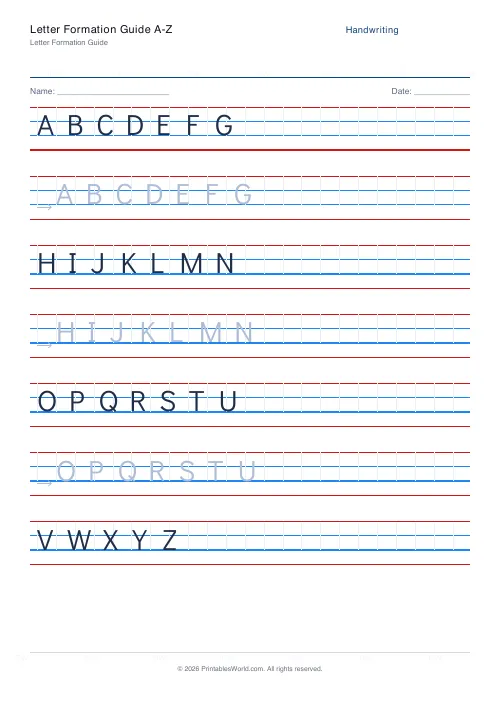
Letter Formation Guide A-Z
Full alphabet with directional arrows for stroke-order learning.
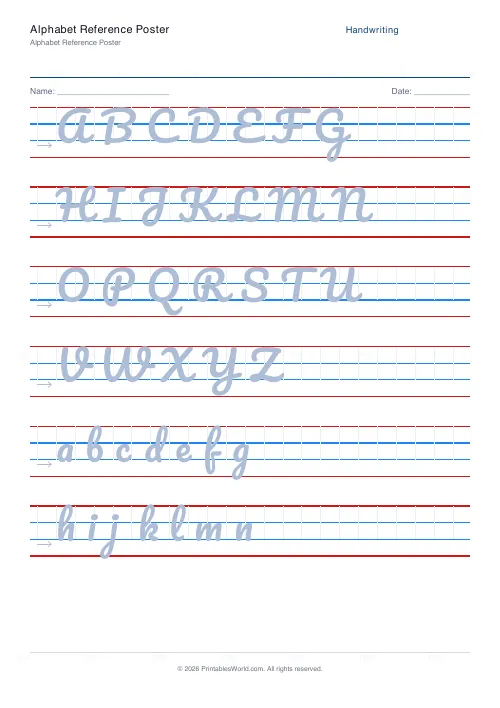
Alphabet Reference Poster
Full A-Z formation reference with directional arrows and letter boxes.
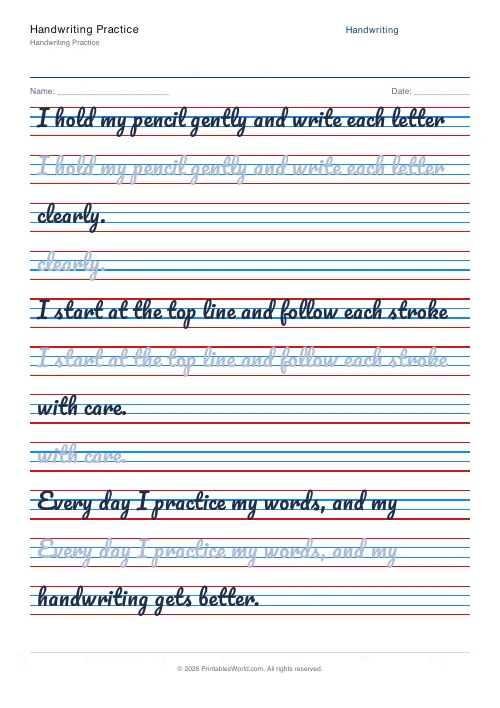
Handwriting Practice Generator
Create custom 4-line handwriting practice sheets with trace rows, adjustable guides, and your own text.
Continue reading
Handwriting
How to teach handwriting to kids: a step-by-step guide
A practical order for teaching handwriting: get the body and the pencil right first, then teach letters in stroke families rather than alphabetically, and keep sessions short enough that the hand never tires.
7 min read
Handwriting
How to fix reversed letters (b and d) in young writers
Reversing b and d is normal up to around seven. The fix is not more practice of both together. It is teaching them apart, by movement rather than by shape.
5 min read