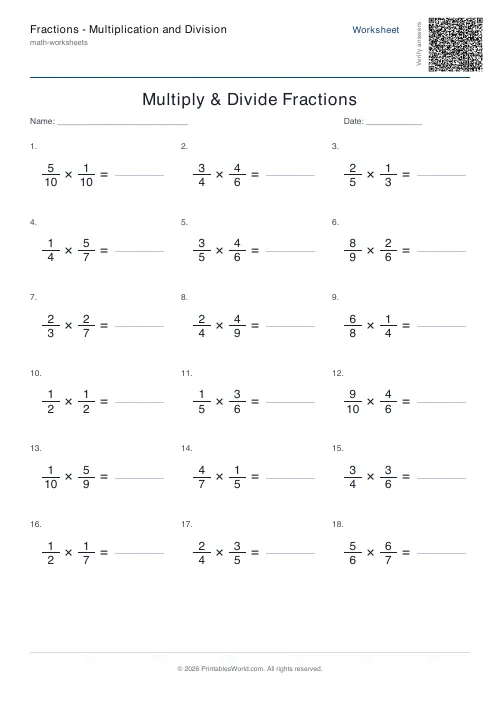
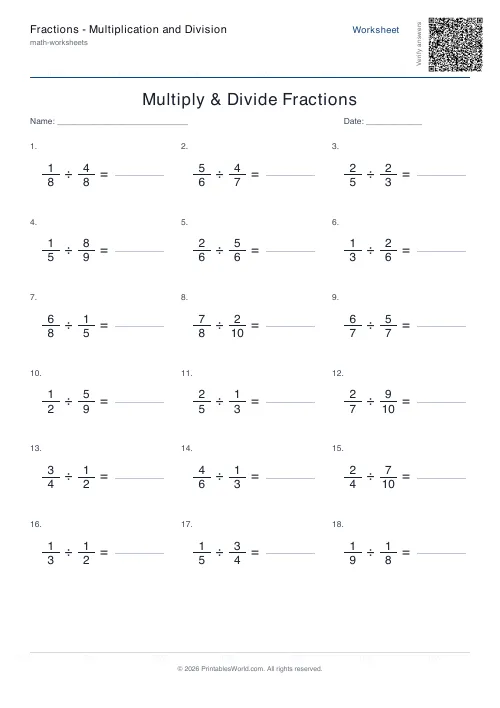
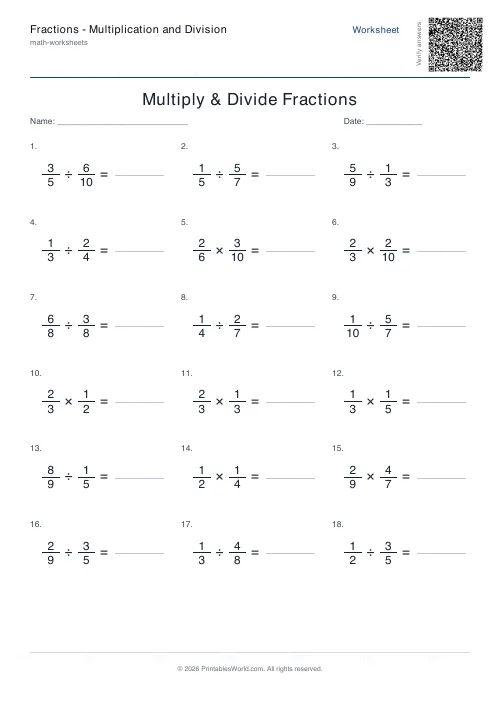
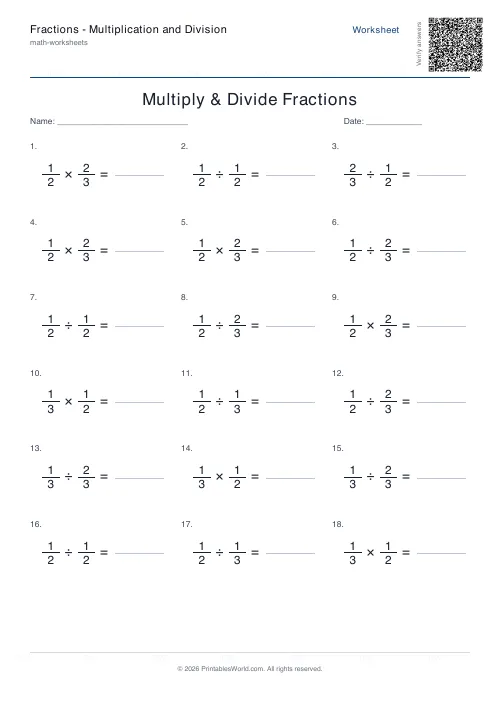
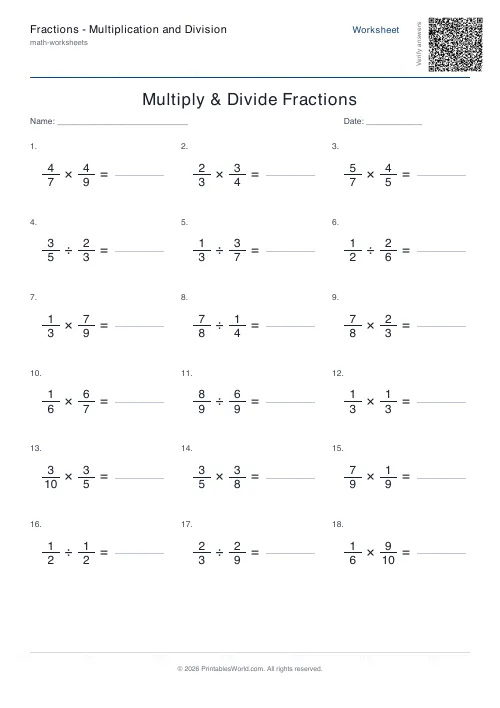
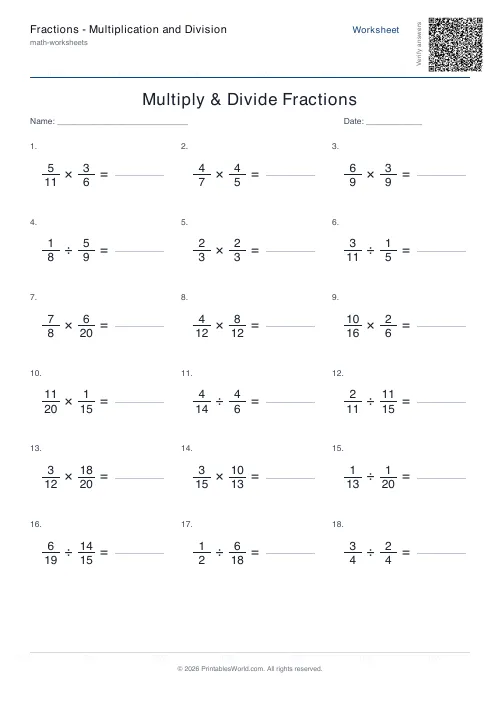
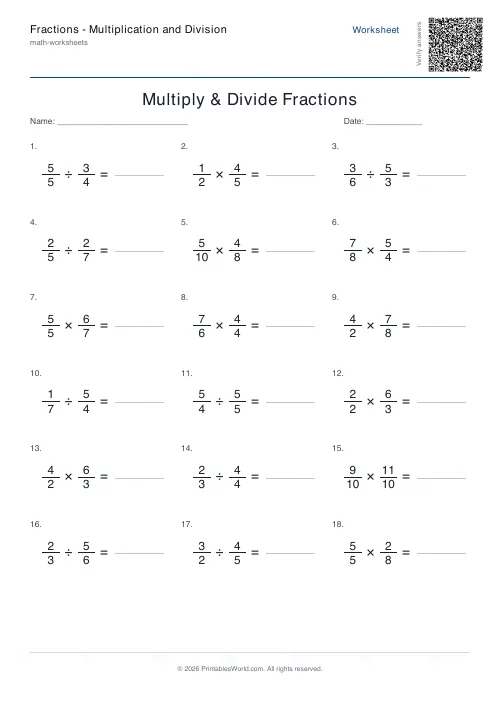
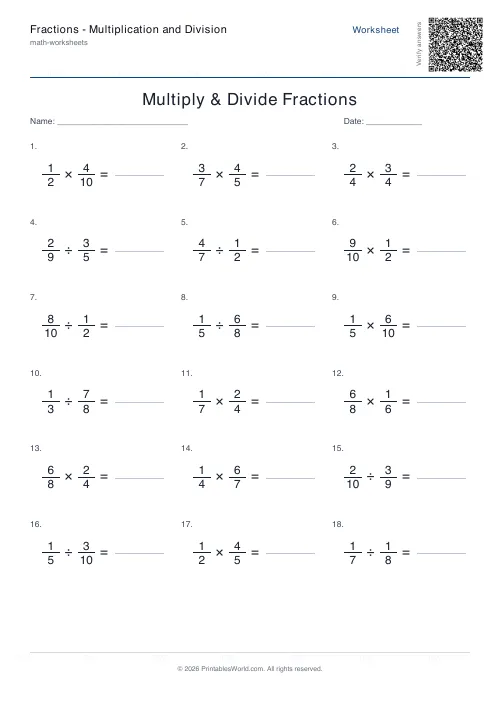
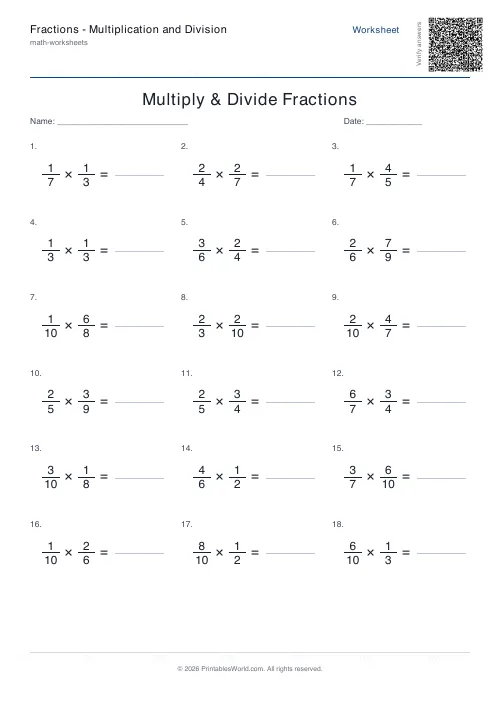
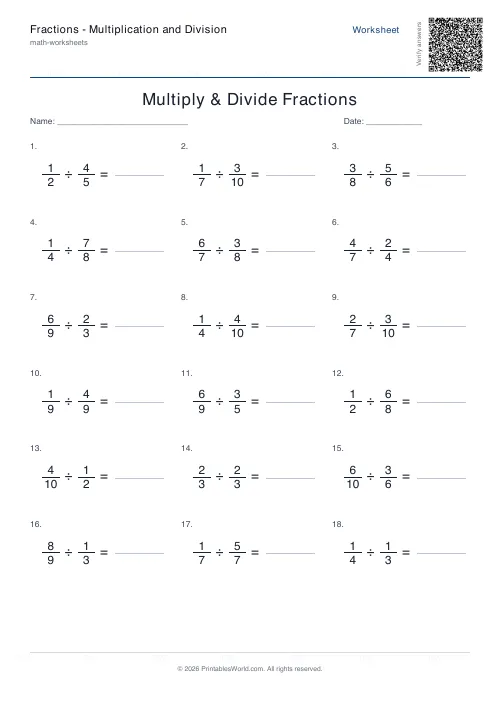
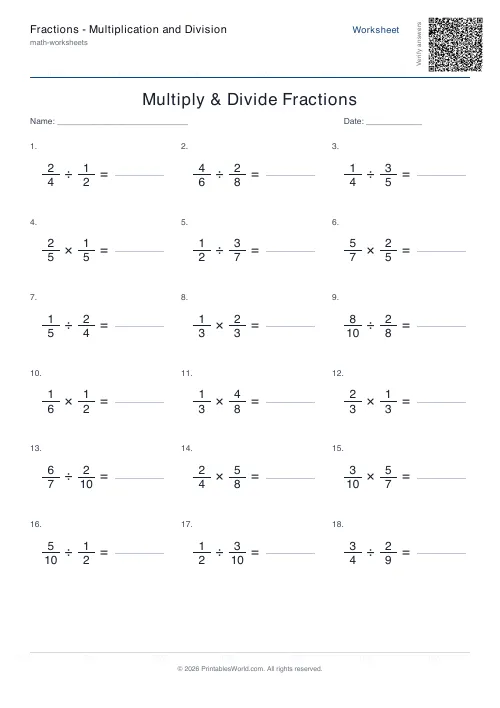
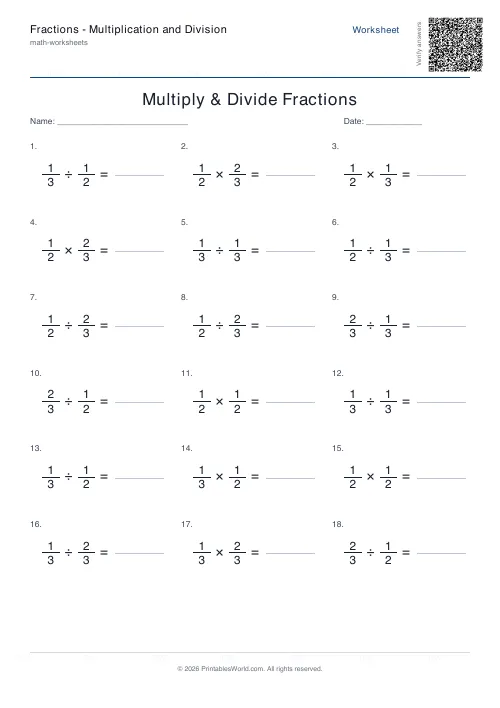
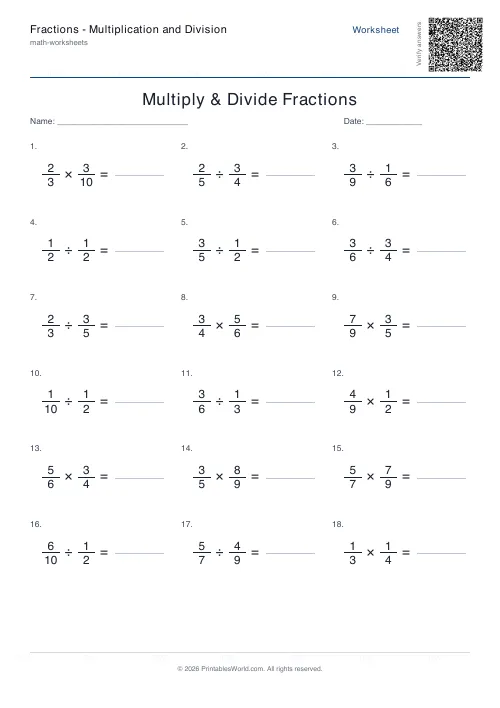
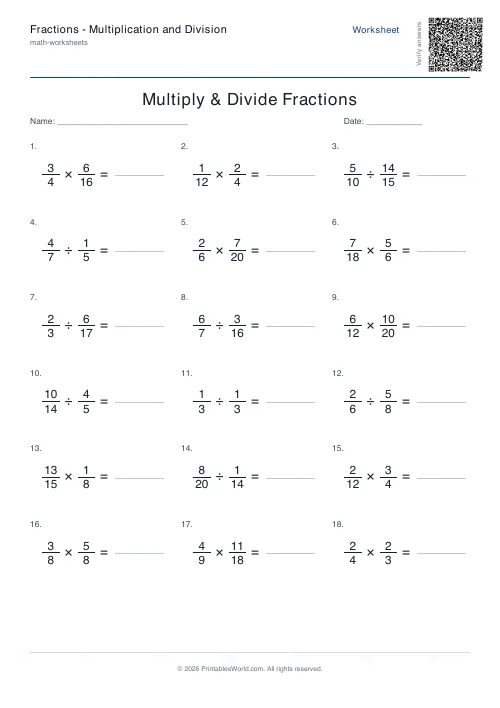
What this tool does
Multiplying and dividing fractions, with improper fractions optional. Every answer comes out reduced to lowest terms. Up to 30 problems a sheet, plus an answer key.
People also used
Add & Subtract Fractions Worksheets
Printable adding and subtracting fractions practice.
Fractions Practice Sheets Generator
Generate printable fraction simplification worksheets with custom ranges, layouts, and answer keys.
Decimals Worksheets Generator
Create custom decimal arithmetic worksheets with configurable operations and decimal places.
Feedback
Spotted something off with this tool?
The operations that are easier than they look
Multiplying fractions is the least demanding thing in the whole topic: multiply the tops, multiply the bottoms, simplify. There is no common denominator to find and nothing to line up.
Division adds one move. Flip the second fraction, then multiply. After that it is the same operation you were already doing.
Which is why this sheet is often set too late. Children who are still struggling with adding fractions can usually multiply them fine, and doing so successfully is a useful thing to have happen partway through a difficult topic.
The thing worth teaching alongside it
Multiplication makes things smaller here, and that contradicts everything a child has learned about multiplication.
Half of a half is a quarter. Multiplying by 1/2 halves the number. Before anybody calculates anything, ask a class whether 3/4 × 2/3 will come out bigger or smaller than 3/4, and a good proportion of the room will say bigger. Getting that prediction wrong out loud, before the arithmetic, is worth more than the arithmetic.
Division does the opposite. 3/4 ÷ 1/2 is 3/2, which is larger than either. "How many halves fit into three quarters?" is the question that makes it make sense.
Setting it up
- Operation — multiplication only, division only, or a mixed sheet. Mixed is the harder one, because the first decision on every problem is which rule applies.
- Improper fractions — off keeps every fraction under 1. On allows tops bigger than bottoms, which is where multiplication stops always shrinking the number and the class's new intuition gets tested.
- Maximum denominator, 3 to 20.
- Problems, up to 30, plus the answer key, a title and Name and Date fields.
Every answer is fully simplified
Results are reduced before they are printed, so 8/12 appears as 2/3 on the key.
That is worth flagging to a class, because a pupil who has correctly worked out 8/12 and stopped there has the right value and the wrong form. Deciding in advance whether you are marking the value or the form saves an argument.
Cancelling before multiplying
Worth teaching from this sheet, since it is where it pays. In 4/9 × 3/8, the 4 and 8 share a factor and so do the 3 and 9, and cancelling first leaves 1/3 × 1/2 — small numbers, done in your head.
Multiply first and you land on 12/72, and now you have to spot that 12 is the highest common factor. Same answer. Considerably more work, and several more places to slip.
Print at 100% on A4 or US Letter.
FAQs
Quick answers
Are answers simplified?
Yes. Every answer is reduced to its lowest terms using the greatest common divisor.
Can I include improper fractions?
Yes. Toggle "Include improper" on to allow top-heavy fractions in both inputs and outputs.
What does division do internally?
Division multiplies the first fraction by the reciprocal of the second, then simplifies.
Can I practise multiplication only?
Yes. Set Operation to Multiply. Use Mixed for combined practice.
Related tools
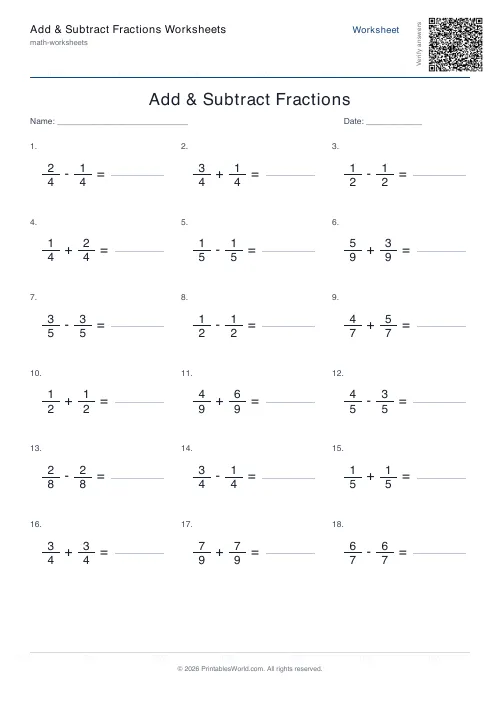
Add & Subtract Fractions Worksheets
Printable adding and subtracting fractions practice.
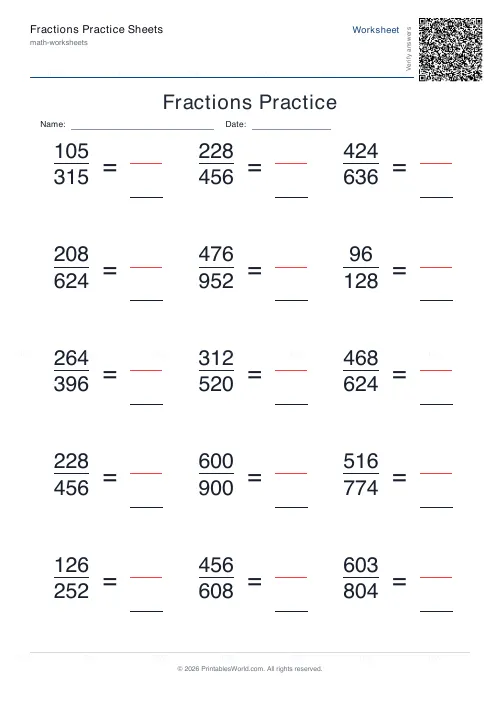
Fractions Practice Sheets Generator
Generate printable fraction simplification worksheets with custom ranges, layouts, and answer keys.
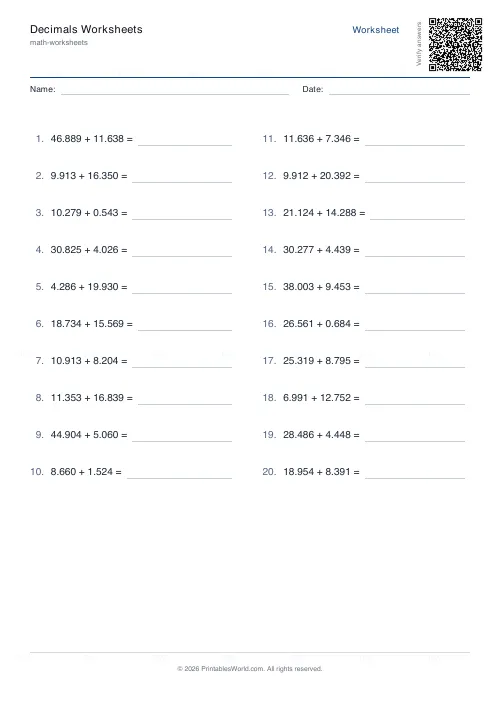
Decimals Worksheets Generator
Create custom decimal arithmetic worksheets with configurable operations and decimal places.
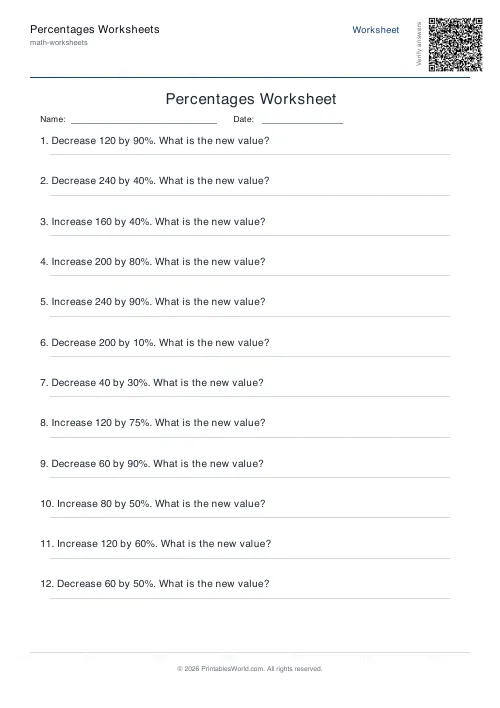
Percentages Worksheets Generator
Free printable percentage worksheets: percent of amounts, percentage change, and percent-to-fraction conversion.
Further reading
Math Worksheets
Fractions made simple: teaching fractions at home
Fractions go wrong when the rules arrive before the meaning. Here is the order that works, the four misconceptions to head off early, and how to use everyday objects before any worksheet.
6 min read
Math & Numeracy
How to help a child who's stuck on times tables
A simple two week plan to help child with times tables, using short daily practice and free printable multiplication grids you can customise and print.
7 min read
More like this
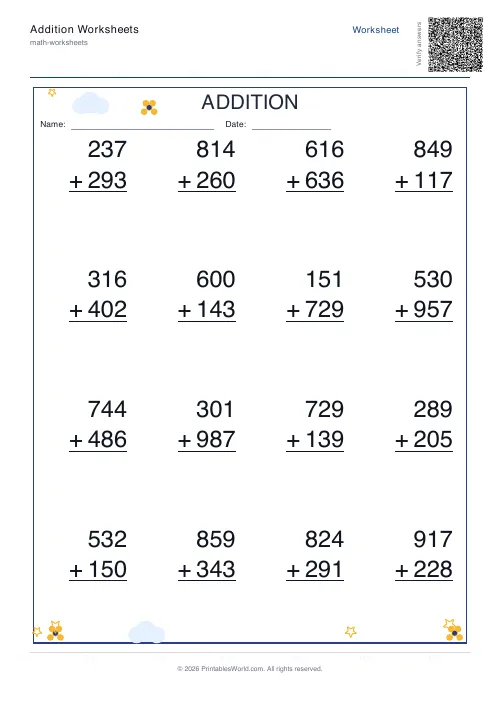 Addition Worksheets Generator
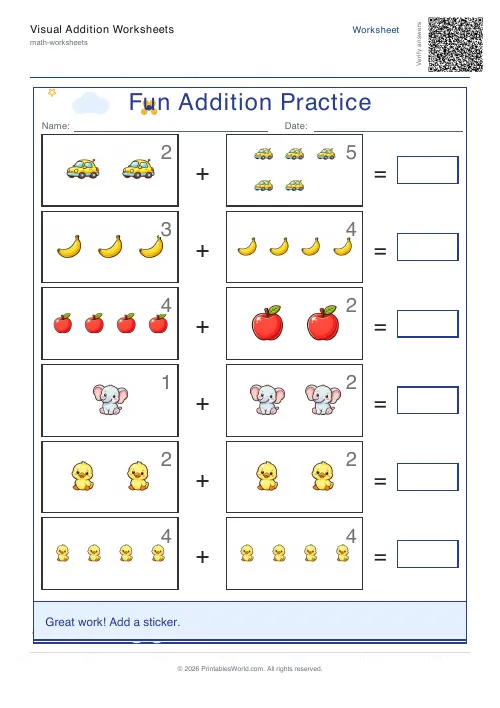 Visual Addition Worksheets Generator
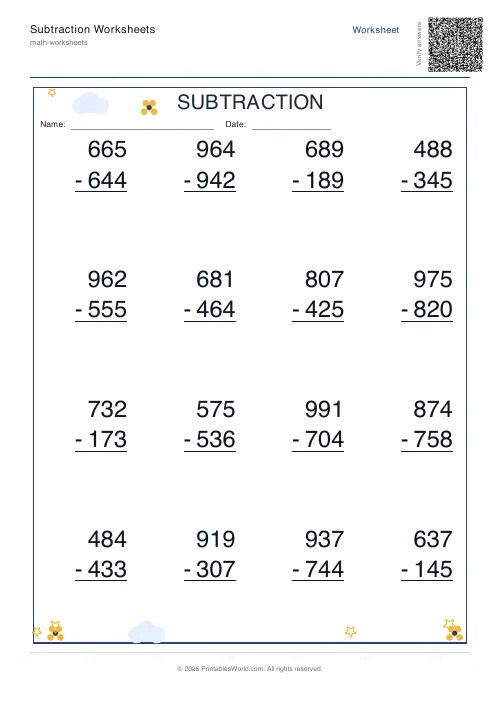 Subtraction Worksheets Generator
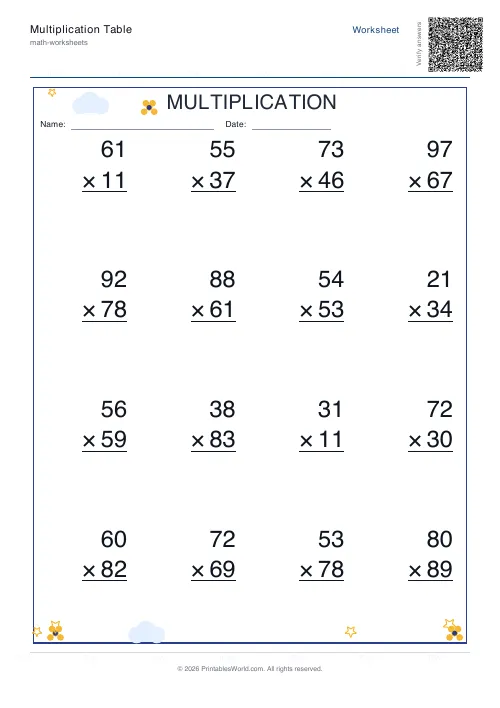 Multiplication Table Generator
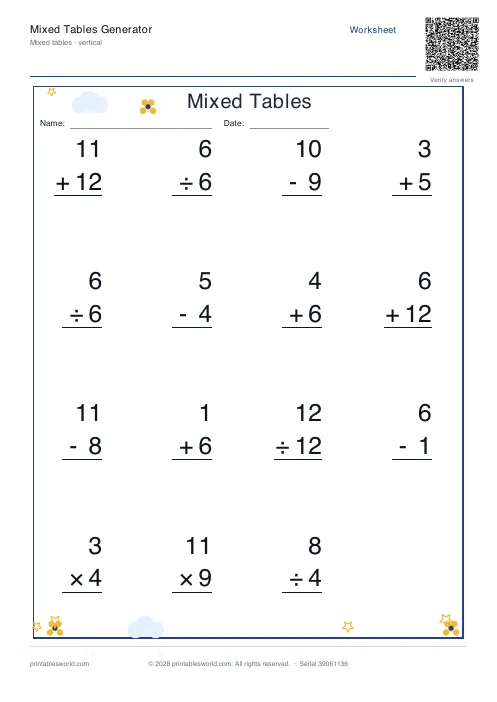 Mixed Tables Generator
- Fractions Practice Sheets Generator
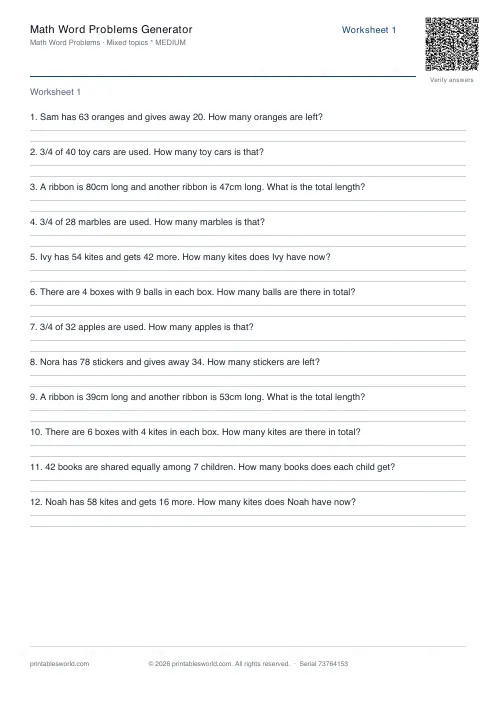 Math Word Problems Generator
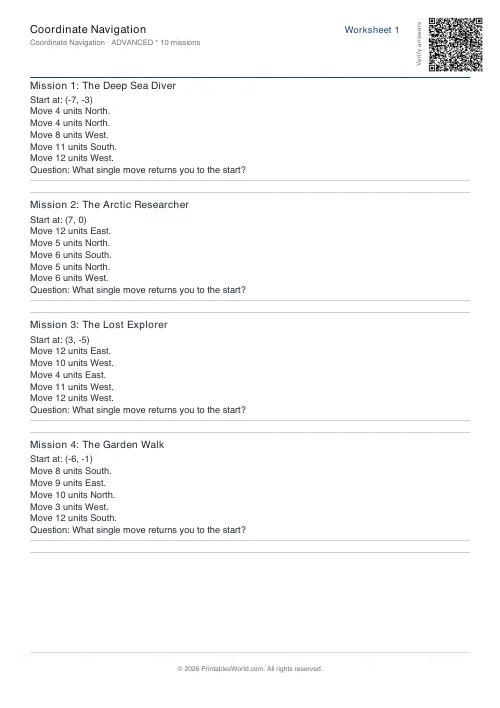 Coordinate Navigation Generator
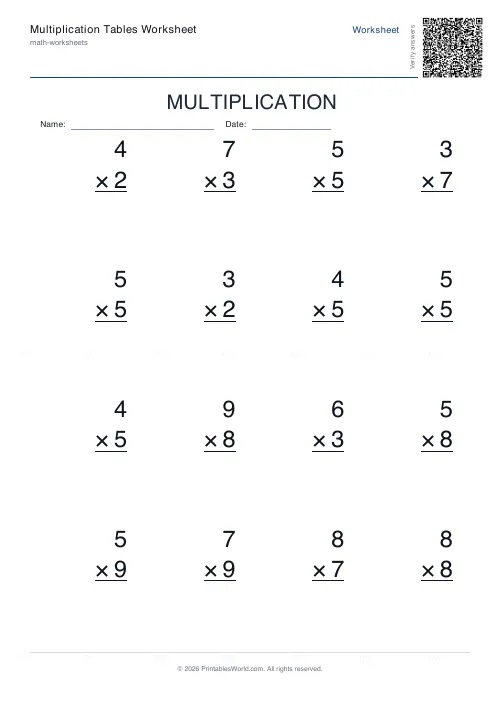 Multiplication Tables Worksheet
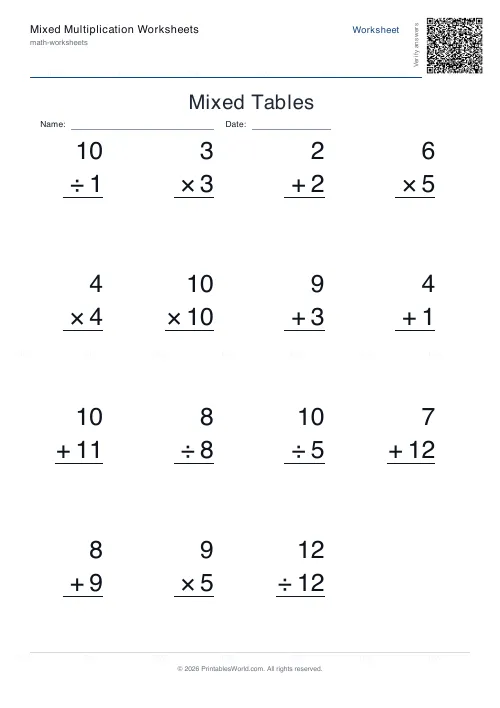 Mixed Multiplication Worksheets
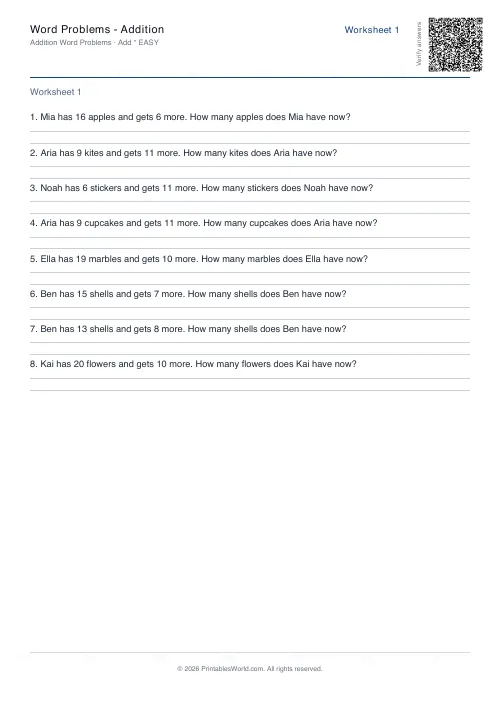 Word Problems: Addition
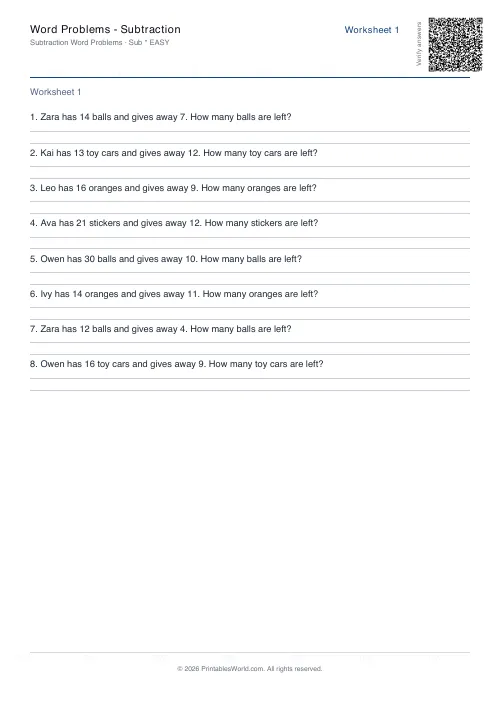 Word Problems: Subtraction
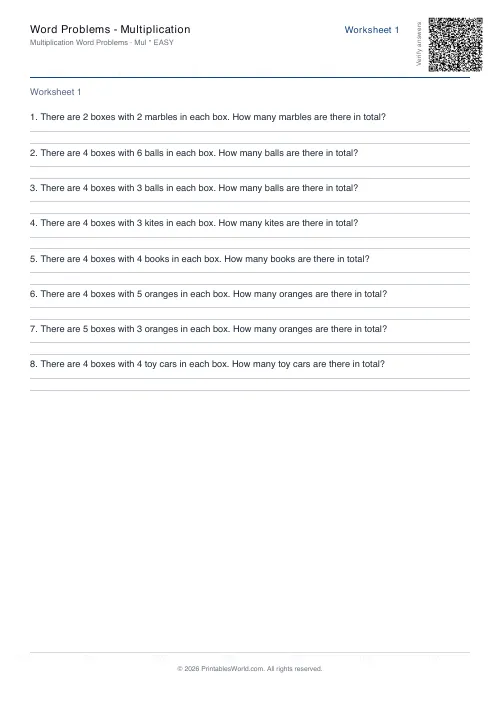 Word Problems: Multiplication
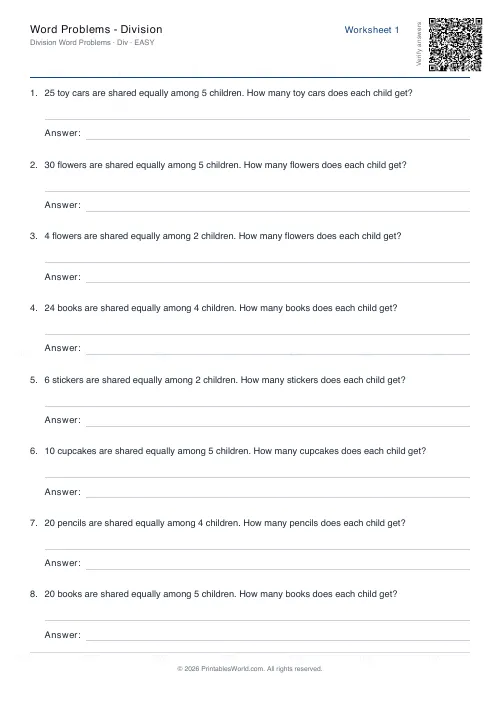 Word Problems: Division