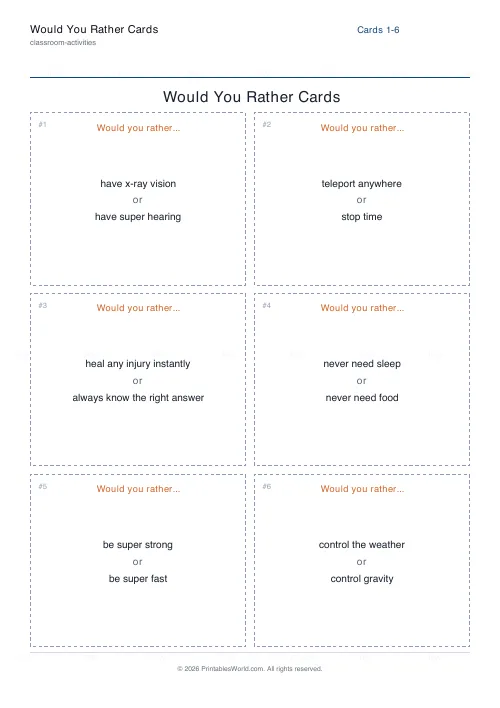
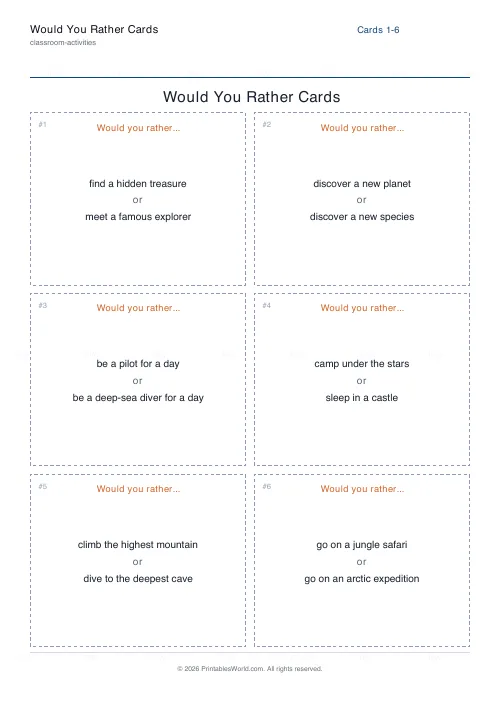
What this tool does
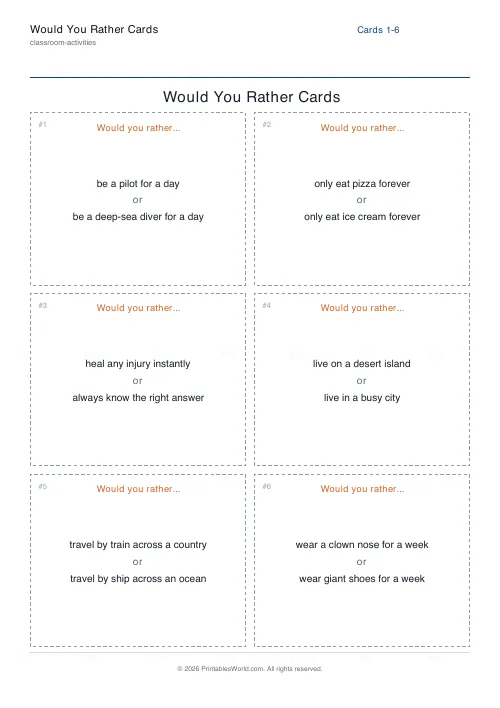
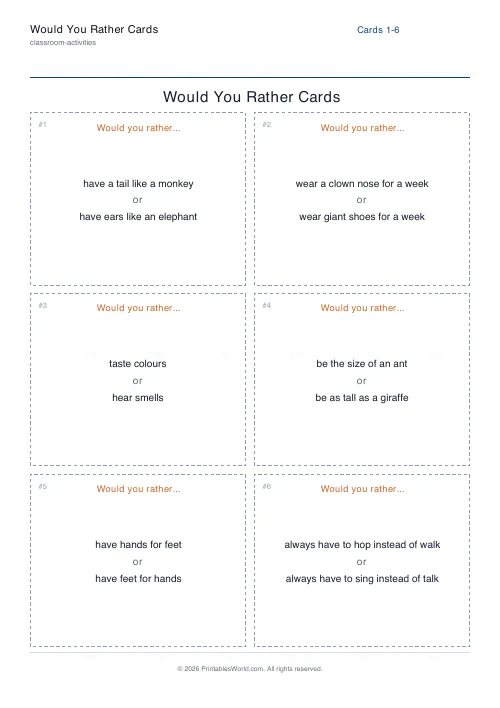
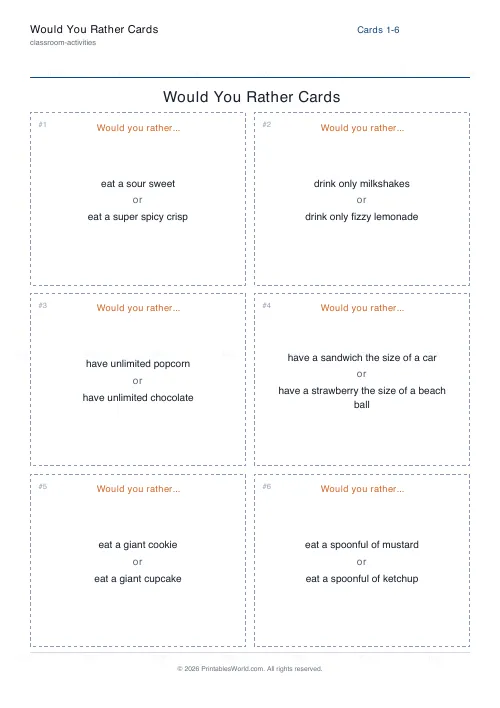
Generate a grid of cut-out 'Would you rather…?' cards from a built-in list of friendly, classroom-safe prompts. Choose a theme and the number of cards, then print on A4 or US Letter. Each card has dashed cut lines so they are quick to snip out for circle time, ice-breakers and brain breaks.
People also used
Feedback
Spotted something off with this tool?
Fun Would You Rather cards in seconds
'Would you rather…?' questions are one of the quickest ways to get a class talking, laughing and listening to each other. This generator lays out a grid of cut-out cards, each printing a friendly either-or prompt drawn from a built-in list. Pick a theme, choose how many cards you need, and print. Every card has dashed cut lines so they are easy to snip out and hand round.
The prompts are written to be classroom-safe and inclusive, so they work for circle time, the start of a lesson, a transition between activities, or a five-minute brain break.
Why a dilemma beats a preference
A Would You Rather card only works if both options cost something. "Fly or be invisible?" is a real dilemma because each gives up what the other offers. "Chocolate or homework?" is not a dilemma at all — everyone answers the same way and there is nothing to say afterwards.
That balance is what makes this a talking activity rather than a quick poll. The child has to weigh two things and then say why, which is a different and considerably harder task than stating a preference.
It also means the follow-up question is the activity. The card supplies the dilemma; "why?" supplies the lesson. Without the second half you have a show of hands.
Building oracy out of one card
A single card supports a whole sequence of speaking tasks, each a step harder than the last.
- Choose and state. "I would rather …" — a full sentence, which is already more than many children volunteer.
- Justify. One reason. "Because …"
- Extend. Two reasons, connected. This is where the sentence structure has to do some work.
- Anticipate. Give a reason someone might choose the other option. Genuinely difficult, and the step that develops perspective.
- Rebut. Hear the other side's reason and respond to it — the beginnings of debate.
Steps 1 and 2 suit Key Stage 1. Steps 4 and 5 stretch upper primary and secondary, and they are the ones that transfer directly into persuasive and discursive writing.
Writing dilemmas that work
The built-in themes are written to be balanced and classroom-safe. When you type your own, three tests separate a good dilemma from a dead one.
Would the class split? If you can predict the answer, it is not a dilemma. A rough 50/50 is the target.
Does each option have a real cost? Both should be attractive, or both slightly awful. Mixing one great option with one poor one kills it.
Can a child defend either side? If one answer is obviously correct, there is nothing to argue.
Curriculum versions work well on this pattern: "Would you rather live in Ancient Rome or Ancient Egypt?", "… be a solid or a liquid?", "… explain your method or show your working?" The reasoning is the assessment, and it reveals what a child understands far better than a closed question would.
Beyond the circle: writing and display uses
Because the format demands a reason, it converts into written work more readily than most talk prompts.
- Journal starter. One card, one paragraph, with the reason required. A dependable five-minute writing task.
- Persuasive writing — children argue their choice to convince someone who chose the other.
- Balanced argument — write both sides fairly, then conclude. The card supplies a genuinely two-sided question, which is the hard part of setting this task.
- Class survey — tally the choices, chart them, and discuss whether the split was expected.
- Display — pin a card and two columns of children's written reasons either side.
Print on card and laminate for a reusable set, or keep the name and date fields on when the cards are being used as written work rather than talk.
FAQs
Quick answers
Are the prompts suitable for children?
Yes. Every prompt is drawn from a built-in, classroom-safe list and is written to be light-hearted and inclusive, so the cards work for primary and lower-secondary groups.
How many cards fit on a page?
Six cards print per page in a two-by-three grid. Choose any number of cards and the tool spreads them across as many pages as needed.
Can I get different cards each time?
Yes. The cards are drawn from the list using a shuffle, so pressing Generate New gives you a fresh selection. Pick a theme to keep them on one topic.
Do I need to laminate them?
Not at all, but laminating after cutting along the dashed lines makes a reusable deck for circle time, ice-breakers and brain breaks.
Related tools
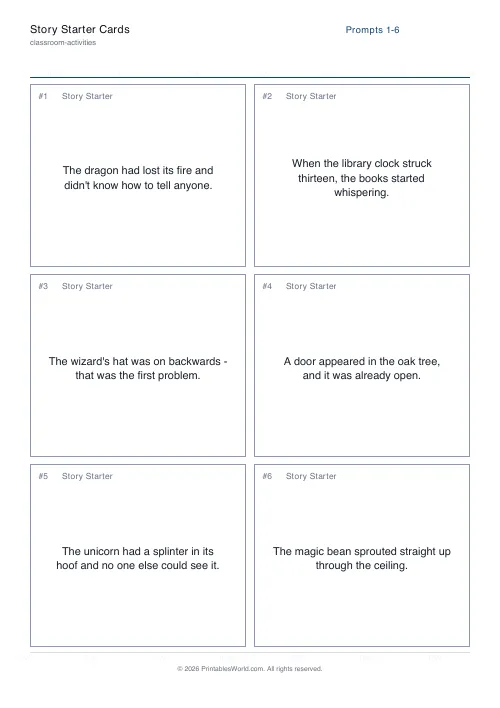
Story Starter Cards
Creative-writing prompt cards to spark a story in one sentence.
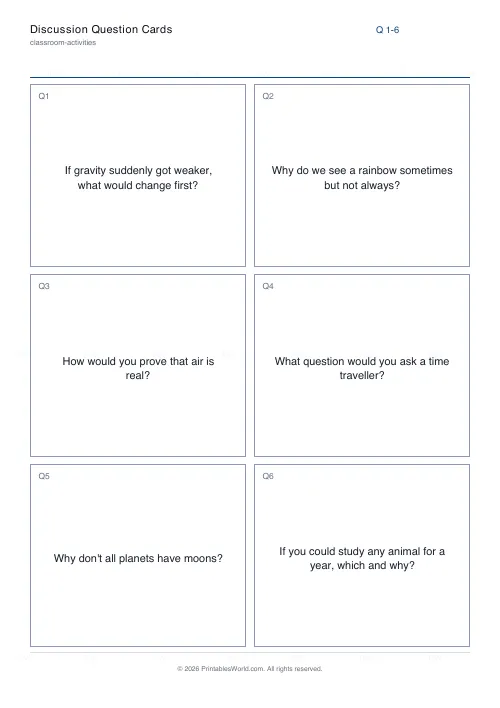
Discussion Question Cards
Open-ended question cards to spark a classroom conversation.
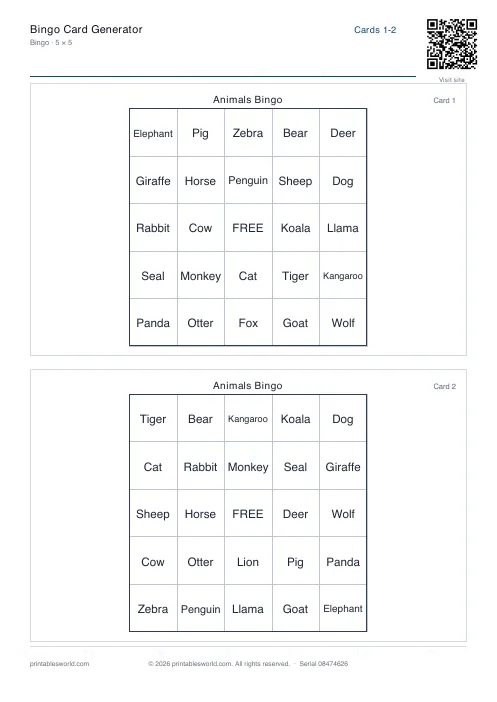
Bingo Card Generator
Generate unique printable bingo cards with custom words, FREE centre toggle, call sheet, and seeded shuffles.
Coloring Page Maker
Create printable coloring pages with mandala, geometric, and animal templates in any line thickness.
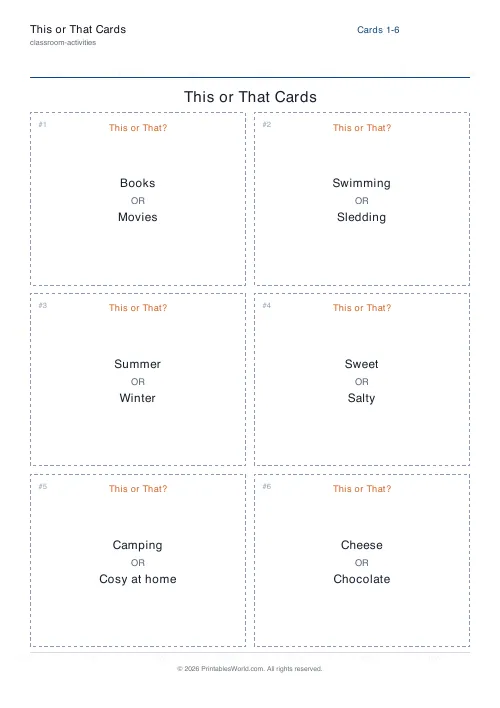
This or That Cards
Quick-fire either/or cards. One binary choice per card, no explaining required.
Further reading
Classroom Activities
How to make learning stations work in any classroom
Stations fail for two predictable reasons: the independent tasks are not truly independent, and the timing is wrong. Both are fixable before the lesson starts.
5 min read
Classroom Activities
Back-to-school printables every teacher needs
Sorted by when you will actually need them: the two things to print before the children arrive, the week-one set, and the routines worth establishing while everyone is still compliant.
5 min read
Classroom Activities
20 classroom games that need zero prep
Games organised by the gap they fill: two minutes at the end of a lesson, ten minutes before assembly, or a whole wet lunchtime. Almost all need nothing but a voice.
6 min read