Classroom Activities
20 classroom games that need zero prep
By Jobi · Creator & Maintainer, PrintablesWorld · Updated 2026-06-25 · 6 min read
Every teacher needs a stock of activities that require nothing: no photocopying, no equipment, no setup, and no explanation longer than a sentence. The list below is organised by the length of gap it fills, because a two-minute game and a forty-minute wet lunchtime are entirely different problems. Two of them use a single printable. A bingo card generator. And the rest need nothing but a voice.
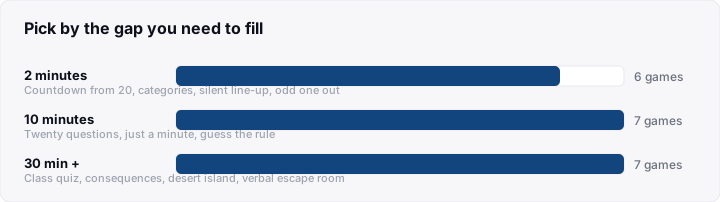
Two minutes: the end-of-lesson gap
1. Countdown from 20. The class counts to twenty, one number per person, in no fixed order. If two people speak at once, start again. Absurdly effective at producing silence and attention.
2. Categories. Name a category, go round the room, no repeats, no hesitation. Out if you falter.
3. Silent line-up. Line up in birthday order without speaking. Takes about ninety seconds and turns lining up into the activity.
4. Word association. One word each, connected to the last. Fast, and it exposes vocabulary you can pick up on later.
5. Two truths and a lie. One volunteer, class votes. Excellent at the start of a year.
6. Odd one out. Say three things; class argues which does not belong. Any answer with a reason counts, which is the point.
Ten minutes: before assembly
7. Twenty questions. You think of something, class asks yes/no questions. Teaches narrowing-down, which is genuinely useful.
8. Just a minute. Talk for sixty seconds on a topic without hesitation, repetition or deviation. Hard, and very funny.
9. Alphabet story. Build a story where each sentence starts with the next letter of the alphabet.
10. Would you rather. Two options, everyone moves to a side of the room, a few explain why. Movement plus reasoning.
11. The answer is… Give the answer, "seven", and the class invents questions. Reverses the usual direction and works in any subject.
12. Guess the rule. Sort children by a secret rule (wearing blue, name has an E). They work out the rule. Pure logic, no materials.
13. Back-to-back drawing. One describes a shape, the other draws it unseen. Needs paper but no preparation, and it teaches precise instruction better than a worksheet on it.
Thirty minutes and up: wet lunchtime
14. Class quiz, written by the class. Groups write five questions each, then quiz each other. The writing is most of the activity.
15. Charades or Pictionary: using this term's topic vocabulary rather than films.
16. Consequences. Fold-over story writing. Reliably produces nonsense and laughter, and quietly practises sentence structure.
17. Desert island. Groups pick five objects and justify them. Ten minutes of argument, five of presenting.
18. Human bingo. Find someone who can whistle, has a pet, has been on a plane. Needs a grid, see below.
19. Mastermind. One child takes questions on a specialist subject of their choosing. Children take this extremely seriously.
20. Escape-the-room, verbal version. You describe a locked room; the class asks questions and proposes solutions. No materials, and it runs as long as you let it.
Games that are secretly curriculum
Several of these do real teaching if you choose the content deliberately.
- Categories with "prime numbers", "prepositions" or "rivers" is retrieval practice.
- Odd one out with three shapes, three materials or three historical figures forces justification. The reasoning is the assessment.
- Twenty questions about a Tudor monarch or a body organ practises classification and questioning.
- The answer is… with "1066" or "photosynthesis" reveals immediately who has the vocabulary and who does not.
This is what makes a filler worth using rather than merely surviving. The children experience a game; you get five minutes of recall.
Two that need one printable
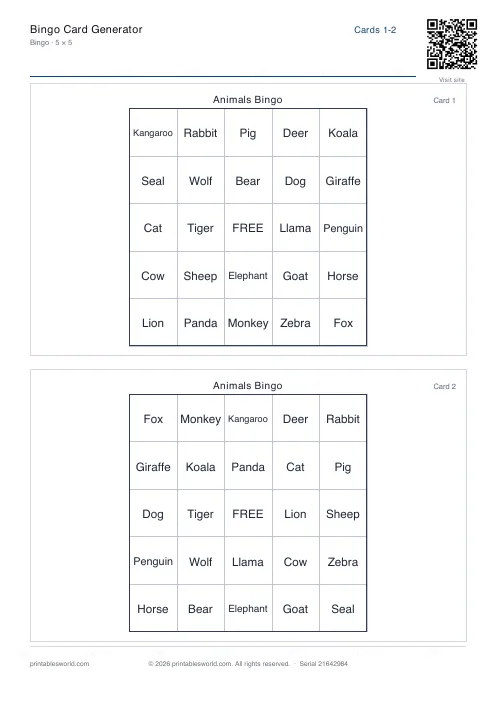
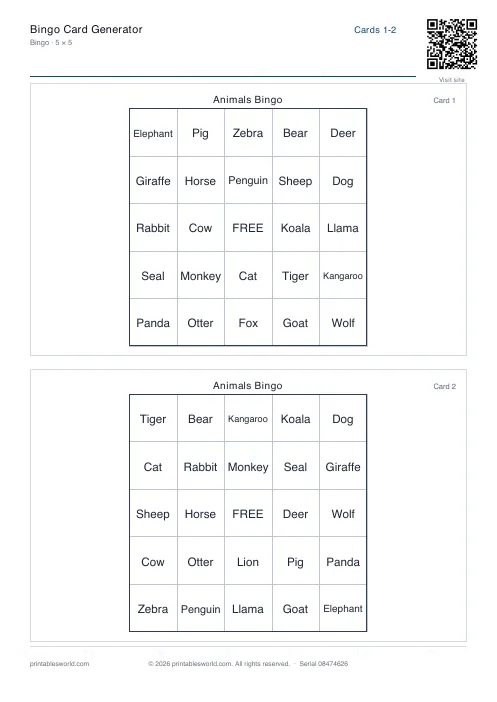
Human bingo needs a grid of squares with a statement in each. "has read a book this week", "can name three countries in Africa". Children move round collecting signatures. A bingo card generator produces the grids in a couple of minutes, and using custom words rather than numbers means the squares can be about your class or your topic.
Subject bingo is the same generator used straight: calls are questions rather than numbers. "Seven times six" and players cover 42. It works for times tables, vocabulary, spellings, key dates and element symbols with no change of method.
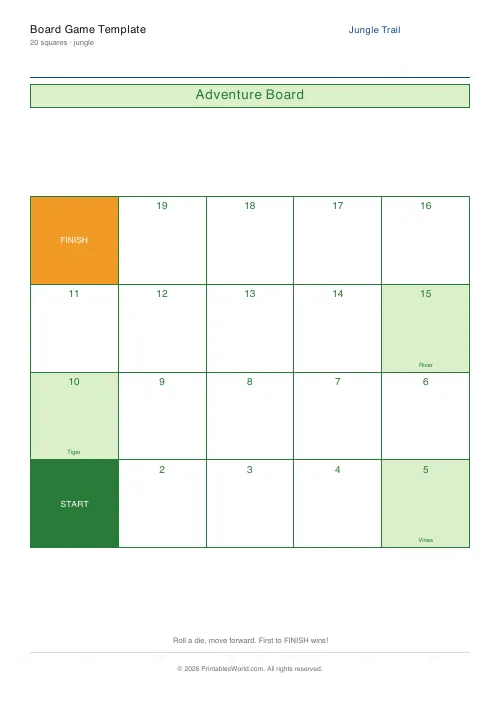
If you want something with more structure for a longer session, a blank board game template lets groups design a game about the topic, which is a lesson in itself. They have to decide what counts as a good question before they can write the squares.
Making any of them work
Explain in one sentence. If the rules take two minutes, you have lost the two minutes.
Decide how it ends before you start. "Five rounds" or "until the bell". Games without an ending are hard to stop.
Have the noise signal ready. Hand up, countdown, whatever your class already knows. Establish it before the game, not during it.
Play a round yourself. Demonstrating beats explaining, particularly with younger classes.
Keep a list on the wall. Not in a folder. The gap always arrives when you are least able to think of something.
Frequently asked questions
Are classroom games a waste of teaching time?
Not when the content is chosen deliberately. Most of these can be run as retrieval practice on the current topic, which is one of the better-evidenced ways to strengthen memory. A game with topic vocabulary is a lesson; a game about films is a break. And there are days when a break is the right call.
How do I stop a game getting out of hand?
Set the end before you start, agree the noise level out loud, and stop while it is still going well. Games that overrun are what make people wary of using them.
Do these work with older students?
Most do, with drier framing and harder content. Just a minute, twenty questions and the-answer-is work well into secondary. Silent line-up does not.
What about a class that will not join in?
Start with games where nobody is singled out. Countdown from 20 and silent line-up involve everyone at once and expose no individual. Save volunteer games until the room is warmer.
Before you print
Most of this list needs nothing at all. Put it on the wall rather than in a folder. For the two that want a grid, the bingo card generator makes a class set in a couple of minutes, and using your own topic words turns a filler into revision.
Related tools
Continue reading
Classroom Activities
Back-to-school printables every teacher needs
Sorted by when you will actually need them: the two things to print before the children arrive, the week-one set, and the routines worth establishing while everyone is still compliant.
5 min read
Math Worksheets
Making maths fun: 15 ways to practise without tears
Maths tears are usually about difficulty, length or fear of being wrong, not about maths. Fifteen practical changes, grouped by which of those three problems they actually solve.
6 min read