Classroom Activities
Back-to-school printables every teacher needs
By Jobi · Creator & Maintainer, PrintablesWorld · Updated 2026-07-17 · 5 min read
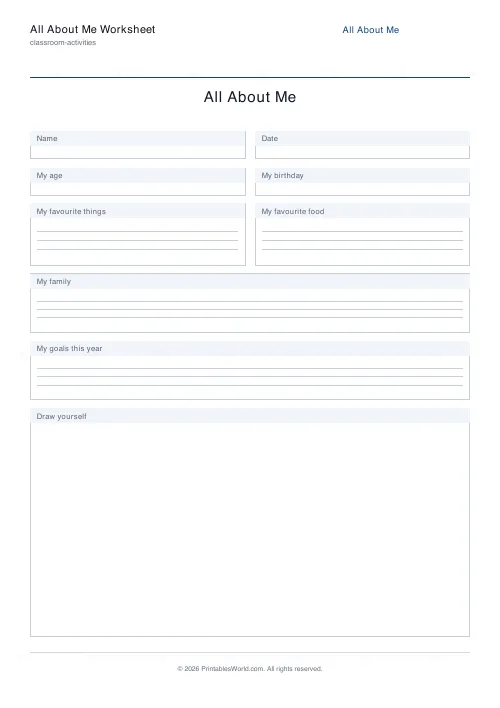
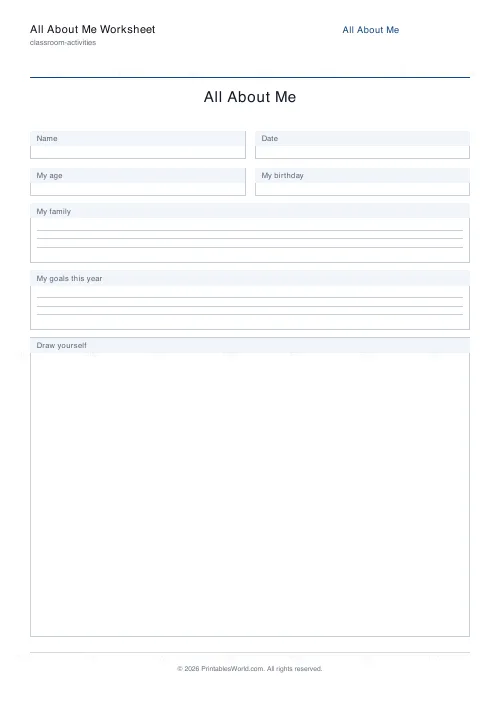
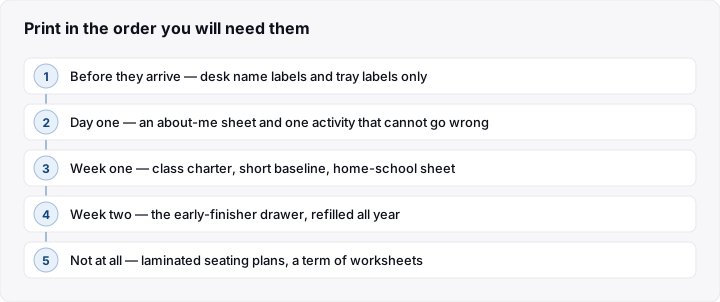
The useful question is not which back-to-school printables exist, but which order you will need them in. Day one has different demands from week three, and preparing everything at once in August guarantees half of it stays in the drawer. A free printable all about me worksheet is the classic day-one sheet; the rest of this list is sorted by when it earns its place.
Before the children arrive
Two things, and only two, genuinely need to exist before the first morning.
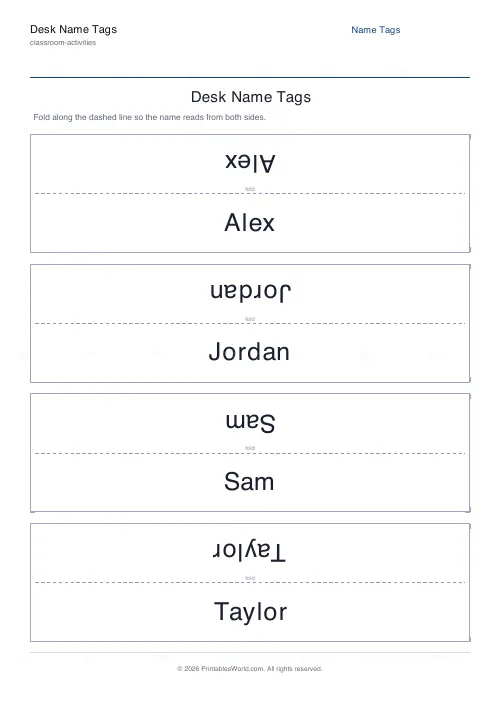
Name labels for desks. Whether or not you keep a seating plan, having names on tables on day one means you can address every child by name from the first minute, which does more for the tone of the room than anything else you can prepare. Desk name tags print a set in one go.
Labels for trays, drawers and pegs. Tedious, and much worse to do while thirty children wait to put their coats somewhere.
Everything else can wait, and waiting is usually better. You will make different choices about your class once you have met them.
Day one
An about-me sheet. It occupies the awkward first half hour, requires nothing of you while you deal with the child whose bag has not arrived, and gives you thirty pieces of genuine information about your class. Keep them. Read in October they tell you things the first week did not.
One activity that cannot go wrong. Something every child can complete regardless of ability, because day one is not the day to discover that a third of the class cannot access the work. A word search on a friendly topic, a maze, a colouring page. The purpose is a settled room and an early win, not assessment.
Nothing else. The commonest day-one mistake is over-preparing. You will spend most of it on logistics: lost jumpers, dinner numbers, someone in the wrong room, a fire drill nobody warned you about.
Week one
Class rules or a charter: written with the children rather than handed to them. A blank grid with room for their wording, then displayed. Ownership is the whole mechanism; a printed list of rules is wallpaper.
Baseline assessment in the core subjects. Keep it short and unthreatening. You want a rough picture, not a ranking, and a long test in week one sets a tone you will spend a term undoing.
A reading record if your school does not supply one.
A home-school communication sheet: what you expect, when homework goes out, how parents reach you. Sent once in week one, it prevents a term of individual emails asking the same four questions.
Routines worth establishing early
The first fortnight is when routines are cheapest to install, because nothing has been established yet and children are watching to see what this class is like.
- A daily entry task: something on every desk when they walk in. It converts the messiest five minutes of the day into work and is the single highest-value routine on this list.
- An exit routine: one question answered before leaving, on a slip. Quick to read, and it tells you what landed.
- A behaviour or reward chart, if your school uses one. Start it in week one; introducing it in October after things have slipped looks like a reaction and is treated as one.
- A homework record that children fill in themselves.
Choose two, not six. A routine that is dropped in week four teaches the class that your routines are optional, which is worse than never starting it.
The early-finisher drawer
Prepare this in the first week and it will save you all year. A tray of activities children can take without asking, which require no explanation and produce no marking:
- Word searches and crosswords on current topic vocabulary
- Mazes and logic puzzles
- Blank graph paper for pattern and design work
- A challenge question of the week on the wall
Two rules make it work. The activities must be genuinely optional and never a punishment for finishing, and the drawer must be refilled. An empty tray in November is worse than no tray, because children stop checking.
What not to print
Anything laminated in August that depends on the class. Seating plans, group names, target charts. All of it changes once you know them.
A full term of worksheets. You will teach differently from how you planned in the holidays, and the pile becomes an obligation.
Decorative display that the children could make. A display made in week two by the class is better on every count than one you made in August, including the amount of your holiday it consumes.
Anything you printed last year and never used. If it stayed in the drawer for a year, the drawer is where it belongs.
Frequently asked questions
How much should I prepare before term starts?
Less than the internet suggests. Name labels, tray labels, a day-one activity and one no-fail task. Everything else is better decided once you have met the class.
What is the single most useful thing to print?
Desk name labels, on balance. Being able to use every child's name from the first minute changes the first day more than any worksheet.
Should day one include real work?
A little, and it should be something everyone can access. The aim is a settled room and an early success, not a measure of where anyone is.
How do I avoid spending the whole holiday preparing?
Set a fixed number of hours and prepare in the order you will use things, stopping when the time is gone. Preparing forward from day one means the unfinished part is always the least urgent.
Before you print
Print name labels and one no-fail activity before the first morning, and leave the rest until you have met the class. Then build the early-finisher drawer in week one. An all about me sheet for day one and desk name tags before it are the two that genuinely have to exist in advance.
Related tools
Continue reading