What this tool does
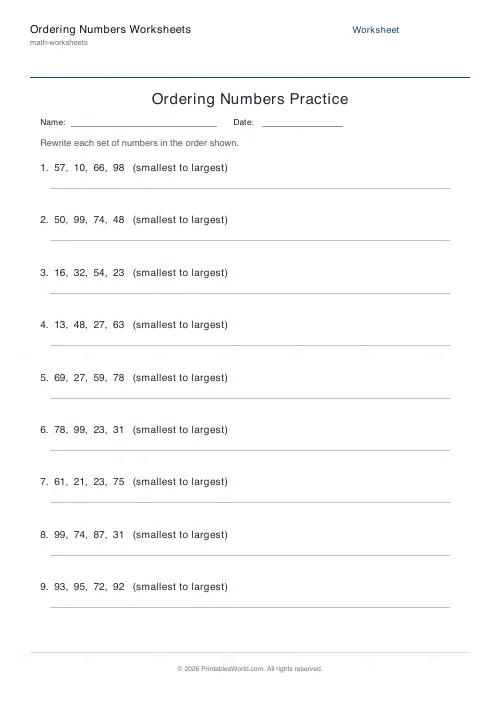
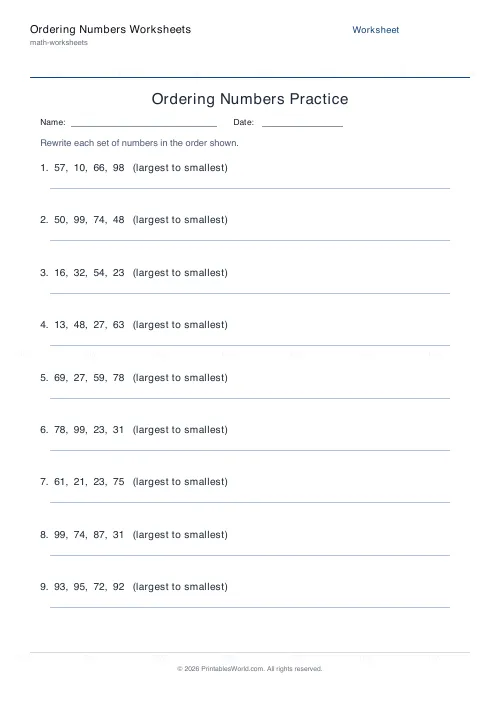
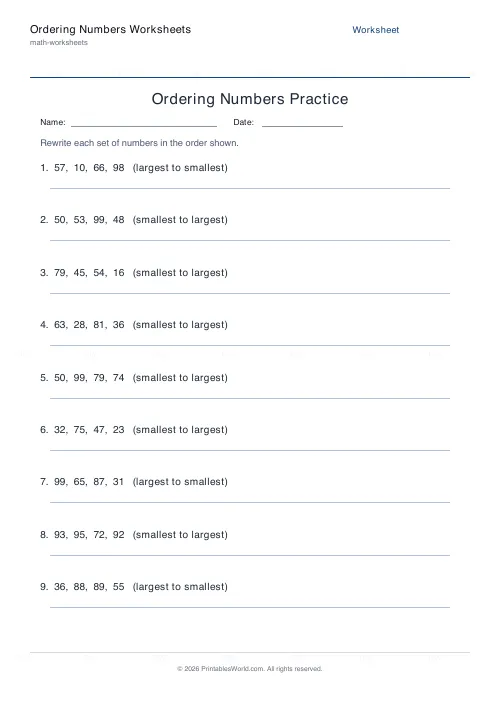
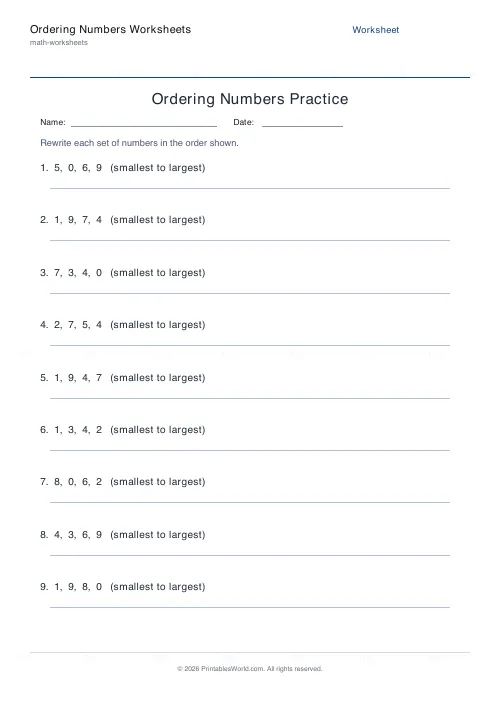
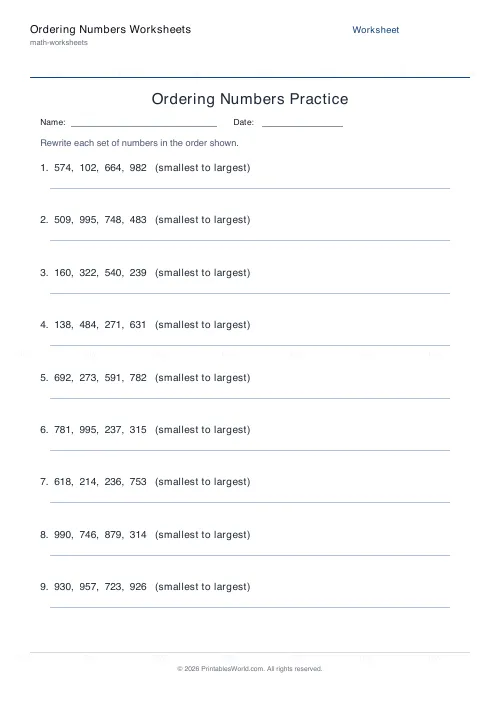
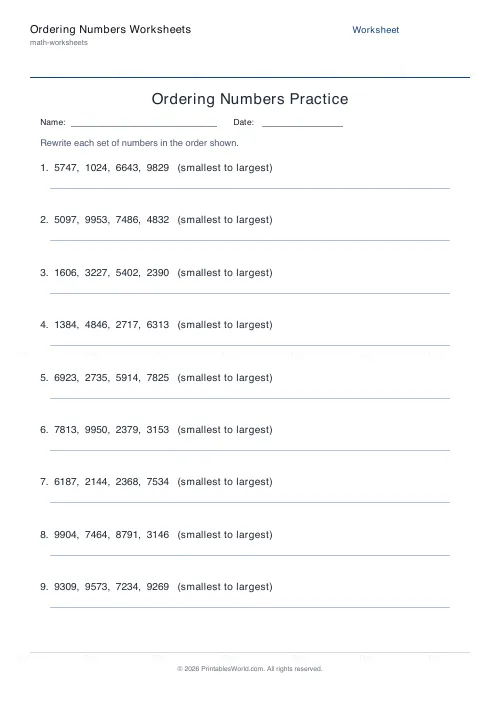
Generate printable ordering-numbers worksheets. Each problem gives a shuffled set of numbers to rewrite in ascending or descending order. Choose set size, digit range, and direction, with an answer key.
People also used
Feedback
Spotted something off with this tool?
Put numbers in order
Ordering numbers builds comparison and place-value understanding. This generator creates worksheets where each problem shows a shuffled set of numbers and the student rewrites them in order on the line below. You choose how many numbers per set, the digit range, and whether to order smallest-to-largest, largest-to-smallest, or a mix. And an answer key is generated automatically.
Ascending and descending
Ascending means smallest to largest (1, 5, 9). Descending means largest to smallest (9, 5, 1). Mixing both on one sheet stops pupils answering on autopilot and forces them to read the instruction each time. Comparing the leading digits, then working left to right, is the reliable strategy for ordering multi-digit numbers.
What you set
- Problems per sheet: short practice or a full page.
- Numbers per set: 3 to 6 values to order.
- Digit count: 1 to 5 digits.
- Direction: ascending, descending, or mixed.
- Answer key, Name & Date: for quick marking and classroom use.
How it gets used
- Set the number of problems, set size, and digit range.
- Pick the ordering direction (or mixed).
- Toggle the answer key and Name/Date fields.
- Preview, then download or print the worksheet.
Teaching ideas
Start with three single-digit numbers, then grow the set size and digit count as confidence builds. Mixed-direction sheets make good revision. For a hands-on version, write each number on a card and have pupils physically arrange them before writing the answer.
Place value does all the work
Ordering is not really a separate skill. It is place value, tested.
The reliable method is to compare left to right: line the numbers up by their place columns, find the leftmost column where they differ, and that column decides it. 4,271 beats 4,269 because the tens differ, and nothing to the right of that can change the outcome.
Children who instead compare by length get most whole-number questions right by accident, since a longer whole number usually is bigger. The habit then fails the moment decimals arrive, which is why the column method is worth insisting on even while the shortcut is still working.
Where decimals break the pattern children expect
This is the hardest part of the topic and the reason ordering deserves its own practice.
With whole numbers, more digits means bigger. With decimals it is the opposite: 0.9 is larger than 0.15, even though 15 is larger than 9. A child applying whole-number reasoning gets this wrong every time and cannot see why.
Two things fix it. First, say the numbers properly — "nine tenths" against "fifteen hundredths" makes the comparison much clearer than "zero point nine" against "zero point one five". Second, pad with zeros so the columns align: 0.90 against 0.15, and the tenths column settles it immediately.
Trailing zeros are worth a note of their own. 0.5, 0.50 and 0.500 are the same number, which surprises children who have learned that extra digits mean something.
Negative numbers reverse the intuition
Once negatives appear, "bigger digits mean bigger number" fails again: −2 is greater than −9, and −100 is one of the smallest numbers a child will have seen.
A number line is the only explanation that reliably lands. Further right is always greater, with no exceptions, and negatives simply sit to the left of zero. Temperature is the most useful real context, because children already accept that −2°C is warmer than −9°C without thinking of it as mathematics.
Mixing positives and negatives on one sheet is the version worth practising. A sheet of negatives alone lets a child invent the rule "ignore the minus and reverse", which collapses as soon as the two are combined.
FAQs
Quick answers
What does ascending and descending mean?
Ascending order is smallest to largest; descending order is largest to smallest. The worksheet labels each problem so students know which is required.
How many numbers are in each problem?
You choose. Between 3 and 6 numbers per set. Smaller sets suit younger pupils; larger sets add challenge.
Can I mix ascending and descending on one sheet?
Yes. Choose the mixed option and each problem is randomly set to ascending or descending, with the direction shown next to it.
Are larger numbers supported?
Yes, up to 4-digit numbers. Increase the digit count to practise ordering hundreds and thousands.
Related tools
Further reading
Math Worksheets
Ten frames and number bonds: early maths foundations
A ten frame is two rows of five. That arrangement does something a row of counters cannot. It makes quantities visible without counting, which is where number sense starts.
5 min read
Math Worksheets
Addition strategies: number lines, regrouping and more
Column addition is the destination, not the route. Here are the strategies that come before it, why each matters, and how to tell which one a child is actually using.
5 min read
Math Worksheets
How many maths worksheets per day? A parent's guide
The honest answer is less than most parents assume. And the number of questions matters less than whether the session ends well.
5 min read
More like this
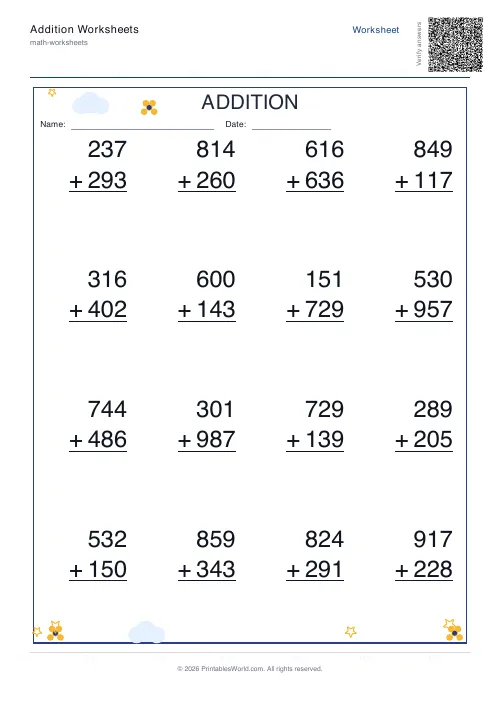 Addition Worksheets Generator
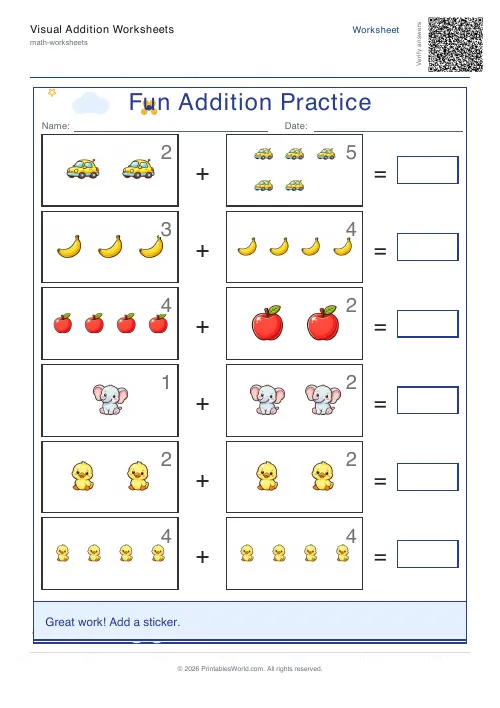 Visual Addition Worksheets Generator
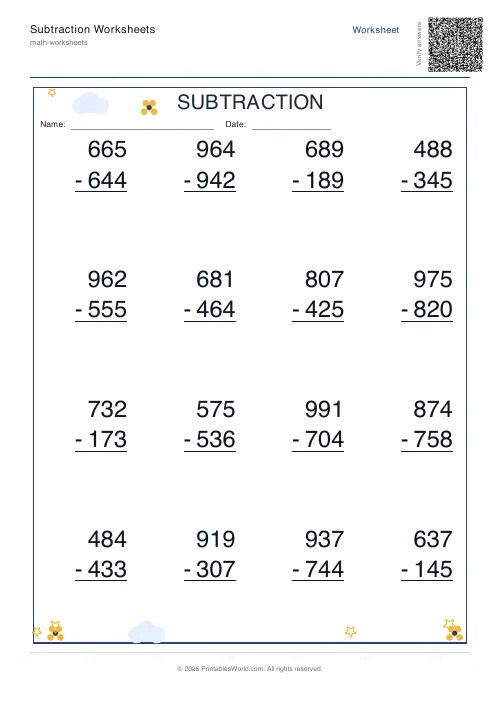 Subtraction Worksheets Generator
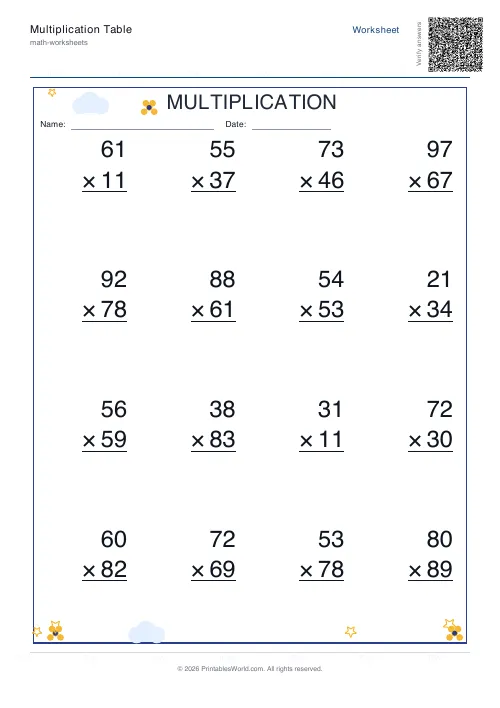 Multiplication Table Generator
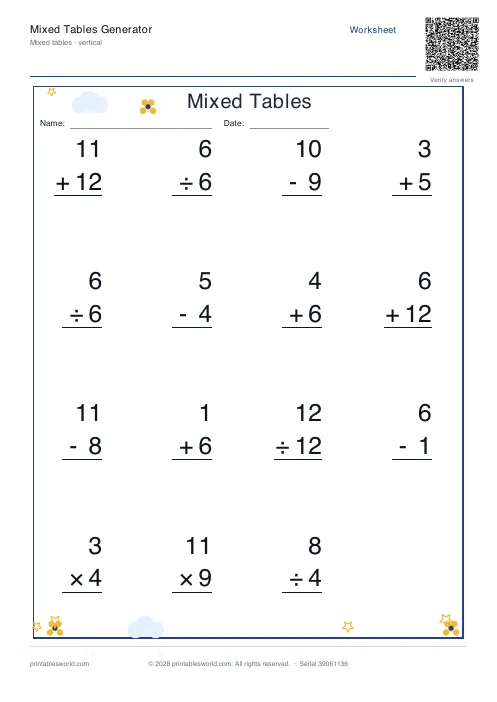 Mixed Tables Generator
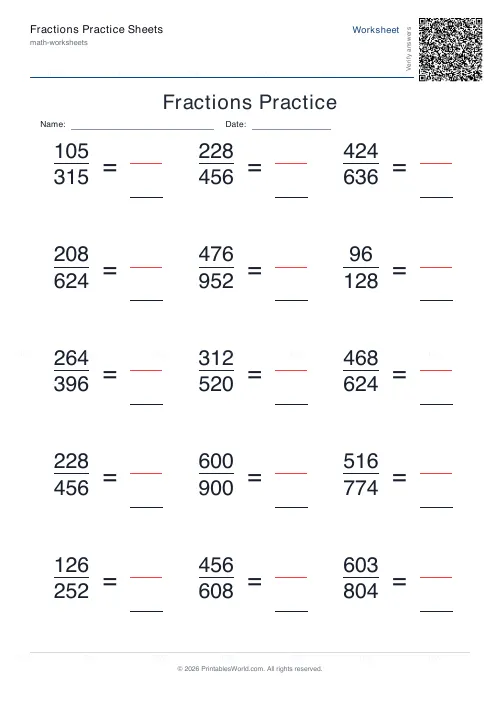 Fractions Practice Sheets Generator
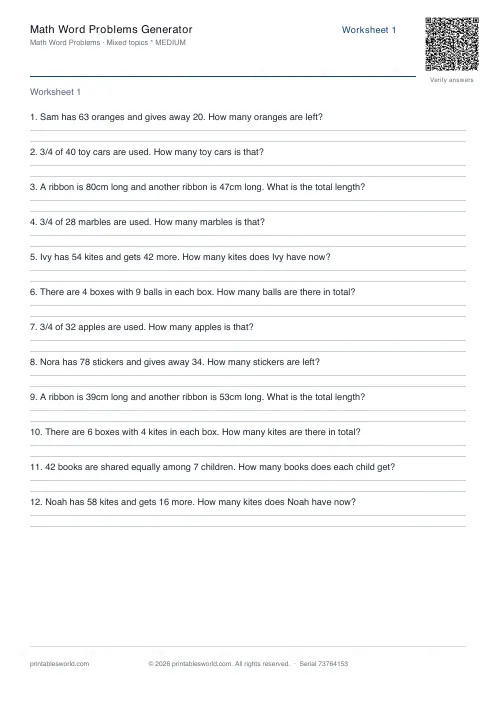 Math Word Problems Generator
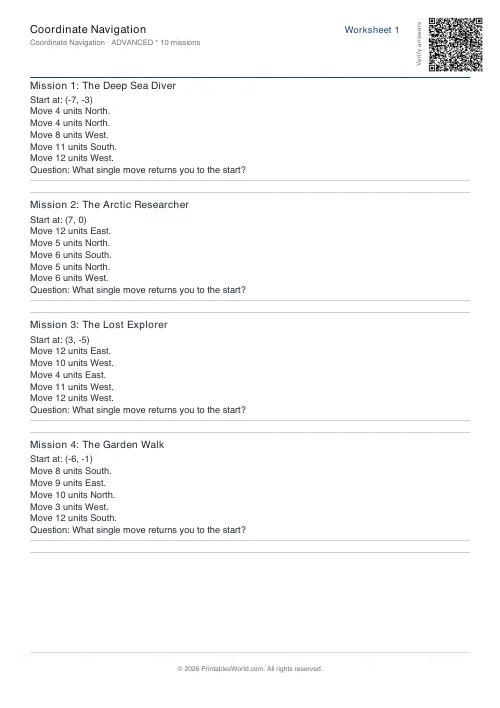 Coordinate Navigation Generator
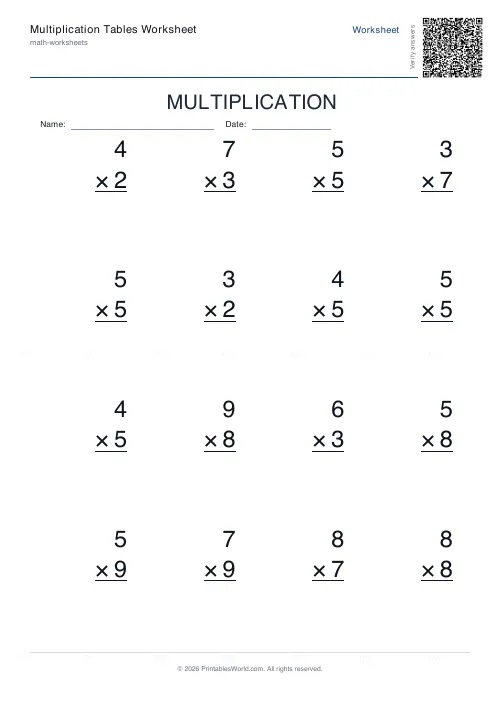 Multiplication Tables Worksheet
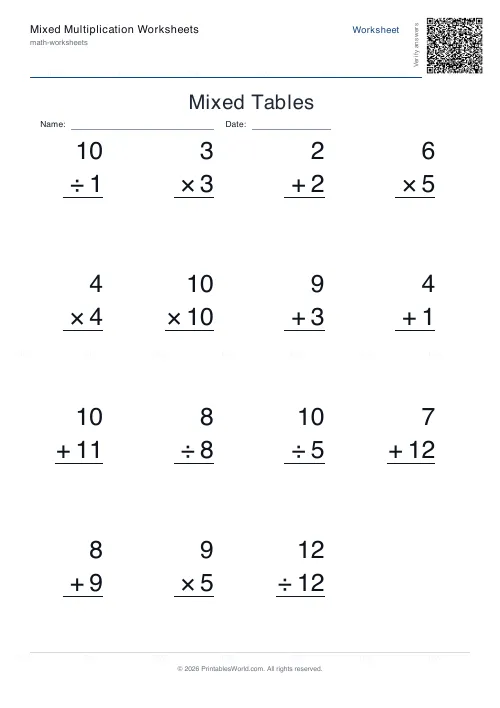 Mixed Multiplication Worksheets
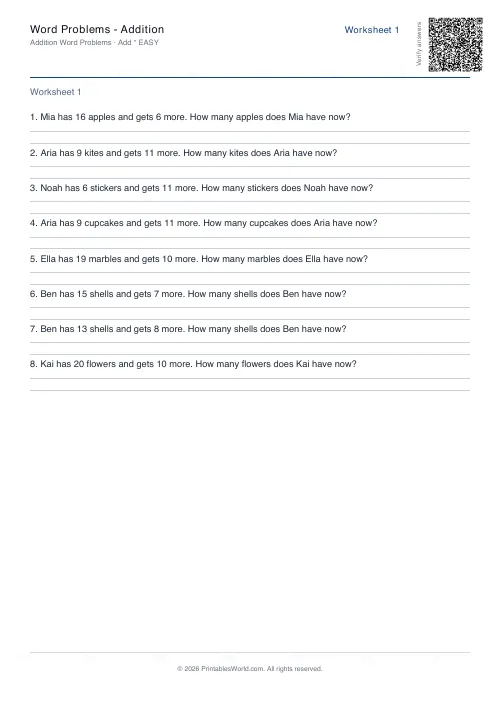 Word Problems: Addition
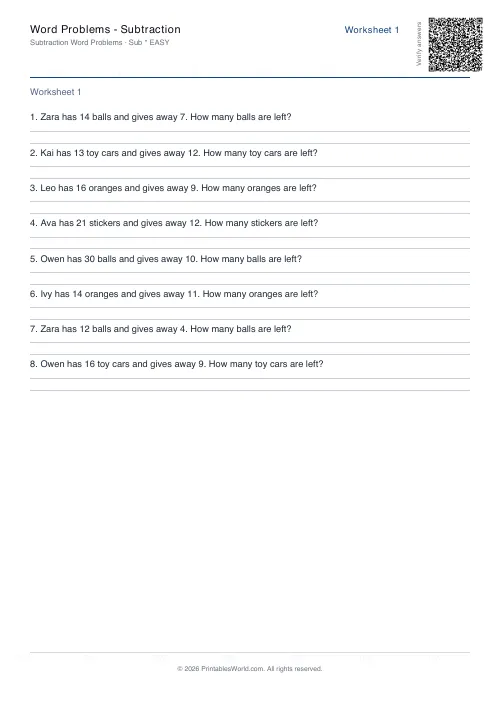 Word Problems: Subtraction
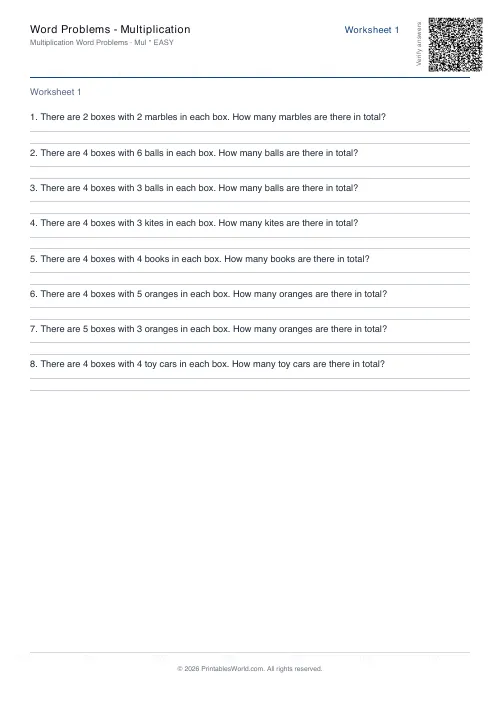 Word Problems: Multiplication
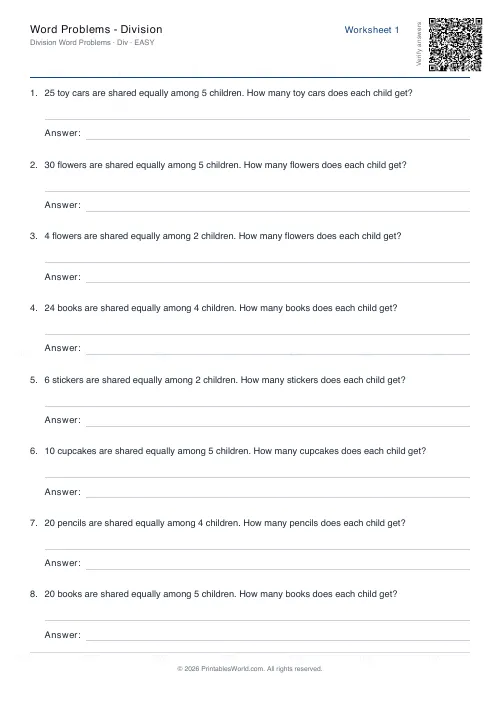 Word Problems: Division