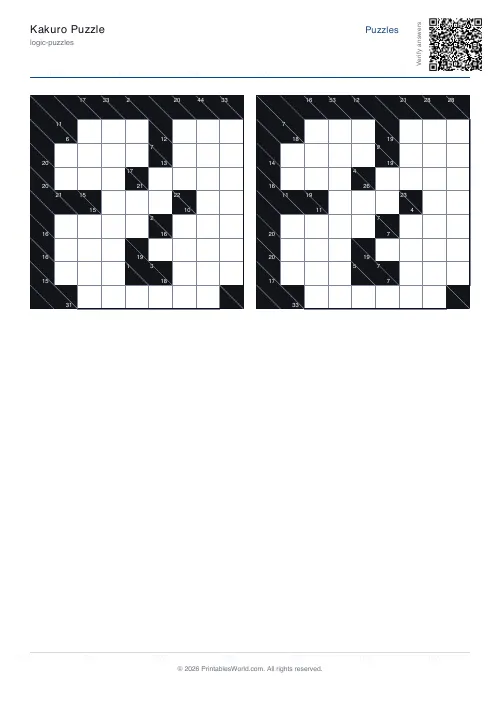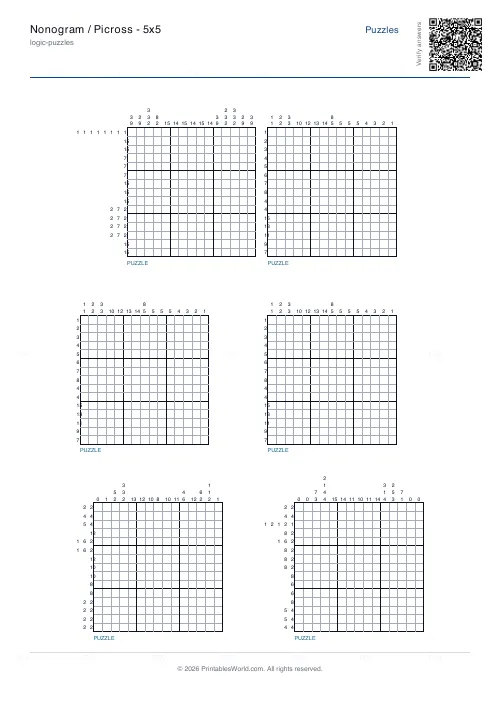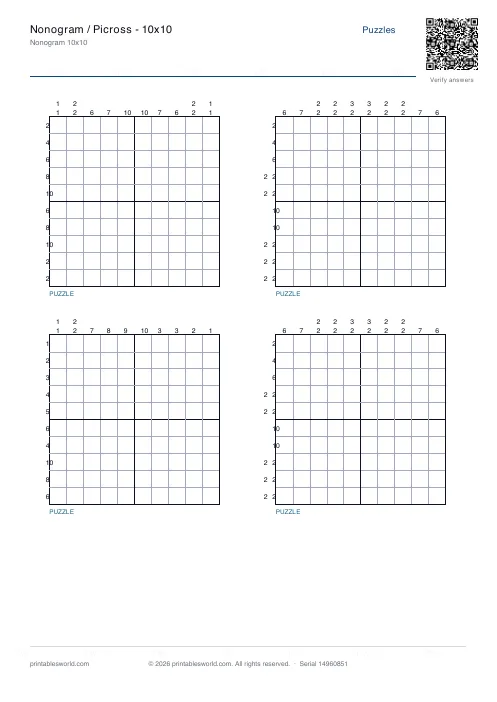
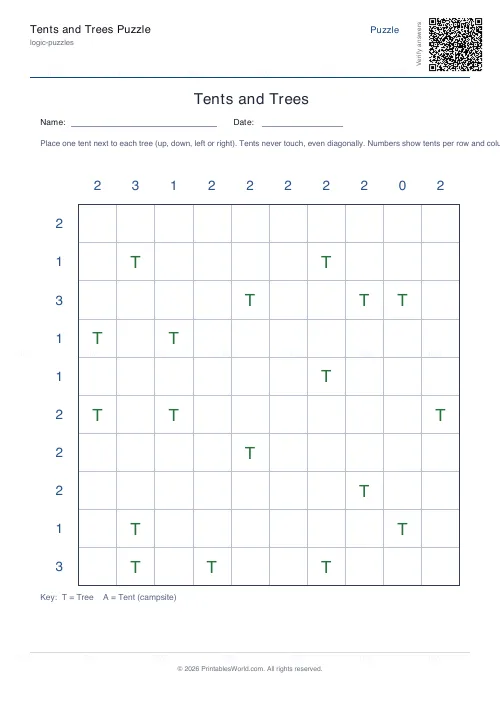
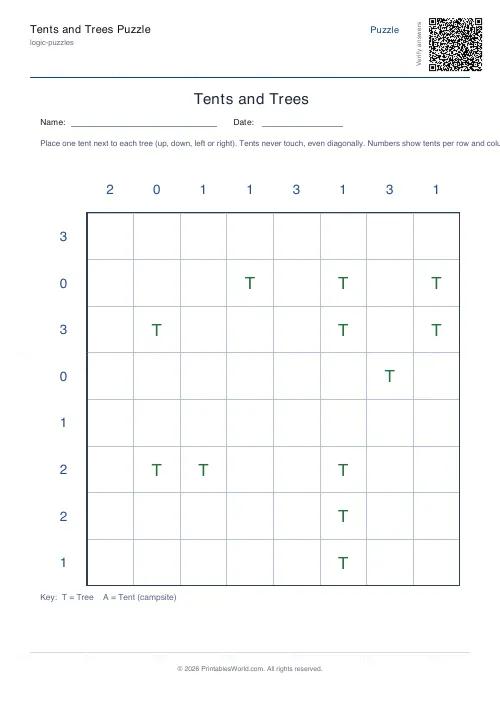
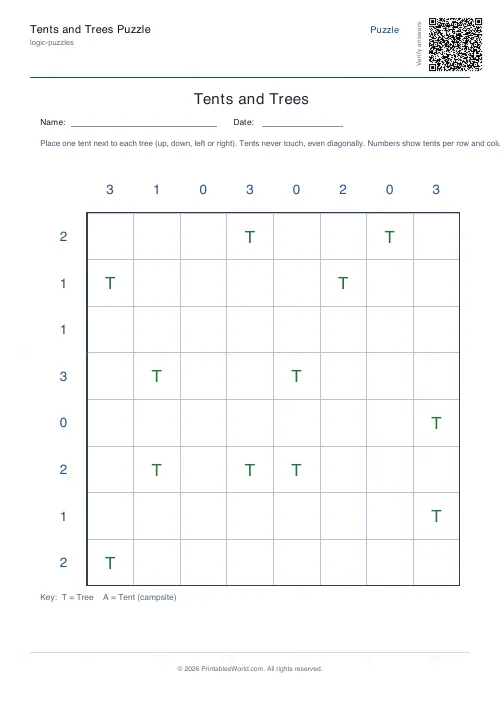
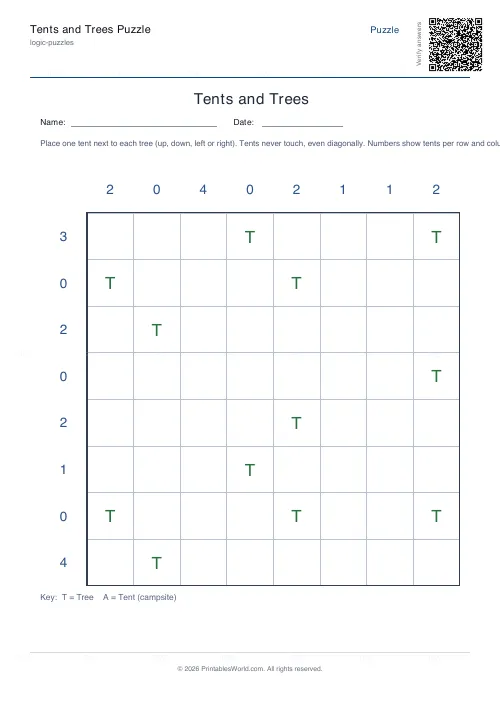
What this tool does
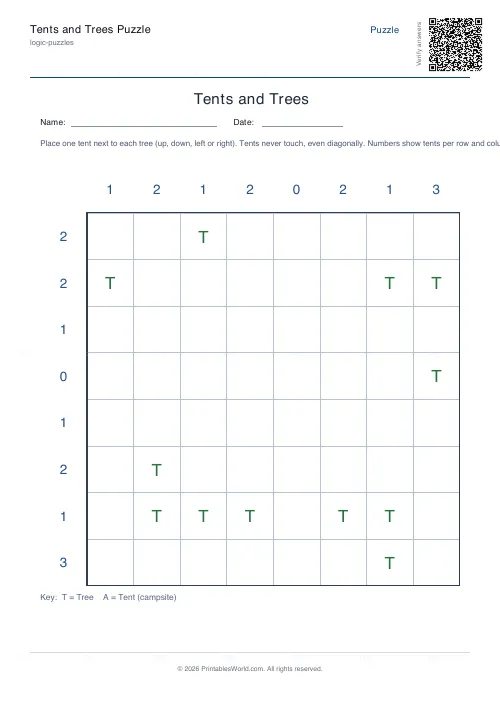
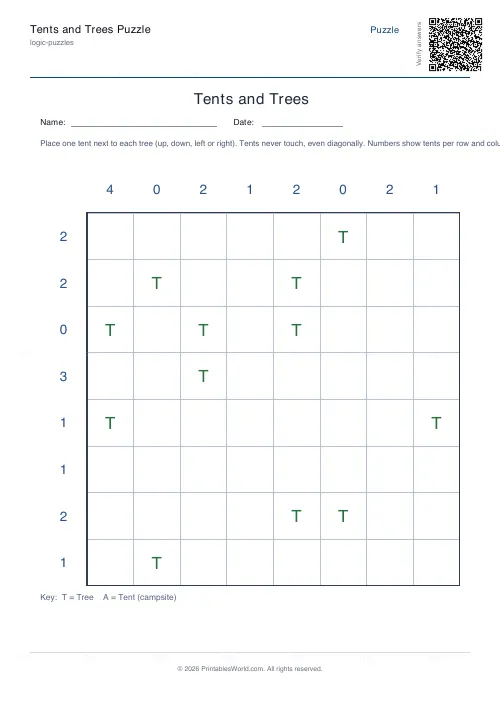
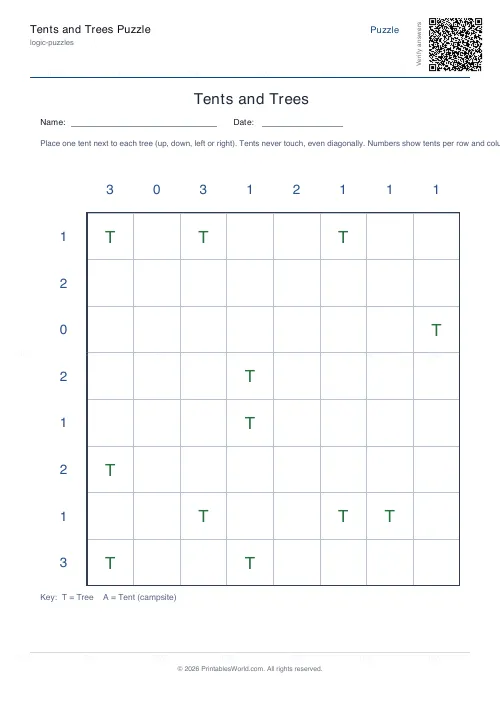
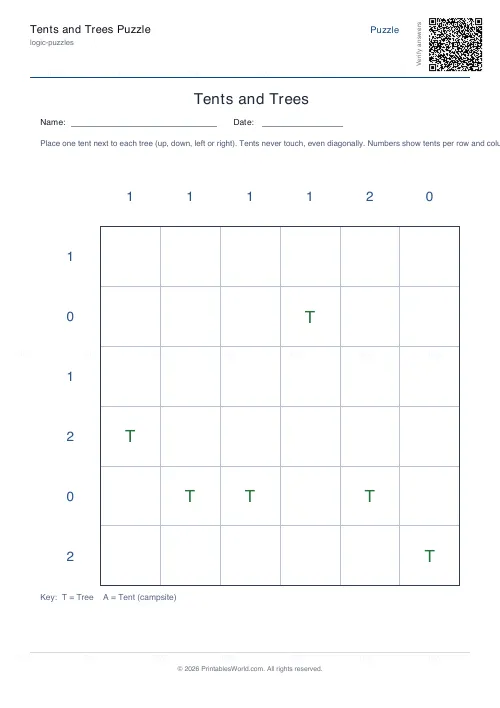
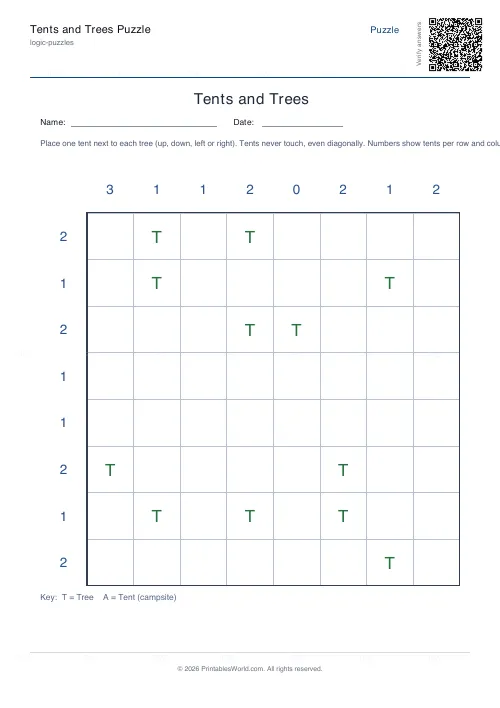
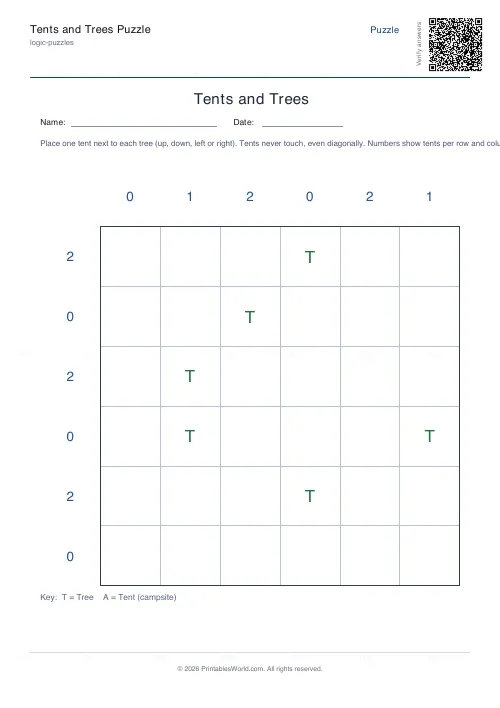
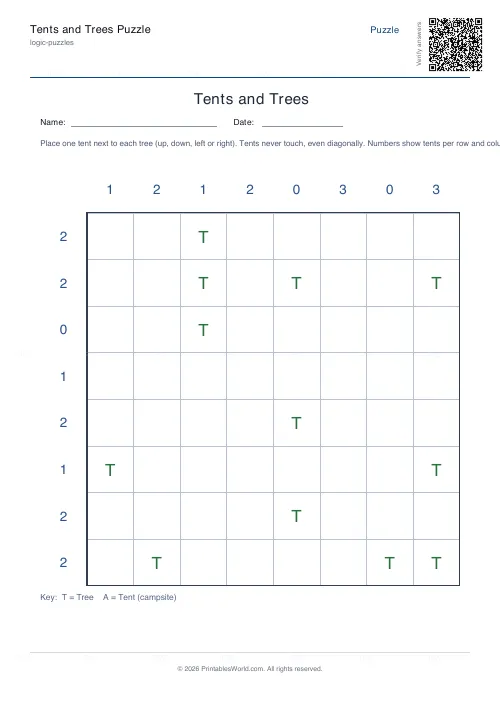
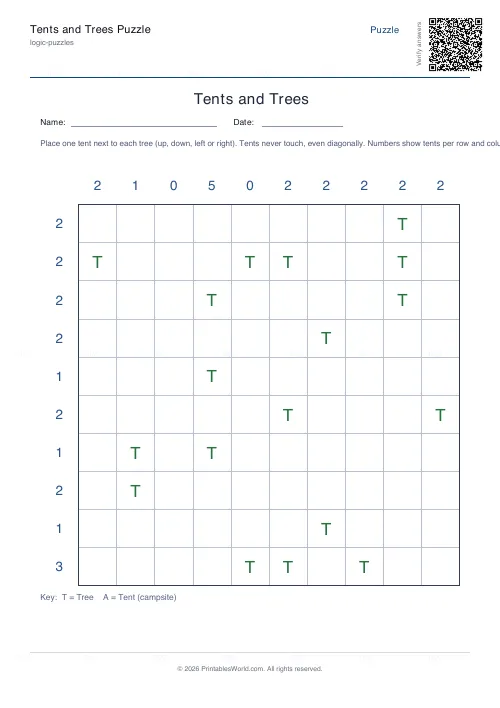
Printable Tents and Trees logic puzzles. Every tree gets exactly one tent beside it. No two tents may touch, even at a corner, and the numbers around the edge count the tents in each row and column. Grids from 5×5 up to 10×10, built from a valid solution first so the clues and the answer key can never disagree.
People also used
Sudoku Generator
Generate printable Sudoku puzzles with six per page, multiple difficulty levels, and optional solutions.
Binary Puzzle Generator: Printable
Create printable binary logic puzzles (Takuzu/Binairo) with customisable grid sizes and difficulty levels.
Logic Grid Puzzle Generator: Printable
Create custom logic grid puzzles with your own categories, items, and clues. Print-ready PDFs in seconds.
Feedback
Spotted something off with this tool?
Three rules, no arithmetic, one answer
A square grid with trees scattered through it and a number beside every row and every column. Pitch a tent for each tree.
- One tent per tree. It sits in a cell that shares an edge with the tree, so directly above it or below it, or to one side. Never on a diagonal.
- Tents never touch. Not even at a corner.
- The numbers count tents. The figure printed beside a row tells you exactly how many tents belong in it, and the trees standing in that row are not part of the count.
Since the pairing is one to one, the number of tents always equals the number of trees. That is a useful check and it is also the first thing to count.
Each puzzle is built from a complete valid solution and the clues are derived from it, so the sheet and the key cannot disagree with each other.
Solving it without guessing
Start with the clues that place themselves. A row whose number equals the number of cells a tent could possibly occupy is fully determined: every one of those cells holds a tent. A row numbered zero can be crossed out entirely, and crossing out a zero row very often unlocks the columns crossing it.
Then work tree by tree. A tree with only one empty neighbour left has found its tent. The instant you place one, mark all eight surrounding cells as empty, because that no-touch rule is the engine of the entire puzzle: every tent you place clears space and forces the next decision somewhere nearby.
Alternate between the numbers and the trees. Dot the cells you have ruled out and mark the ones you have confirmed. When a row has all its tents, everything else in that row is empty, which usually breaks open the next column. Done carefully, no guess is ever required.
Grid size, five to ten
Five by five is a warm-up with a handful of trees and short chains of reasoning. Ten by ten packs in far more pairs, and because the clues interact, a deduction in one corner ripples across the board.
The number of tree-and-tent pairs scales with the grid rather than staying fixed, so a bigger board is a genuinely bigger puzzle and not the same one stretched out. Eight is the default and is about a ten-minute solve once the technique is learned.
Why it works in a classroom
No arithmetic. No reading. Which means it works across year groups and across languages, and a child who struggles with a written starter can succeed at this one.
What it trains is combining constraints, and reasoning from what must be true rather than from what looks likely. That is the same habit a proof needs, arriving in a form a nine-year-old will do voluntarily. The answer key makes marking a class set a matter of seconds, and one on the projector is a five-minute logic starter that the room will argue about.
Press Generate New for a fresh layout at the same size. Print a stack for early finishers, or turn the key off for something closer to a competition sheet.
FAQs
Quick answers
What are the rules of Tents and Trees?
Each tree is matched with exactly one tent placed directly above, below, left or right of it. No two tents may touch, not even diagonally. The numbers beside each row and column tell you how many tents go in that line. Trees are never counted.
Is every puzzle solvable by logic alone?
Yes. Each puzzle is built from a complete valid solution, and the clues are read straight from that solution, so the row and column counts and the answer key always agree. You can solve every grid by deduction without guessing.
What grid sizes can I make?
You can choose any square grid from five by five up to ten by ten. Smaller grids suit younger solvers and quick starters; larger grids add more tents and longer chains of reasoning for a tougher challenge.
Is there an answer key?
Yes. Toggle the answer key on and the PDF adds a second page showing every tent in place beside its tree, so marking takes seconds. Turn it off for a clean competition or exam copy.
Related tools
Sudoku Generator
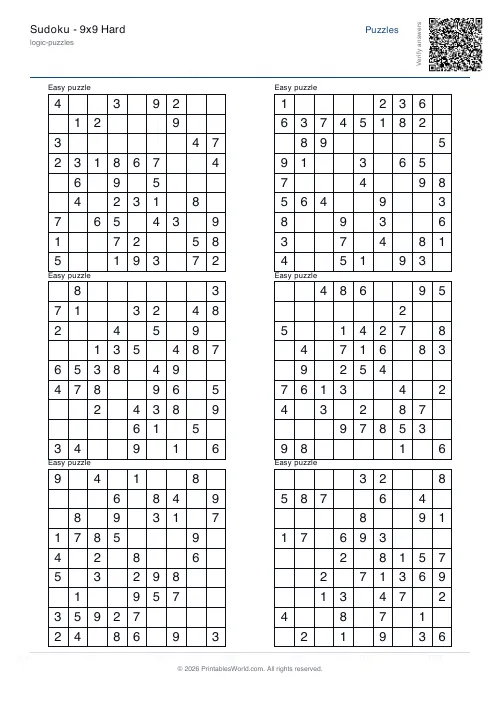
Generate printable Sudoku puzzles with six per page, multiple difficulty levels, and optional solutions.
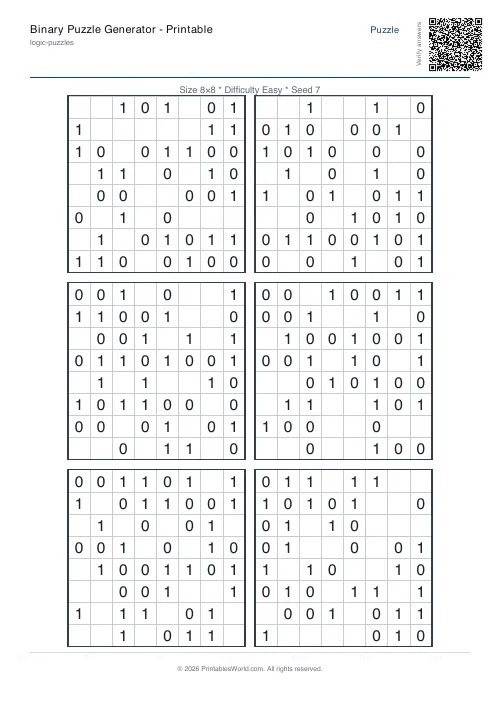
Binary Puzzle Generator: Printable
Create printable binary logic puzzles (Takuzu/Binairo) with customisable grid sizes and difficulty levels.
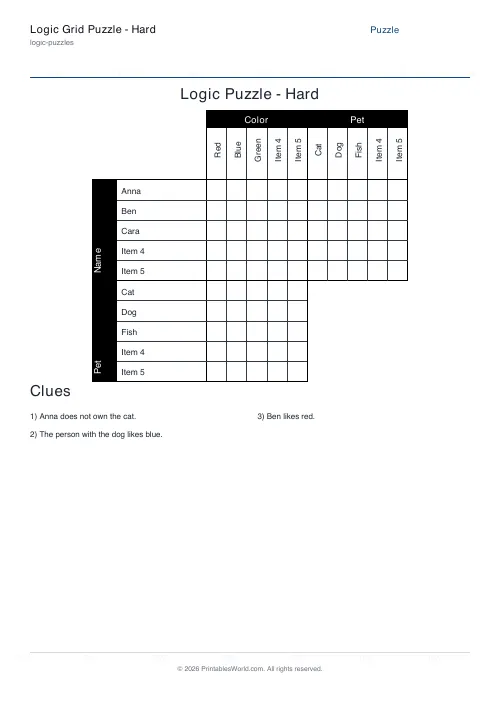
Logic Grid Puzzle Generator: Printable
Create custom logic grid puzzles with your own categories, items, and clues. Print-ready PDFs in seconds.
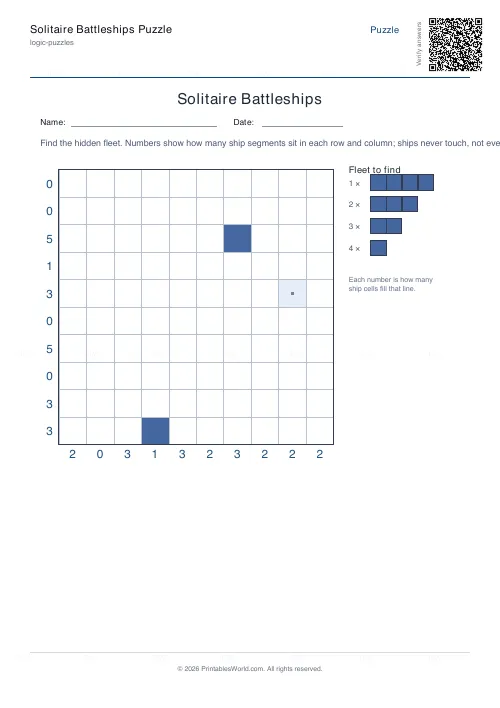
Solitaire Battleships Puzzle
Find the hidden fleet from the row and column clues.
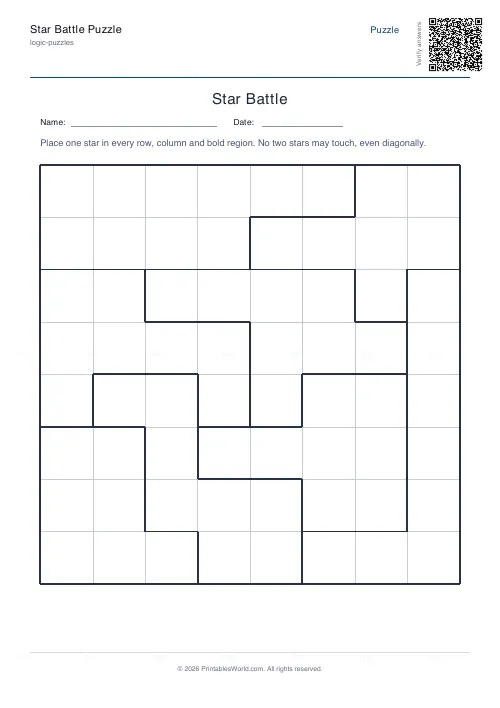
Star Battle Puzzle
Place stars so every row, column and region holds exactly one.
Further reading
Logic Puzzles
The benefits of logic puzzles for developing brains
Logic puzzles teach deduction and persistence, which are worth having. The claim that they make children generally smarter is weaker than the marketing suggests.
5 min read
Puzzles & Brain Games
Printable brain games for seniors: a free puzzle pack
A free printable puzzle pack for older adults, with a sample seven-day plan, large-print and easier-difficulty tips, and how to use the Logic Puzzles collection.
7 min read
Logic Puzzles
Kakuro, killer sudoku and other number puzzles explained
If sudoku has stopped being a challenge, these are the natural next steps. And unlike sudoku, most of them genuinely involve arithmetic.
5 min read