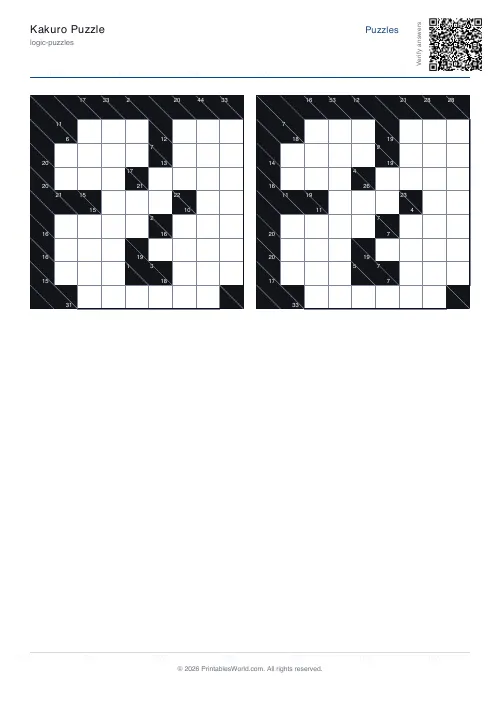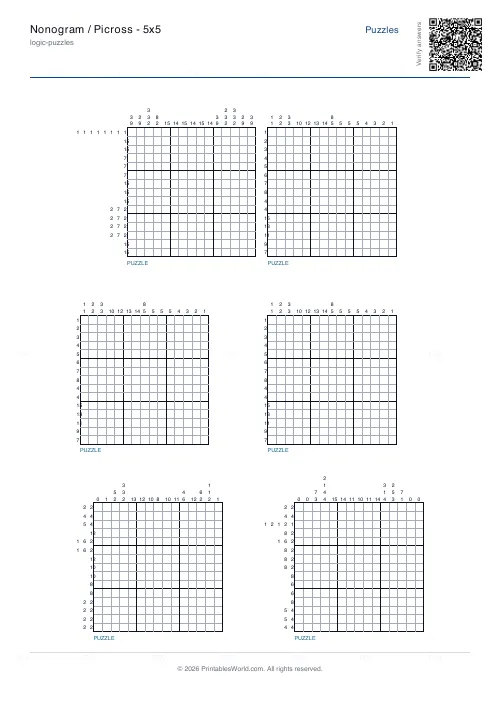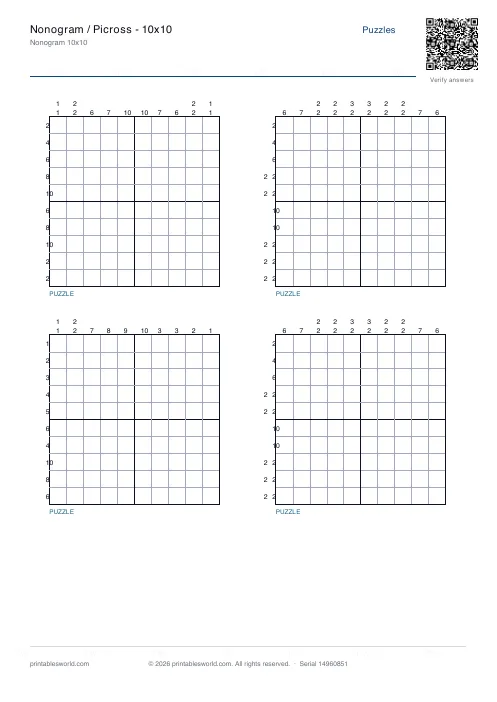
What this tool does
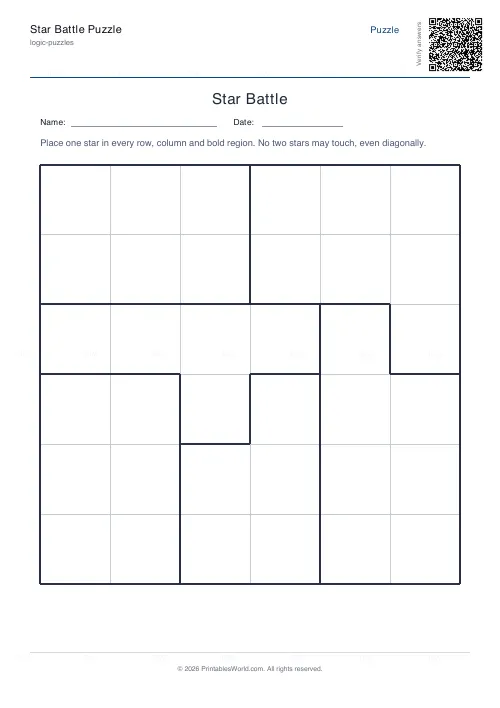
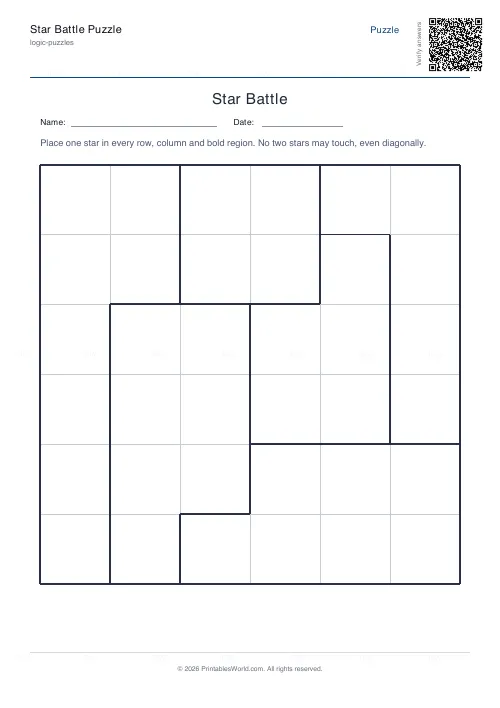
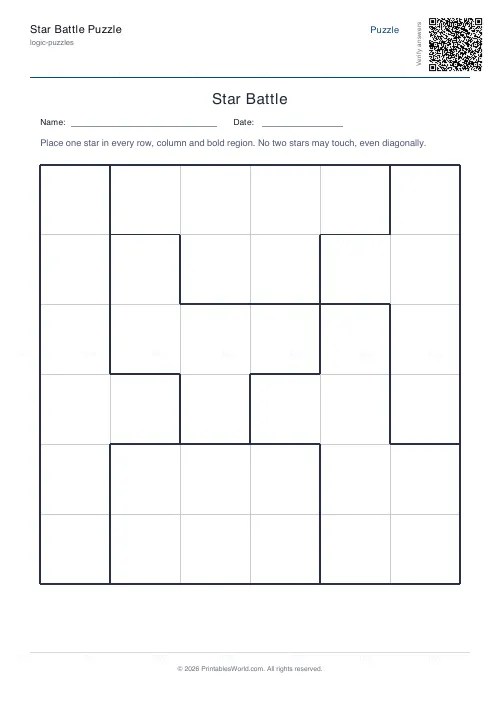
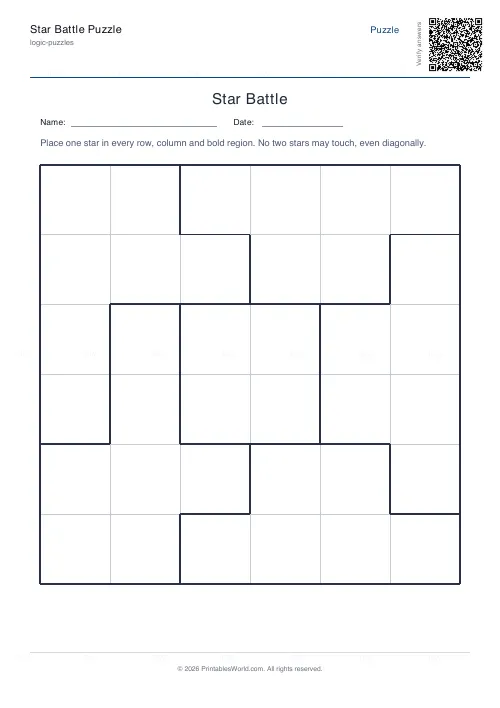
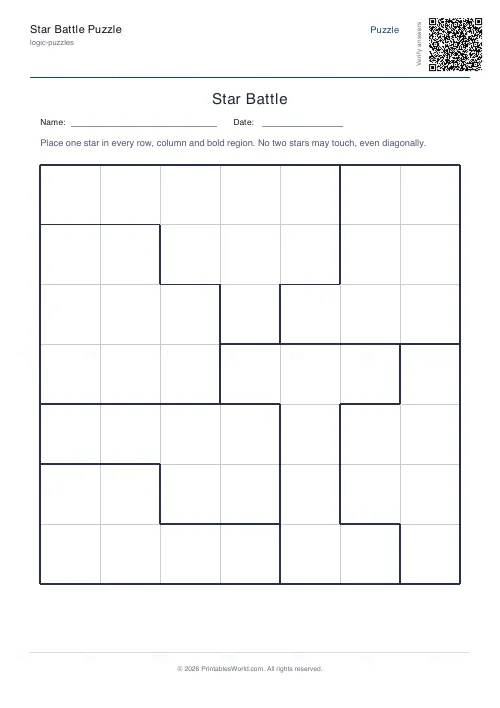
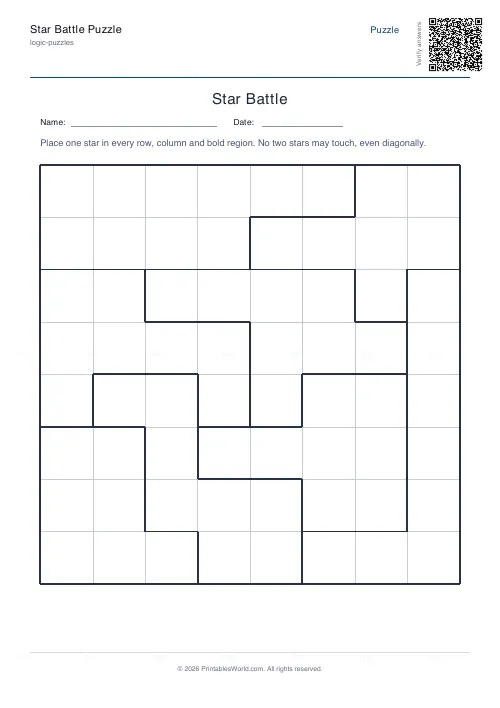
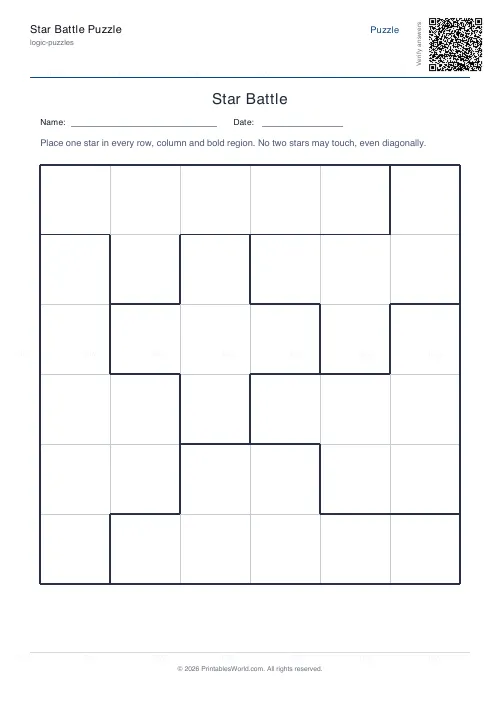
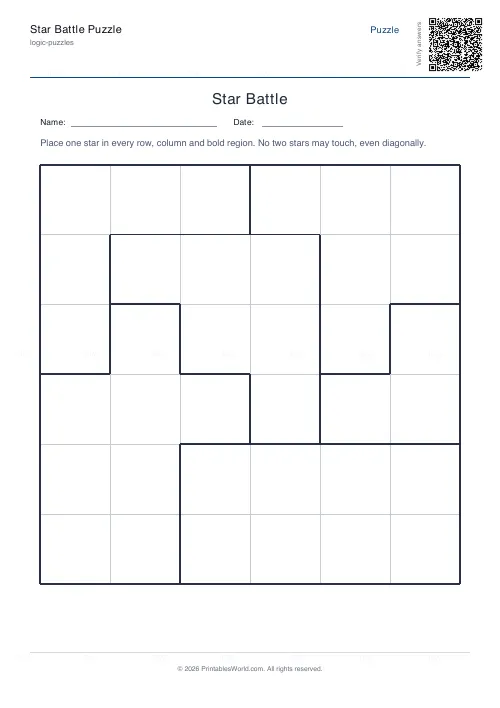
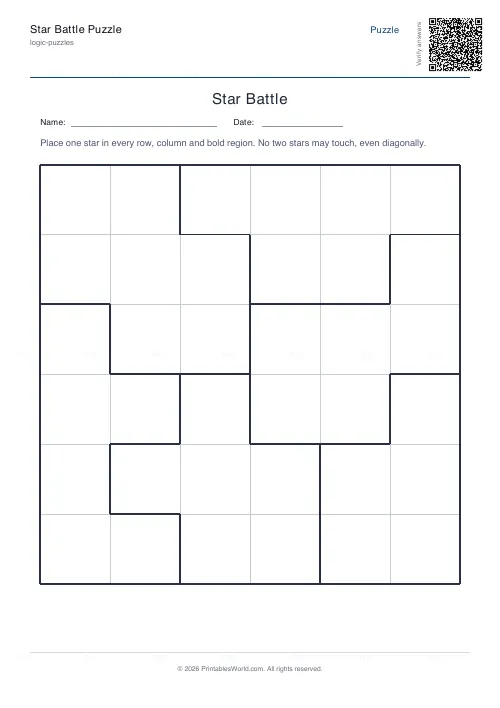
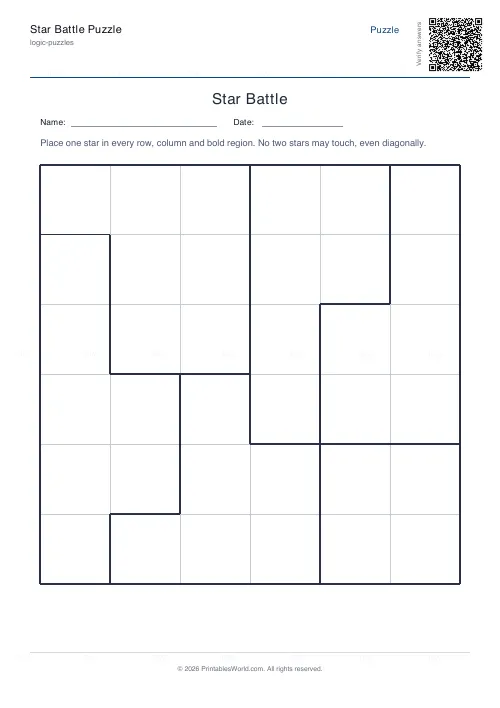
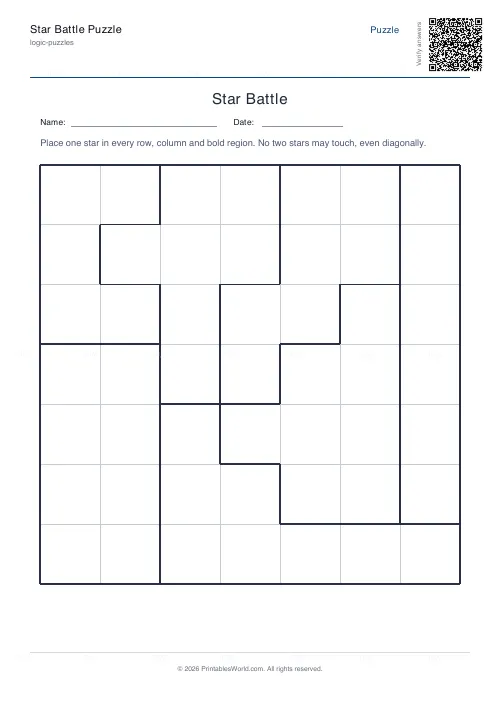
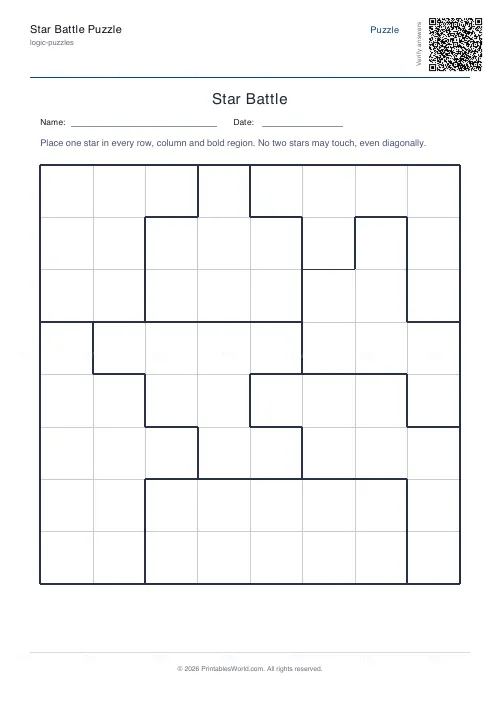
Star Battle: place one star in every row, every column and every bold region, with no two stars touching — not even diagonally. Grids from 5×5 to 9×9, with a solution page.
People also used
Sudoku Generator
Generate printable Sudoku puzzles with six per page, multiple difficulty levels, and optional solutions.
Binary Puzzle Generator: Printable
Create printable binary logic puzzles (Takuzu/Binairo) with customisable grid sizes and difficulty levels.
Logic Grid Puzzle Generator: Printable
Create custom logic grid puzzles with your own categories, items, and clues. Print-ready PDFs in seconds.
Feedback
Spotted something off with this tool?
One star per row, column and region
The grid is divided into bold irregular regions. Place exactly one star in each row, each column and each region, and no two stars may touch — including diagonally.
Sizes from 5×5 up to 9×9. The answer page shows the same grid with every star marked.
The diagonal rule is the whole puzzle
Without it, this would be a mild variant of sudoku. With it, a placed star clears the eight cells around it, and that is where the deductions come from.
Get into the habit of marking those eight immediately. Solvers who track only rows and columns miss most of what a star tells them, and then wonder why the grid stalls.
How to start
Look for the small regions. A region occupying only two or three cells constrains its star far more than a sprawling one, and it is nearly always where the first certainty lives.
Then look for regions confined to a single row or column. If a region lies entirely within row 4, that row's star must be inside it — so every other cell in row 4 is eliminated, across the whole width of the grid. That one observation opens more puzzles than any other.
The counting argument
Worth knowing, because it cracks positions that look impossible.
If three regions between them occupy exactly three rows, those three rows hold those three regions' stars and nothing else. Every other region is therefore excluded from those rows. It is the same pigeonhole reasoning that powers the harder sudoku techniques, and it feels like magic the first time it works.
Why these puzzles are always solvable
They are built forwards rather than searched for. A valid complete star placement is constructed first — one per row, one per column, none touching — and the regions are then grown outward from each star so that every region ends up containing exactly one.
Because the puzzle and the answer come from the same construction, they cannot disagree. There is no solver in the loop that might time out and ship something broken.
Where to start as a beginner
Five by five. It is small enough to hold in your head and it teaches the diagonal rule in about four minutes, which is the only thing standing between you and the larger grids.
Related: sudoku and binary puzzles for logic of a different shape.
FAQs
Quick answers
What are the rules of Star Battle?
Place stars so that each row, each column and each bold region contains exactly one star, and make sure no two stars touch. Not side by side and not diagonally. This generator uses the one-star version, so there is a single star in every row, column and region.
Is there only one solution?
Yes. Each puzzle is constructed from a valid star arrangement and the regions are drawn around it, so every printable board has exactly one correct solution, shown on the answer key page.
Can I print an answer key?
Yes. Turn on the answer key and the PDF adds a second page that shows the same grid with every star marked, so you can check your work or mark a class set quickly.
What grid sizes are available?
You can choose any size from 5x5 up to 9x9. Smaller grids are friendlier for beginners and younger solvers, while larger grids give experienced puzzlers a longer chain of deductions.
Related tools
Sudoku Generator
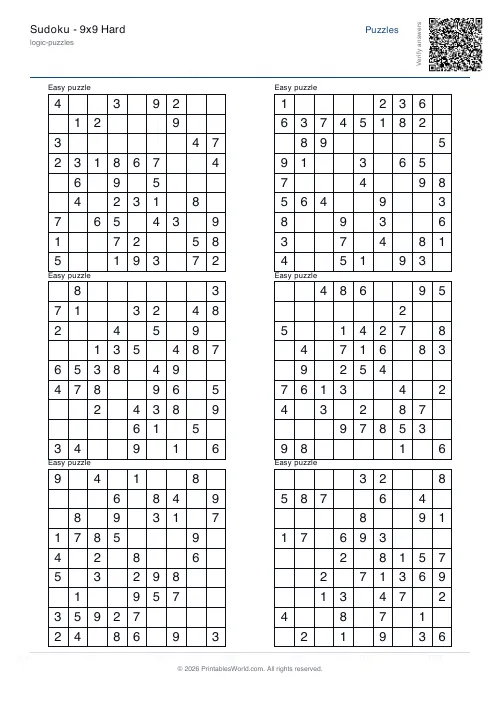
Generate printable Sudoku puzzles with six per page, multiple difficulty levels, and optional solutions.
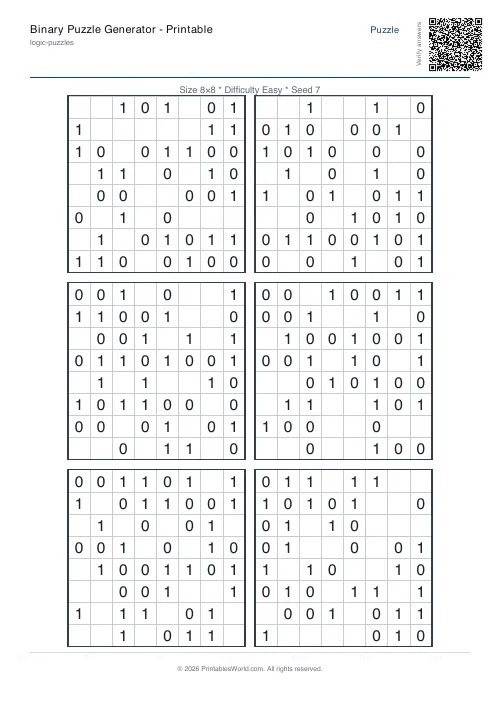
Binary Puzzle Generator: Printable
Create printable binary logic puzzles (Takuzu/Binairo) with customisable grid sizes and difficulty levels.
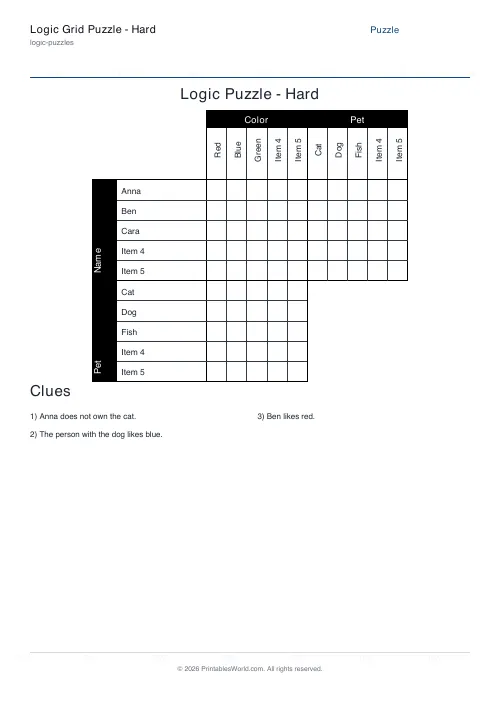
Logic Grid Puzzle Generator: Printable
Create custom logic grid puzzles with your own categories, items, and clues. Print-ready PDFs in seconds.
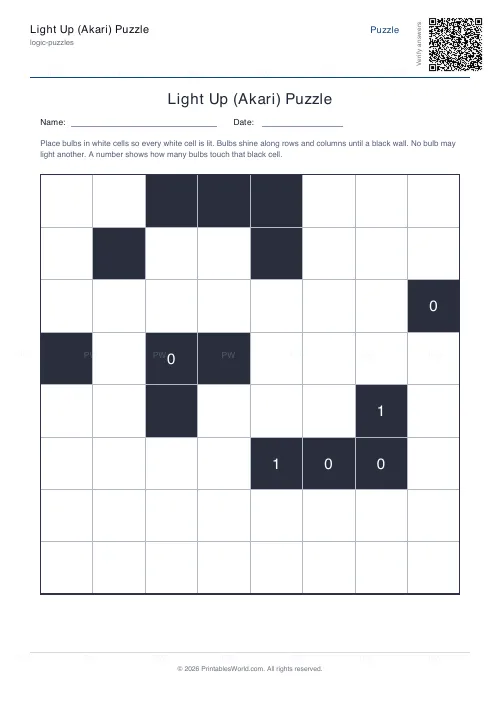
Light Up (Akari) Puzzle
Place bulbs to light every cell. A classic logic puzzle.
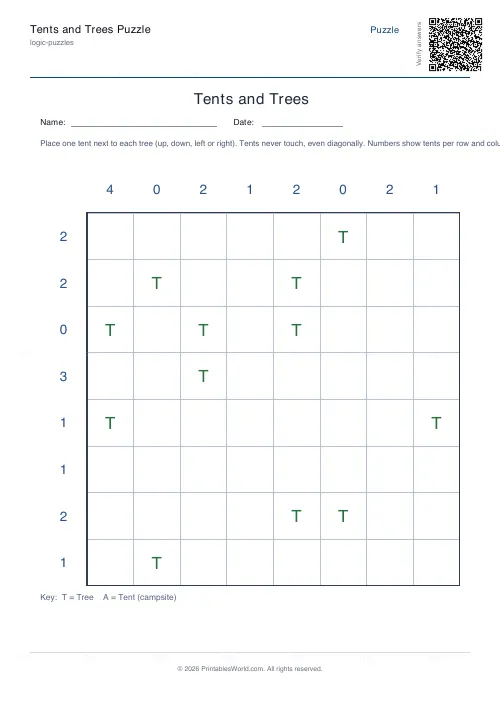
Tents and Trees Puzzle
Pitch one tent beside every tree using the row and column clues.
Further reading
Logic Puzzles
The benefits of logic puzzles for developing brains
Logic puzzles teach deduction and persistence, which are worth having. The claim that they make children generally smarter is weaker than the marketing suggests.
5 min read
Puzzles & Brain Games
Printable brain games for seniors: a free puzzle pack
A free printable puzzle pack for older adults, with a sample seven-day plan, large-print and easier-difficulty tips, and how to use the Logic Puzzles collection.
7 min read
Logic Puzzles
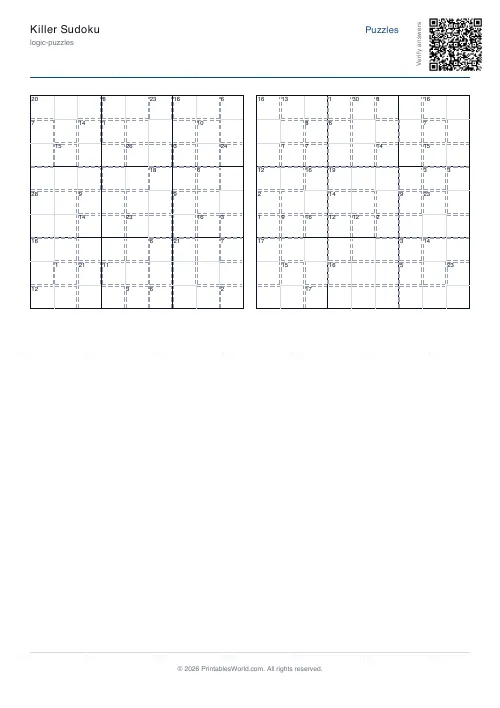
Kakuro, killer sudoku and other number puzzles explained
If sudoku has stopped being a challenge, these are the natural next steps. And unlike sudoku, most of them genuinely involve arithmetic.
5 min read