What this tool does
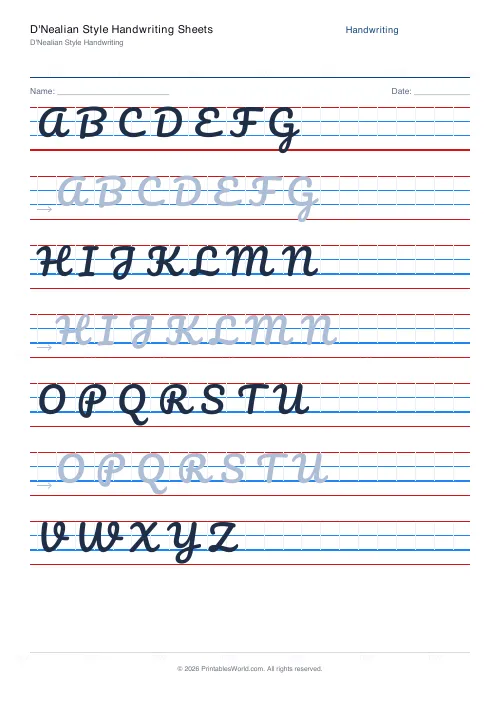
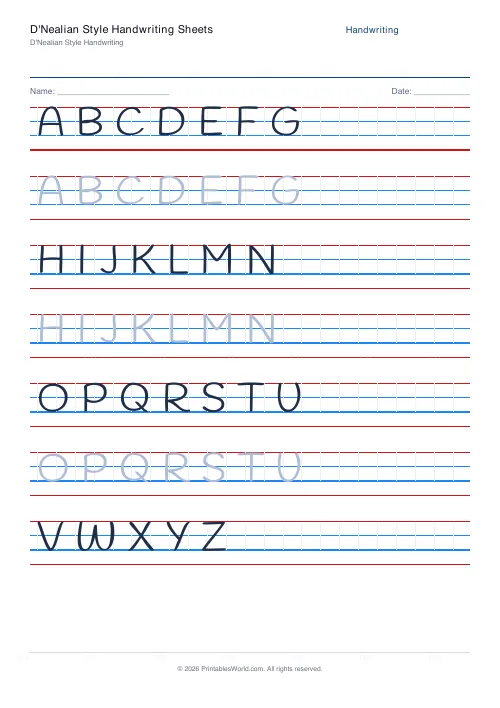
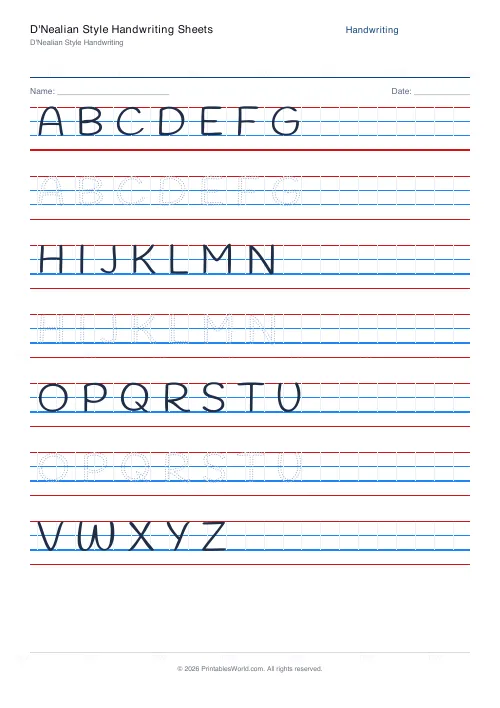
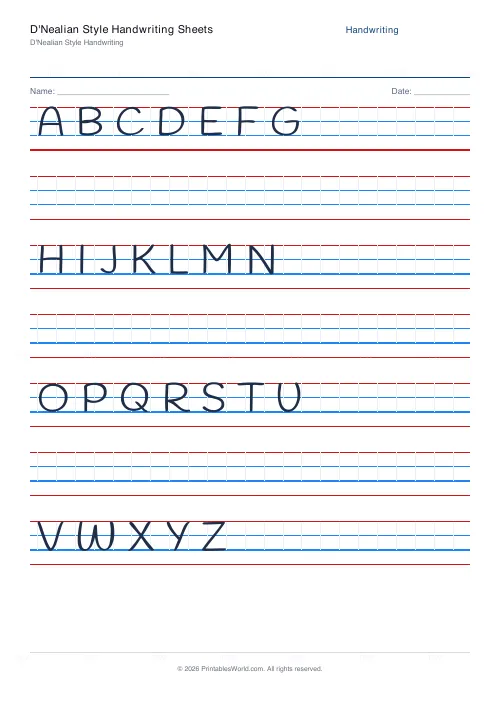
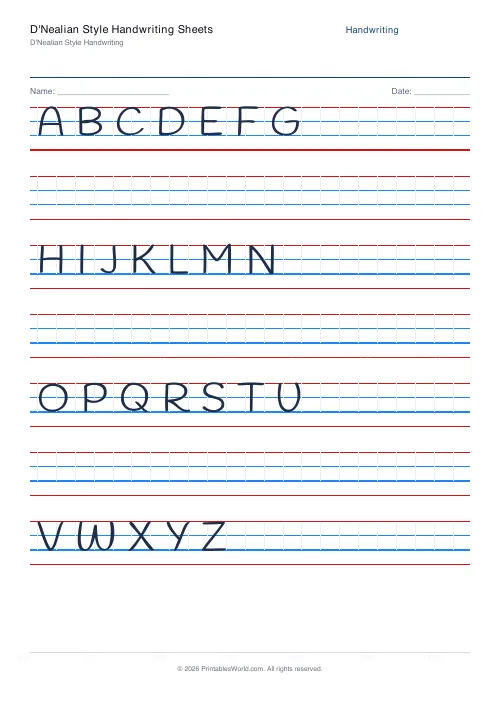
Alphabet practice in a slanted, continuous-stroke style with directional arrows and character boxes — the approach D'Nealian takes as a bridge from print to cursive.
People also used
Feedback
Spotted something off with this tool?
What the sheet gives you
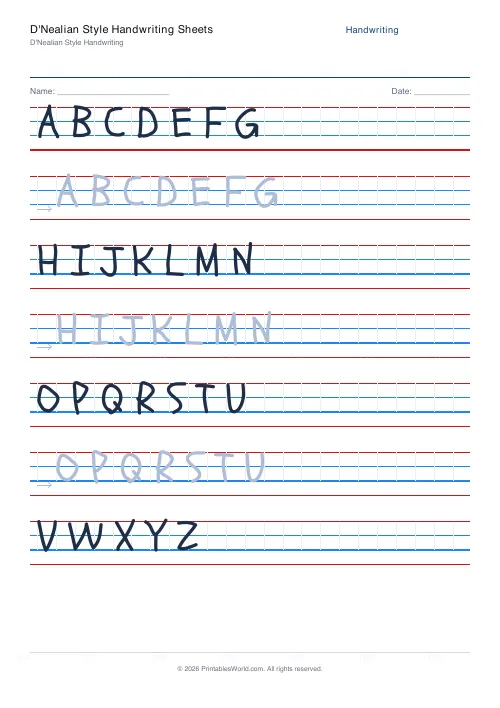
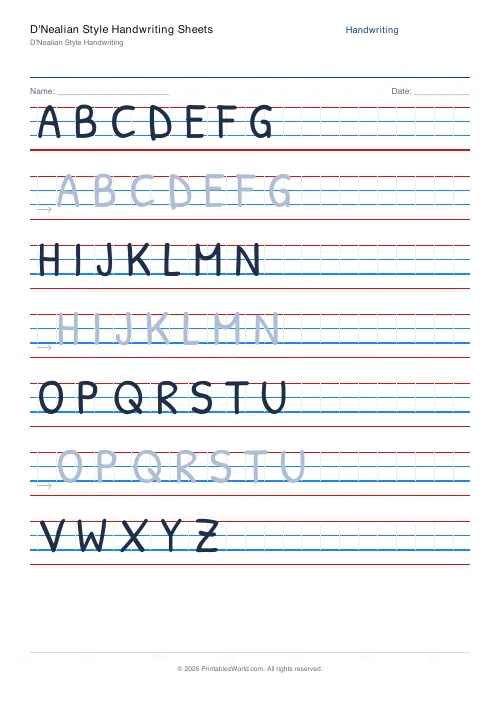
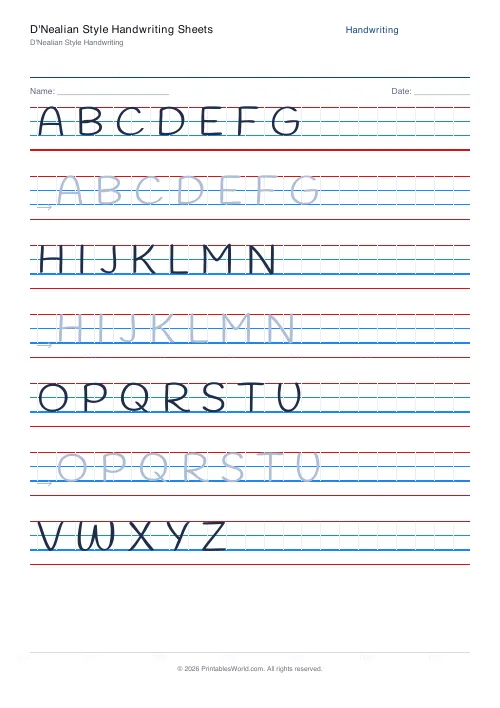
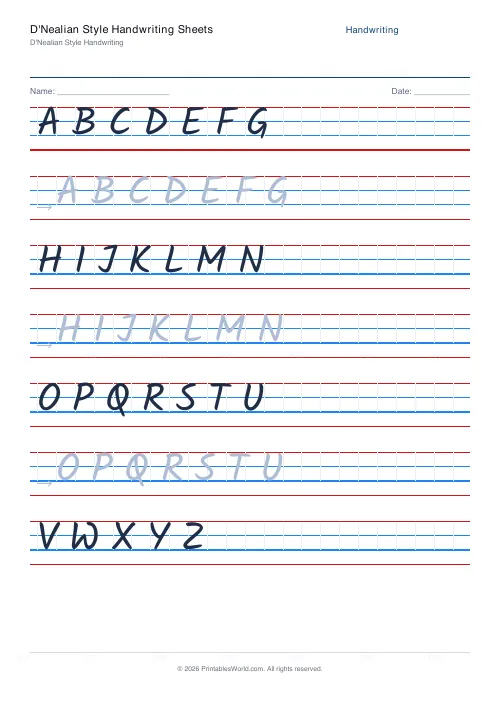
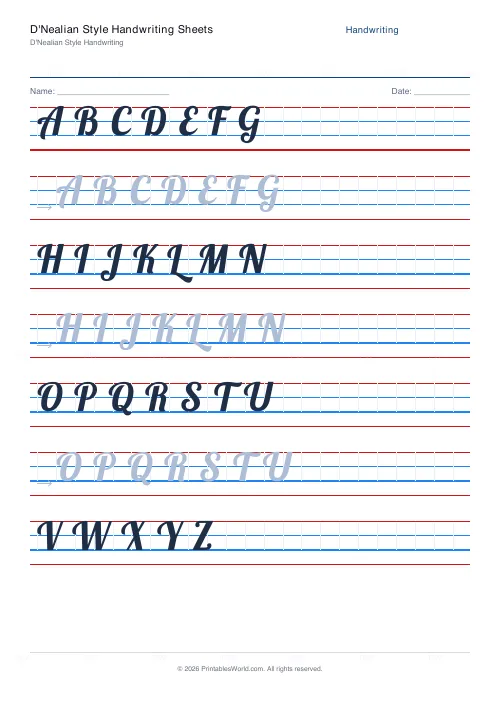
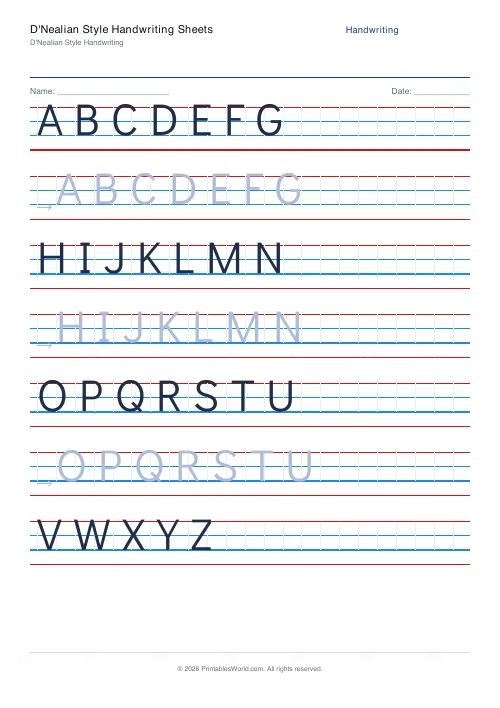
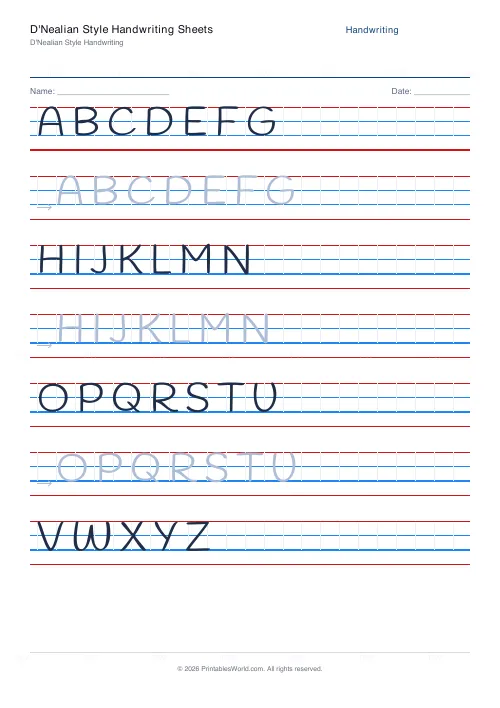
Capitals and lowercase across eight rows, at a 6 mm line height, with arrows showing stroke direction and a box around each character. One tracing row, then a row to write unaided.
The face is rounded and slightly informal rather than rigidly geometric. Closer to how the style is meant to look.
What D'Nealian was for
It was designed in the 1970s by Donald Neal Thurber to fix a specific problem: children learned ball-and-stick manuscript at five, then abandoned it entirely at eight to learn cursive.
Two unrelated alphabets, learnt twice over. His answer was a manuscript hand that already leans, already curves, and already carries small exit strokes, so that the eventual move to cursive becomes a matter of joining up letters the child can already form rather than beginning the whole thing again from nothing.
How it differs from ball-and-stick
Traditional manuscript is built from separate circles and straight lines. A lowercase a is a circle plus a stick. Two lifts.
The D'Nealian a is one continuous stroke, slanted, finishing with a small tail. That continuity is the whole idea: fewer pen lifts, a slant already established, and an exit stroke sitting where the join will eventually go.
Read the honest caveats
The evidence for the transition benefit is mixed rather than settled. Studies through the 1980s and 1990s produced results in both directions, and some found D'Nealian manuscript slightly harder to read than ball-and-stick at the earliest stage.
The counter-argument runs that legibility at five matters less than fluency at nine, and both positions are defensible enough that a parent picking between them is not picking between right and wrong.
The practical rule holds here as everywhere: use whatever the child's school uses. Learning one style at school and a different one at home is worse than either style on its own.
Using this sheet
Arrows first, always. A letter that looks correct and was built in the wrong order will not join, and the fault is invisible in the finished shape — watch the pencil rather than the page.
Six millimetres is small for a beginner. Raise it for a first attempt; bring it down once the shapes hold.
Related
The handwriting practice generator holds every font and style, including genuinely joined cursive faces. The alphabet reference poster is the same alphabet as a wall chart rather than a worksheet.
FAQs
Quick answers
What is the D'Nealian style?
It is a slightly slanted, continuous-stroke manuscript style with small entry and exit strokes, designed so children can move into cursive without relearning letter shapes.
Does the sheet cover the whole alphabet?
Yes. Both uppercase A-Z and lowercase a-z, grouped by row so children can practise each set in turn.
What do the arrows show?
Each trace row begins with a small directional arrow chip indicating the standard left-to-right writing direction for forming each letter.
Can I switch it to joined writing?
Yes. Change the writing style to joined to practise a cursive-style version, since the slanted D'Nealian letterforms flow naturally into joined writing.
Related tools
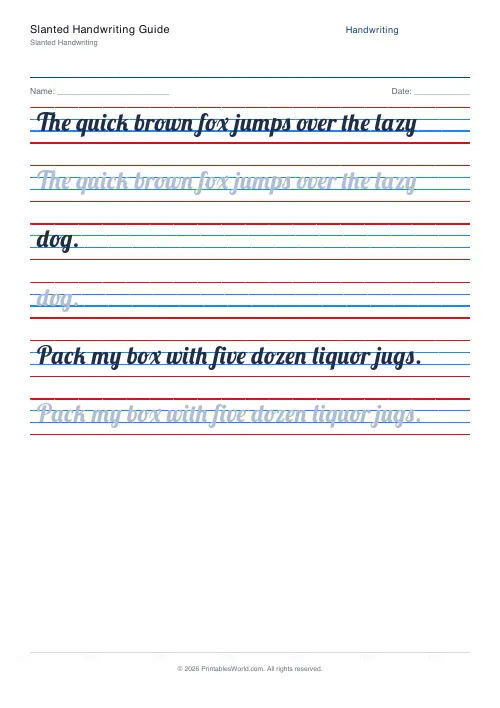
Slanted Handwriting Guide
Diagonal slant overlay supports consistent italic and cursive slope.
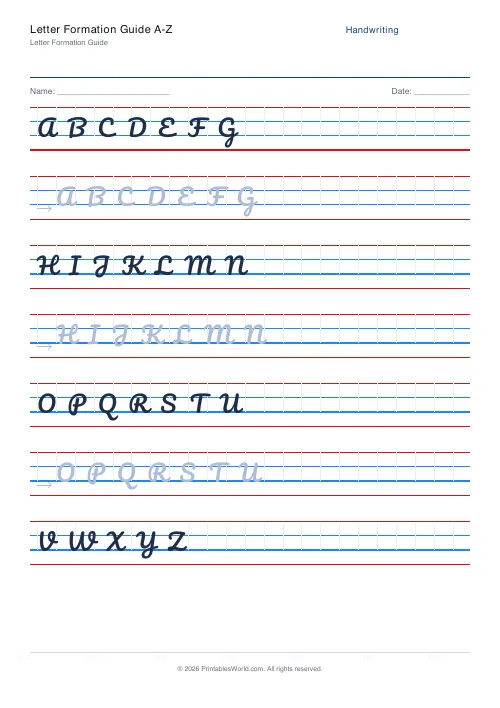
Letter Formation Guide A-Z
Full alphabet with directional arrows for stroke-order learning.
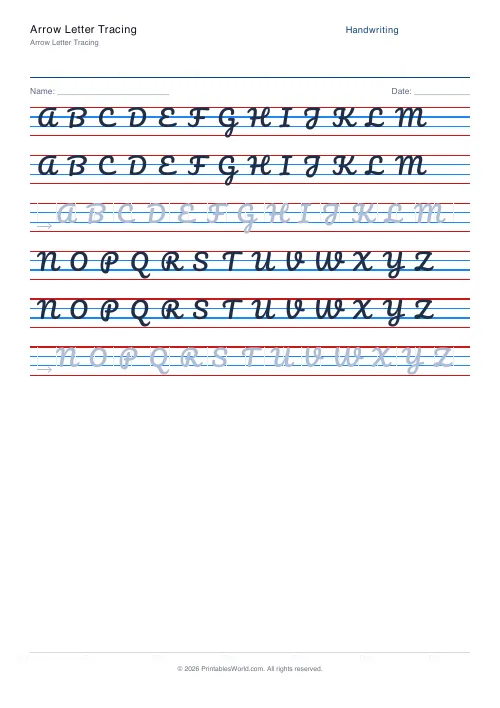
Arrow Letter Tracing
Letters shown with directional arrows indicating correct stroke order.
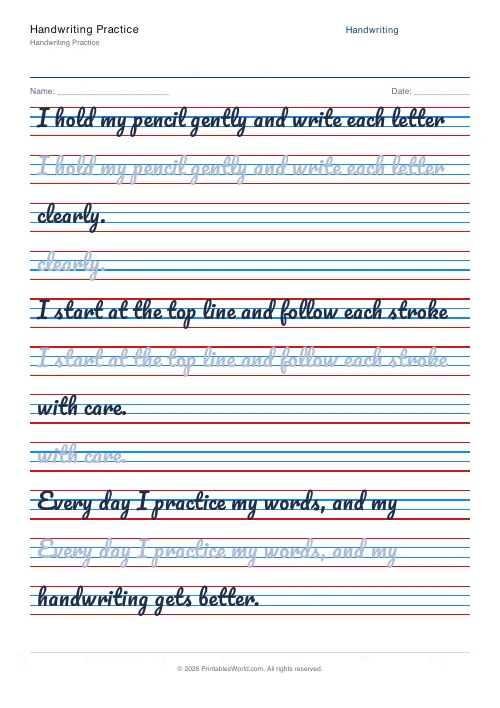
Handwriting Practice Generator
Create custom 4-line handwriting practice sheets with trace rows, adjustable guides, and your own text.
Further reading
Handwriting
How to teach handwriting to kids: a step-by-step guide
A practical order for teaching handwriting: get the body and the pencil right first, then teach letters in stroke families rather than alphabetically, and keep sessions short enough that the hand never tires.
7 min read
Handwriting
Left-handed handwriting practice: free printable sheets
How to set up left-handed handwriting practice for comfort: paper angle, grip and page layout, plus free printable sheets designed for lefties.
7 min read
Handwriting
The best age to start handwriting practice
Age is the wrong question. Three readiness signs predict whether handwriting practice will help or frustrate. And what to do with the child who is not there yet.
5 min read
More like this
- Handwriting Practice Generator
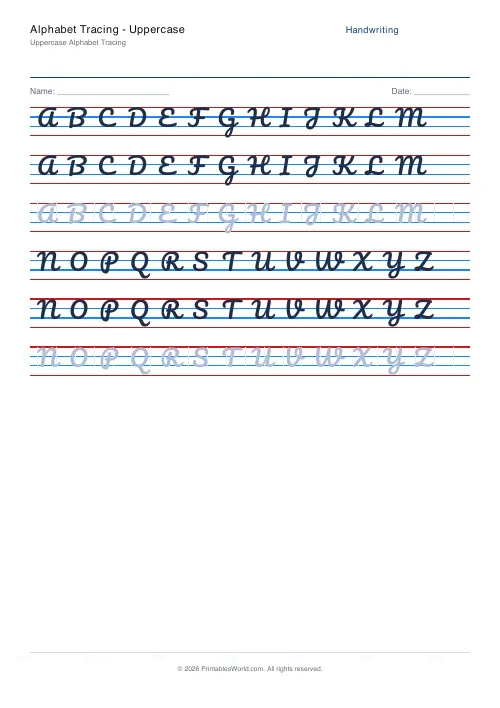 Alphabet Tracing: Uppercase
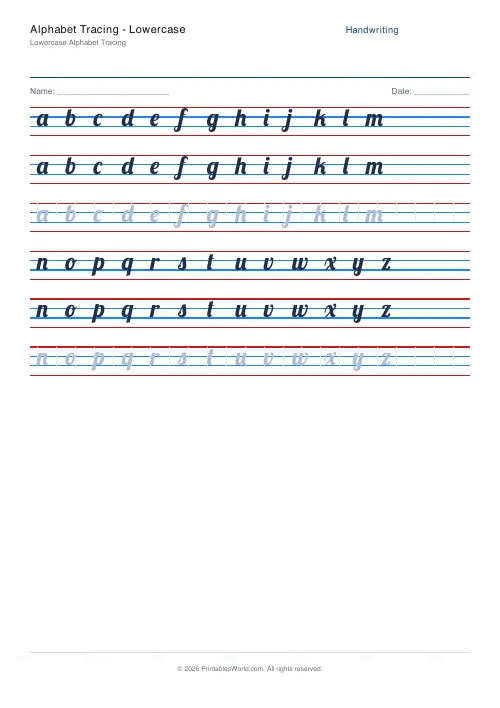 Alphabet Tracing: Lowercase
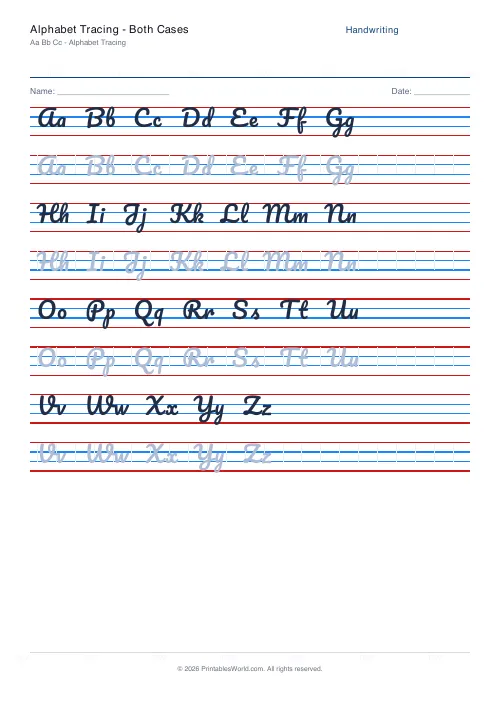 Alphabet Tracing: Both Cases
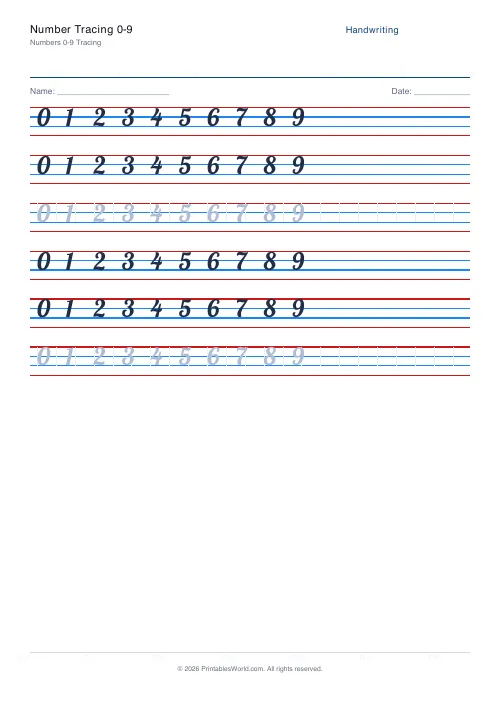 Number Tracing 0-9
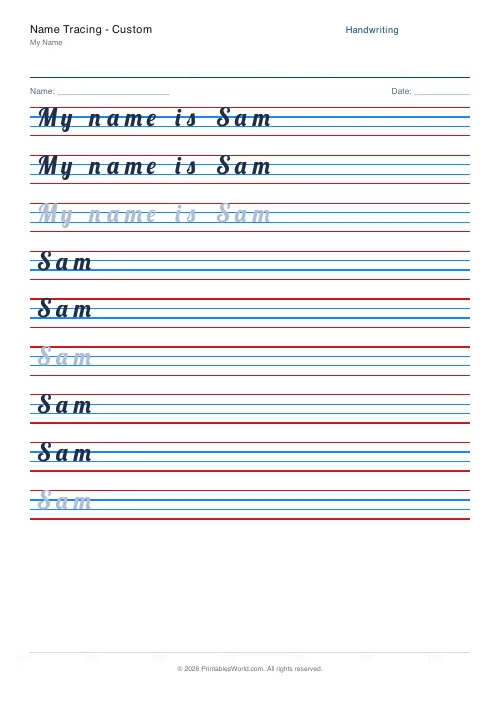 Name Tracing: Custom
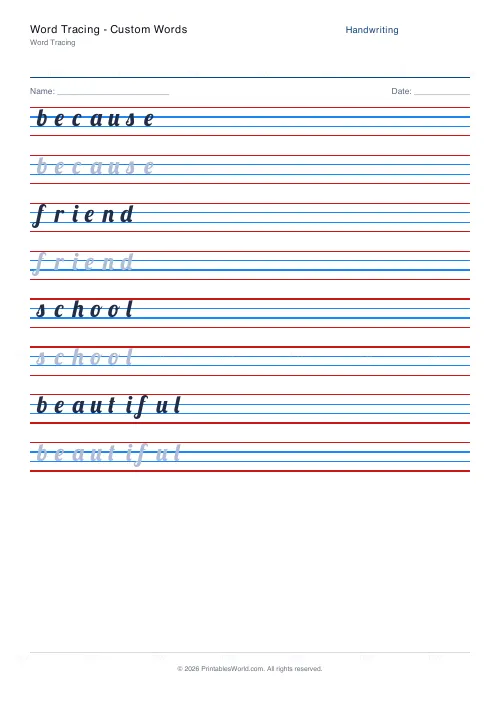 Word Tracing: Custom Words
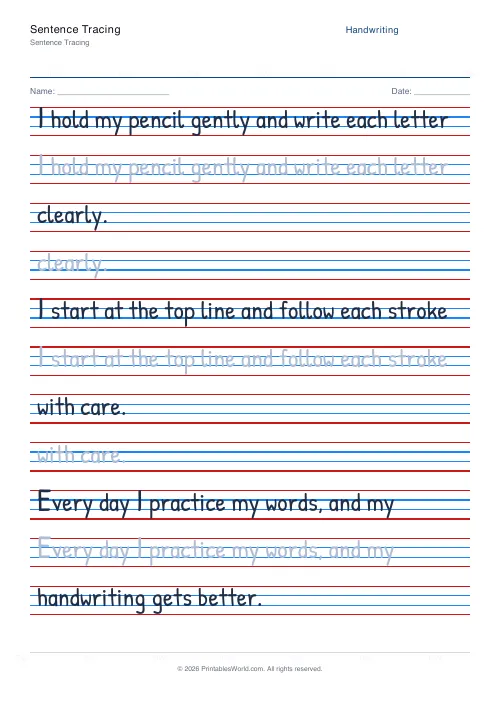 Sentence Tracing
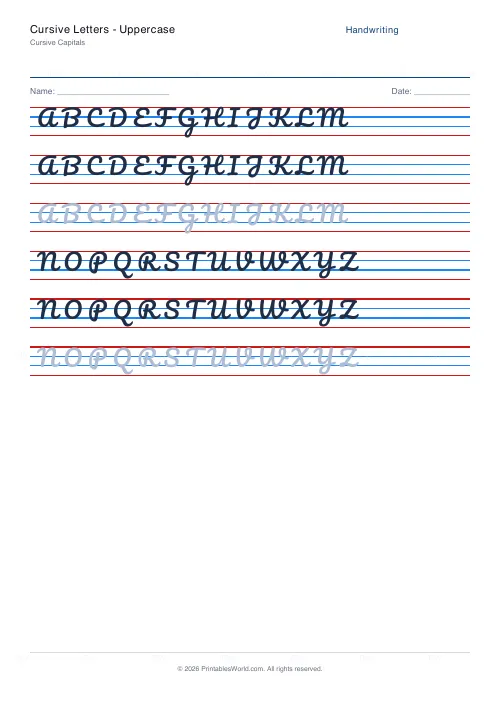 Cursive Letters: Uppercase
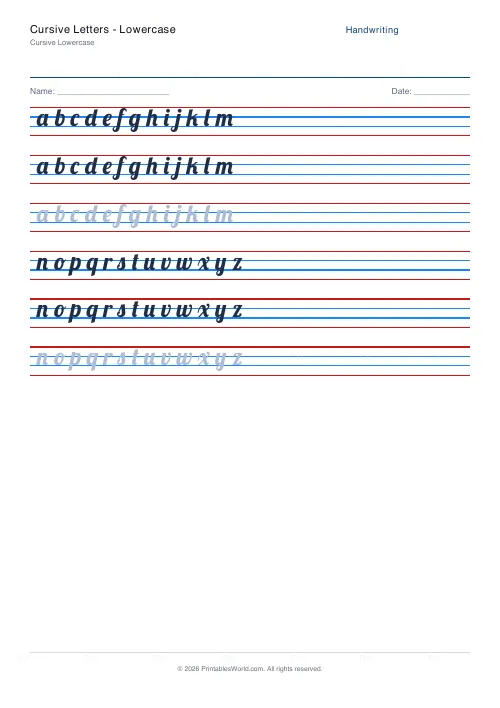 Cursive Letters: Lowercase
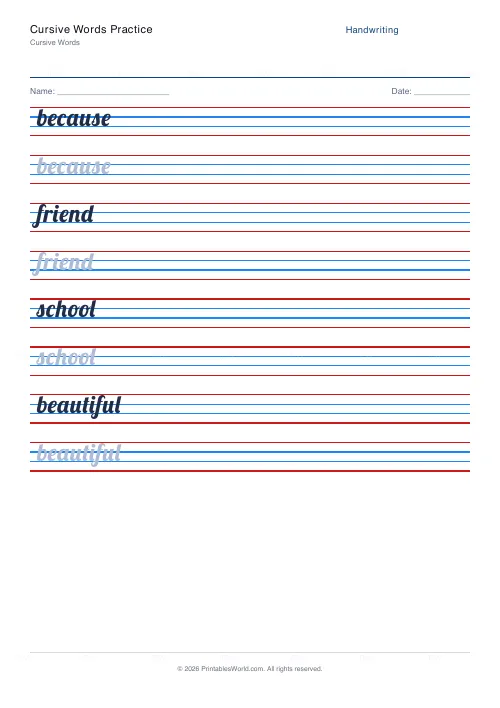 Cursive Words Practice
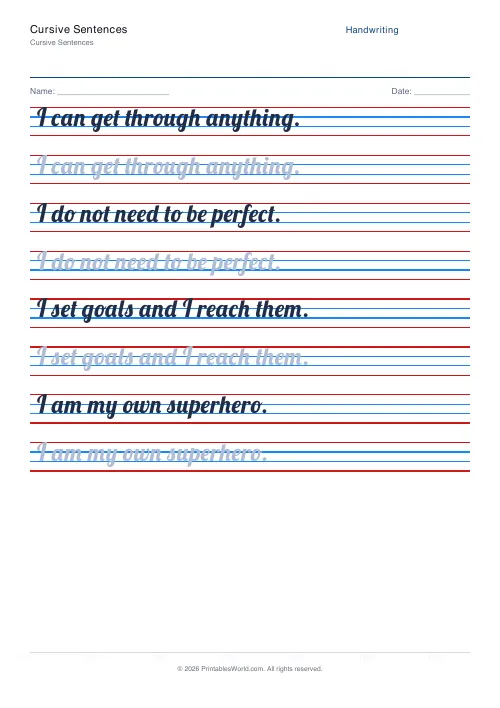 Cursive Sentences
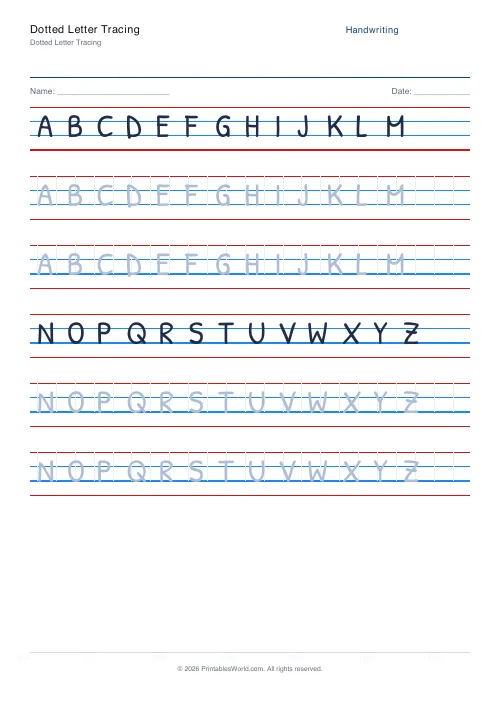 Dotted Letter Tracing
- Arrow Letter Tracing