What this tool does
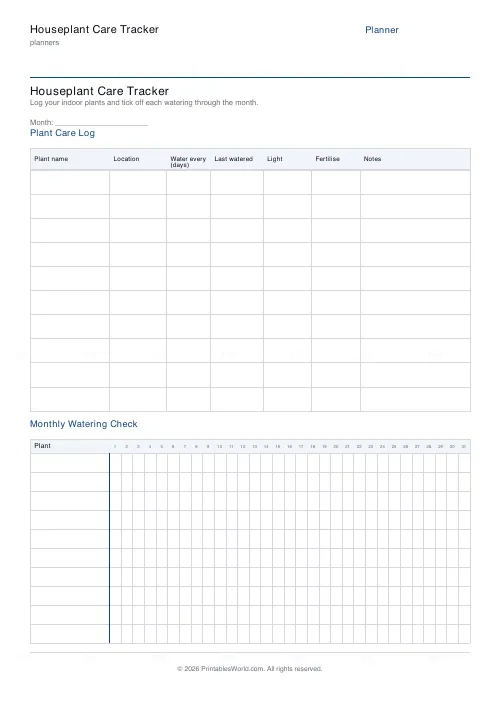
A plant care sheet: a table of name, location, watering interval, last watered, light, fertilising, plus a 31-day watering grid with a row per plant. 6 to 14 plants.
People also used
Feedback
Spotted something off with this tool?
Two halves
The top half is a reference table. Each plant's name, where it lives, how often it wants watering, when it was last done, what light it gets, when it was last fed.
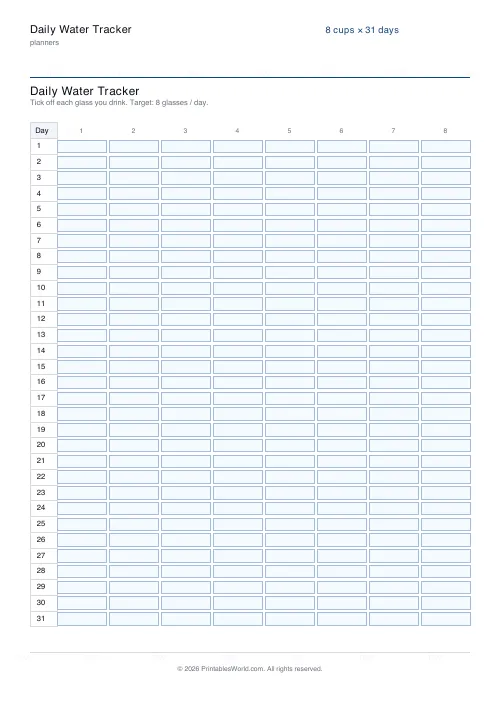
The bottom is a month grid — one row per plant, thirty-one day columns — to mark off as you go. Six to fourteen plants on a page.
Overwatering kills more houseplants than neglect
By a wide margin. The tracker exists largely to prevent it.
The failure mode is conscientiousness: you water on a Saturday because it is Saturday, the compost never dries out, the roots sit wet and rot. The plant then looks limp, which reads as thirsty, so it gets watered again. A grid showing you watered it four days ago is the interruption that breaks that loop.
The interval column is a reminder to check rather than an instruction to pour. Put a finger in the compost first — if the top few centimetres are damp, skip it and mark the skip.
The location column earns its place
Two identical plants in one house need different schedules. The reason is where they are standing.
A south-facing windowsill dries out several times faster than a north-facing corner. A radiator underneath changes everything again. Writing the position down is what stops you applying one rule to a shelf and a bathroom, and it explains the plant that keeps dying when its twin is thriving.
Seasons change the answer
Most houseplants want considerably less water between October and March, when the light is poor and growth has more or less stopped.
Keeping the summer schedule through winter is the single commonest way a plant that survived its first year does not survive its second. Feed in the growing season and stop over winter, for the same reason — fertiliser given to a dormant plant accumulates in the compost rather than being used.
Useful when you go away
Hand the sheet to whoever is watering. "Water the plants" produces either a drowned collection or a dead one; a table saying which plants, how much and how often produces neither.
It is also the sheet to have when something is unwell, because the history is on it — when it was last fed, when it was last watered, whether it was moved.
Print a fresh grid monthly
The reference table stays true for a year or more. Photocopy that half; reprint the grid.
Related: the garden planting planner for anything outdoors.
FAQs
Quick answers
How many plants can I track on one sheet?
Between 6 and 14 rows per page. The default is 10, which fits comfortably with generous space to write in each cell and tick the monthly grid.
What does the monthly grid show?
It gives each plant a row of 31 day boxes. Tick the box on the day you water so you can see at a glance when each plant was last watered and avoid over- or under-watering.
Is this a fillable PDF?
No. It prints as a clean worksheet you complete by hand. That keeps it universal, works offline, and needs no PDF editor or app.
What should I put in the 'Water every (days)' column?
The interval that suits each plant. For example 3 for a thirsty fern, 14 for a succulent. Use it with the grid to keep the spacing consistent.
Can I use it for a plant sitter?
Yes. Fill in the care table with each plant's location, watering interval, light and feeding needs, and the sitter ticks the grid as they water.
Which paper sizes are supported?
A4 and US Letter. Print at 100% scale so the 31 day columns stay aligned and wide enough to tick by hand.
How often should I print a new one?
The watering grid covers a month, so a fresh sheet each month works well. Keep the old sheets to spot seasonal watering patterns across the year.
Related tools
Cleaning Schedule
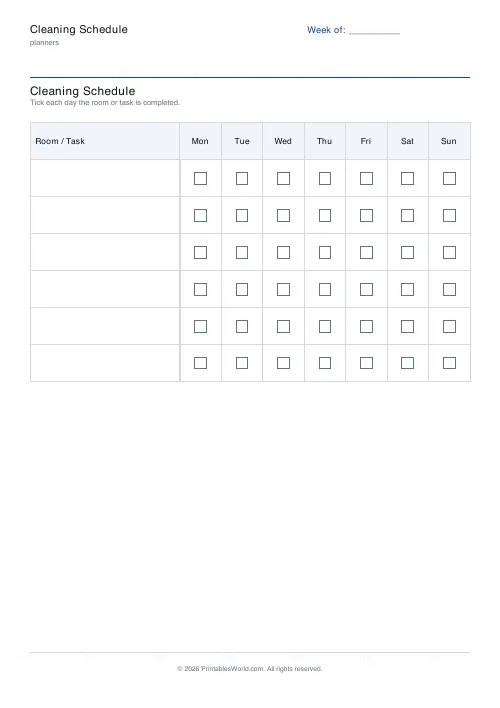
Print a weekly cleaning schedule grid with custom rooms and tasks across Monday to Sunday.
30-Day Habit Tracker
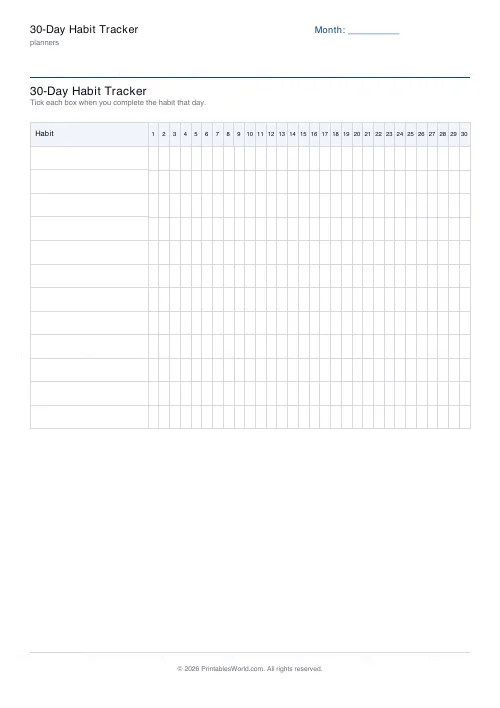
A printable 30-day habit grid to tick off every morning. One row per habit.
Weekly Meal Planner
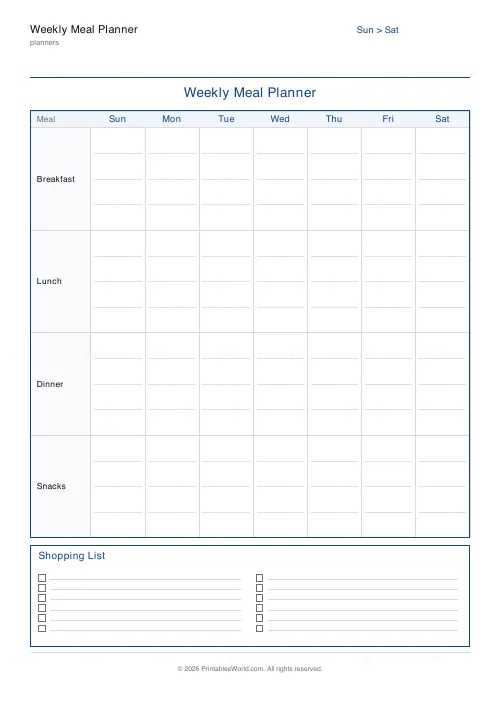
Plan seven days of breakfast, lunch and dinner on one printable page.
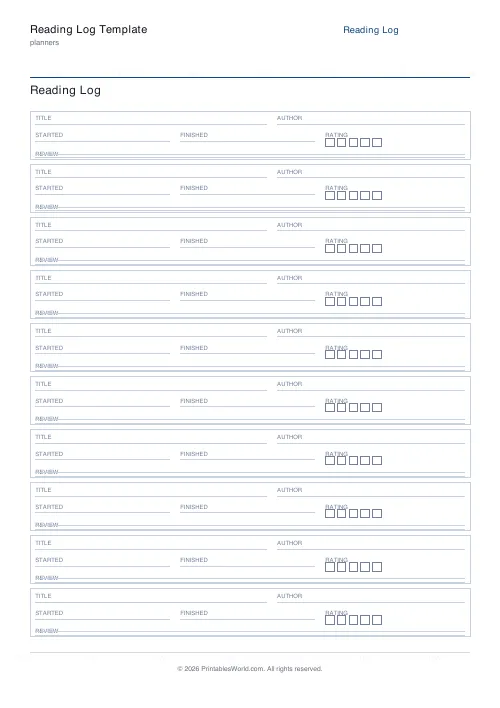
Reading Log Template
Printable reading log. Track titles, authors, dates, ratings, and reviews.
Further reading
Planners
How to pay off debt faster with a payoff tracker
One method costs less; the other is easier to stick to. Here is how to choose between them honestly, and why a visual tracker changes the odds either way.
5 min read
Planners
Study planning for exams: a student's complete guide
A revision timetable is only as good as what goes in the slots. Here is how to build one backwards from the exam date, and which study methods the evidence actually supports.
5 min read
Planners
Chore charts that motivate kids (without nagging)
Most chore charts fail for the same three reasons. Here is what to put on one by age, whether to attach money, and how to stop being the person who remembers everything.
5 min read