Planners
Chore charts that motivate kids (without nagging)
By Jobi · Creator & Maintainer, PrintablesWorld · Updated 2026-06-11 · 5 min read
A chore chart is meant to move the remembering from you to the child. Most fail at exactly that: the chart goes up, works for a fortnight, and then you are back to asking three times. Free printable behaviour and chore charts make the chart itself easy. The design decisions below are what determine whether it survives.
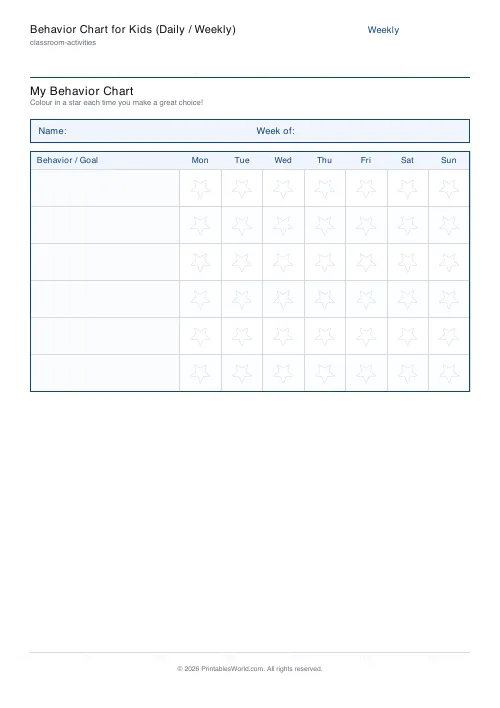
Why most chore charts fail
Too many jobs. Eight chores per child looks thorough and is abandoned within a fortnight. Two or three that happen every day beat eight that happen sometimes.
The chore is vague. "Tidy your room" is a project with no definition of done, and children stall on it for the same reason adults stall on "do the taxes". "Books on the shelf, clothes in the basket" is a task.
The adult still owns the remembering. If you are the one checking the chart, nothing has moved. The chart has to be the reminder, which means it must be where the chore happens.
A fourth, less obvious one: the chart was designed for the parent's convenience rather than the child's routine. A chore attached to a moment that already exists, after breakfast, before screens, survives; one floating in the day does not.
What children can actually do, by age
Rough guidance; children vary and capability matters more than the birthday.
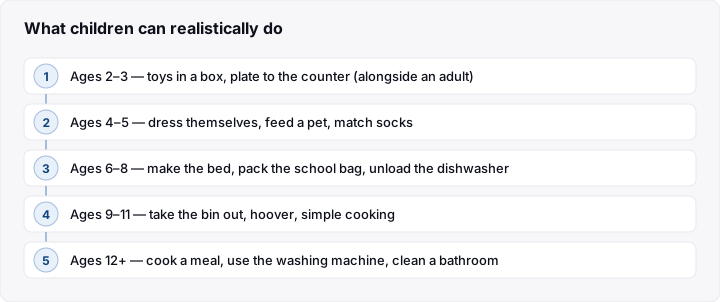
- 2–3: put toys in a box, carry their plate to the counter, throw something in the bin. Alongside an adult, always.
- 4–5: dress themselves, feed a pet, match socks, set out cutlery, water a plant.
- 6–8: make their bed, tidy their room to a defined list, help unload the dishwasher, pack their school bag.
- 9–11: take the bin out, hoover a room, prepare simple food, do their own laundry basket run.
- 12+: cook a meal, use the washing machine, clean a bathroom, look after a younger sibling briefly.
Two principles. Give jobs that genuinely help the household rather than invented tasks. Children can tell the difference, and real contribution is the point. And expect it done badly for a while: a six-year-old's bed-making is not good, and correcting it visibly is the fastest way to stop them doing it.
Should chores be paid?
Opinions differ genuinely, and both positions are reasonable.
The case against: contributing to the household is part of being in a family, not a job. Paying can make chores feel optional, the child can simply decline the money, and it does not teach responsibility so much as transaction.
The case for: money has to be learned somewhere, and earning it teaches more than receiving it. Handling their own money teaches saving, choosing and regretting a purchase.
A common middle path: basic contributions are unpaid, tidying your own things, clearing your plate, keeping your room to a standard, while extra jobs are paid, such as washing the car or a bigger seasonal task. That separates "this is what we all do" from "this is work you chose to take on", which is a distinction worth making explicit.
If you do pay, an allowance and money chart is worth running alongside, because the money side teaches most when it is tracked rather than handed over.
Designing a chart that works
- Two or three chores per child. Add a fourth only once the first three happen without prompting.
- Write the definition of done, not the category.
- Put it where the chore happens: kitchen chores on the fridge, bedroom chores on the bedroom door.
- Let the child tick it themselves. The ticking is most of the motivation, and an adult ticking removes the ownership entirely.
- Use pictures for pre-readers, so the chart works without an adult reading it aloud.
- Reset weekly, visibly. A fresh chart on Monday is a clean start; a chart with a month of gaps is a record of failure.
Getting out of the reminding business
This is the actual goal, and it needs the consequence to move off you and onto the situation.
Instead of reminding, ask a question: "What does your chart say?" That points at the chart rather than making you the enforcer, and it works considerably better than the third reminder.
Then let the natural consequence happen where it is safe to. If the school bag is not packed, the reading book is missing at school. If the laundry does not reach the basket, the favourite top is not clean. One experienced consequence teaches more than a month of reminders, and it is the child's problem rather than an argument with you.
Where a natural consequence is unsafe or unfair to others, make the link explicit and immediate instead. Screens after the chore, not before.
Frequently asked questions
At what age should children start chores?
Around two or three, with very simple tasks done alongside an adult. Starting early matters less for the work done than for establishing that helping is normal rather than exceptional.
What if they simply refuse?
Check the chore is achievable and clearly defined first. Refusal is often about a vague or overwhelming task. Then attach a consequence that is immediate and related rather than a general punishment, and apply it calmly and consistently.
Should stickers or rewards be used?
They work well for younger children and lose their power over time, which is fine. The aim is to build the habit while the reward carries it. Fade the rewards gradually rather than stopping abruptly.
How do I handle different ages fairly?
Fair is not identical. Match the job to the capability and say so plainly; older children generally accept more responsibility if it comes with more independence elsewhere.
Before you print
Pick two or three chores per child, define what "done" means, put the chart where the job happens, and let them tick it. Print a chore and behaviour chart weekly rather than monthly, and add an allowance chart only if you are paying for extra jobs.
Related tools
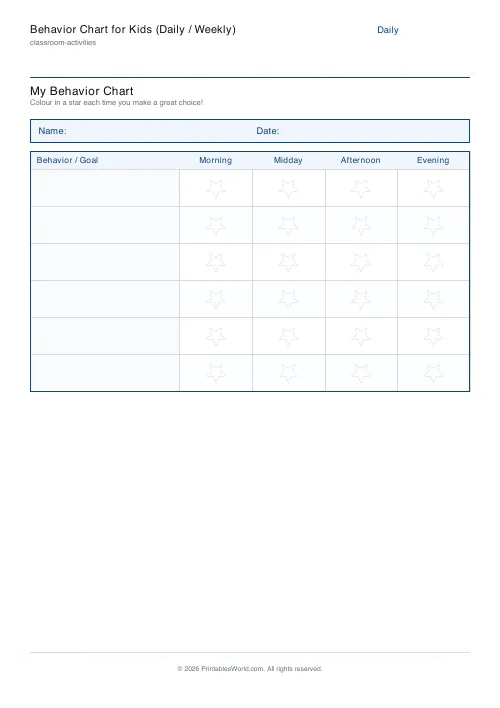
Behavior Chart for Kids (Daily / Weekly)
Printable daily or weekly behavior chart for children. Behaviors and goals down the side, days or time slots across the top.
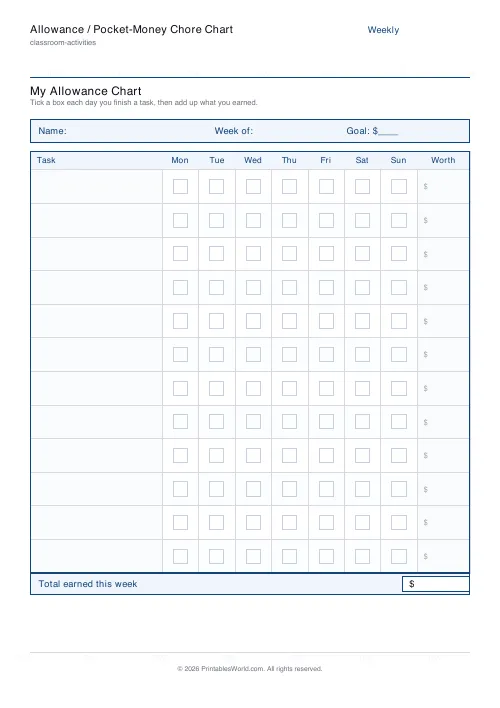
Allowance / Pocket-Money Chore Chart
Printable allowance chart. Tasks × 7 days of tick boxes, a money column and a weekly total.
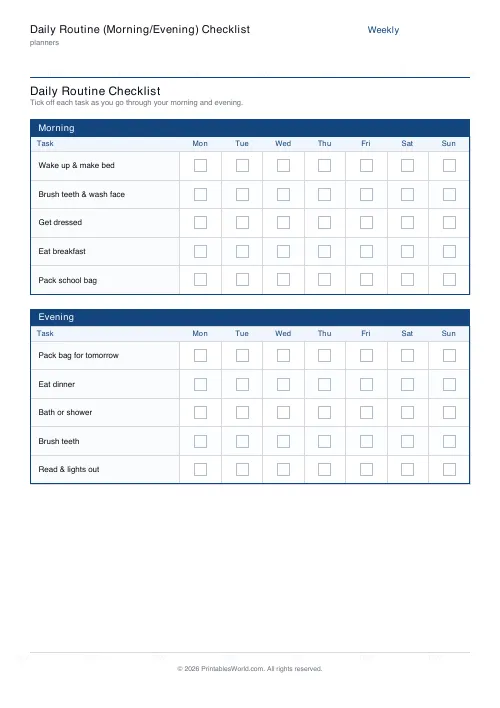
Daily Routine (Morning/Evening) Checklist
Printable morning and evening routine checklist with a tick box for every task, every day of the week.
Continue reading
Classroom Activities
Positive reinforcement in the classroom: charts that work
Reward charts work when they name a specific behaviour and fade over time. They backfire when they rank children publicly. Here is the difference in practice.
5 min read
Planners
How to build a daily routine that actually sticks
Most routines fail in week two, when motivation runs out and nothing has replaced it. The fix is structural: fewer items, fixed anchors, and a plan for the day you miss.
6 min read