What this tool does
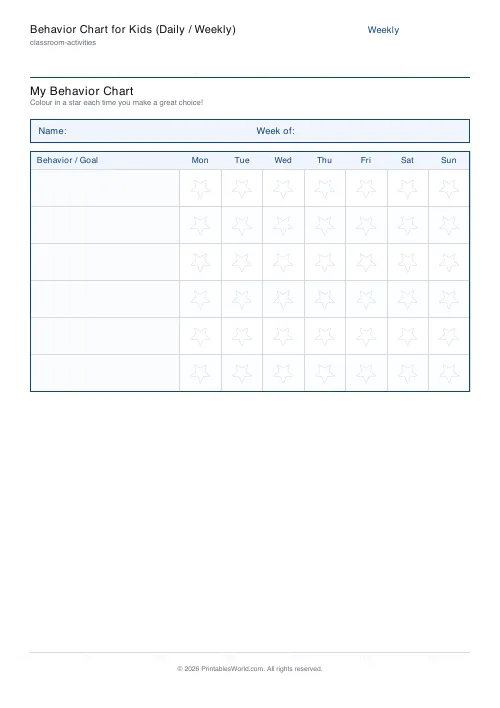
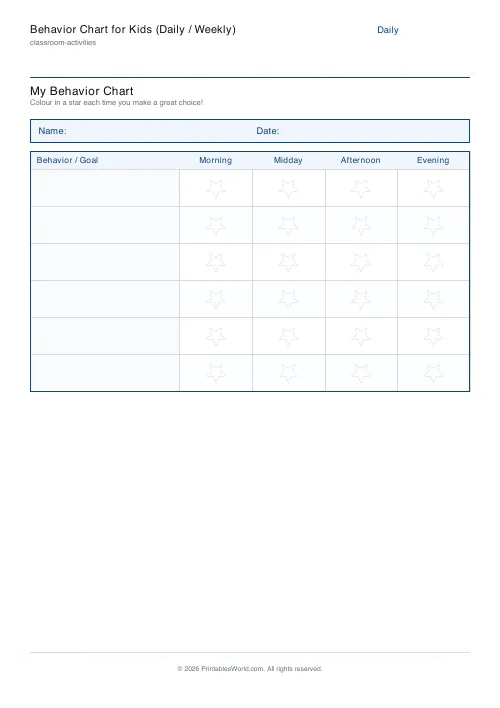
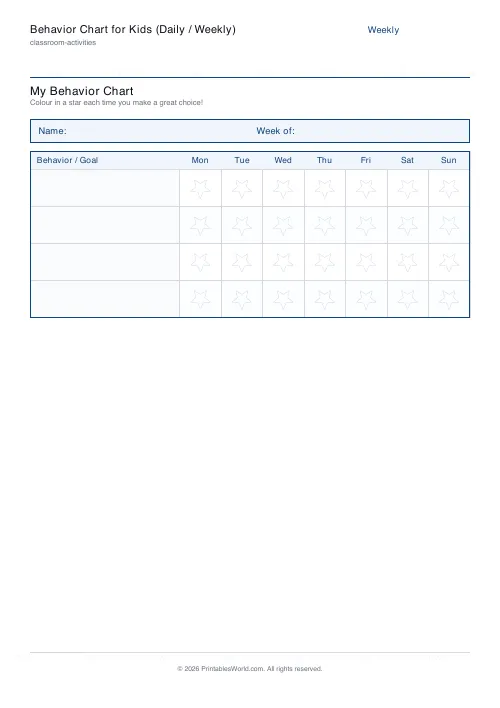
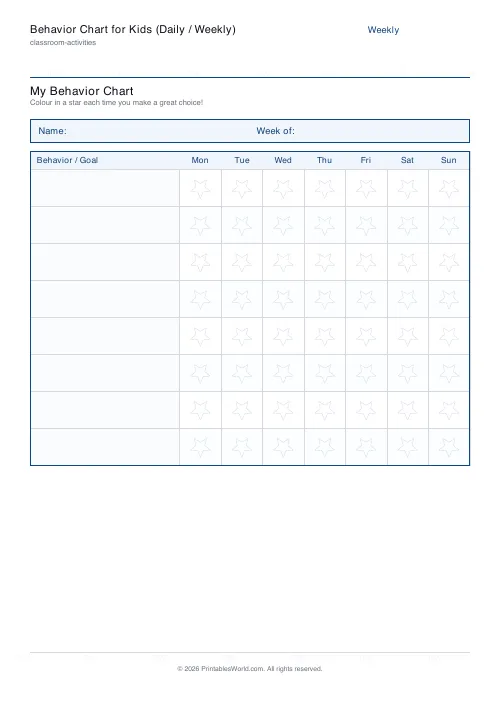
A behaviour grid in a daily layout with time slots or a weekly one across seven days. Four to ten behaviours, named by you, with the child's name at the top.
People also used
Feedback
Spotted something off with this tool?
Behaviours down the side, time across the top
Pick a daily chart, running through slots from morning to evening, or a weekly one across the seven days. Name four to ten behaviours yourself, add the child's name, and print.
Write what to do, not what to stop
This is the difference between a chart that helps and one that becomes a record of failure.
"No shouting" cannot be ticked, because not doing something has no moment where it happens. "Used my indoor voice" can. "Stop hitting" is a prohibition; "kept my hands to myself" is an action, and an action is what a chart can record.
The reframing is not softness — it is that a child can only practise a behaviour they can picture. Telling somebody what not to do leaves them with no instruction at all.
Four behaviours, not ten
The grid takes ten and almost nobody should use ten.
A child working on four things is working on four things. A child facing ten is facing a page that is mostly blank at the end of every day, which reads as failure regardless of how the week actually went. Pick the two or three that matter most right now and add more when those are stable.
Put one easy one in deliberately. A chart with some guaranteed ticks on it stays in use; a chart with none gets taken down.
Daily or weekly
The daily layout catches the pattern within a day — the child who manages fine until three o'clock has a tiredness or hunger problem rather than a behaviour one, and the chart will show you that in a week.
The weekly layout is lower-pressure and better for a longer stretch. It is also less overwhelming for a child who finds being observed all day difficult.
What these charts are and are not good at
They work for behaviours a child can already do and is not doing consistently. They are a prompt and a record, and the visibility does most of the work.
They do not work for behaviour driven by something the chart cannot reach — anxiety, sensory overload, an unmet need, a communication difficulty. A child who is hitting because they cannot yet ask for help will not be helped by a chart about hitting, and running one anyway teaches them that they fail at something daily.
If a chart is producing consistent blanks, that is information about the chart rather than the child. Stop it and look at what is underneath.
Keep it separate from feelings
A behaviour chart records what was done. A feelings chart records what was felt, and the two must not be merged — the moment "angry" becomes a bad mark, a child stops reporting anger honestly.
Both feelings are allowed. Only some behaviours are, and that distinction is worth saying out loud.
Settings: title, child's name, mode, behaviour count (4 to 10) and your list. A4 or US Letter at 100%.
FAQs
Quick answers
What is the difference between the daily and weekly chart?
The weekly chart has seven columns (Monday to Sunday) for tracking behavior across a week. The daily chart has four time-slot columns (Morning, Midday, Afternoon, Evening) so you can review progress several times in a single day.
How many behaviors should I list?
Pick 4 to 10. For younger children, focusing on just one or two target behaviors works best; older children can manage a longer list.
Can I print a blank chart and fill it in by hand?
Yes. Leave the behaviors list blank and the rows print empty, ready to write in. Handy if your targets change from day to day or week to week.
Can I make one per child?
Yes. Change the name and behavior list and generate a separate PDF for each child. The design stays consistent across siblings or classmates.
Related tools
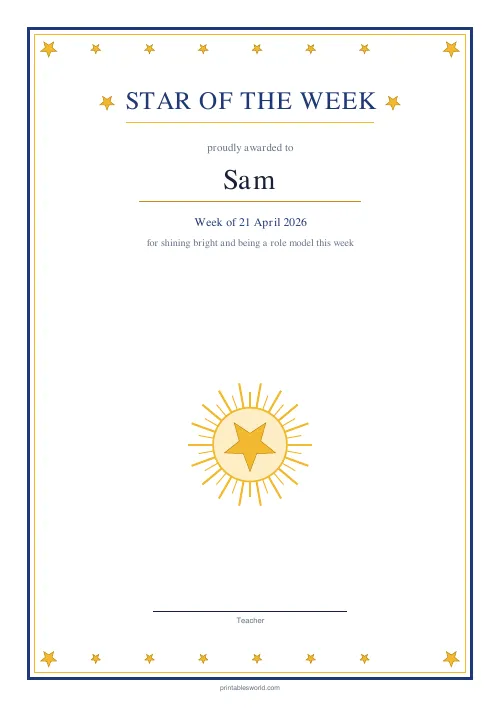
Star of the Week Certificate
A bright "Star of the Week" certificate with a golden star frame.
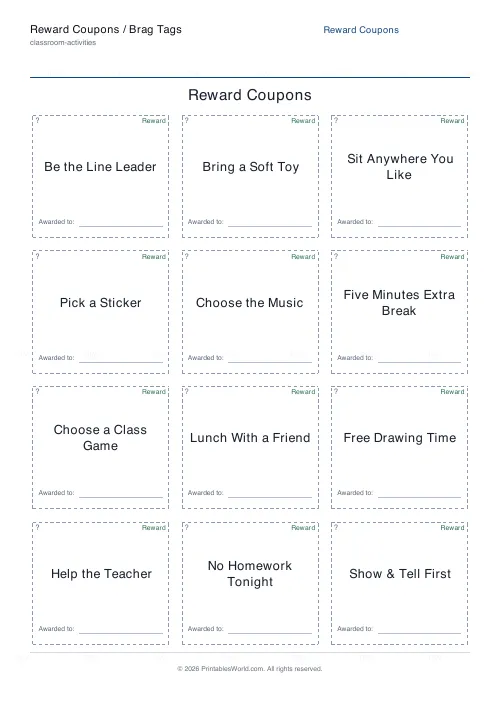
Reward Coupons / Brag Tags
Print a sheet of cut-out reward coupons and brag tags.
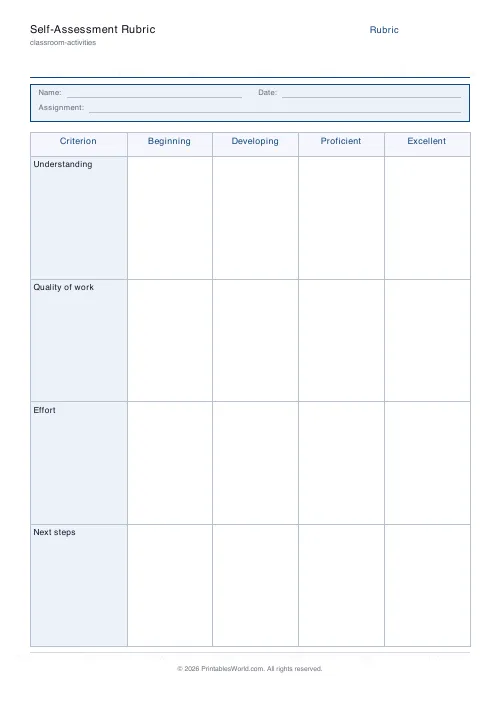
Self-Assessment Rubric
Four criteria, four levels. A printable rubric students fill in themselves.
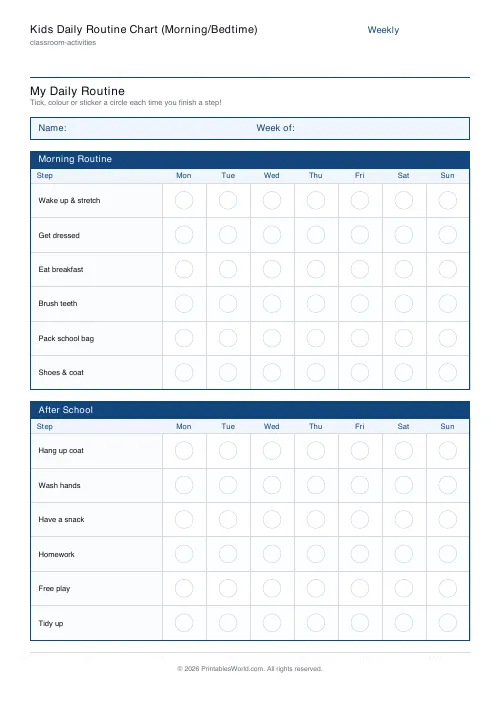
Kids Daily Routine Chart (Morning/Bedtime)
Printable morning and bedtime routine chart for children. Two routine blocks × 7 days of check circles.
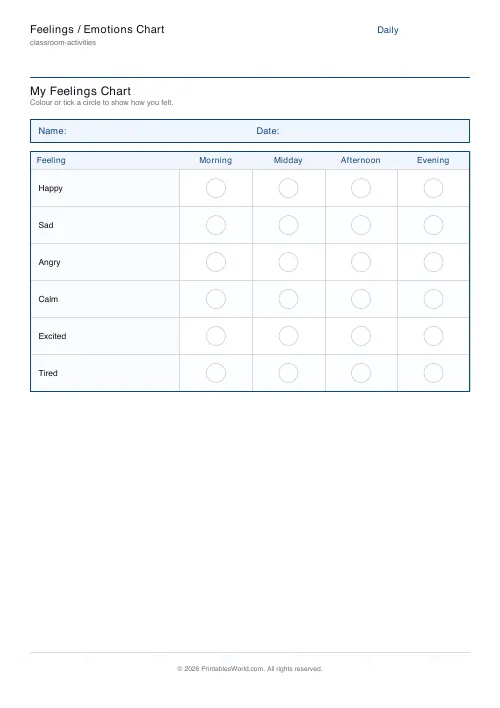
Feelings / Emotions Chart
Printable daily or weekly feelings chart for children. Emotions down the side, days or time slots across the top, a circle in every cell to colour or tick.
Further reading
Classroom Activities
How to run a classroom economy (free printables)
A classroom economy teaches money, work and choice at once. But it collapses if the maths is wrong. Here is how to set the numbers, and the four pitfalls to avoid.
5 min read
Classroom Activities
Positive reinforcement in the classroom: charts that work
Reward charts work when they name a specific behaviour and fade over time. They backfire when they rank children publicly. Here is the difference in practice.
5 min read
Planners
Chore charts that motivate kids (without nagging)
Most chore charts fail for the same three reasons. Here is what to put on one by age, whether to attach money, and how to stop being the person who remembers everything.
5 min read