Classroom Activities
Positive reinforcement in the classroom: charts that work
By Jobi · Creator & Maintainer, PrintablesWorld · Updated 2026-06-20 · 5 min read
Reward charts are among the most used and most misused tools in a classroom. Used well they make an expectation visible and build a habit. Used badly they become a public ranking of children by compliance. The difference is mostly in the design, and a free printable behaviour chart can be set up either way.
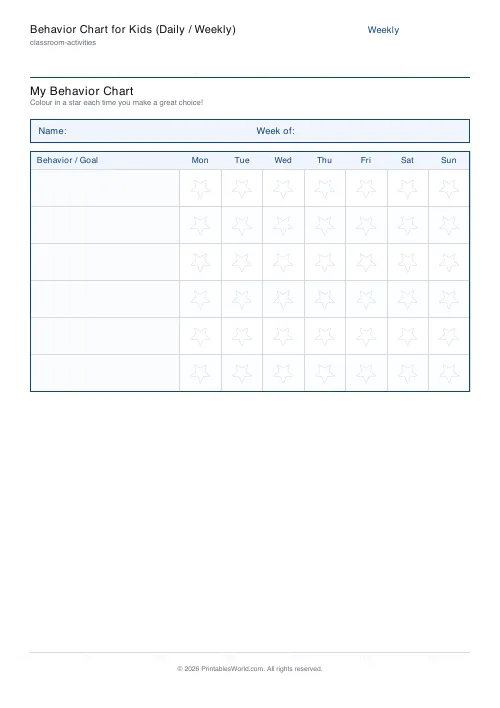
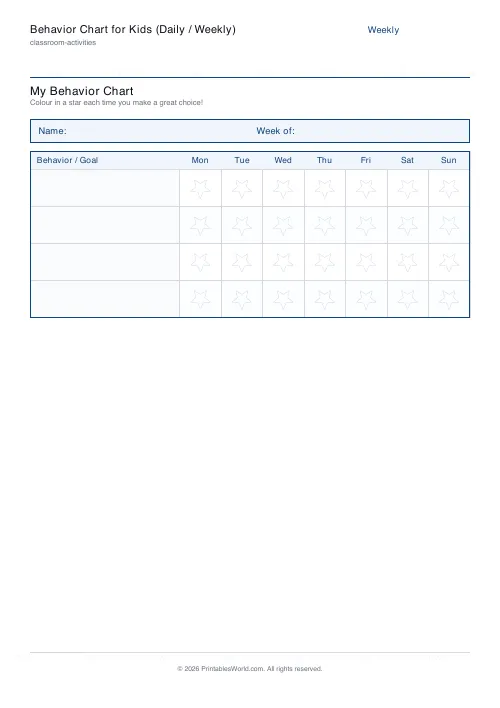
Reward the behaviour, not the child
"Well done, you're a good boy" tells a child nothing they can repeat. "Well done for starting your work straight away without being asked" tells them exactly what earned it.
Specific praise is more useful for the same reason specific feedback is: it names the thing. It also avoids the trap of praising a fixed quality. Children praised for being clever tend to avoid harder work, because failing would threaten the label, whereas children praised for effort and strategy are more willing to attempt something difficult.
So the chart should track a behaviour you can point at. "Being good" is not one. "Started work within a minute" is. Choose one or two at a time; a chart tracking six behaviours tracks none of them clearly.
The problem with public charts
The classic display. Every child's name with visible points, or a clip that moves up and down a colour scale. Has real drawbacks worth weighing.
It publicly ranks children, and the same names tend to sit at the bottom day after day. For a child who finds self-regulation genuinely difficult, that is a daily public statement about them rather than about a choice they made, and it can entrench an identity rather than change behaviour.
It also invites comparison as the main motivation, which fades as soon as the chart does.
Alternatives that keep the visibility without the ranking:
- A whole-class goal: marbles in a jar, one shared target. Cooperative rather than competitive, and the class regulates itself.
- Private individual charts: each child's own chart in their book or folder, compared only with their own last week.
- Recognition without ranking: a star of the week that rotates and highlights different qualities, so it is not always the same profile of child.
Chart types and what each suits
Sticker or stamp charts: best for young children and for a single, specific target. Simple, immediate, easy to fade.
Token or points systems: suit older primary, where points accumulate towards something. More flexible, more admin.
Whole-class jars: best for a class-wide issue such as noise on entry or tidiness. Everyone contributes, nobody is singled out.
Individual targets: for a child working on something specific. Private, agreed with the child, reviewed with them. This is the one that most often produces real change, because it is about them rather than about the class.
Whichever you use, the reward should arrive soon for younger children. A prize at the end of term is too distant to influence behaviour on Tuesday.
Fading the rewards out
The aim is a child who behaves well because it works better, not one who behaves well while being paid. That means the chart is scaffolding, and scaffolding comes down.
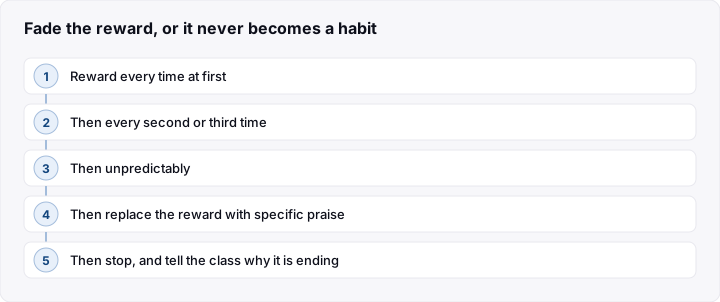
A workable sequence: reward every time at first, then every second or third time, then unpredictably, then replace the reward with specific praise, then stop and move to another target.
Intermittent rewards are more durable than constant ones, which is why the middle steps matter and why removing a chart abruptly usually fails.
Tell the class when a chart is ending and why, "you don't need this any more, you all line up properly now", so it reads as achievement rather than as something being taken away.
When it stops working
The novelty has gone. Charts have a natural life of a few weeks. Change the target or the format rather than persisting.
The same children never earn anything. The bar is too high for them. Set individual targets so everyone can succeed at their own level.
Children negotiate constantly. "Do I get a sticker for this?" means the chart has become the point. Narrow it to one behaviour and be less generous.
Behaviour worsens when the chart is not visible. The behaviour has been attached to the chart rather than internalised. Move to fading, and pair with specific praise so the behaviour has another anchor.
And if a chart is not working for one child in particular, the chart is probably the wrong tool for what is going on. That is a conversation with the child, and possibly with your SENCO or the family, rather than a design problem.
Frequently asked questions
Do reward charts undermine intrinsic motivation?
There is genuine debate here. The concern is best supported for tasks a child already enjoys, where rewarding can reduce the natural interest. For behaviours a child does not yet find rewarding, lining up quietly, starting work promptly, a chart is generally a reasonable scaffold, provided it is faded rather than made permanent.
Should I use consequences as well?
Most classrooms need both. Keep consequences proportionate, immediate and related to the behaviour, and avoid removing earned rewards. Losing points already earned tends to produce resentment rather than reflection.
What age do reward charts work best for?
Most effective in early and middle primary. Older students respond better to individual targets, genuine responsibility and specific feedback than to stickers.
How long should a chart run?
A few weeks per target. Longer than that and it becomes wallpaper. Change the target, the format, or stop.
Before you print
Pick one specific behaviour, decide whether it needs to be public at all, and plan the fade before you start. Print a behaviour chart for the individual or whole-class version rather than a public league table, and rotate a star of the week to recognise a range of qualities.
Related tools
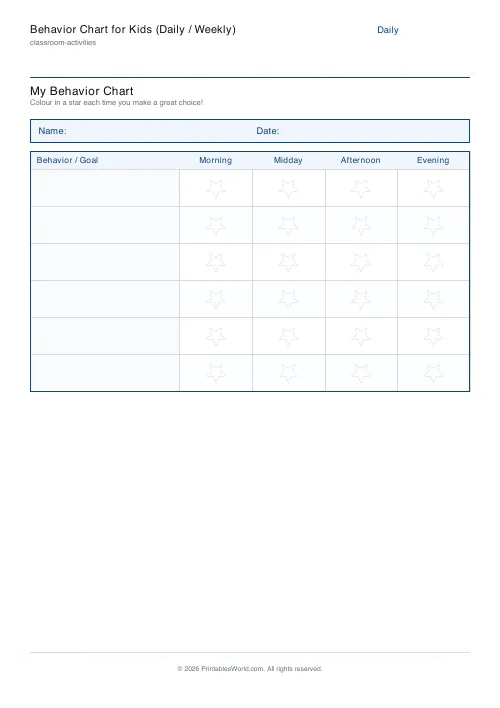
Behavior Chart for Kids (Daily / Weekly)
Printable daily or weekly behavior chart for children. Behaviors and goals down the side, days or time slots across the top.
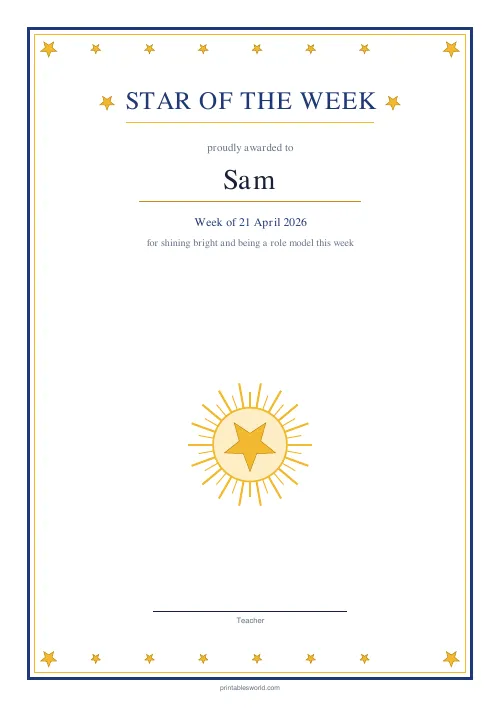
Star of the Week Certificate
A bright "Star of the Week" certificate with a golden star frame.
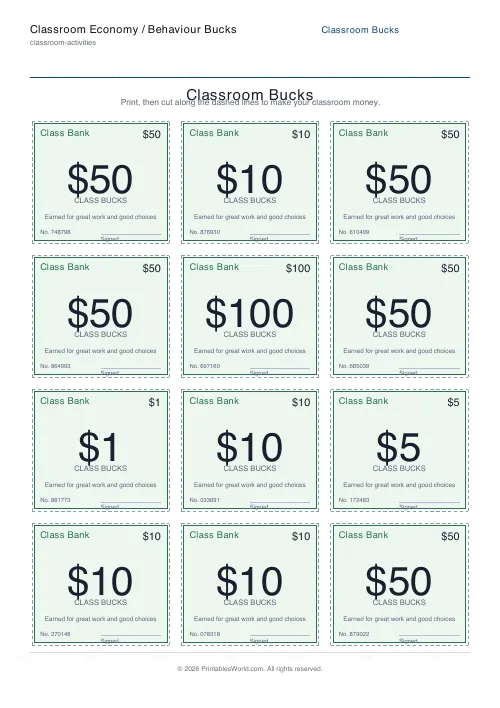
Classroom Economy / Behaviour Bucks
Print a sheet of cut-out classroom money for a token reward economy.
Continue reading
Classroom Activities
How to run a classroom economy (free printables)
A classroom economy teaches money, work and choice at once. But it collapses if the maths is wrong. Here is how to set the numbers, and the four pitfalls to avoid.
5 min read
Planners
Chore charts that motivate kids (without nagging)
Most chore charts fail for the same three reasons. Here is what to put on one by age, whether to attach money, and how to stop being the person who remembers everything.
5 min read