What this tool does
Convert paper weight between grams per square metre (gsm) and US basis weight in pounds (lb) for bond, text, cover, and index stocks. Enter a value and pick the paper type to see the equivalent figures.
People also used
Paper Sizes Calculator
Compare paper sizes and convert dimensions to pixels for accurate print design at any resolution.
Print Cost Estimator
Estimate the per-job cost of printing based on pages, paper, ink, and quantity.
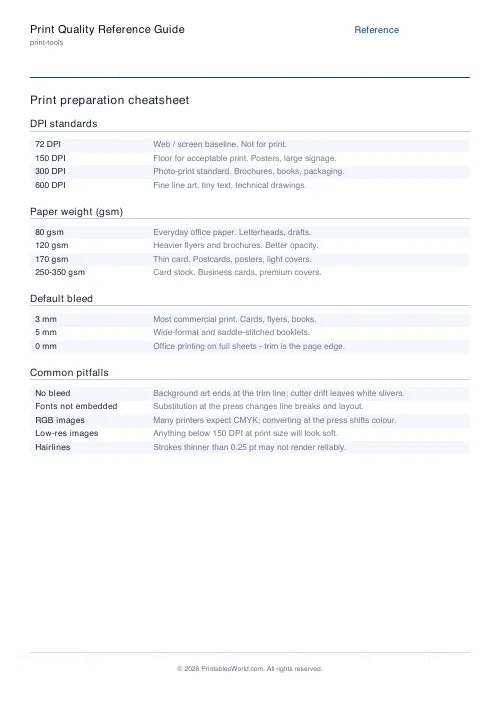
Print Quality Reference Guide
A printable reference for DPI standards, paper weights, bleed defaults, and common pitfalls.
Feedback
Spotted something off with this tool?
gsm and pounds, finally side by side
Paper weight is described two ways depending on where you are. The rest of the world uses gsm, grams per square metre, a single consistent number. The US uses basis weight in pounds (lb), but the pounds differ by paper category because each is weighed at a different sheet size. That is why 20lb bond and 50lb text are almost the same paper. This converter translates between gsm and the correct lb value for the stock you choose.
Pick the paper type (bond/writing, text/book, cover/card, or index), enter a weight in either unit, and read the equivalent. A reference chart of common weights is included so you can sanity-check the result.
Why pounds depend on paper type
US basis weight is the weight of 500 sheets at that grade's basic size. Bond's basic size is 17x22 inches; text is 25x38; cover is 20x26; index is 25.5x30.5. Because the basic sizes differ, the same gsm maps to different pound numbers per grade. The conversion factors below come from those basic sizes:
- Bond / writing: gsm = lb x 3.7606
- Text / book: gsm = lb x 1.4805
- Cover / card: gsm = lb x 2.7048
- Index: gsm = lb x 1.8147
Common weights at a glance
- 80 gsm: everyday copy paper (about 20lb bond).
- 120 gsm: heavier inkjet / brochure paper.
- 160 gsm: light card, about 60lb cover.
- 250 gsm: business-card and cover stock (about 92lb cover).
- 300 gsm: heavy card for invitations and certificates.
Putting it to work
- Choose the paper category. This sets the correct conversion factor.
- Enter the weight you know, in gsm or lb.
- Read the converted value; compare it with the reference chart.
- When buying card, gsm is the safest spec to quote because it is unambiguous.
Weight is not thickness
- gsm is weight per area and does not directly tell you thickness (caliper). Two papers at the same gsm can differ in bulk; thickness in points/microns is a separate measurement.
- Always confirm the paper category when converting from lb. The same number means different stock in bond versus cover.
- Conversions are rounded for display; manufacturer tolerances are typically a few percent anyway.
FAQs
Quick answers
Is 20lb bond the same as 50lb text?
Almost. Both are about 75 gsm. They feel the same because they are the same paper; the different pound numbers come from being weighed at different basic sheet sizes.
Why can't I convert gsm to pounds without a paper type?
Because US basis weight depends on the grade's basic sheet size. Bond, text, cover, and index each use a different size, so the same gsm gives a different lb figure for each.
Does gsm tell me how thick the paper is?
Not exactly. gsm is mass per area; thickness (caliper, measured in points or microns) depends on how dense or bulky the paper is. Two 250 gsm stocks can have slightly different thickness.
Which unit should I give my printer?
gsm is the clearest because it is one number for any paper. If your supplier uses pounds, state the category too, e.g. '100lb cover', so there is no ambiguity.
Related tools
Paper Sizes Calculator
Compare paper sizes and convert dimensions to pixels for accurate print design at any resolution.
Print Cost Estimator
Estimate the per-job cost of printing based on pages, paper, ink, and quantity.
Print Quality Reference Guide
A printable reference for DPI standards, paper weights, bleed defaults, and common pitfalls.