What this tool does
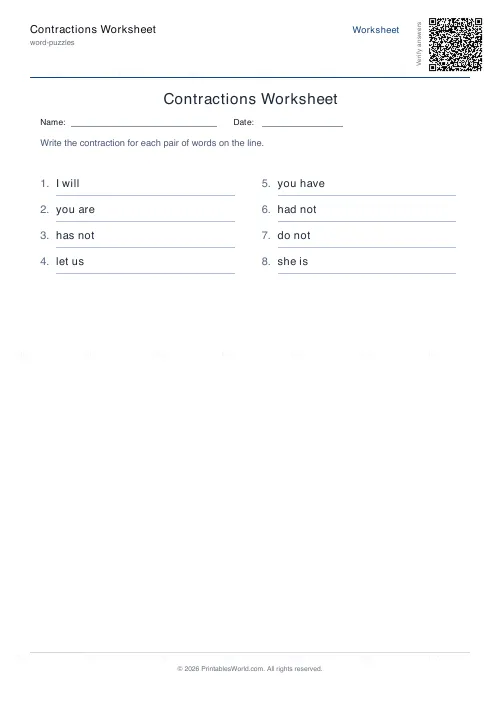
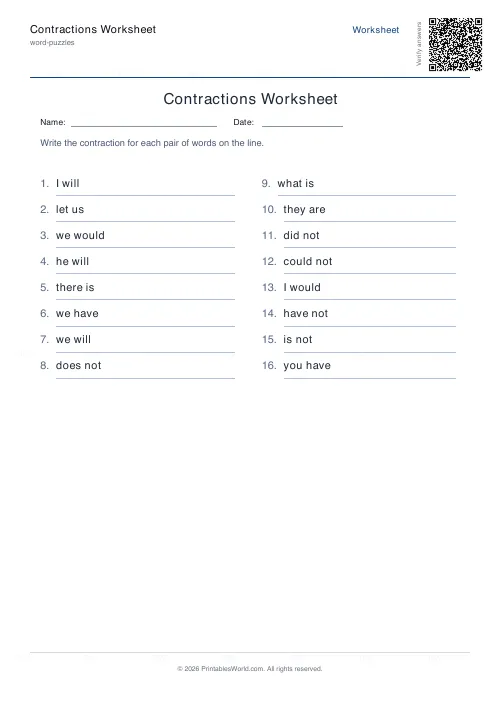
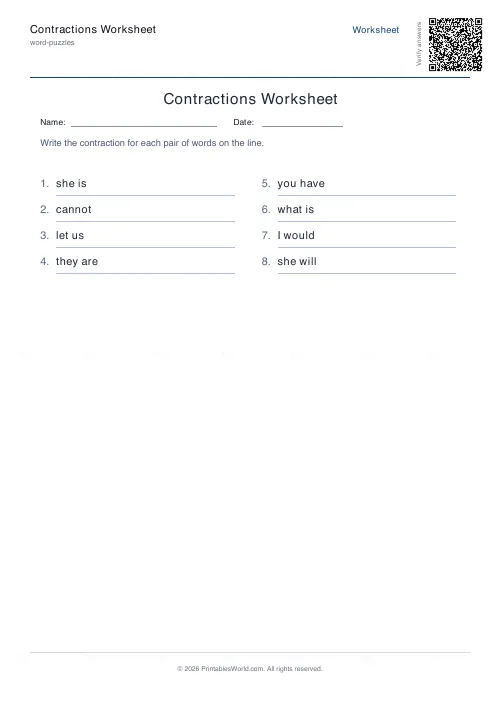
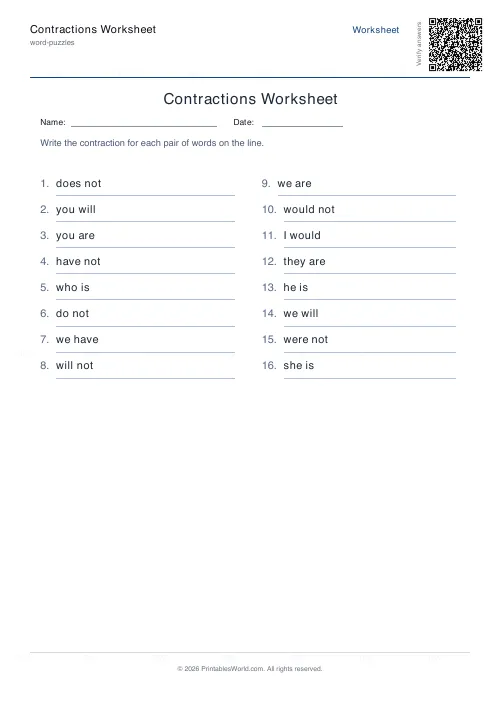
Contractions worksheets from a curated list of the common English forms. Each row prints a pair of words such as <em>do not</em> and a line for the pupil to write the contraction on. Set how many problems, reshuffle for a fresh sheet, and add an answer key.
People also used
Feedback
Spotted something off with this tool?
Two words in, one word out
Each row gives a word pair and a line beside it. Do not becomes don't. Twenty rows by default, reshuffled from the bank every time you generate.
The words come from a curated list rather than being assembled by rule, which matters here more than it would elsewhere, because English contractions are not fully regular and a generated list would produce forms nobody says.
The apostrophe marks what went missing
That is the whole rule, and it is worth saying to a class in exactly those words. In do not to don't, the apostrophe is standing where the o used to be. Not decoration, not a gap between words: a marker for a deleted letter.
Most negatives behave. Is not to isn't, could not to couldn't, the o dropping out each time. Pronouns join to verbs the same way: I am to I'm, they are to they're, it is to it's.
Two do not behave, and they are worth teaching separately rather than hoping. Will not becomes won't, which no rule predicts. Cannot becomes can't, losing two letters where the pattern would drop one.
This is where the its and it's problem gets fixed
A child who understands that the apostrophe marks a missing letter has the tool to solve the commonest error in written English, and they will keep it for life.
It's has an apostrophe because a letter is gone: it is. Its has no apostrophe because nothing is missing. Same for they're against their. Taught as a spelling rule to memorise it never sticks; taught as a consequence of what an apostrophe means, it does.
So spend the time on the meaning before the worksheet, not after it.
What to do after the sheet
Read the pairs aloud first. Contractions exist because of how people speak, and hearing do not collapse into don't explains the spelling faster than the spelling explains itself.
Afterwards, sort the answers into families by which word got shortened: the not family, the is family, the will family. The irregulars stand out on their own, which is exactly what you want them to do.
For older pupils, reverse it. Give them a short passage and ask them to find and expand every contraction in it, which is harder than it sounds and catches the ones they have been reading past for years.
FAQs
Quick answers
What is a contraction?
A contraction is a shortened form of two words joined together, with an apostrophe marking the missing letters. For example, "do not" becomes "don't" and "I am" becomes "I'm".
What year group is this for?
Contractions are usually introduced in Year 1–3 (Grade 1–3). The worksheet also suits older pupils revising apostrophe use and tricky pairs like won't and can't.
Is there an answer key?
Yes. Toggle the answer key on and the PDF adds a marked copy showing the correct contraction for every word pair, so marking takes seconds.
Can I make every worksheet different?
Yes. Each generation reshuffles the curated list, so you can print a unique sheet for every pupil. Press Generate New to reshuffle the preview.
Related tools
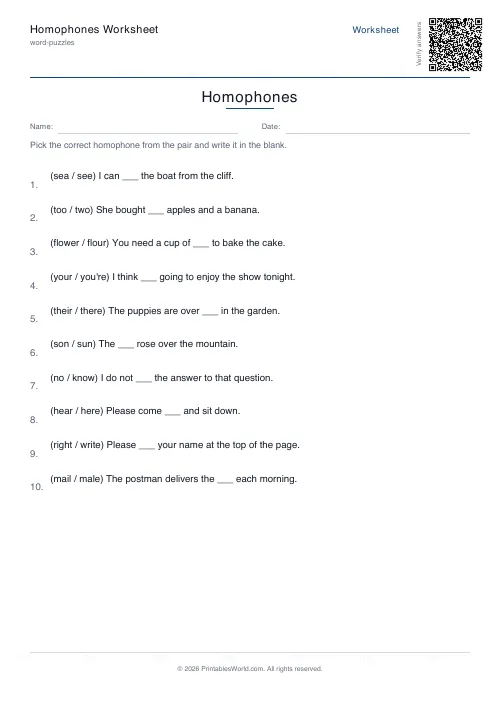
Homophones Worksheet
Pick the right homophone. There / their / they're and friends.
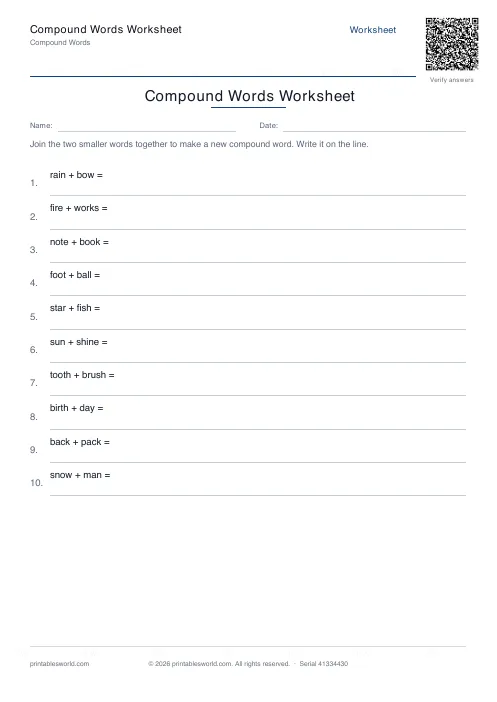
Compound Words Worksheet
Join two small words together to build a compound word.
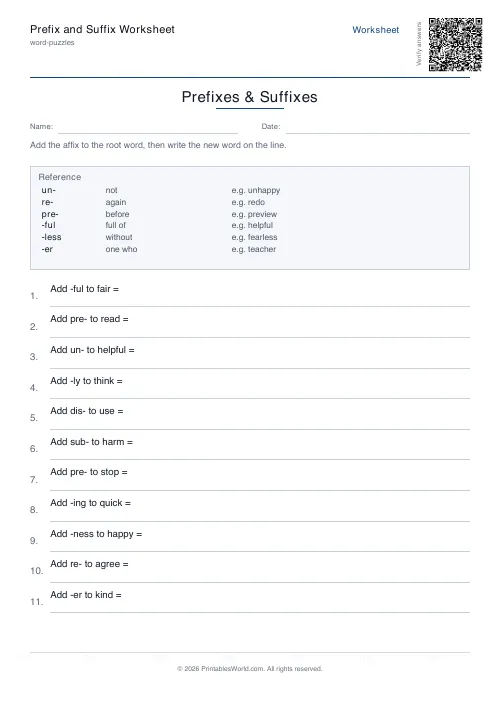
Prefix and Suffix Worksheet
Build new words by adding common prefixes and suffixes.
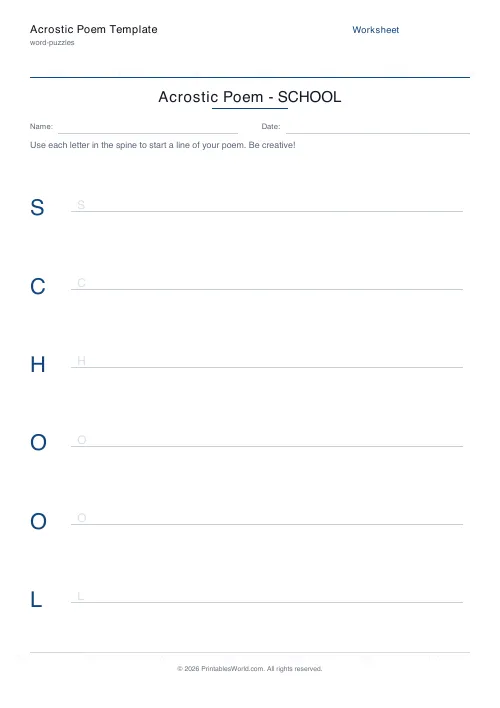
Acrostic Poem Template
Write a poem where each line starts with a letter of your spine word.
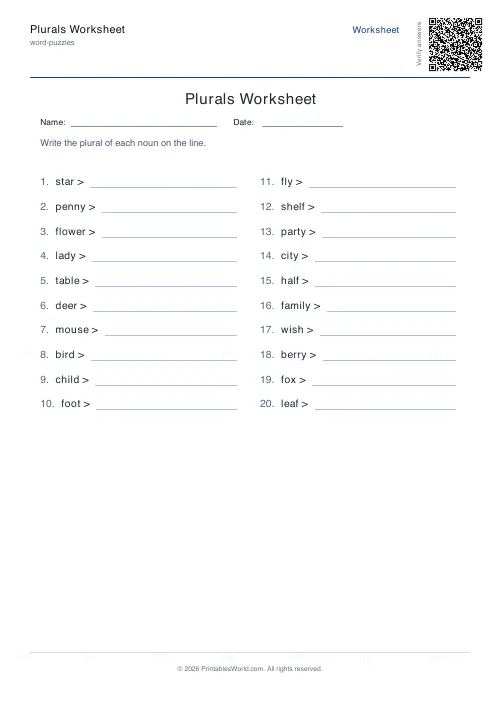
Plurals Worksheet
Write the plural of each noun.
Further reading
Word Puzzles
Sight words: the complete teaching guide
Sight words are usually taught as words to memorise. Most of them are partly decodable, and treating them that way works better. Here is how, and how many to teach at once.
6 min read
Literacy & Spelling
Do word searches help spelling? What works
Do word searches help spelling, or just fill time? What they practise, what the evidence suggests, and how to turn a spelling list into useful recall practice.
8 min read
Word Puzzles
Phonics at home: CVC words, blends and beyond
The order matters more than the materials, and one small thing, saying pure sounds rather than "buh" and "cuh", makes blending dramatically easier.
6 min read
More like this
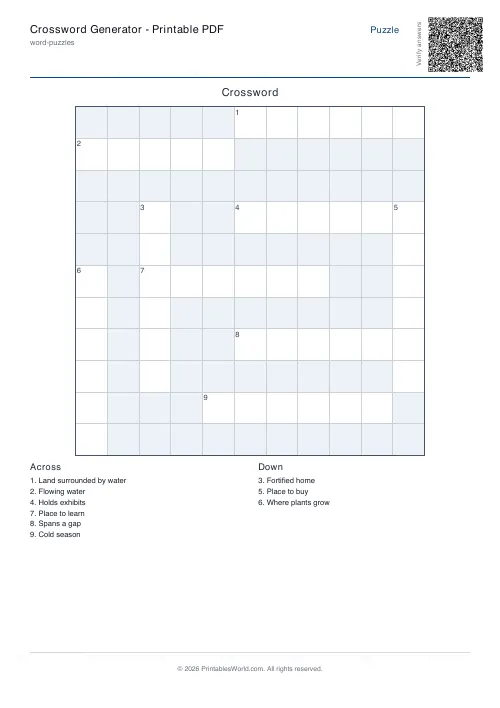 Crossword Generator: Printable PDF
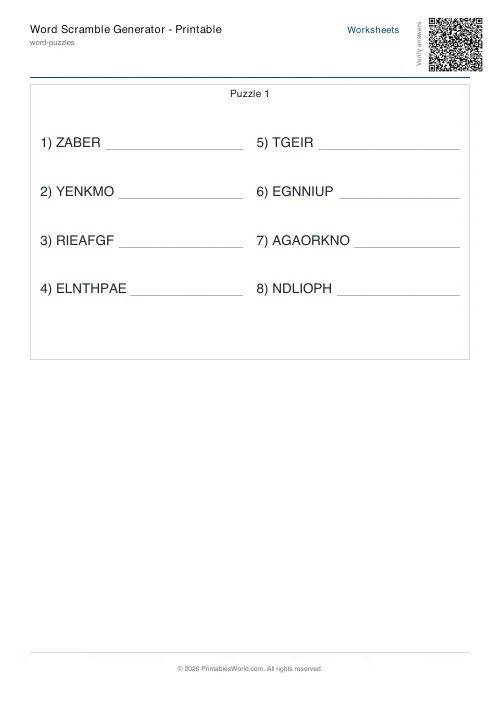 Word Scramble Generator: Printable
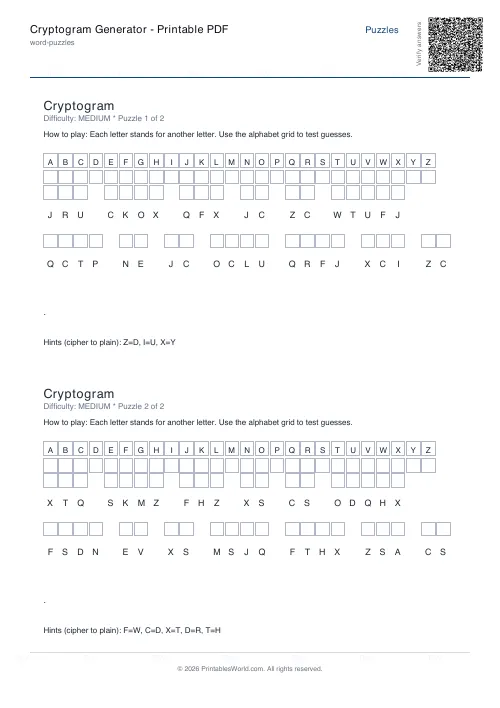 Cryptogram Generator: Printable PDF
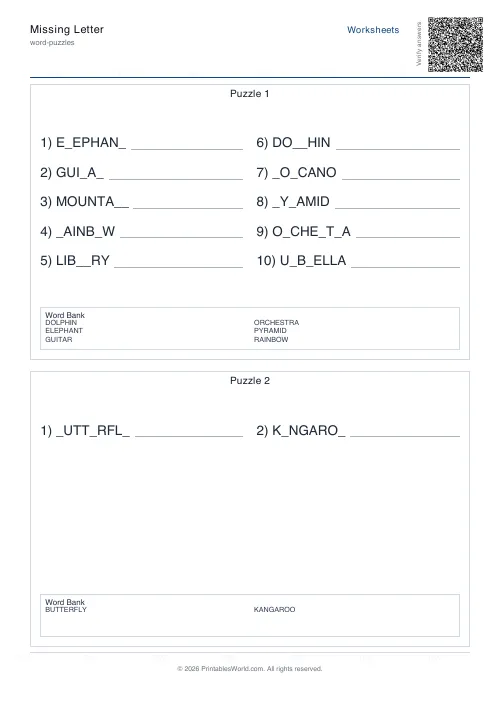 Missing Letter Generator
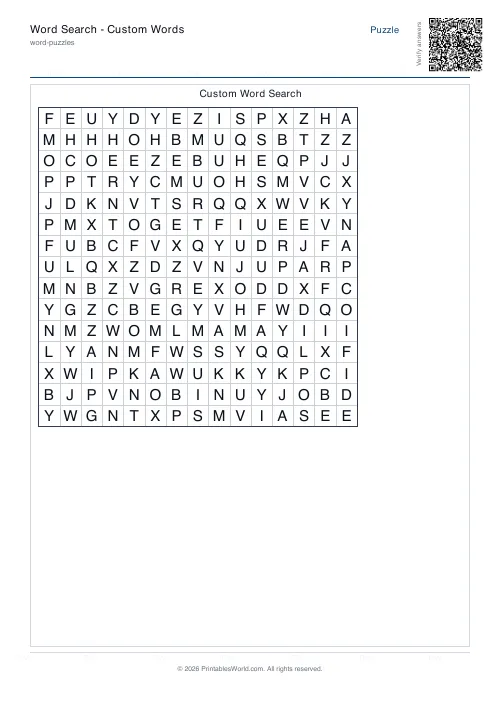 Word Search: Custom Words
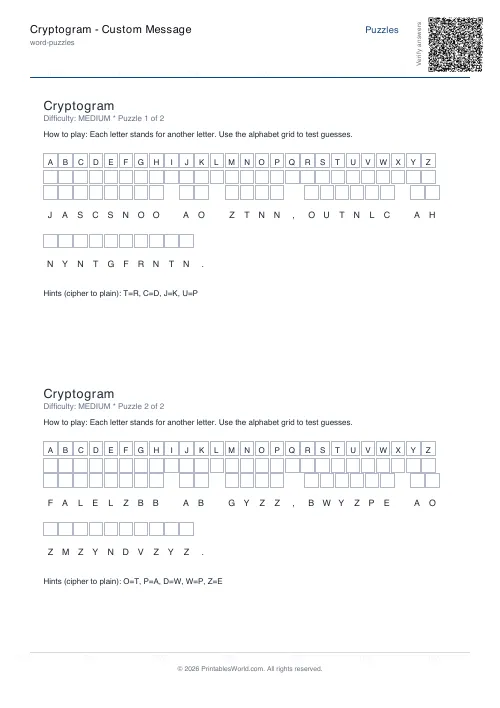 Cryptogram: Custom Message
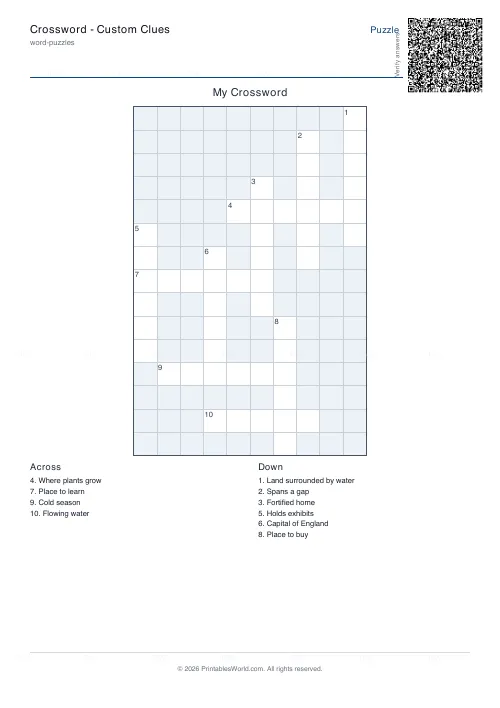 Crossword: Custom Clues
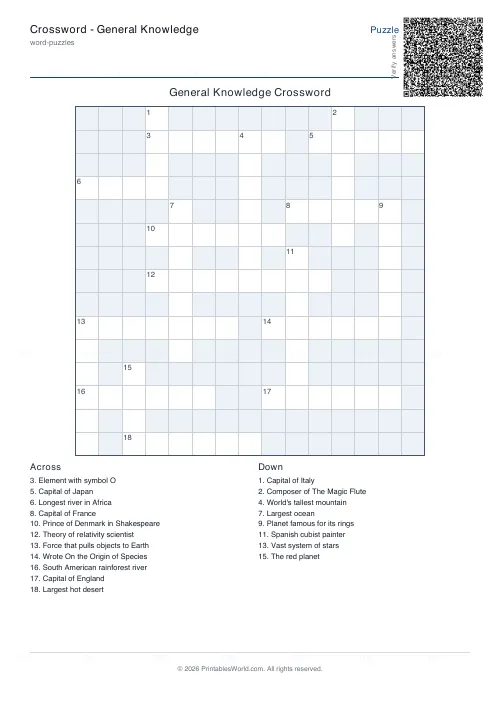 Crossword: General Knowledge
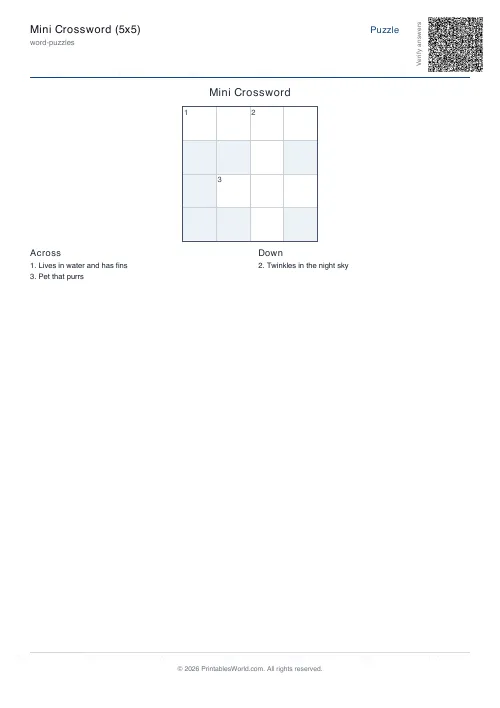 Mini Crossword
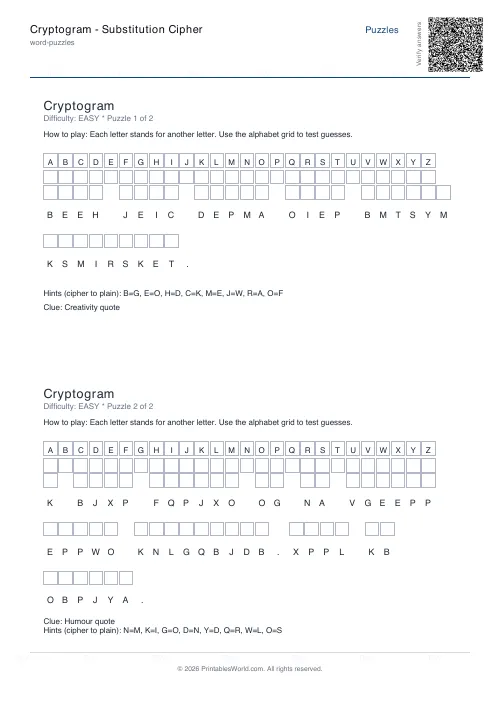 Cryptogram: Substitution Cipher
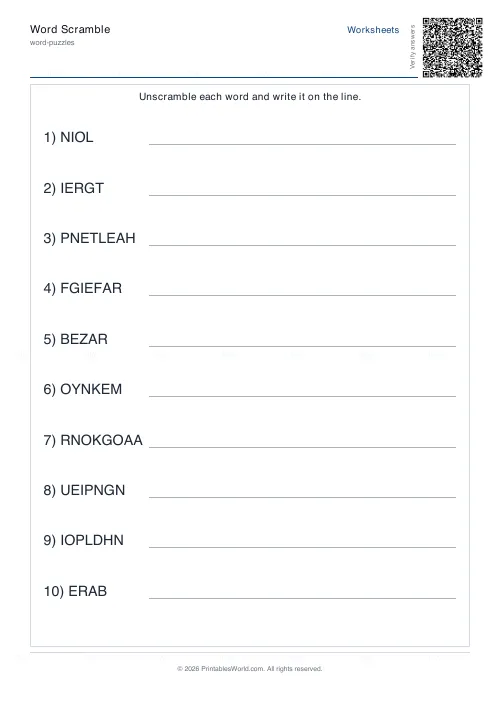 Word Scramble Generator
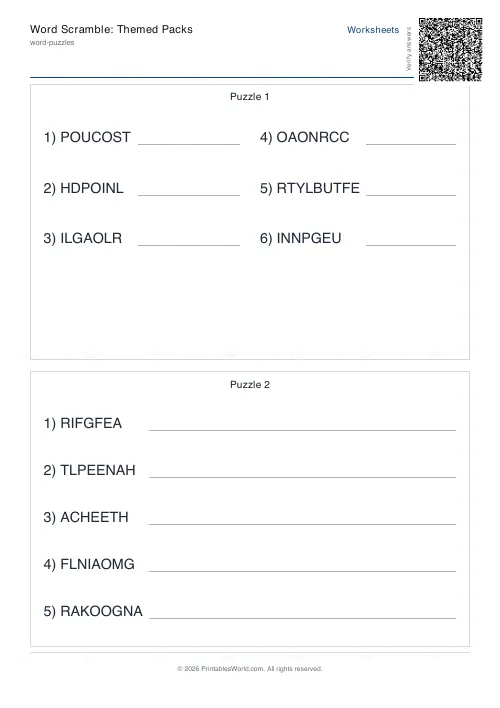 Word Scramble: Themed Packs
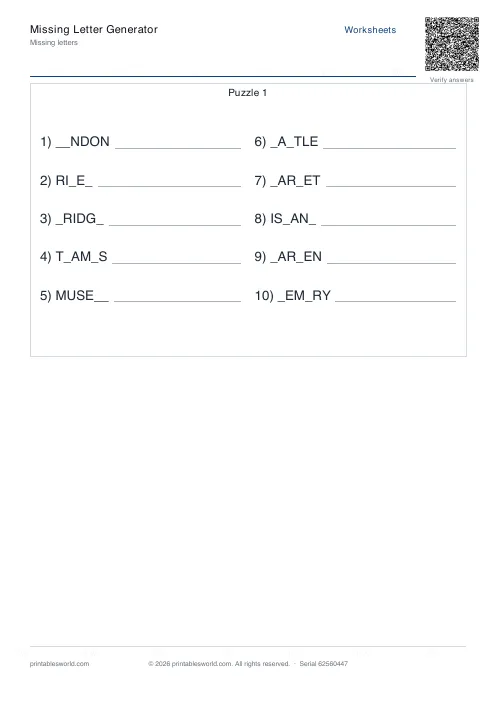 Missing Letters Puzzle
- Acrostic Poem Template