Word Puzzles
Phonics at home: CVC words, blends and beyond
By Jobi · Creator & Maintainer, PrintablesWorld · Updated 2026-07-24 · 6 min read
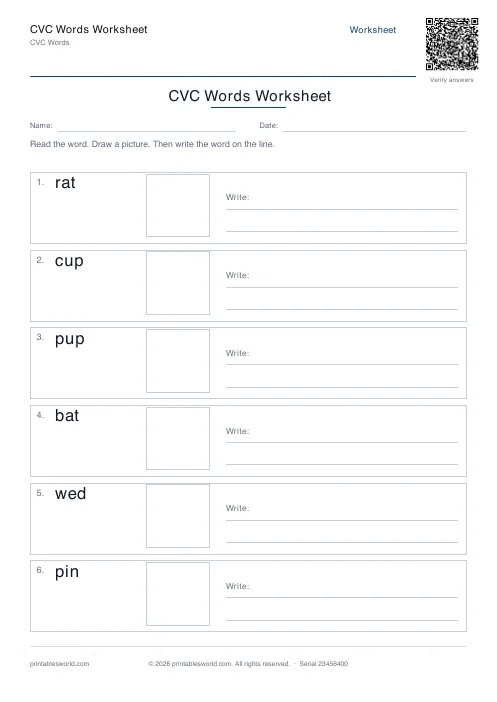
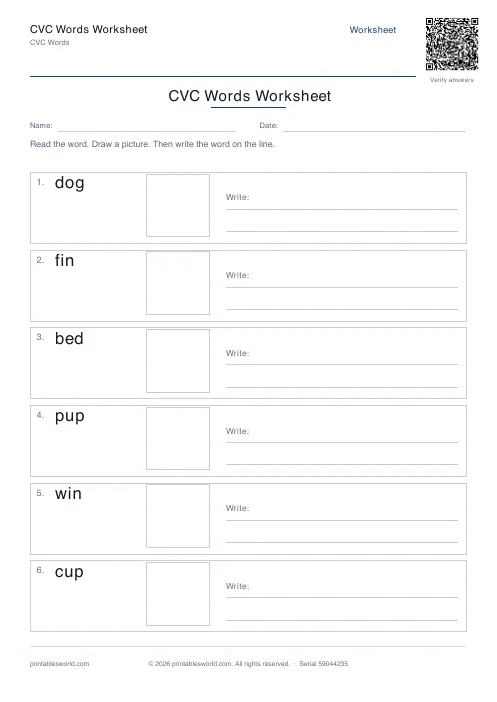
Phonics teaches that letters represent sounds, and that those sounds can be blended into words. Supporting it at home does not require a scheme or a qualification. It requires the right order and one small technical detail most parents get wrong. Free printable CVC word sheets cover the first real stage.
Say pure sounds. The detail that matters most
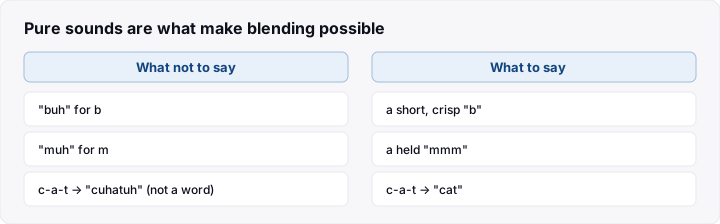
The letter b makes a short "b" sound, not "buh". The letter m is "mmm", not "muh".
This sounds pedantic and is genuinely the single most useful thing on this page. If a child sounds out cat as "cuh-a-tuh", what they hear is cuhatuh, which is not a word and cannot be blended into one. Added vowel sounds, schwa, technically, are the most common reason blending stalls.
Continuous sounds (s, m, f, l, n, r, v, z) are easy to say purely: just hold them. Stop sounds (b, c, d, g, k, p, t) are harder because they cannot be held at all; say them as briefly and crisply as you can. Schools often demonstrate these online, and hearing them said correctly is worth two minutes of searching.
The order phonics is taught in
Schemes differ in detail but the sequence is broadly shared:
- Listening and oral blending. Before letters at all. Hearing that "c-a-t" says cat when an adult sounds it out.
- First letter sounds, usually s, a, t, p, i, n rather than alphabetical order, because those six make a lot of words immediately.
- Blending CVC words: consonant, vowel, consonant.
- Segmenting for spelling. The reverse: hearing cat and writing the three sounds.
- Digraphs: two letters, one sound: sh, ch, th, ck.
- Consonant blends: two letters, two sounds still audible: bl, st, tr, mp.
- Long vowels and alternative spellings: ai/ay/a-e all saying the same sound.
Follow your child's school order where you can. Teaching a different sequence at home is the one thing that reliably causes confusion; the specific order matters less than everyone using the same one.
CVC words: the first real reading
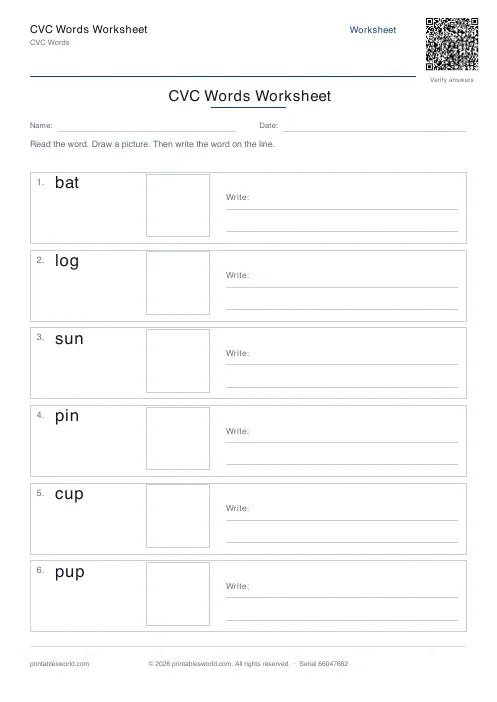
CVC words, cat, dog, sun, hat, pig, bed, are where a child first reads independently, and it is a genuine milestone.
Work one vowel at a time. All the a words first (cat, mat, sat, bag, ran), then i, and so on. Mixing all five vowels from the start makes the task much harder than it needs to be, because the vowel is the sound children find hardest to hear.
Word families help: cat, hat, mat, sat, bat differ by one sound, so the pattern does some of the work and success comes quickly.
Keep the sessions to five or ten minutes and stop while it is going well. This is tiring work for a four- or five-year-old, in a way that is easy to underestimate because the words look trivial to an adult.
Teaching blending when it will not click
Blending is the step that suddenly clicks, and until it does it can look like nothing is happening. Things that help:
- Check your sounds first. Nine times out of ten a stalled blender is being given "cuh" and "tuh".
- Say the sounds faster and closer together. Stretch it, "ccccaaaat", then speed it up until it becomes the word.
- Blend the last two first. For cat, do "a-t" → "at", then "c-at". Two sounds is much easier than three.
- Use physical letters. Push magnetic letters together as you say the sounds. The movement mirrors the blending.
- Practise orally without print. "I'm thinking of a p-e-n." Removes the decoding load so only blending is being practised.
If it has not clicked, keep going with oral blending and come back. Pushing a child through printed words before they can blend by ear teaches guessing from pictures, which is a habit that takes far longer to undo than the wait would have taken.
Blends and digraphs: not the same thing
These get muddled constantly, and the difference is simple:
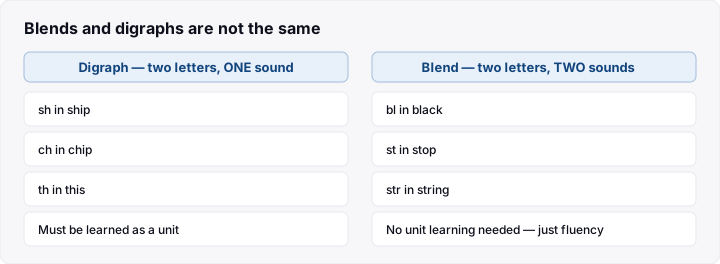
A digraph is two letters making one sound. sh in ship, ch in chip, th in this, ck in duck. You cannot hear the individual letters.
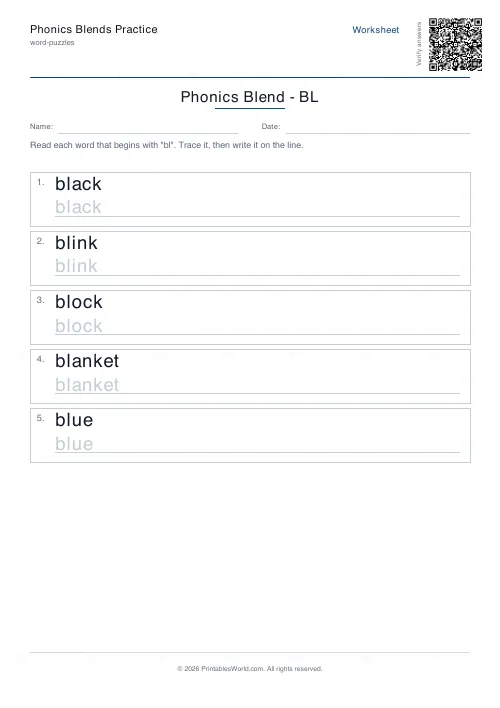
A blend (or cluster) is two or three letters each keeping their own sound, said quickly together. bl in black, st in stop, str in string. You can still hear each one.
Why it matters: digraphs must be learned as a unit. A child who sounds out sh-i-p as "s-h-i-p" gets four sounds and no word. Blends do not need learning as units at all; a child who can blend three sounds can read stop without st being taught separately. Practising blends is really practising fluency, and phonics blends sheets are for that rather than for memorisation.
What actually helps at home
Read to them, a lot. Being read to builds vocabulary, sentence patterns and the motivation to bother. None of which phonics provides.
Let them read to you badly. Wait before correcting. Give a few seconds, then prompt with the first sound rather than the word.
Play with sounds away from print. I-spy with sounds rather than letter names, rhyming games, clapping syllables. In the car, at the shops, no materials.
Keep it short and stop early. Five minutes daily. A child who is bored has stopped learning several minutes ago.
Do not test constantly. "What's that word? And that one?" turns reading into examination. Read together instead.
Match the school. Ask which scheme they use and follow that order and terminology.
Frequently asked questions
What are CVC words?
Consonant-vowel-consonant words: cat, sun, big, hop, pen. Three sounds, each spelled with one letter, which makes them the simplest words to blend and usually the first a child reads independently.
My child guesses words from the pictures. Is that bad?
It is a common habit and worth redirecting gently. Cover the picture and prompt for the first sound. Guessing from context tends to work on easy books and fail as text gets harder, so it is better addressed early.
Should I teach letter names or letter sounds first?
Sounds first for reading. Knowing that s says "sss" is what enables blending, whereas "ess" does not. Names come in alongside, and both are needed eventually.
How long should a phonics session be?
Five to ten minutes for a four- or five-year-old, most days. Short and frequent beats long and occasional, and stopping while it is still going well protects the willingness to do it tomorrow.
Before you print
Get the pure sounds right first. It is the change that unlocks blending. Work one vowel at a time through CVC words, teach digraphs as units and treat blends as fluency practice, and keep sessions to five minutes.
Related tools
Continue reading
Word Puzzles
Sight words: the complete teaching guide
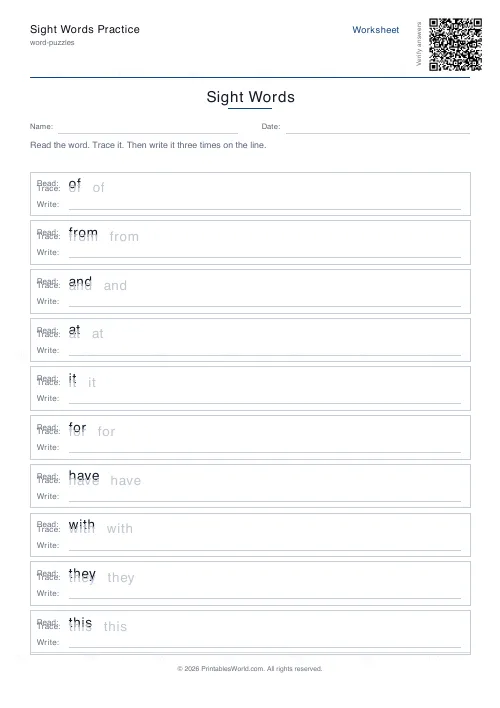
Sight words are usually taught as words to memorise. Most of them are partly decodable, and treating them that way works better. Here is how, and how many to teach at once.
6 min read
Handwriting
How to teach handwriting to kids: a step-by-step guide
A practical order for teaching handwriting: get the body and the pencil right first, then teach letters in stroke families rather than alphabetically, and keep sessions short enough that the hand never tires.
7 min read