What this tool does
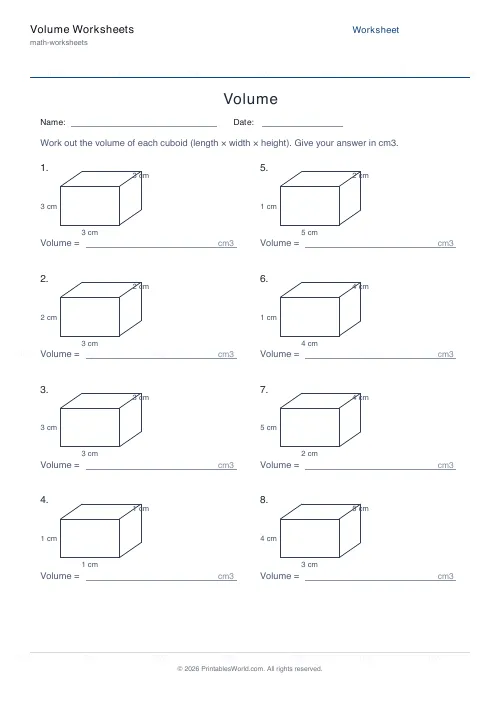
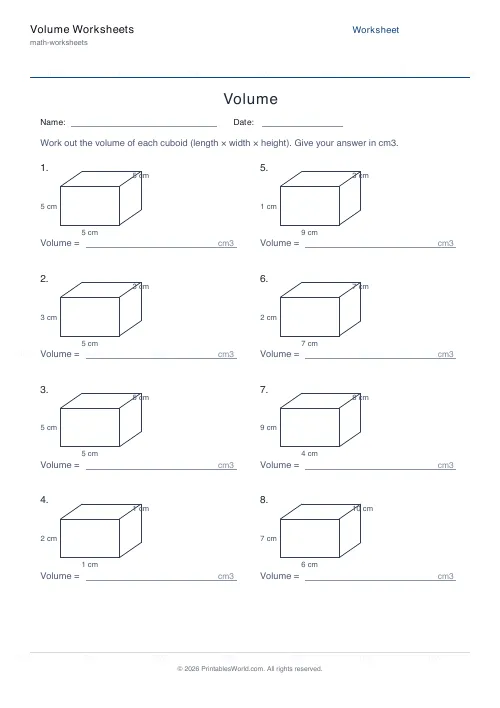
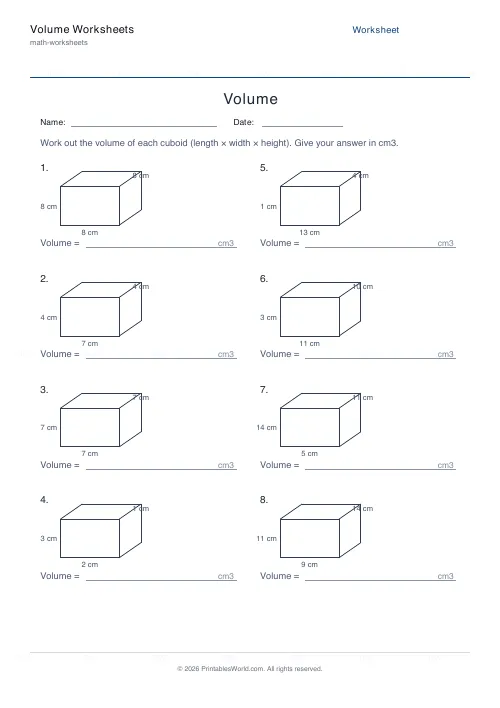
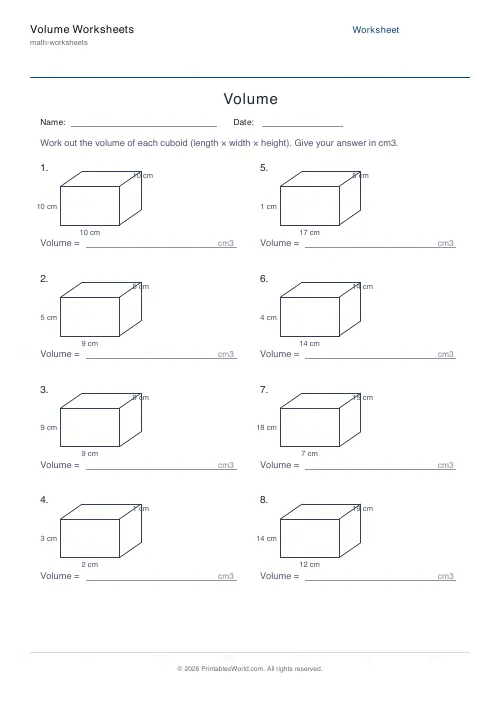
Printable volume worksheets. Each problem draws a labelled cuboid in isometric with whole-centimetre edges, and the pupil multiplies the three dimensions to get the volume in cm³. Some of the boxes come out as cubes. Two to forty problems a sheet, a longest-edge setting from 3 to 20 cm, and an optional answer key.
People also used
Perimeter and Area Worksheets
Generate perimeter and area worksheets for rectangles, squares, triangles, and compound shapes.
Measurement Worksheets
Convert length, mass, and volume units. Mm ↔ cm ↔ m, g ↔ kg, ml ↔ l.
Geometry: Angles Worksheets
Print identify, measure, and calculate-missing-angle worksheets with diagrams for every problem.
Feedback
Spotted something off with this tool?
Length times width times height, drawn so you can see all three
Every problem carries a small isometric drawing of a box with its three edges labelled in whole centimetres. Multiply them. Write the answer in cubic centimetres.
The drawing is doing real work here. A cuboid described only in words asks a child to build it mentally before they can start, and the ones who cannot do that yet fail a question they actually understand. With the box drawn and the three edges labelled on it, what is being tested is the multiplication and the unit.
Some of the boxes come out with all three edges equal. Those are cubes, and it is worth saying out loud that a cube is not a different shape but a special case, because plenty of children file them separately and then look for a separate formula.
The formula, and the two mistakes
Volume equals length times width times height. A box 4 cm by 3 cm by 2 cm holds 4 × 3 × 2 = 24 cm³. A cube with 5 cm edges holds 5 × 5 × 5 = 125 cm³.
The first mistake is adding instead of multiplying, which produces a number that looks plausible and is not. The second is forgetting the third dimension entirely and calculating an area, which is much commoner and much harder to spot on marking, because 4 × 3 = 12 is a perfectly respectable answer to a different question.
Both are prevented by the same habit: label the three measurements on the drawing before touching them. A child who has written l, w and h on the picture rarely loses one of them.
The largest-edge setting is the difficulty
It runs from 3 to 20 centimetres, at 10 by default, and it decides whether this is a volume worksheet or a multiplication worksheet wearing a hat.
Keep it low while the method is new, so the arithmetic never gets in the way of the concept. 4 × 3 × 2 is a sheet about volume. 17 × 14 × 19 is a sheet about long multiplication that happens to mention a box, and a child can fail it while understanding volume perfectly well. Raise it once the method is secure and you get both at once, deliberately.
Two to forty problems on a sheet, eight by default, which is about right when each one carries a drawing.
Connecting cm³ to something real
The unit is where this becomes abstract. Square centimetres are at least visible on a page; cubic ones are not.
So bring boxes into the room. Measure the edges of a real one with a ruler, predict the volume, then check against the calculation. Better still, build a 3 by 2 by 2 out of centimetre cubes and count them: twelve cubes, twelve cubic centimetres, and the unit stops being a superscript and becomes a thing you can hold. The cube problems on the sheet then lead naturally into cube numbers and into why the unit is cubed in the first place.
FAQs
Quick answers
How do you find the volume of a cuboid?
Multiply the three dimensions together: volume = length × width × height. Because the edges are measured in centimetres, the answer is in cubic centimetres (cm3). For example, a 4 cm by 3 cm by 2 cm box has a volume of 24 cm3.
Why are some shapes cubes?
A cube is a special cuboid where all three edges are the same length. The worksheet includes a few cubes so pupils see that the same formula still applies. You just multiply the edge length by itself three times.
What does cm3 mean?
cm3 stands for cubic centimetres, the unit of volume. It tells you how many one-centimetre cubes would fit inside the shape. Volume is always given in cubed units because three lengths are multiplied together.
Is there an answer key?
Yes. Toggle the answer key on and the PDF adds a second copy showing the calculated volume in cm3 for every cuboid, so marking takes seconds.
Related tools
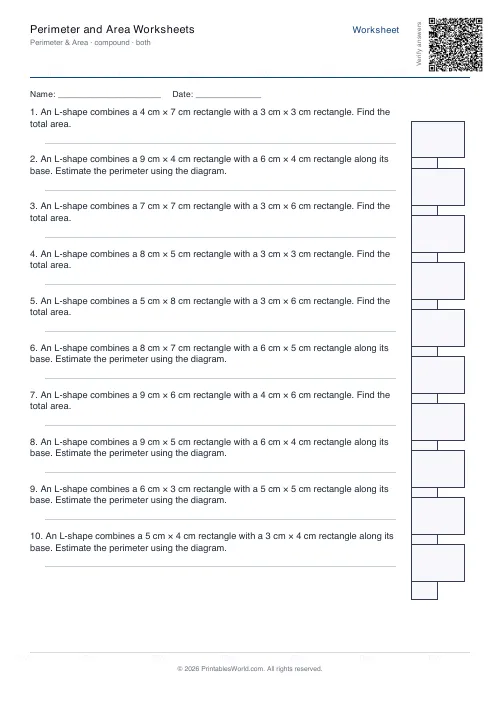
Perimeter and Area Worksheets
Generate perimeter and area worksheets for rectangles, squares, triangles, and compound shapes.
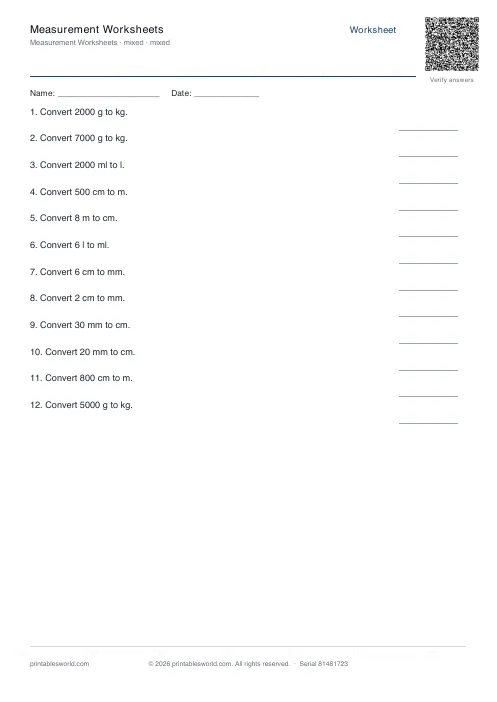
Measurement Worksheets
Convert length, mass, and volume units. Mm ↔ cm ↔ m, g ↔ kg, ml ↔ l.
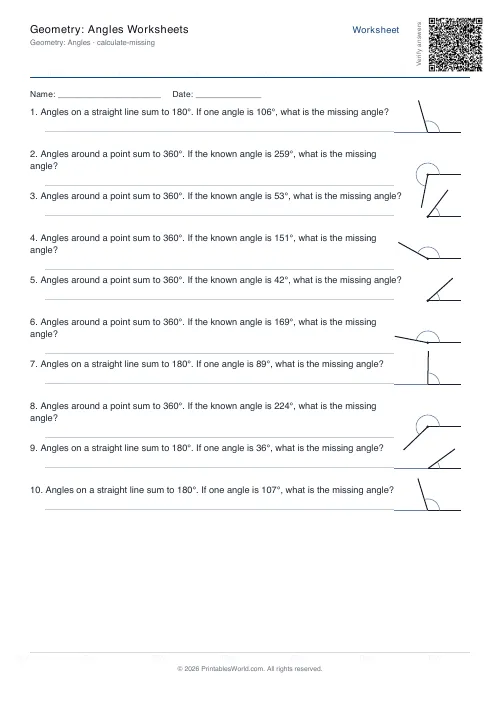
Geometry: Angles Worksheets
Print identify, measure, and calculate-missing-angle worksheets with diagrams for every problem.
Further reading
More like this
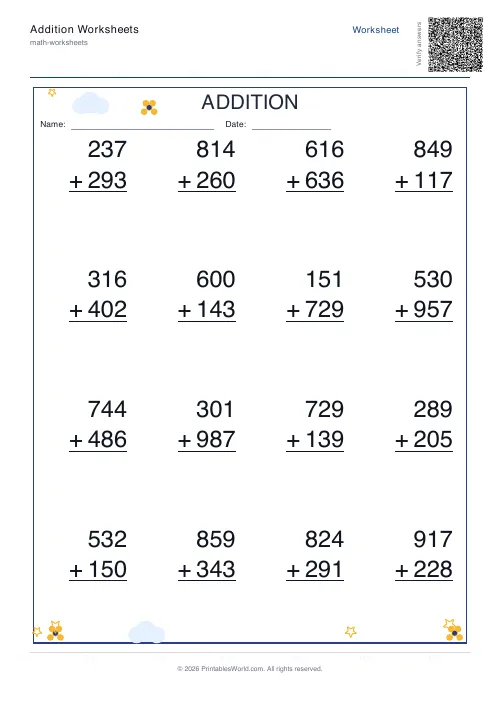 Addition Worksheets Generator
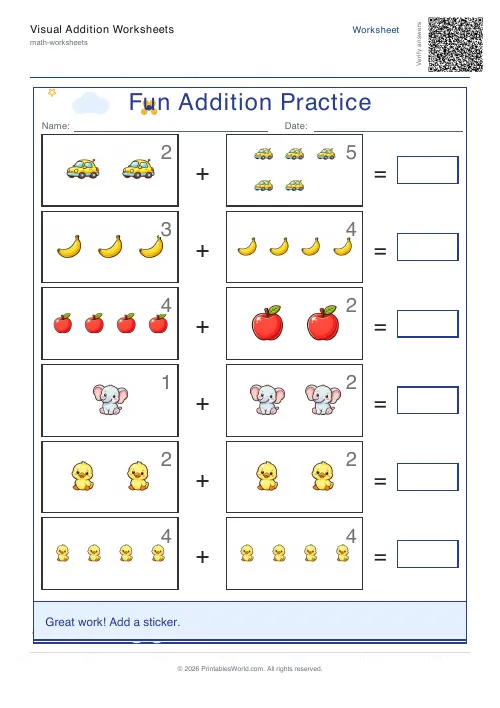 Visual Addition Worksheets Generator
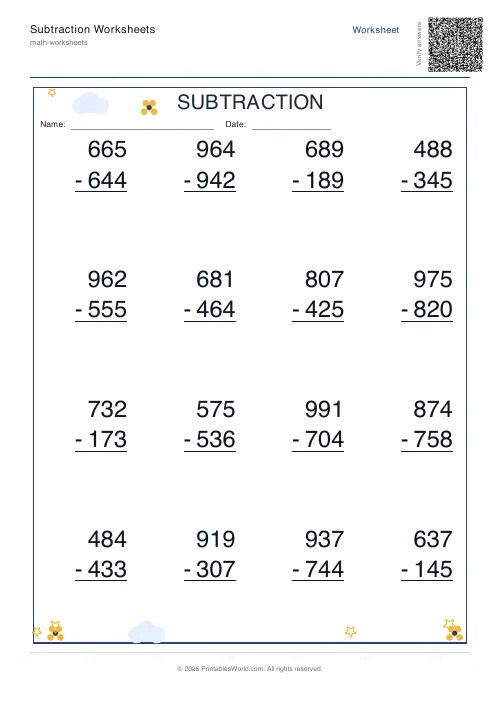 Subtraction Worksheets Generator
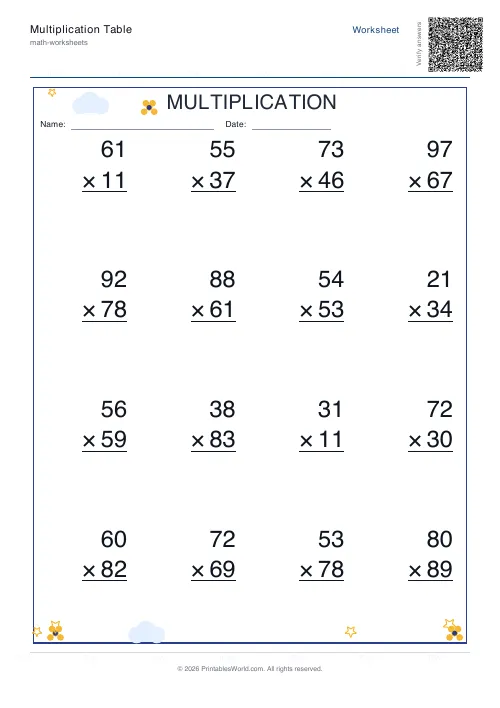 Multiplication Table Generator
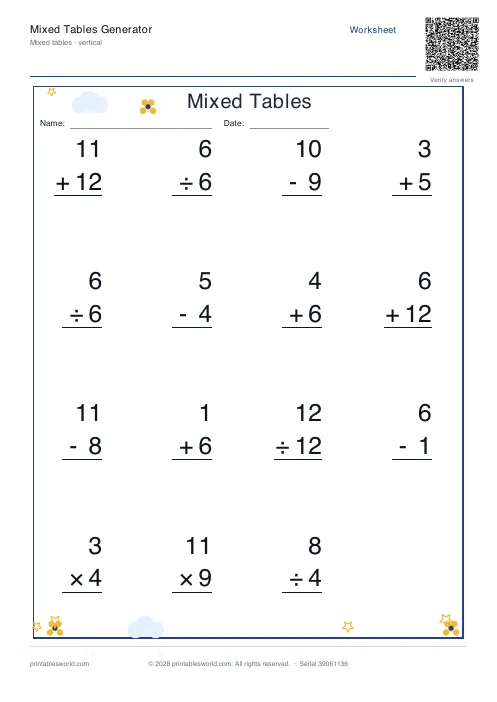 Mixed Tables Generator
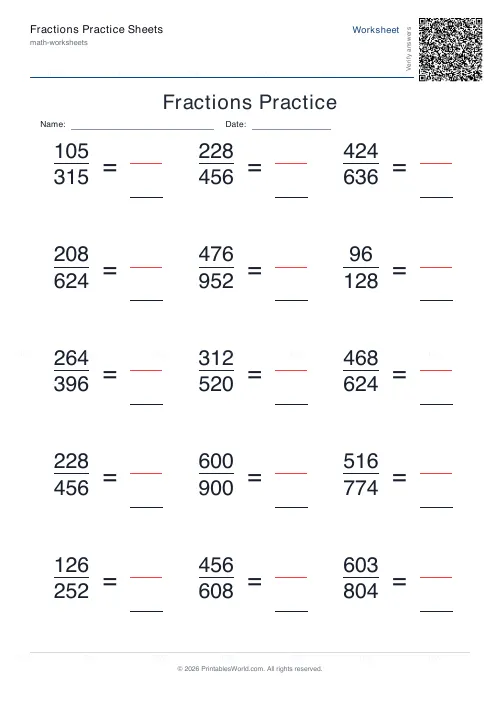 Fractions Practice Sheets Generator
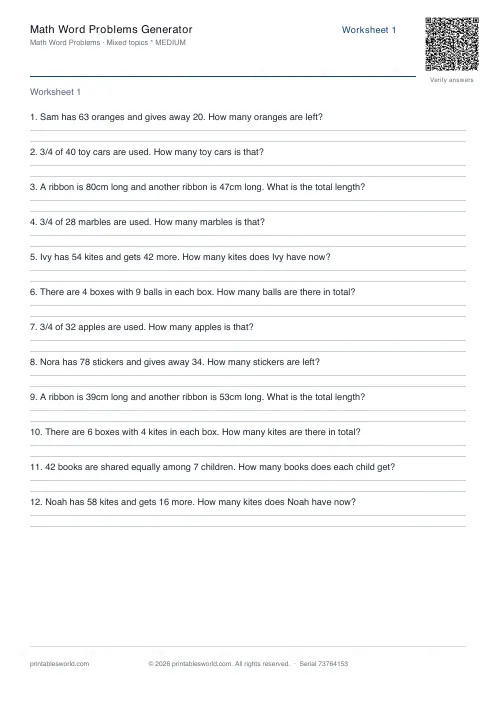 Math Word Problems Generator
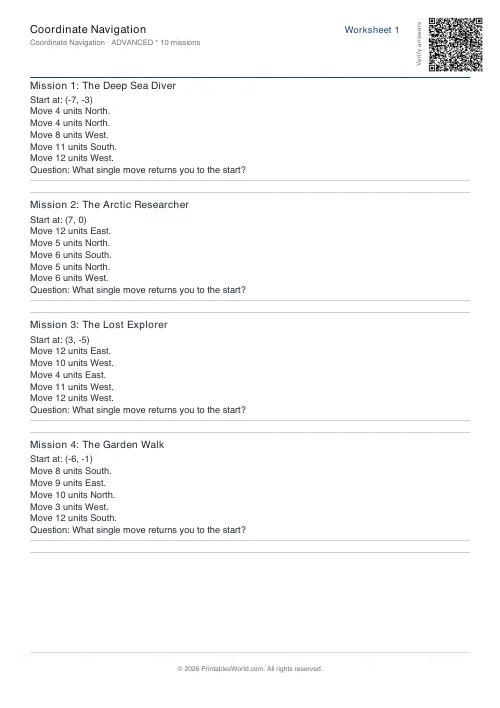 Coordinate Navigation Generator
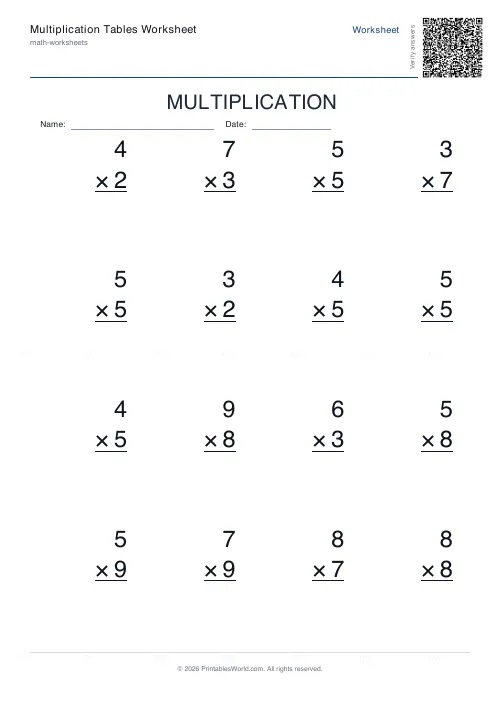 Multiplication Tables Worksheet
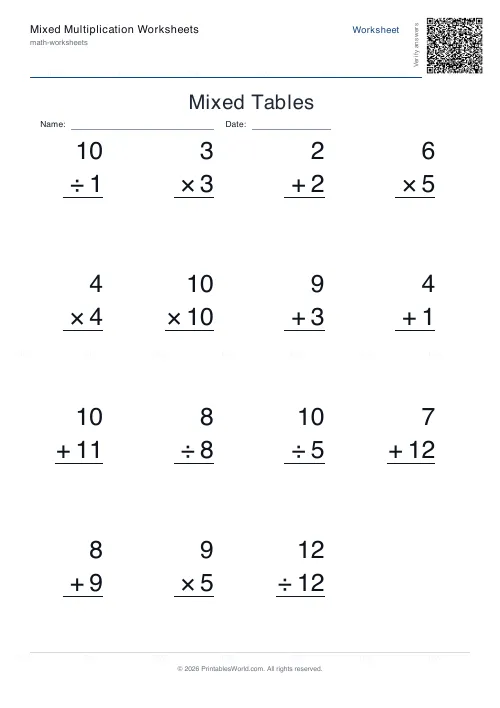 Mixed Multiplication Worksheets
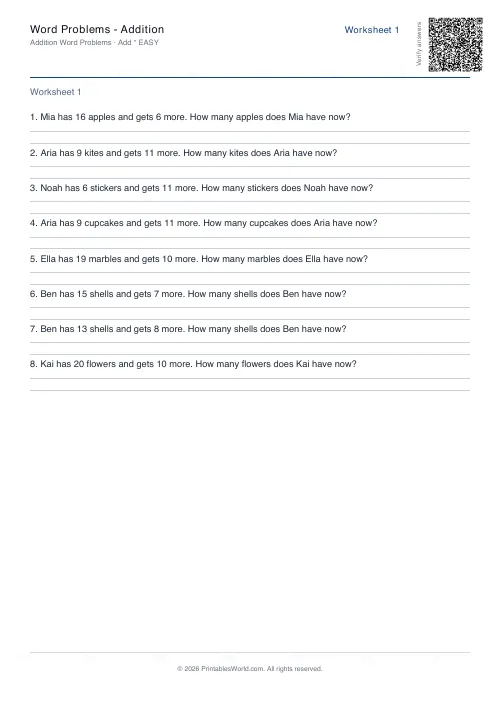 Word Problems: Addition
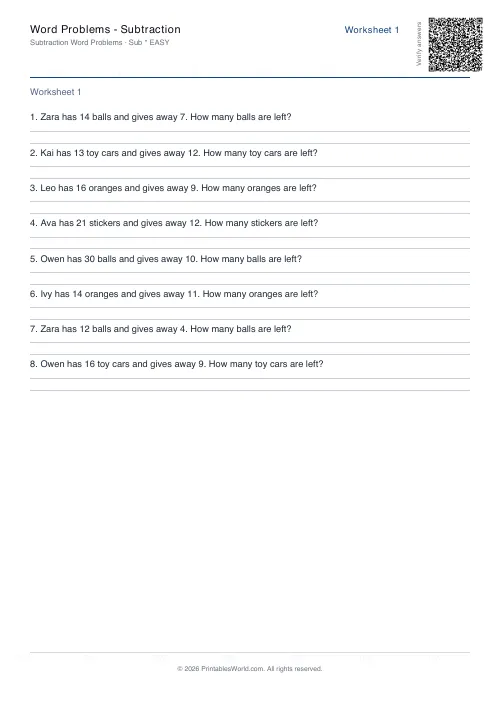 Word Problems: Subtraction
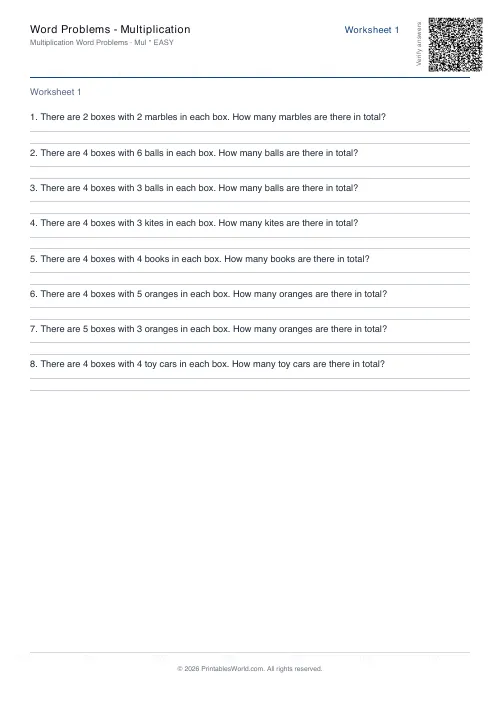 Word Problems: Multiplication
 Word Problems: Division