What this tool does
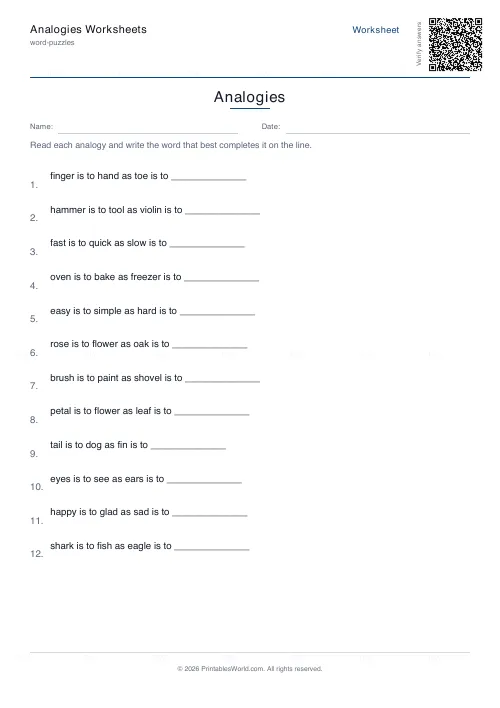
Word analogy practice: A is to B as C is to what. 50 curated items spanning synonyms, antonyms, part-and-whole, category, function. Fill-in-the-blank or multiple choice, 6 to 24 per sheet.
People also used
Feedback
Spotted something off with this tool?
The shape of the question
Big is to large as tiny is to ___. Answer: small.
The first pair establishes a relationship and the second has to repeat it. Fifty items in the bank, drawn across five relation types, and you choose between writing the answer in and picking from four options.
The five relations
Synonym — the words mean roughly the same. Antonym — they are opposites. Part to whole — a petal to a flower. Category — a robin to a bird. Function — what a thing is for.
Naming the relation out loud is the technique to teach. A child who says "big and large mean the same, so I need a word that means the same as tiny" has solved it; a child who is pattern-matching on how the words look has not, and will come unstuck on the harder items.
Why analogies are worth the time
They are not a vocabulary test, though vocabulary is required.
The actual skill is holding a relationship in mind and transferring it to a different pair of words, which is reasoning of a kind that shows up everywhere afterwards — in comprehension, in maths, in the reasoning papers of every selective school entrance exam in the country. It is also one of the few exercises where a child can be right for the wrong reason and be caught out on the next question.
Fill in the blank or multiple choice
Multiple choice is easier and faster, and it is the right starting point: the four options make the shape of the task visible, and a child who is stuck can work backwards from the choices.
Fill-in-the-blank is harder and tells you more. There is nothing to eliminate, so the relationship has to be named before an answer can be produced. Move to it once the multiple-choice sheets are coming back mostly right.
When an answer is arguably right
It happens, and it is worth handling well. If a child writes a word that genuinely preserves the relationship, mark it correct even though the key says otherwise.
Then ask them to explain it. The explanation is the assessment; the word in the box is just evidence.
Level and use
The vocabulary is pitched at upper primary and KS2, roughly ages eight to eleven. Twenty-four items suits a whole lesson; six makes a starter.
The answer key means these work as homework or as cover work. For related vocabulary practice, try synonyms and antonyms.
FAQs
Quick answers
What is a word analogy?
A word analogy shows a relationship between two words and asks you to complete a second pair with the same relationship, as in "big is to large as tiny is to small".
What relationship types are covered?
Five: synonyms, antonyms, part-to-whole, category or member, and function or use. Each generated sheet mixes items from across the bank.
What is the difference between the two modes?
Fill-in-the-blank asks the student to write the missing word on a line. Multiple-choice gives four options, the answer plus three distractors, to circle.
How many analogies fit on a page?
Up to twelve sit comfortably on one sheet. Choose more and the worksheet flows onto extra pages automatically, up to twenty-four.
Is there an answer key?
Yes. Toggle the answer-key option to add following pages that print the correct word for every numbered item.
How do the multiple-choice distractors work?
The engine samples three other words from the curated bank as decoys, then shuffles them with the correct answer so its position varies each time.
Can I add my own analogies?
Not yet. The tool uses a fixed curated bank of original, age-appropriate analogies to keep every answer key reliable.
Related tools
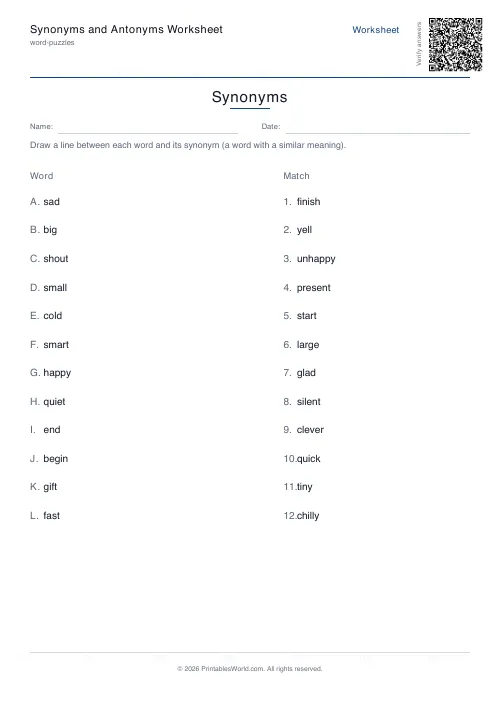
Synonyms and Antonyms Worksheet
Match each word with a synonym, an antonym, or a mix of both.
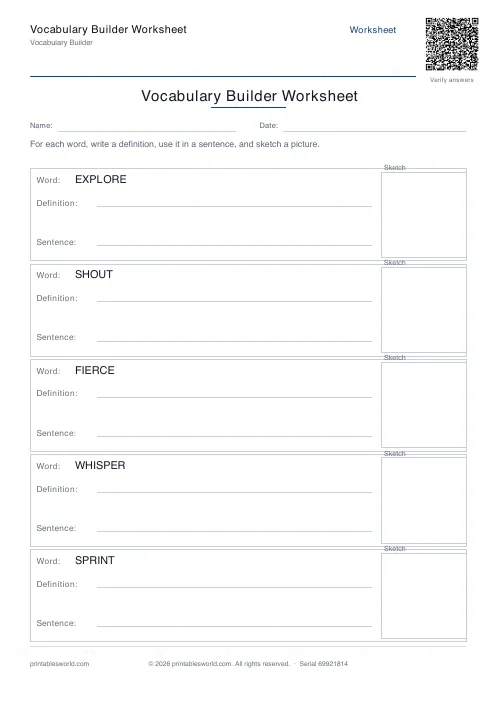
Vocabulary Builder Worksheet
Define, use in a sentence, and sketch. One word at a time.
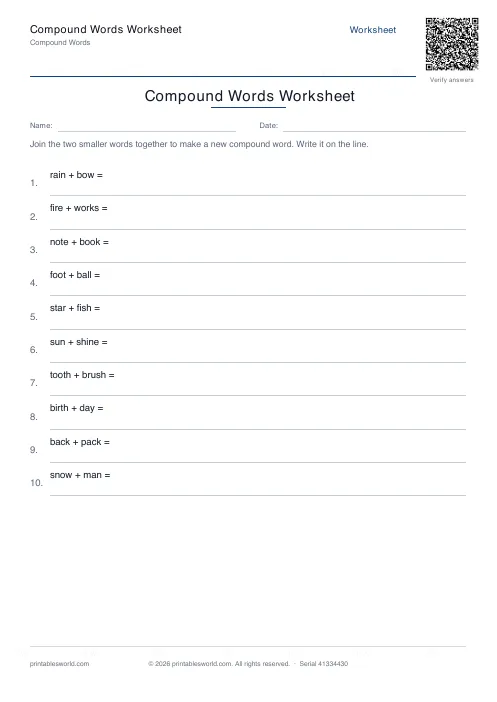
Compound Words Worksheet
Join two small words together to build a compound word.
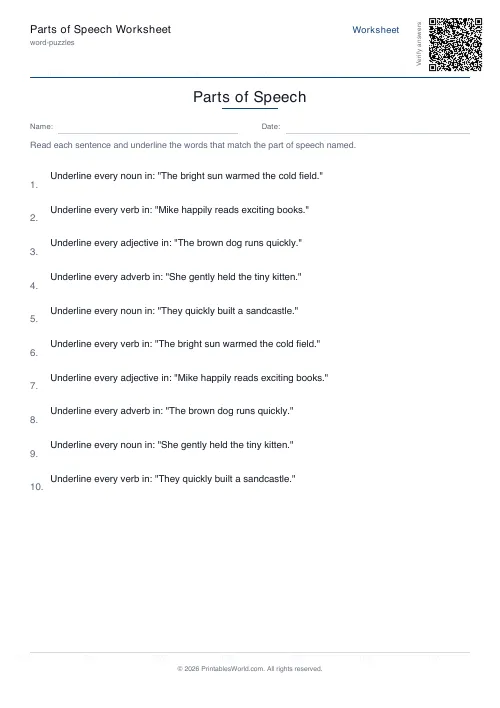
Parts of Speech Worksheet
Spot the nouns, verbs, adjectives and adverbs in each sentence.
Further reading
Word Puzzles
Sight words: the complete teaching guide
Sight words are usually taught as words to memorise. Most of them are partly decodable, and treating them that way works better. Here is how, and how many to teach at once.
6 min read
Literacy & Spelling
Do word searches help spelling? What works
Do word searches help spelling, or just fill time? What they practise, what the evidence suggests, and how to turn a spelling list into useful recall practice.
8 min read
Word Puzzles
Phonics at home: CVC words, blends and beyond
The order matters more than the materials, and one small thing, saying pure sounds rather than "buh" and "cuh", makes blending dramatically easier.
6 min read
More like this
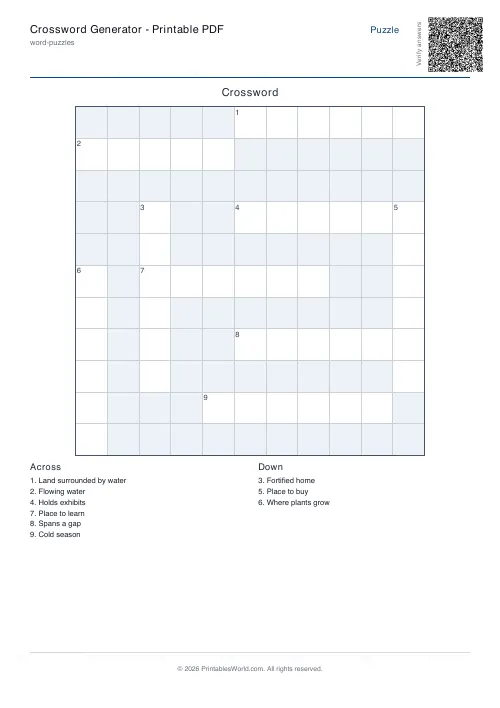 Crossword Generator: Printable PDF
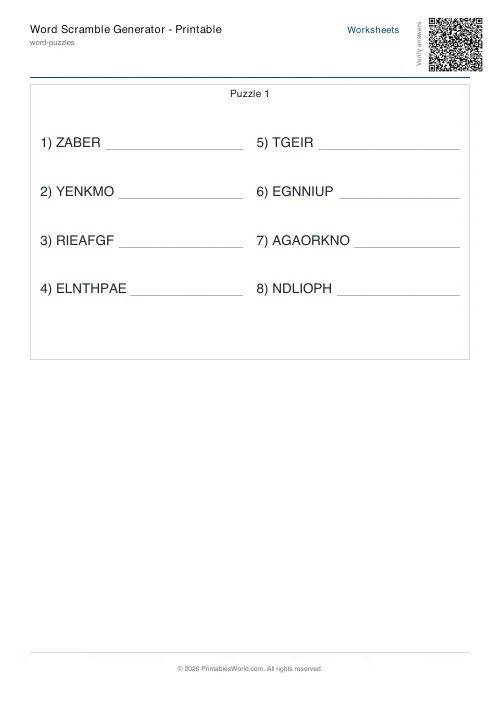 Word Scramble Generator: Printable
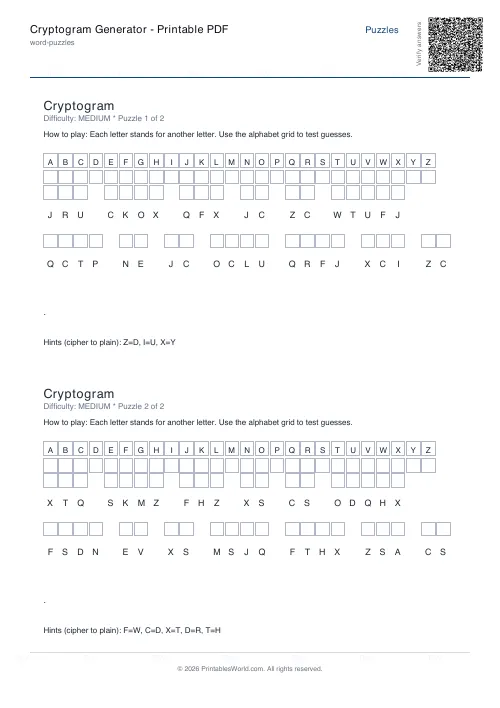 Cryptogram Generator: Printable PDF
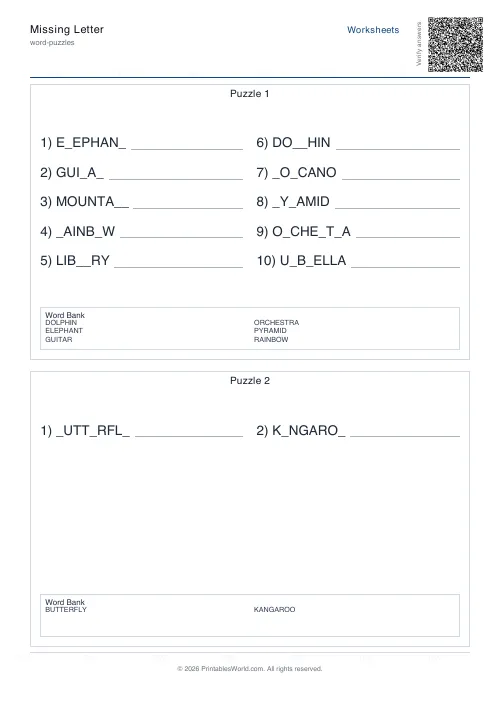 Missing Letter Generator
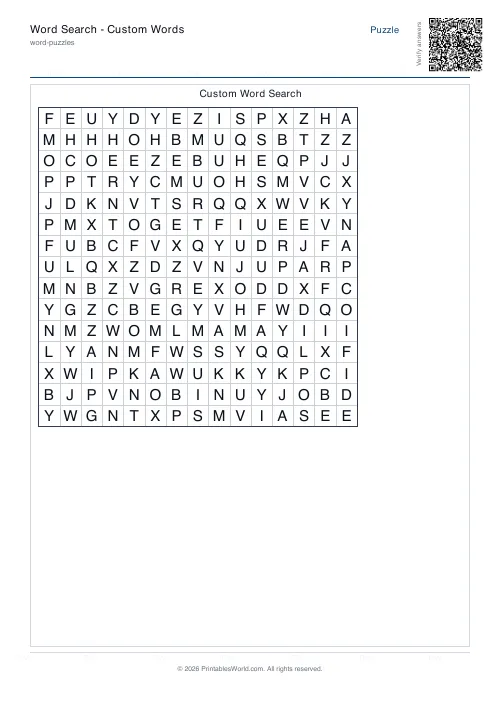 Word Search: Custom Words
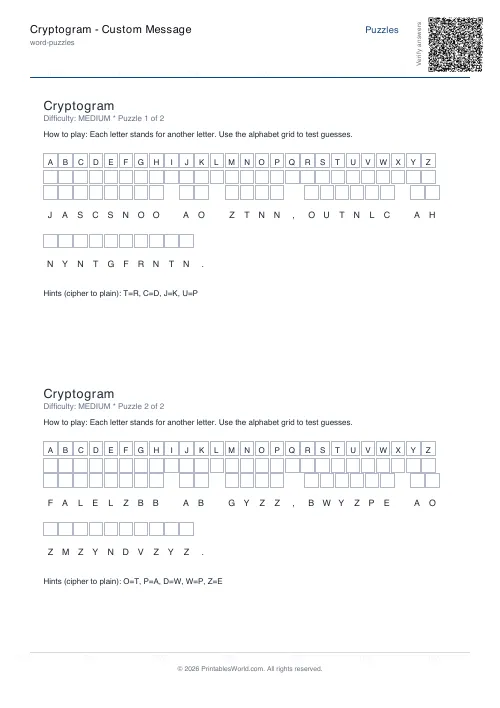 Cryptogram: Custom Message
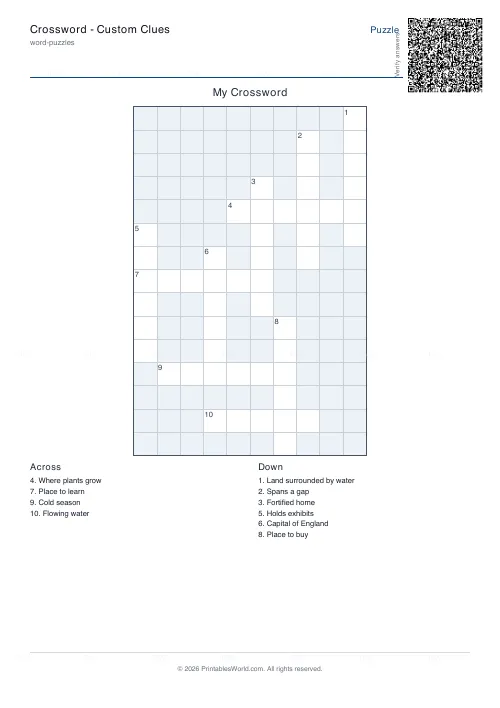 Crossword: Custom Clues
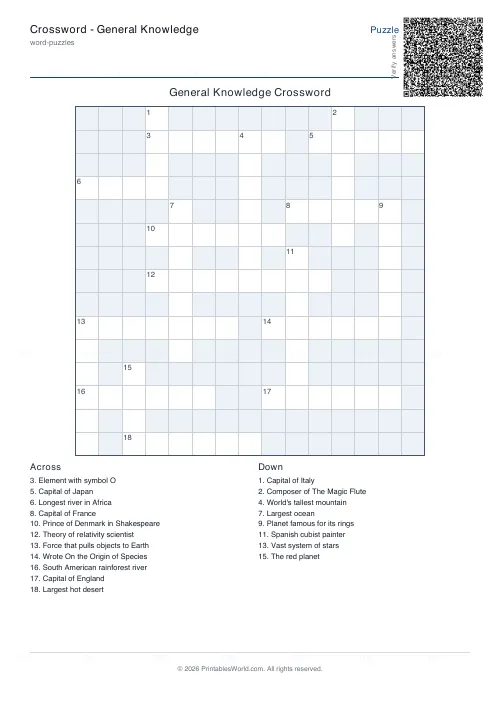 Crossword: General Knowledge
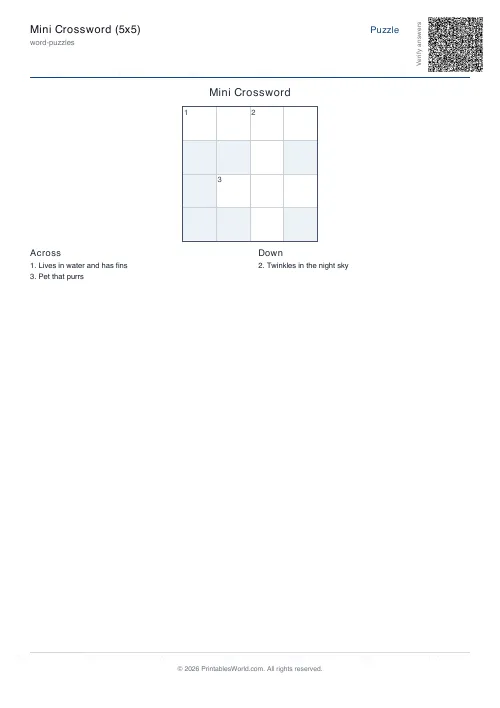 Mini Crossword
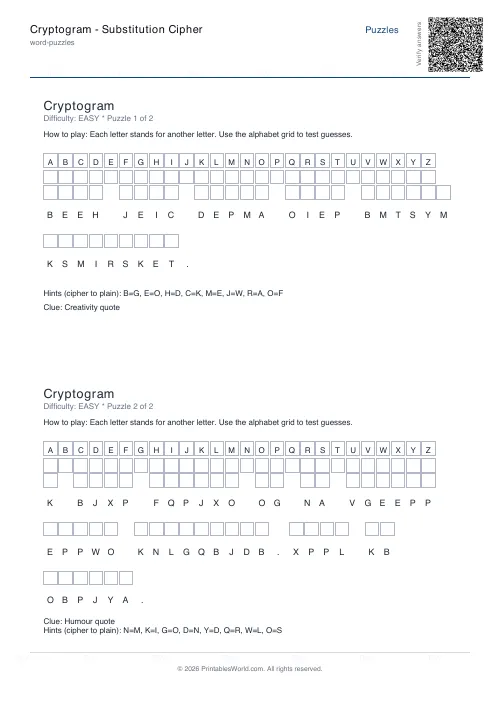 Cryptogram: Substitution Cipher
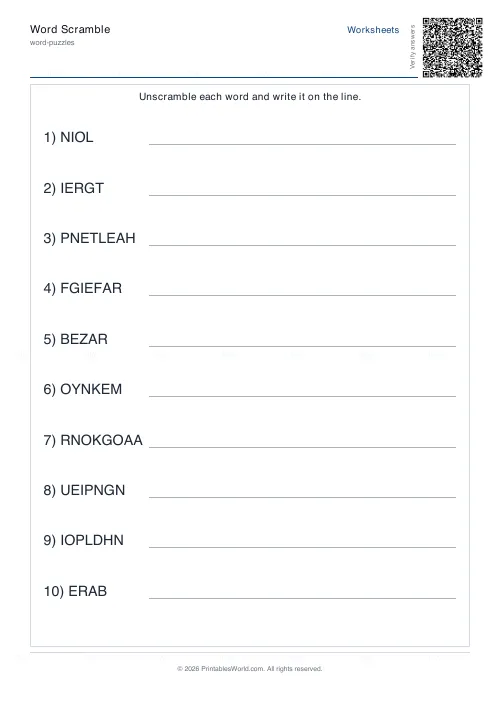 Word Scramble Generator
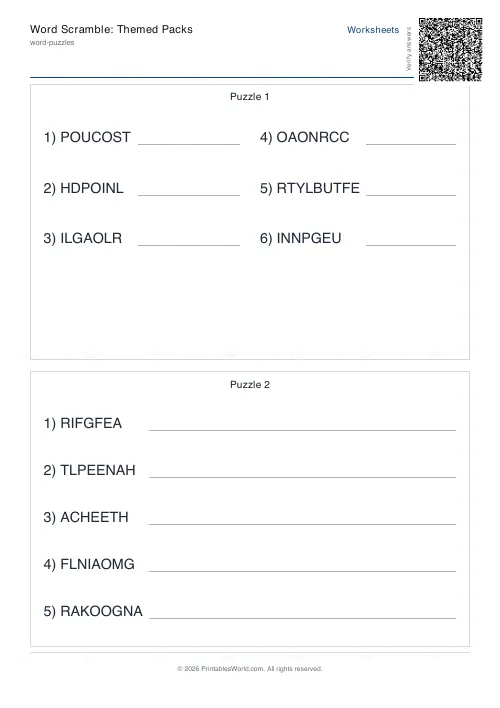 Word Scramble: Themed Packs
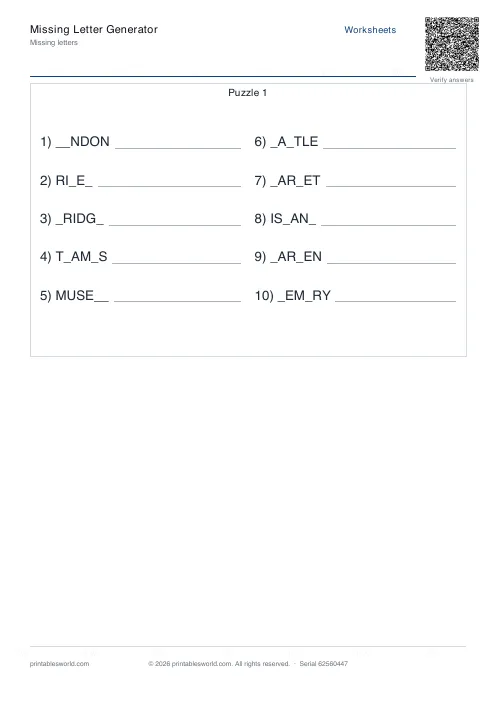 Missing Letters Puzzle
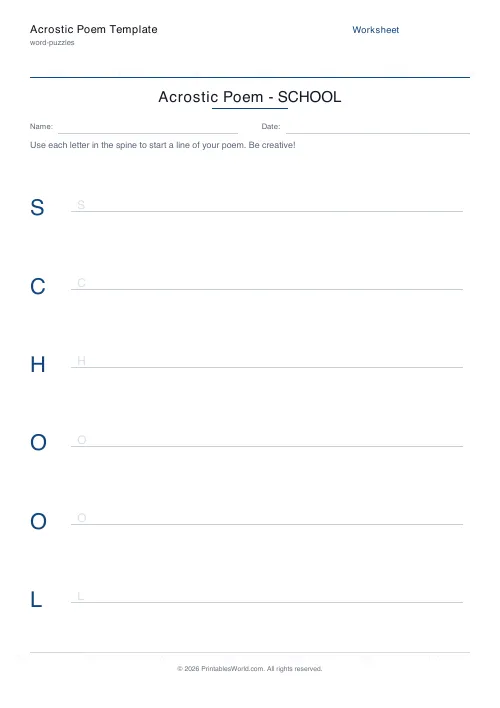 Acrostic Poem Template