Word Puzzles
Crosswords for kids: age-by-age difficulty guide
By Jobi · Creator & Maintainer, PrintablesWorld · Updated 2026-07-01 · 5 min read
A crossword asks more of a child than a word search does. A word search needs recognition; a crossword needs recall, spelling and the patience to work from partial information. That makes it a better exercise and a steeper one. And pitching it wrong is why children abandon them. A free printable crossword generator lets you control both the grid and the clues.
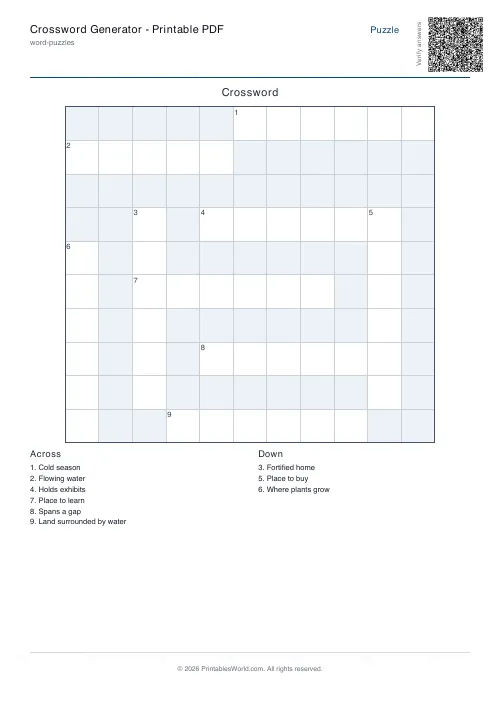
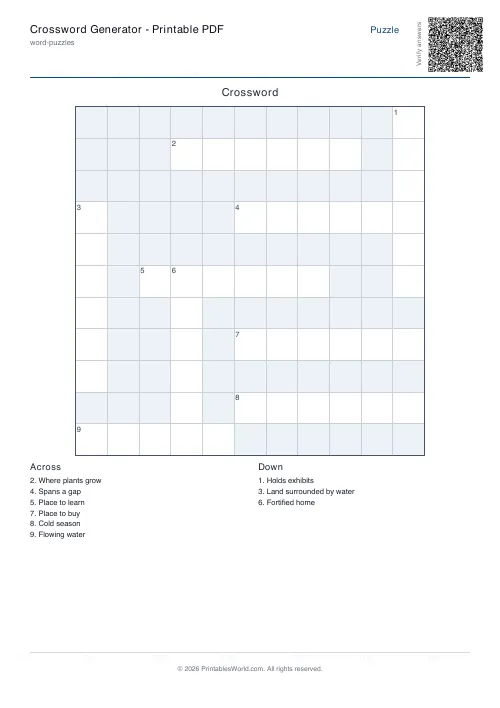
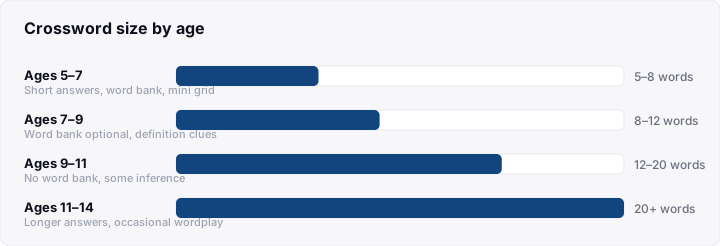
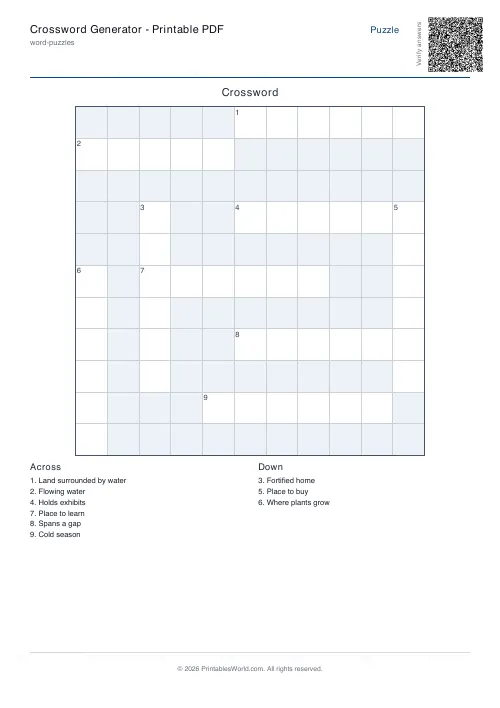
Grid size by age
Rough guidance; a confident reader can go up a band and a reluctant one down.
- Ages 5–7: 5 to 8 words, short answers of three to five letters, a picture or word bank. A mini crossword is the right format.
- Ages 7–9: 8 to 12 words. Word bank optional; definition clues.
- Ages 9–11: 12 to 20 words, no word bank, clues that require a little inference.
- Ages 11–14: 20 words plus, longer answers, occasional wordplay.
Answer length matters more than word count. Two ten-letter answers are harder than six four-letter ones, however the grid looks.
The first crossword should have a word bank
A word bank, the answers listed alongside, unordered, changes the task from recall to matching and placement. That sounds like making it too easy, and it is exactly right for a first attempt.
Without one, a child who cannot get started has nothing to work with and no way in. With one, they can find a word that fits the letter count, place it, and discover how crossing letters help. That discovery is the actual skill a crossword teaches, and it cannot happen on a puzzle they cannot begin.
Drop the word bank once they complete two or three comfortably. Many teachers keep it for the lower-attaining group as ordinary differentiation, which is a good use of it. Same puzzle, same lesson, different level of support.
Four clue types that work
Definition. "A large grey animal with a trunk" → ELEPHANT. The workhorse, and where every child should start.
Fill in the blank. "The capital of France is ___" → PARIS. The easiest type, because the sentence carries most of the meaning. Good for building early confidence.
Category. "A colour you get by mixing red and yellow" → ORANGE. Requires reasoning without requiring wordplay.
Curriculum recall. "The process plants use to make food" → PHOTOSYNTHESIS. This is where crosswords earn lesson time, because the clue is a revision question wearing a hat.
Keep clues short. A clue longer than the answer is usually doing too much work, and long clues turn the puzzle into a reading comprehension exercise.
The clue type to avoid
Cryptic clues. They are a genuine pleasure for adults who know the conventions, and they are impenetrable without them. Anagram indicators, hidden words, charades and the rest are a learned code, not a puzzle you can reason your way into cold.
A child given a cryptic clue does not experience a hard puzzle; they experience a puzzle with no visible route in, which teaches them that crosswords are not for them.
If you want to introduce cryptic clues to older students, teach one device at a time and label it. A whole puzzle of anagrams, with "anagram" stated. That is learnable. A mixed cryptic puzzle is not, at first.
Using them in class
Crosswords work best as consolidation, not introduction. Build the puzzle from vocabulary the class has already met and you get a revision activity; build it from words they have not seen and you get thirty children stuck.
Three practical uses: end-of-topic revision with the key terms as answers, a homework task that parents can help with without needing to know the subject, and an early-finisher activity from the current topic.
Pairs work better than individuals for a first crossword. One child often knows a word the other does not, and the discussion is where the learning shows.
Keep the solution for yourself. Handing it out ends the puzzle; using it to nudge one answer restarts it.
Frequently asked questions
At what age can children do crosswords?
Around five or six with a very small grid, picture or word-bank support and short answers. Independent crossword solving usually comes later, around eight or nine.
Are crosswords better than word searches?
They do different jobs. Word searches practise letter patterns and visual scanning; crosswords require recall and spelling, which is more demanding. Word searches suit younger children and spelling familiarity; crosswords suit vocabulary and subject revision.
How long should a kids' crossword take?
Ten to fifteen minutes is a reasonable target. If a class is still going after twenty-five, it was pitched too hard. Note that and drop the grid size next time.
Should I let them use a dictionary?
Usually yes. Looking a word up is a skill worth practising and it keeps a stuck child moving. The exception is a puzzle being used to check recall, where the point is what they can produce unaided.
Before you print
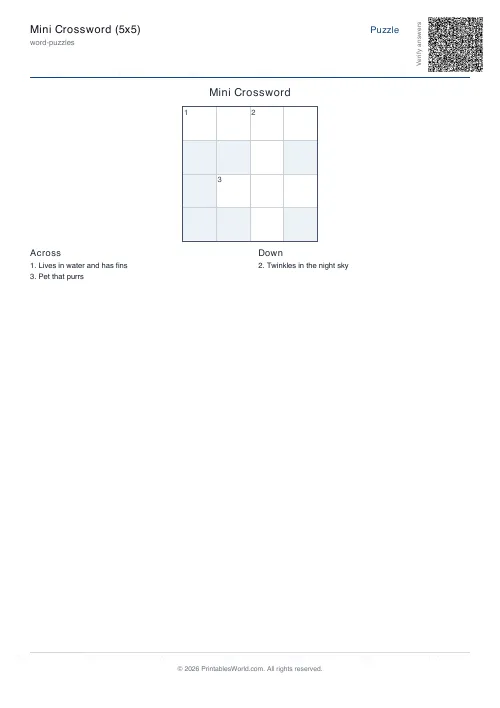
Match the answer length rather than the word count to the age, give the first puzzle a word bank, and build the clues from vocabulary the class has already met. Print a mini crossword for the youngest and the full generator once they are placing words confidently.
Related tools
Continue reading
Literacy & Spelling
Do word searches help spelling? What works
Do word searches help spelling, or just fill time? What they practise, what the evidence suggests, and how to turn a spelling list into useful recall practice.
8 min read
Word Puzzles
Fun ways to build vocabulary in kids
Children learn most words by meeting them repeatedly in context, not by memorising lists. Here is what that means practically, and where word lists still earn their place.
5 min read