Planners
Baby's first year: tracking sleep, feeds and milestones
By Jobi · Creator & Maintainer, PrintablesWorld · Updated 2026-07-01 · 5 min read
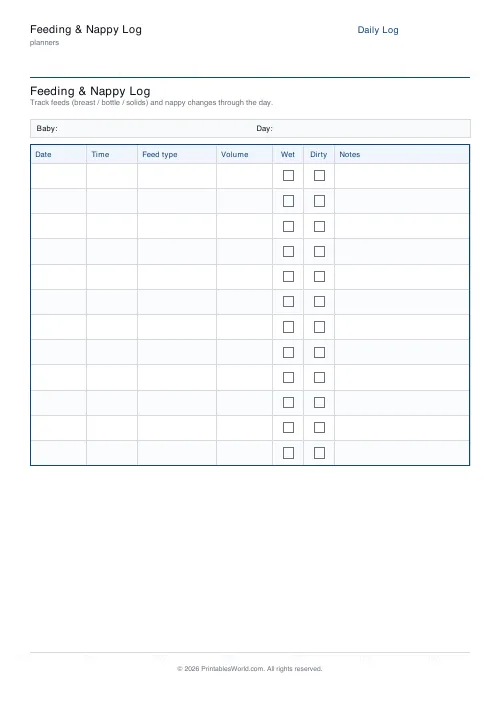
In the first weeks, tracking a baby's feeds and nappies is genuinely useful. It answers questions from health visitors and midwives, and it substitutes for a memory that sleep deprivation has taken away. Later it can become an anxiety generator. Knowing which phase you are in is the whole skill. Free printable feeding and nappy logs cover the early weeks, which is when they matter most.
This is general information only. For anything about your baby's health, feeding or development, your midwife, health visitor or doctor is the right source.
The first two weeks: what actually matters
Early on, professionals ask specific questions: how often is the baby feeding, how many wet and dirty nappies, how is weight going. A log answers all of them in seconds, at an appointment where you may otherwise struggle to remember what happened yesterday.
That is the real case for tracking in the newborn period. Not optimisation. Evidence, for the people whose job it is to check that feeding is established.
Keep it minimal: time of feed, which side or how much, and nappies. Anything more is admin you will not sustain, and sustaining it is what makes it useful.
Feeds and nappies
Newborns feed frequently. Commonly eight to twelve times in twenty-four hours in the early weeks, and often irregularly rather than to a schedule. Clusters in the evening are usual and not a sign that something is wrong.
Nappies are the more informative half of the log, because they are the visible output. Wet and dirty nappy counts are what health professionals ask about most, and the expected pattern changes over the first week as feeding establishes. Your midwife or health visitor will tell you what to look for on which day.
Log at the time, not later. Retrospective logging in the first weeks is fiction, and everyone who has tried it knows it.
One caution worth stating: the log is a record, not a target. Babies vary enormously, and a day that looks different from yesterday is usually just a day. If something concerns you, the answer is a professional, not more data.
Sleep: what tracking can and cannot tell you
Sleep logs are the ones most likely to help and most likely to harm, depending on what you use them for.
Useful: spotting a rough pattern after a few weeks. Many parents find their baby has a predictable window of easier settling, or a consistently harder stretch, and knowing it helps you plan your own rest around it.
Not useful: comparing totals against a number found online. Sleep needs vary widely between babies of the same age, and newborn sleep is fragmented by design. A log that produces nightly anxiety about a total is doing harm.
A gentler approach after the newborn weeks is to record only the broad shape, roughly when the long stretch happened, roughly how the day went, rather than every minute. The pattern is what is useful; the precision is not.
Milestones, and the trap in them
Recording first smiles, rolling, sitting and first words is lovely, and worth doing simply because the year passes quickly and memory blurs.
The trap is treating milestone lists as a schedule. They describe wide ranges, and typical development includes a great deal of variation in both order and timing. A baby doing something later than a chart suggests is very often entirely typical.
So keep a milestone page as a keepsake rather than an assessment. If you have a concern about development, raise it with your health visitor or doctor. That is a conversation, not a chart comparison.
When to stop tracking
Most families find detailed logging useful for a few weeks to a couple of months, then increasingly burdensome. Signs it has outlived its purpose:
- Feeding is well established and weight gain is not a concern.
- You are logging out of habit rather than using the information.
- The log is making you anxious rather than reassured.
- You find yourself comparing today's numbers with yesterday's and worrying about differences.
Stopping is a milestone in itself. Many parents move to a simple baby routine sheet, a rough shape of the day rather than a timed record, which is enough to help whoever else is looking after the baby without becoming a job.
Frequently asked questions
How long should I track feeds and nappies?
Often the first few weeks, while feeding is establishing and professionals are asking. Your midwife or health visitor can advise for your situation, and there is no need to continue once nobody is using the information.
Paper or an app?
Paper is easier one-handed at 3am and does not put a bright screen in front of you in a dark room. Apps are better for sharing between two parents and for totals. Many families use paper early and stop tracking before an app would have paid off.
Should I wake a baby to keep to a schedule?
That depends entirely on your baby's age, weight and feeding. It is a question for your midwife or health visitor rather than a general rule, particularly in the early weeks.
My baby's numbers look different from a chart online. Should I worry?
Variation is normal and charts online are often generic. If something worries you, ask a professional rather than gathering more data. That is what they are there for.
Before you print
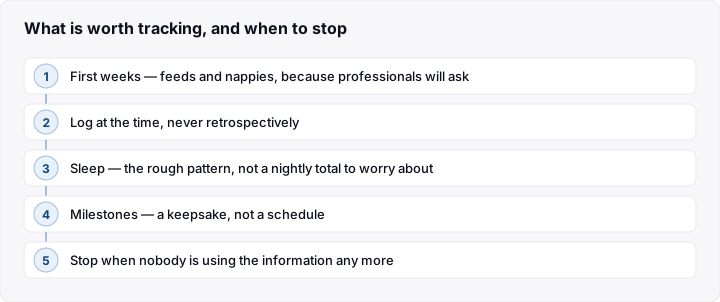
Track feeds and nappies in the early weeks because professionals will ask, log at the time rather than later, and keep milestones as a keepsake rather than a schedule. Print the feeding and nappy log a week at a time, and move to a simpler baby routine sheet once feeding is established.
Related tools
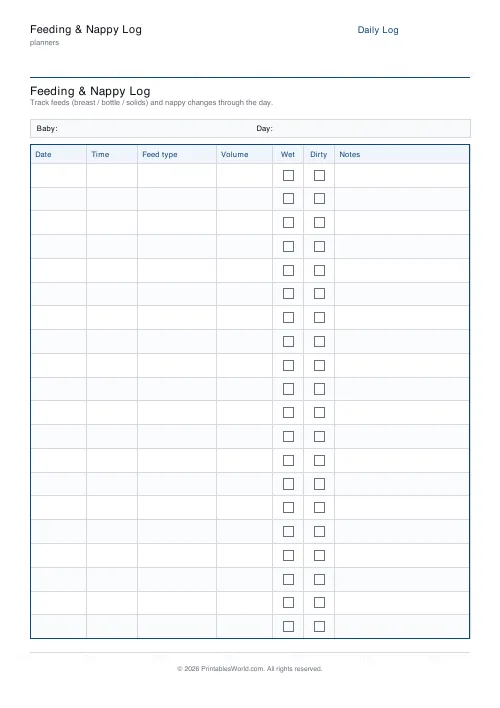
Feeding & Nappy Log
Printable feeding & nappy log with time, feed type, volume and wet/dirty tick boxes.
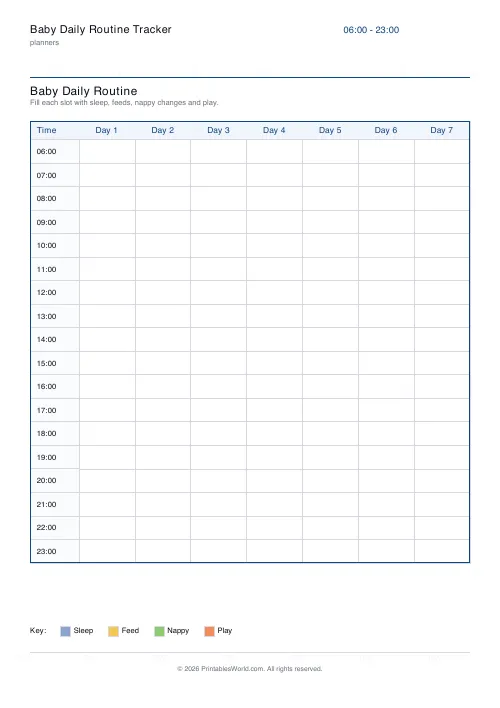
Baby Daily Routine Tracker
Printable hour-by-hour baby routine grid for sleep, feeds, nappy changes and play.
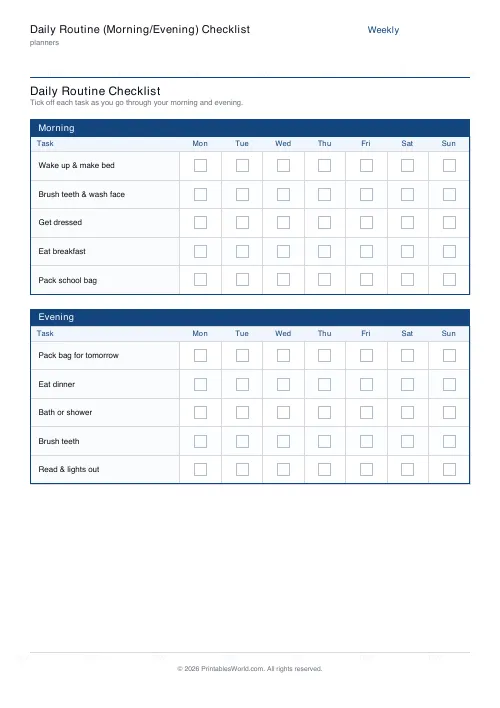
Daily Routine (Morning/Evening) Checklist
Printable morning and evening routine checklist with a tick box for every task, every day of the week.
Continue reading