Handwriting
Dotted vs solid trace lines: what works best for beginners
By Jobi · Creator & Maintainer, PrintablesWorld · Updated 2026-07-30 · 4 min read
Tracing sheets come in several styles, and they are not interchangeable. Each removes a different amount of support. Choosing the right one is less important than moving through them in order, because the commonest mistake is staying on tracing far longer than it helps. A free printable handwriting practice generator produces all of these styles from the same settings.
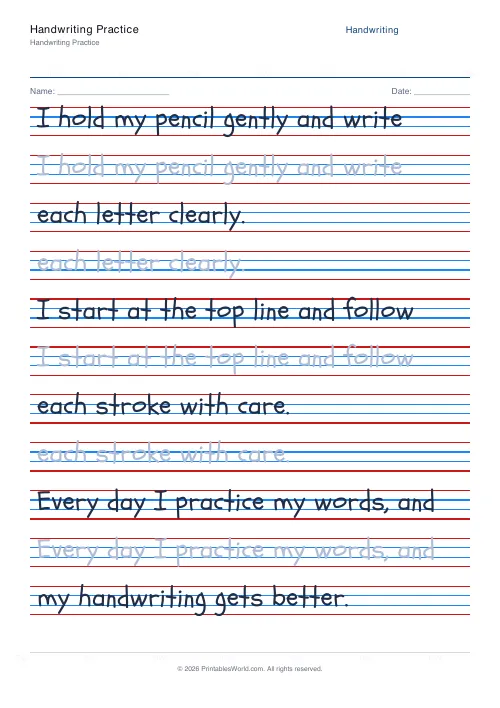
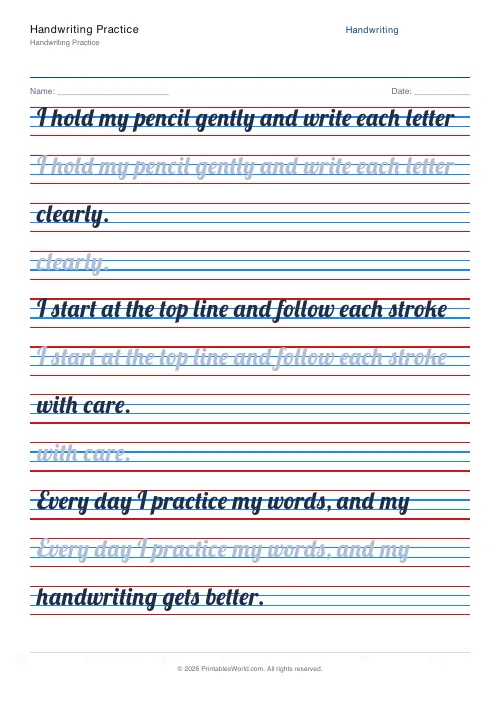
The styles, from most support to least
Solid grey letters. The whole letter shown in a light tone, traced over completely. Maximum support: the child cannot go wrong, and cannot really go right either. They are following, not forming. Useful for a first introduction to a shape.
Hollow (outline) letters. The letter as an outline to be filled or traced inside. Slightly less support, and it makes the letter's proportions visible in a way solid grey does not. Popular with young children because it doubles as colouring.
Dotted letters. The shape indicated by dots to be joined. This is the most useful style for actual learning, because the child has to produce the line between the dots themselves. The shape is given, the movement is not.
Start-point arrows. Often added to any of the above. Arguably more valuable than the trace style itself, since most formation errors are start-point errors rather than shape errors.
Model plus blank rows. Not tracing at all. One correct letter at the start of the line and space to copy. This is where the real learning happens.
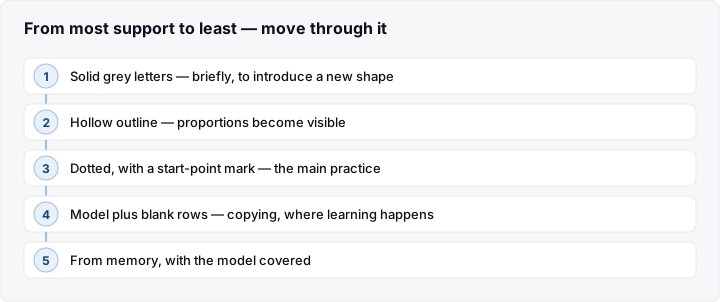
The order to move through them
- Solid or hollow, briefly, to introduce an unfamiliar shape.
- Dotted, with a start-point mark, for the main practice.
- Dotted with fewer dots: some generators fade the support; if not, move on sooner.
- Model plus blank rows, copying from the model.
- From memory, with the model covered.
Move on faster than feels comfortable. A child who traces neatly is not necessarily able to form the letter, and you will not find out until you take the support away.
Why tracing alone is not enough
Tracing can become a motor exercise the eyes barely supervise. A child can follow a grey shape while thinking about something else entirely, producing a neat page and no learning.
It also gives no retrieval practice. Copying from a model requires holding the shape in mind and reproducing it, which is what builds the memory. Tracing requires only following.
The practical rule: every session should include at least one row that is not traced. Even at the earliest stage, one attempt at copying tells you more about what a child can actually do than a full page of tracing.
Watch what they do rather than what the page looks like. A child tracing bottom-to-top produces an identical-looking letter and a habit that will cause problems when joining starts.
Frequently asked questions
Which trace style is best for a four-year-old?
Dotted, with a marked start point, for most children. Hollow letters if they need more support or if the colouring aspect keeps them engaged. Solid grey is worth using only briefly.
How long should a child trace before copying?
Days rather than weeks per letter. If tracing is neat after a few sessions, move to copying. That is where you find out whether the shape has been learned.
Do arrows and numbers on letters help?
Start-point marks help most. Numbered stroke sequences help some children and clutter the letter for others, particularly if the child cannot yet read the numbers reliably.
Is tracing on a screen as good as on paper?
A screen removes the friction of pencil on paper and the resistance that builds hand strength, so it is not equivalent for motor development. It can be useful for learning the shape and direction.
Before you print
Use dotted letters with a marked start point as your default, include at least one untraced row every session, and move to copying sooner than feels comfortable. The handwriting practice generator switches between trace styles and blank rows from the same settings.
Related tools
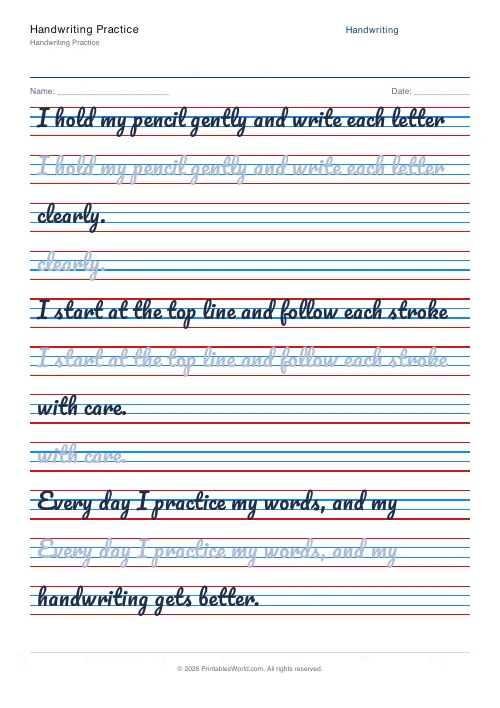
Handwriting Practice Generator
Create custom 4-line handwriting practice sheets with trace rows, adjustable guides, and your own text.
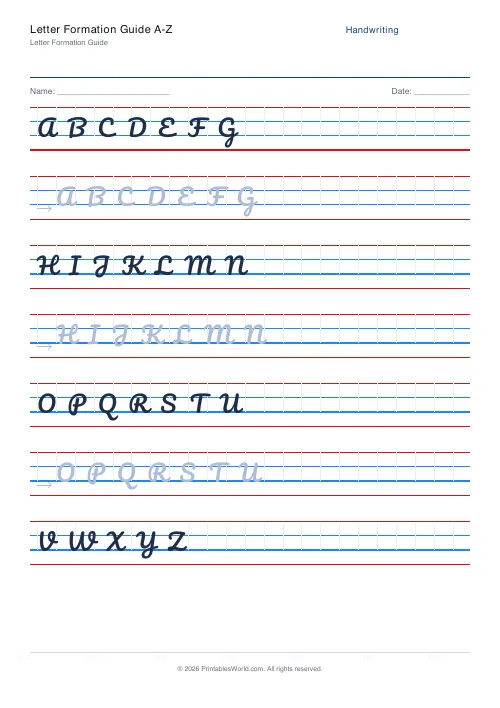
Letter Formation Guide A-Z
Full alphabet with directional arrows for stroke-order learning.
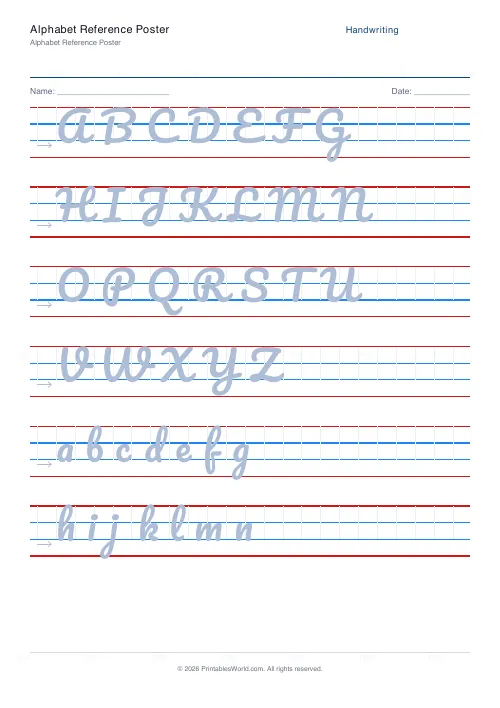
Alphabet Reference Poster
Full A-Z formation reference with directional arrows and letter boxes.
Continue reading
Handwriting
How to teach handwriting to kids: a step-by-step guide
A practical order for teaching handwriting: get the body and the pencil right first, then teach letters in stroke families rather than alphabetically, and keep sessions short enough that the hand never tires.
7 min read
Handwriting
The best age to start handwriting practice
Age is the wrong question. Three readiness signs predict whether handwriting practice will help or frustrate. And what to do with the child who is not there yet.
5 min read