What this tool does
Pick a year group and a topic and read a book on screen, laid out as a real book with two pages and a page turn. Each one is written to take about fifteen minutes at that year's reading speed, and is measured against sentence length, syllable count and Flesch-Kincaid grade before it reaches the shelf. Switch between British and American spelling, vocabulary and year labels at any time. Set the text size, line spacing, typeface and page colour, bookmark any page, and pick up where you left off. At the end of each book there are multiple-choice questions and a reading card showing how it went. Parents can also paste in a story of their own for their child to read here like any other book.
People also used
Reading Comprehension Worksheet
Paste any passage and print it with numbered comprehension questions and ruled answer lines.
Reading Log Template
Printable reading log. Track titles, authors, dates, ratings, and reviews.
Bedtime Story Maker
Create custom bedtime stories with vocabulary, morals, and questions for children aged 3 to 10.
Feedback
Spotted something off with this tool?
A shelf of books, levelled by year, that take about fifteen minutes
Pick a year group and a topic, and you get books written to be read in roughly a quarter of an hour. That length is not a guess. Every book is measured against the reading speed for its year — 40 words a minute at Year 1, 100 at Year 3, 225 at Year 10 — and a book that comes out too long or too short does not reach the shelf.
It opens as a book rather than a web page: two pages side by side, a page turn, and no scrolling. On a phone it becomes a single page. The text size, line spacing, typeface and page colour are all yours to set, and the reader remembers where a child stopped.
What “Year 3 level” actually means here
Levelling is usually a claim. Here it is a measurement, and a book has to pass all of it:
- Length — within 15% of fifteen minutes at that year's reading pace.
- Sentence length — an average inside the band, and a hard cap on the longest sentence in the book. One 30-word sentence can undo a whole page for a struggling reader.
- Flesch–Kincaid grade — the standard readability score, inside a range set for that year.
- Syllables and long words — an average syllable count per word, and a ceiling on the share of words with three or more syllables.
- Paragraph length — capped, because the same words in shorter paragraphs are a genuinely easier read.
A book that misses any of those is rejected and rewritten, not published with a label on it.
British or American, from the same book
Every book is written once and rendered in either style. Switch it and the spelling changes throughout — colour and color, realised and realized, grey and gray — along with the vocabulary that genuinely differs, so a pavement becomes a sidewalk and autumn becomes fall. Dialogue takes single quotation marks in British style and double in American.
The year labels move too. Year 1 is shown as Kindergarten, Year 2 as Grade 1, and so on down the shelf, because British Year N is American Grade N−1 and treating them as the same number puts a child in front of the wrong book.
How the content is made, and checked
These books are written with the help of a language model, working to a fixed content policy, and every one is then checked by a person before it appears. We would rather say that plainly than let anyone assume a staff of authors they cannot see.
The policy is strict and it is applied automatically as well as by eye. No violence, no weapons, no death, no injury. No romance. No frightening or horror content. Nothing about alcohol, smoking, drugs or gambling. No brand names, no links, no phone numbers, and nothing that asks a child to contact anyone or share anything about themselves. Nothing a child could copy and be hurt by.
Difficulty is graded by age rather than banned outright. In Years 1 to 3 nothing is ever in danger: the stakes are a lost mitten or a cake that went wrong. From Year 4 a book may have mild, clearly resolved jeopardy. From Year 7 it may carry real tension — a hard climb, a failure that costs something — and still never violence or death. Every problem is resolved inside the book it appears in.
Questions at the end, and a reading card
Every book finishes with a handful of multiple-choice questions, all of them answerable from the book itself. There is no general knowledge in them and nothing that needs a leap the text does not support, because a question a careful reader cannot answer only teaches them that reading carefully does not help.
Each answer is explained straight away, which is where most of the learning actually happens. Then a reading card shows how many questions went well, how long the book took, and how many books have been finished so far. There is no pass mark, no failing, and no red crosses — a wrong answer dims and the right one lights up, so a child is shown what is true rather than marked for what was not. Any question that did not go well can be looked at again on the card.
The card stays in that browser. Nothing about what a child reads, or how they answered, is sent anywhere.
Bookmarks, and picking up where you stopped
The reader always remembers the page a book was left on. A bookmark is separate and deliberate: press the ribbon to keep a page you want to come back to, and every bookmark appears as a mark on the progress bar and as a button that jumps straight there. Books that have been started, or that hold a bookmark, are labelled on the shelf.
Add a story of your own
A parent, grandparent or teacher can paste in a story they have written and it joins the shelf, opening in exactly the same reader. Blank lines separate paragraphs, and a short line on its own becomes a chapter heading. A plain text file can be opened instead of pasting.
Two things are worth being straight about. The story is saved in that browser only — it is never uploaded, we never see it, and nobody else can open it. And because we never see it, our content rules do not apply to it: those govern the books on the shelf, not text you supply. What we can do is measure it, so the shelf will tell you the story reads at roughly Year 4 level and takes about eleven minutes. That figure comes from sentence and word length alone; whether the subject suits your child is something only you can judge.
No ads, no account, nothing following your child
This page carries no advertising at all. Not child-directed advertising, not non-personalised advertising — none. It is the one thing we were unwilling to put beside a child reading quietly for fifteen minutes.
There is no sign-in and no profile. The typeface you choose and the page a child stopped on are kept in that browser and nowhere else; they never reach us, and they do not follow anyone to another device. Nothing records which books a child reads.
What it is not
- It is not a reading scheme or a phonics programme, and it does not assess anybody. There are no scores and no levels to unlock.
- Levelling by formula is a genuine but blunt instrument. It measures sentences and syllables, not whether an idea makes sense to an eight-year-old. Trust a teacher over the label.
- There are no illustrations. These are books to read, not picture books, and the youngest band here already assumes a child who reads words.
- The reading times are averages. A child reading well below or above their year will finish faster or slower, and that is ordinary.
FAQs
Quick answers
How do you decide what Year 1 or Year 6 level means?
By measurement, not by label. Every book has to land inside its year's range for length, average and maximum sentence length, average syllables per word, share of words with three or more syllables, paragraph length and Flesch-Kincaid grade. A book that misses any one of those is rejected rather than published with a level attached to it.
Why does each book take fifteen minutes?
Because the word count is set from the reading speed for that year: about 40 words a minute at Year 1, 100 at Year 3, 160 at Year 6 and 225 at Year 10. A Year 1 book is therefore around 600 words and a Year 10 book around 3,375. A child reading well above or below their year will finish sooner or later than that, which is completely normal.
What is the difference between the UK and US settings?
Spelling, vocabulary, punctuation and the year labels. British spelling becomes American throughout, words that genuinely differ are swapped (pavement to sidewalk, autumn to fall), dialogue moves from single to double quotation marks, and Year 1 is relabelled Kindergarten, Year 2 as Grade 1 and so on. It is the same book either way, not a different one.
Who writes these books?
They are written with the help of a language model, working to a fixed content policy, and each one is checked by a person before it goes on the shelf. We say so plainly rather than let anyone imagine a staff of authors. The policy that governs them is described in full on this page.
How do you keep the content suitable for children?
A written policy that is enforced both automatically and by a reviewer. No violence, weapons, death, injury, romance, horror, alcohol, drugs or gambling; no brands, links or contact details; nothing a child could copy and be hurt by. Difficulty is graded by age rather than banned outright: Years 1 to 3 have no peril at all, Years 4 to 6 allow mild and clearly resolved jeopardy, and Years 7 upward allow real tension but never violence or death. Every problem is resolved within the book.
Are there adverts on this page?
No. This page carries no advertising of any kind, which is not true of the rest of the site. There is also no sign-in, no profile, and no record of which books anyone reads.
Are the questions at the end a test?
No. There is no pass mark, nothing to fail and no score to beat. Every question can be answered from the book itself, each answer is explained as soon as it is given, and a wrong choice is dimmed rather than marked with a cross. A child who gets four out of seven has understood most of a book, and the reading card says something true and encouraging at every score.
Can my child bookmark a page?
Yes. The reader always remembers the page a book was left on, and pressing the ribbon keeps a page deliberately. Bookmarks show as marks on the progress bar and as buttons that jump straight back. Books that have been started or bookmarked are labelled on the shelf.
Can I add a story I wrote myself?
Yes. Paste it in or open a plain text file, and it appears on the shelf and opens in the same reader. Blank lines separate paragraphs and a short line on its own becomes a chapter heading. It is saved in that browser only, is never uploaded, and nobody else can see it. Because we never see it, our content rules do not apply to it — but we do measure it, so you are told roughly which year level it reads at and how long it takes.
Does it remember where my child stopped reading?
Yes. The page a reader stopped on, along with their chosen text size, typeface and page colour, is stored in that browser only. It never reaches us and it does not carry across to another device or another browser.
Can I print a book instead of reading it on screen?
Yes. Any book can be downloaded as a printable booklet with the same branded layout as everything else on the site, so it can be read away from a screen or handed out to a class.
Can I use these books in my classroom?
Yes, freely, for teaching at home or in school. They are made to be read, printed and handed out. Please do not republish the text as your own or sell it.
Is the reading level exact?
No, and no formula is. Readability scores measure sentences and syllables; they cannot judge whether an idea makes sense to an eight-year-old, how familiar a subject is, or how much a child cares about it. Treat the year band as a starting point and trust a teacher or parent over the number.
Related tools
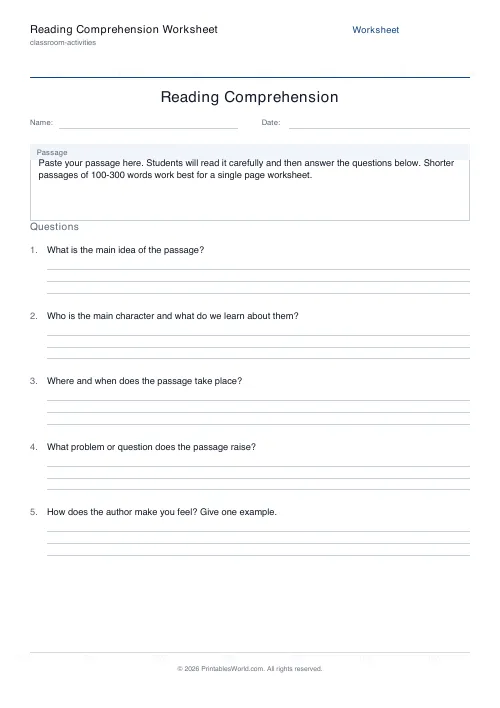
Reading Comprehension Worksheet
Paste any passage and print it with numbered comprehension questions and ruled answer lines.
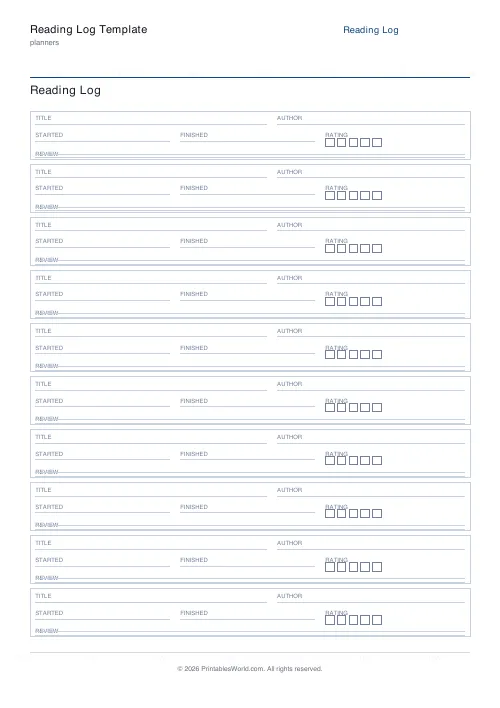
Reading Log Template
Printable reading log. Track titles, authors, dates, ratings, and reviews.
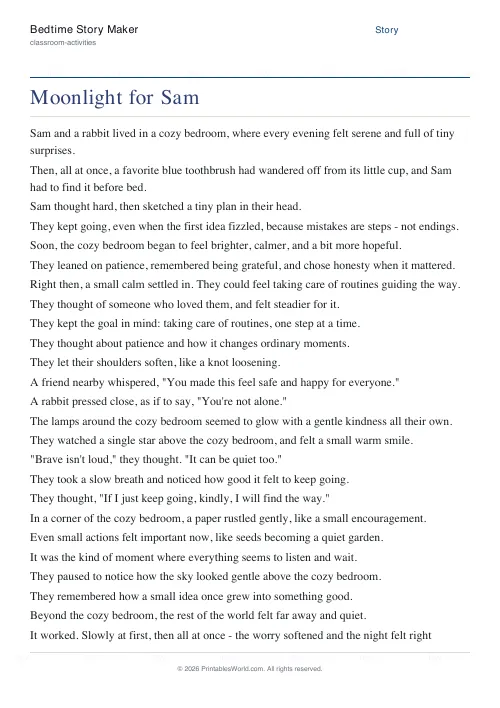
Bedtime Story Maker
Create custom bedtime stories with vocabulary, morals, and questions for children aged 3 to 10.
Further reading
Classroom Activities
Positive reinforcement in the classroom: charts that work
Reward charts work when they name a specific behaviour and fade over time. They backfire when they rank children publicly. Here is the difference in practice.
5 min read
Classroom Activities
Bingo in the classroom: 10 subjects, one game
Bingo works in almost every subject because the mechanic never changes. Only the call does. Ten variations, and the one rule that turns it from a filler into retrieval practice.
4 min read
Classroom Activities
20 classroom games that need zero prep
Games organised by the gap they fill: two minutes at the end of a lesson, ten minutes before assembly, or a whole wet lunchtime. Almost all need nothing but a voice.
6 min read