Classroom Activities
Bingo in the classroom: 10 subjects, one game
By Jobi · Creator & Maintainer, PrintablesWorld · Updated 2026-06-02 · 4 min read
Bingo survives in classrooms because the mechanic is invisible. Children are trying to complete a card; the fact that doing so requires recalling a times table or a definition is incidental to them and central to you. A free printable bingo card generator makes a class set in a couple of minutes, and the same set works for every variation below.
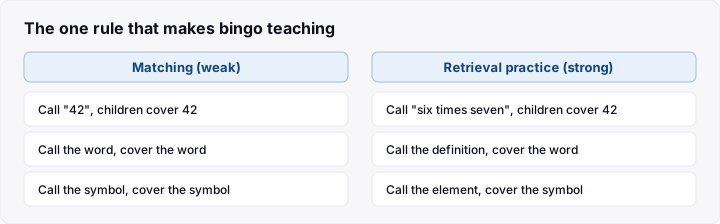
The one rule that makes it teaching
The call and the square must not be the same thing.
Calling "42" while children cover 42 is pattern matching. Calling "six times seven" while they cover 42 is retrieval practice. The child has to produce the fact before they can act on it.
That single change converts bingo from a time filler into one of the better-evidenced revision activities you can run, because retrieval practice is consistently among the more effective ways to strengthen memory. Everything below is an application of it.
Maths
1. Times tables. Cards of answers; you call the question. The classic, and it works because the answers are unique enough to fill a grid.
2. Number bonds. Cards of numbers to ten or twenty; call "what goes with seven to make twenty?"
3. Fractions, decimals and percentages. Cards show one form; call another. Half, 0.5 and 50% covering the same square is exactly the equivalence you want them fluent in.
4. Shape properties. Cards of shape names; call a property. "four equal sides and four right angles".
For pure number recognition with younger children, number bingo cards do the job without any calling to prepare.
Literacy and languages
5. Vocabulary and definitions. Cards of words; call the definition. Works from primary spelling lists to secondary subject terminology.
6. Synonyms and antonyms. Cards of words; call a synonym. Considerably harder than it sounds, and a good stretch activity.
7. Spellings. Cards of this week's words; say each word aloud, children cover it. Also exposes who is matching by first letter alone.
8. Modern languages. Cards in the target language; call in English, or the reverse. One of the strongest uses on this list, because it is exactly the recall the subject needs.
For any of these, custom word bingo cards let you type the list rather than working around numbers.
Science, humanities and beyond
9. Elements and symbols. Cards of symbols; call the element name. Equally good for formulae, units or SI prefixes.
10. Dates and events. Cards of dates; call the event. Or cards of people, calling what they are known for.
Beyond those: body parts and functions, countries and capitals, musical notes, keyboard shortcuts in computing, key terms in any GCSE specification. If a subject has a set of facts that must become automatic, it fits.
Running it well
- Randomise the cards. If every card is identical, everyone wins simultaneously and the game collapses.
- Keep a record of what you have called: a checklist you tick. Disputes at the end are otherwise unresolvable.
- Use counters, not pens, if you want to reuse the cards. Bottle tops, cubes, torn paper.
- Decide the winning pattern in advance, line, four corners, full house, and say it before you start.
- Make the winner justify one square. "Which call gave you that?" stops guess-covering, and it is where the assessment actually happens.
- Keep the pace up. Bingo dies if you pause between calls; the momentum is most of the appeal.
Frequently asked questions
How many squares should a card have?
Nine (3×3) for younger children or a short game, sixteen or twenty-five for older classes. More squares means a longer game. Twenty-five squares with a full-house rule can outlast a lesson.
Does everyone need a different card?
Ideally, or the game ends for everyone at once. Randomised cards from a generator solve this in one print run; hand-made sets rarely do.
Is bingo actually educational or just fun?
It depends entirely on the call. Calling the answer is a matching exercise; calling the question makes it retrieval practice, which is one of the better-supported revision methods.
What about children who find recall slow?
Slow recall means they miss calls and fall behind, which is discouraging. Repeat each call once, keep a visible list of what has been called so far, and consider pairing children so nobody is stranded.
Before you print
Call the question, never the answer. That one decision is what makes this worth lesson time. Print randomised cards from the bingo card generator, keep a tick-list of calls, and ask the winner to justify a square before you accept it.
Related tools
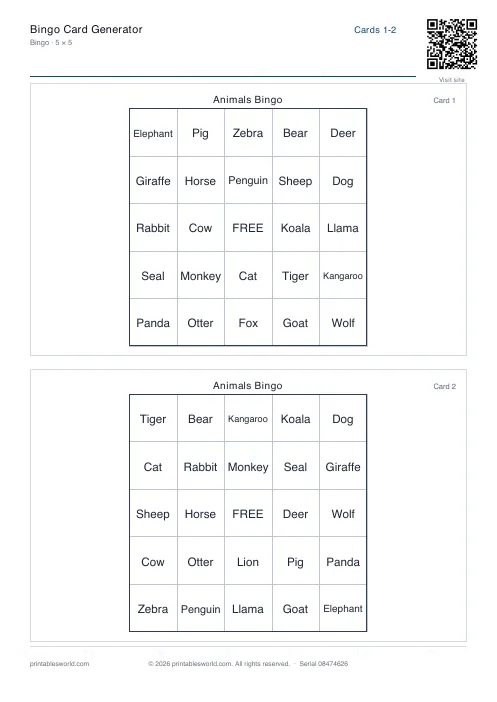
Bingo Card Generator
Generate unique printable bingo cards with custom words, FREE centre toggle, call sheet, and seeded shuffles.
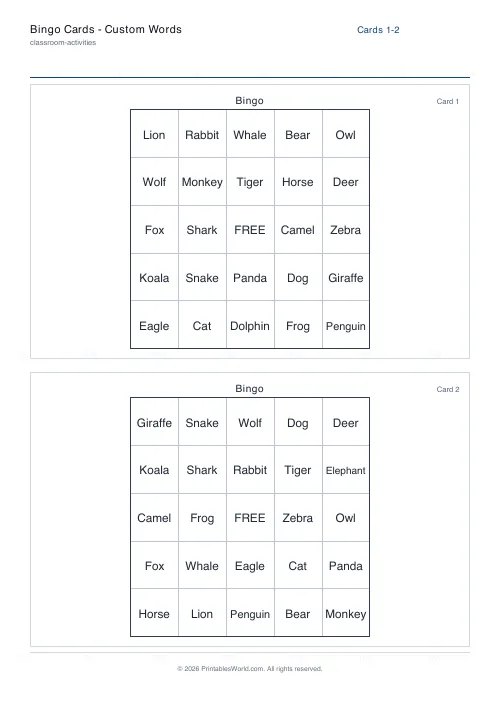
Bingo Cards: Custom Words
Enter any word list and generate unique bingo cards for every player.
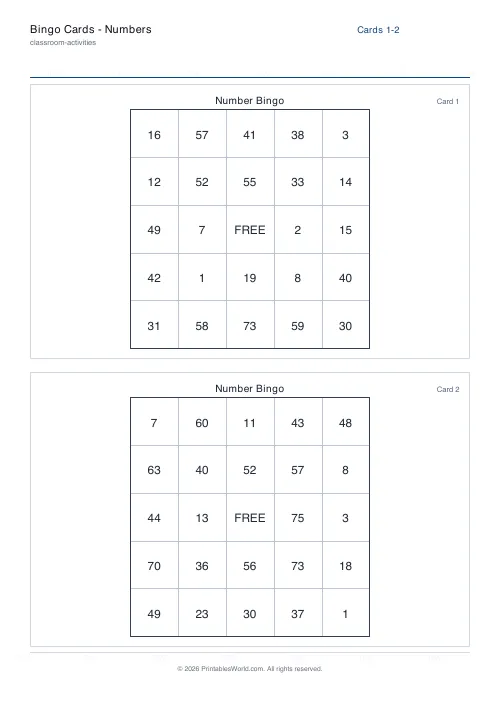
Bingo Cards: Numbers
Classic number bingo (1-75 or 1-90) with unique cards per player.
Continue reading
Classroom Activities
20 classroom games that need zero prep
Games organised by the gap they fill: two minutes at the end of a lesson, ten minutes before assembly, or a whole wet lunchtime. Almost all need nothing but a voice.
6 min read
Classroom Activities
Back-to-school printables every teacher needs
Sorted by when you will actually need them: the two things to print before the children arrive, the week-one set, and the routines worth establishing while everyone is still compliant.
5 min read