What this tool does
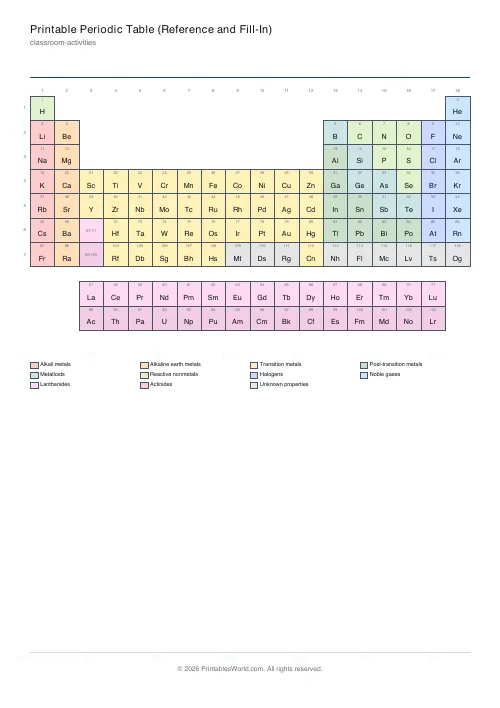
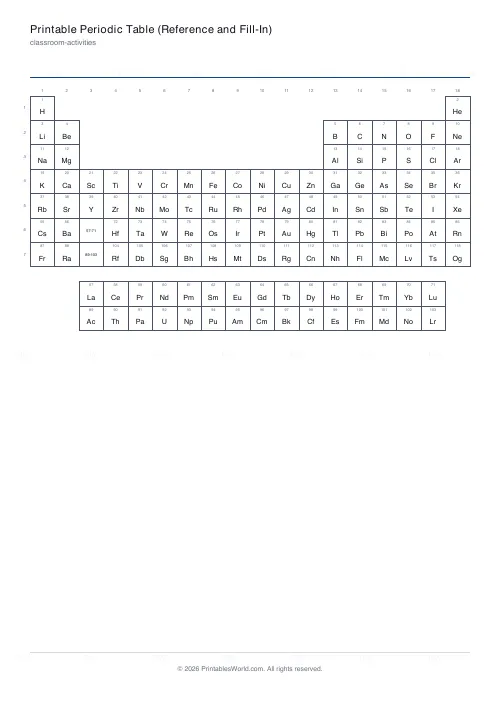
The standard 18-column table with the lanthanides and actinides below, drawn from a list of all 118 elements. Reference mode prints symbol and number in each cell with the category colours and a legend; fill-in mode leaves the symbols out; blank prints the empty grid. A second page lists every element with its name, symbol, number and atomic mass, because the grid cells on a portrait sheet are too small to carry names.
People also used
Blank US States Map
Real state outlines: numbered to name, labelled with abbreviations, or blank, with a state list and answer key.
Custom Flashcards
Double-sided printable flashcards from your own list of pairs.
Quiz Template Generator
Blank numbered quiz template with configurable question count and answer-line style.
Feedback
Spotted something off with this tool?
Three versions of one table
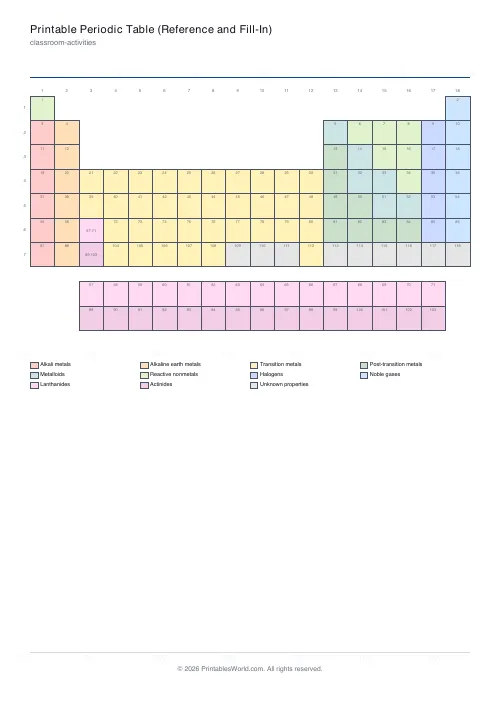
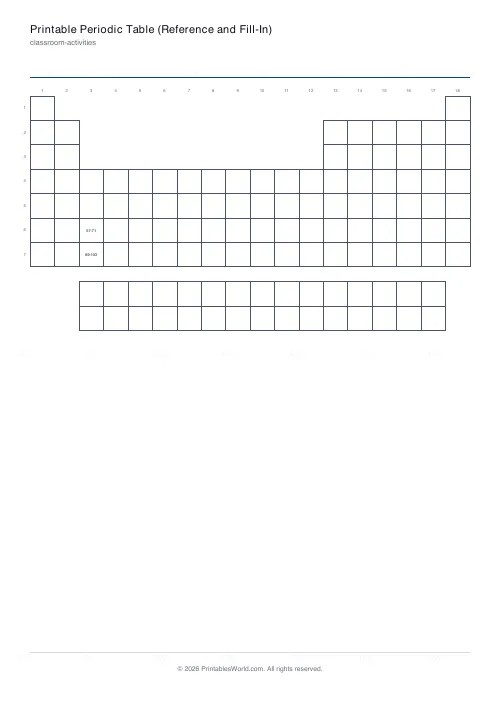
The reference table is the one for the wall or the back of a folder: every element's symbol and atomic number in the standard grid, coloured by category (alkali metals, halogens, noble gases and so on) with a legend underneath. The fill-in table keeps the numbers and drops the symbols, which is the standard test: write the symbol in each cell, with or without a symbol bank to choose from. The blank table is the empty grid, for teachers who set their own task.
Why the names are on a second page
Eighteen columns across an A4 portrait sheet leave each cell about a centimetre wide. A symbol fits; Praseodymium does not. So the grid carries symbol and number only, and the element list page carries the rest: number, symbol, name and atomic mass for all 118, in three columns. Tick it on or off.
What is in the data
Atomic masses are the standard abridged values to two or three decimals; elements with no stable isotope show the mass number of the longest-lived isotope in brackets, as on most classroom tables. Categories follow the common ten-group scheme. The four newest elements with unconfirmed chemistry are marked as unknown properties.
The fill-in table in a lesson
With the symbol bank on, it is a matching exercise: 118 symbols in a scrambled line under the table, and a place for each. Without the bank it is recall. A common middle path is to fill in the first twenty and the common metals, then hand out the reference version to check against.
Paper
Portrait A4 or Letter. The colour version reads better on a colour printer but is legible in greyscale, because the fills are light and the symbols are black.
FAQs
Quick answers
Are all 118 elements included?
Yes, hydrogen to oganesson, with the lanthanides and actinides in their own rows below the main block.
What is in each cell?
Atomic number and symbol in the reference version; the number only in fill-in; nothing in blank. Names and atomic masses are on the element list page.
What is the symbol bank?
A scrambled line of all 118 symbols printed under the fill-in table, so the task becomes matching rather than recall.
What do the colours mean?
The element's category: alkali metals, alkaline earth metals, transition metals, post-transition metals, metalloids, reactive nonmetals, halogens, noble gases, lanthanides, actinides, and unknown for the newest elements. A legend prints under the table.
Does it print in black and white?
Yes. The category fills are light enough to read in greyscale, or untick Colour by category for a plain grid.
Why bracketed masses?
Elements with no stable isotope have no standard atomic weight; the bracketed number is the mass number of the longest-lived isotope, the usual classroom convention.
Related tools
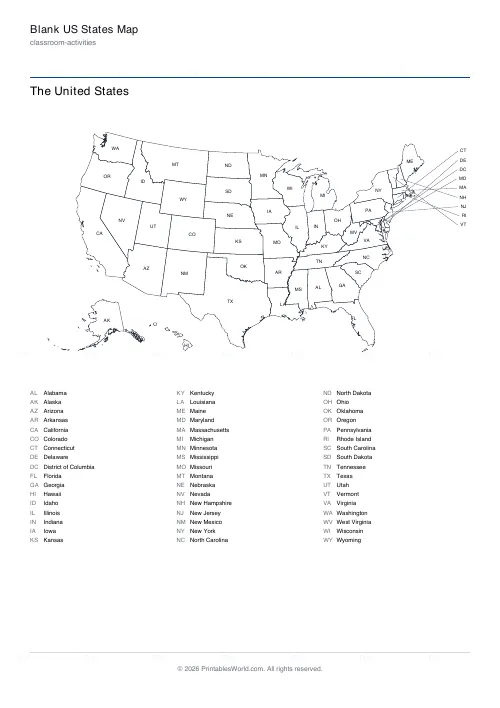
Blank US States Map
Real state outlines: numbered to name, labelled with abbreviations, or blank, with a state list and answer key.
Custom Flashcards
Double-sided printable flashcards from your own list of pairs.
Quiz Template Generator
Blank numbered quiz template with configurable question count and answer-line style.
Science Experiment Log
Printable lab log with question, hypothesis, materials, method, observations and conclusion.
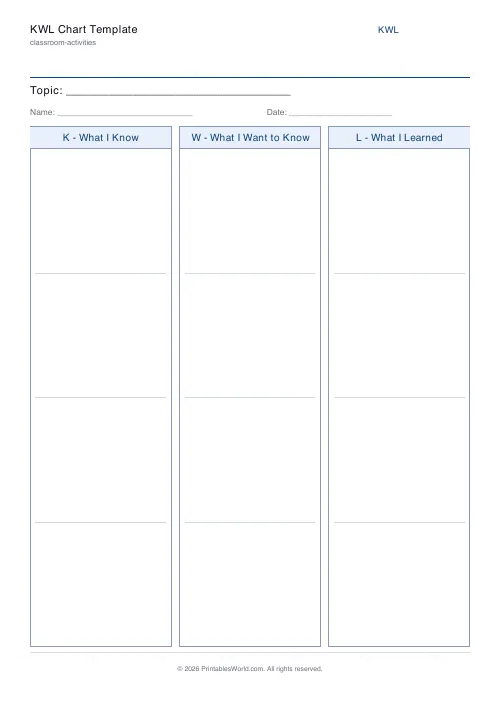
KWL Chart Template
Three-column "Know, Want to Know, Learned" graphic organiser, fillable and printable.
Further reading
Classroom Activities
20 classroom games that need zero prep
Games organised by the gap they fill: two minutes at the end of a lesson, ten minutes before assembly, or a whole wet lunchtime. Almost all need nothing but a voice.
6 min read
Classroom Activities
How to run a classroom economy (free printables)
A classroom economy teaches money, work and choice at once. But it collapses if the maths is wrong. Here is how to set the numbers, and the four pitfalls to avoid.
5 min read
Classroom Activities
Escape room activities for the classroom: a how-to
A classroom escape room is a sequence of puzzles with a story on top. The design decision that matters most is whether groups work through them in order or all at once.
5 min read