Printable Paper
The best note-taking paper for students (Cornell, grid, lined)
By Jobi · Creator & Maintainer, PrintablesWorld · Updated 2026-07-20 · 4 min read
Most students use whatever paper is in the pad. That is fine for capture and unhelpful for review, because the layout of a page determines how easy it is to use later. And reviewing is where notes actually pay off. Free printable Cornell notes sheets, lined and grid paper cover the realistic options.
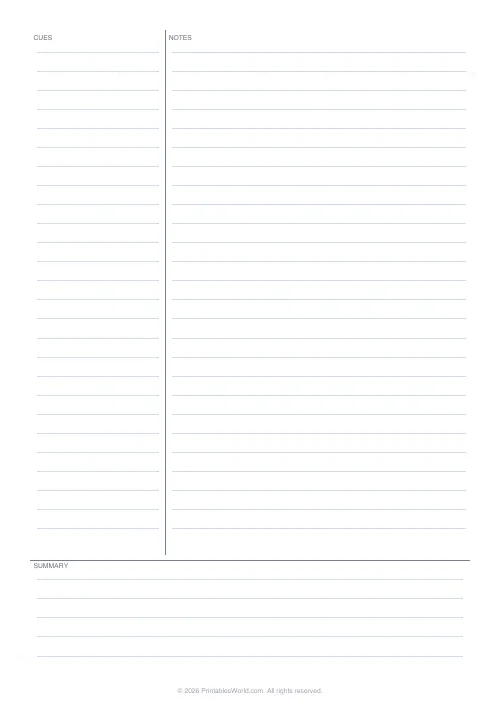
Cornell notes
A page split into three: a wide right-hand column for notes taken during the lesson, a narrow left-hand column for questions and cues added afterwards, and a strip across the bottom for a summary.
The layout enforces a method rather than just holding writing. Notes go in the main column during class. Afterwards, ideally the same day, you write questions in the left column that the notes answer, and a two- or three-sentence summary at the bottom.
What makes it genuinely useful is that it converts notes into a self-test. Cover the main column, read the cue questions, and try to answer from memory. That is retrieval practice, which is among the better-evidenced study methods, and it happens automatically because the page is built for it.
The catch: it only works if you do the second stage. A Cornell page with an empty cue column is lined paper with a wasted margin, and that is what most abandoned Cornell notes look like.
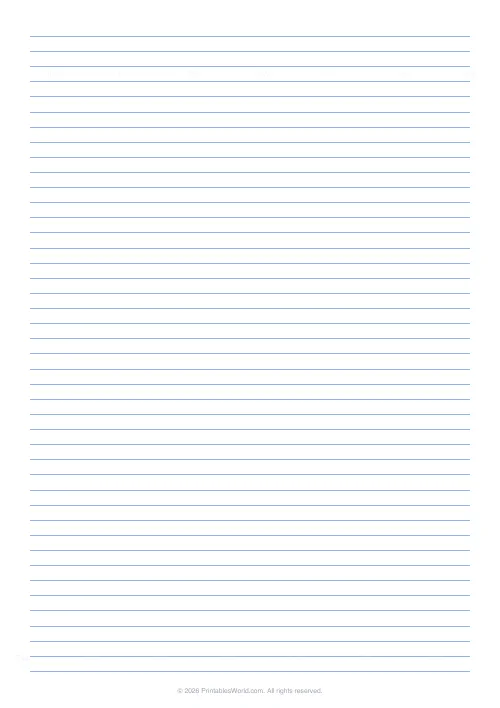
Plain lined paper
Fast, familiar, and better than its reputation for straightforward prose subjects.
Its weakness is that it makes everything look equally important. A wall of uniform lines with no visual hierarchy is hard to revise from. If you use lined paper, impose the structure yourself: headings, indentation, a wide margin ruled by hand for later annotations.
Line spacing matters more than students expect. Narrow ruling fits more and is harder to annotate; wide ruling leaves room to add to your notes later, which you will want to do.
Grid and squared paper
Essential rather than optional for anything with diagrams, graphs or aligned working.
In maths and physics, squared paper keeps columns of working aligned, which prevents a large class of careless errors. Misaligned place value in long calculations is a genuine cause of wrong answers. In chemistry and biology it makes diagrams proportionate. In geography it supports sketch maps and graphs.
5mm is the usual default. 1cm suits younger students or anyone whose handwriting is large; 2mm is for detailed technical plotting and is uncomfortable to write prose on.
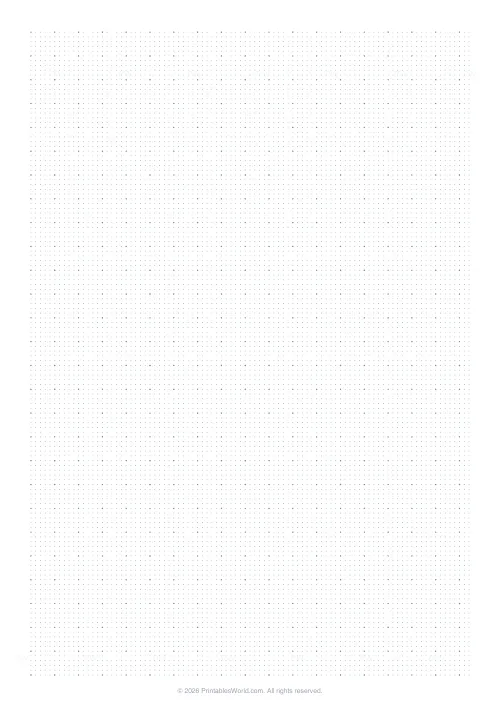
Dot grid
The compromise: alignment support in both directions, without the visual noise of a full grid. Dots mark the intersections only and recede once there is writing over them.
It suits mixed pages, some prose, a diagram, a small table, which describes most real lesson notes. It is also the standard for bullet journalling, for the same reason.
Its drawback is that it gives less support than lines for long stretches of prose; handwriting drifts more on dots than on ruled lines, particularly at speed.
Which to use for which subject
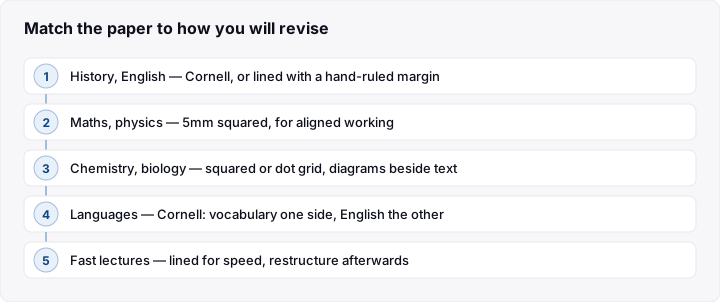
- History, English, humanities: Cornell, or lined with a hand-ruled margin. Mostly prose, heavy on later revision, so the cue column earns its place.
- Maths and physics: squared, 5mm. Alignment prevents errors.
- Chemistry and biology: squared or dot grid, for diagrams alongside text.
- Languages: Cornell works particularly well: vocabulary in the notes column, the English in the cue column, and you have flashcards by accident.
- Lectures and fast talkers: lined, for speed. Restructure afterwards.
- Planning and mixed content: dot grid.
Frequently asked questions
Are handwritten notes better than typed?
The picture is more mixed than the popular claim suggests. Handwriting is slower, which tends to force summarising rather than transcribing, and that processing is probably where any benefit comes from. Typing is faster and searchable. What matters most is whether you review them either way.
Do Cornell notes actually work?
The layout supports retrieval practice and summarising, both of which are well supported as study methods. The format itself does nothing unless you complete the cue column and summary. Which is the step most people skip.
What paper weight is best?
80gsm is fine for pencil and most ballpoints. If you use fountain pens or highlight heavily, 100gsm stops bleed-through, which matters if you write on both sides.
Should I use one format for everything?
Consistency within a subject helps more than consistency overall. You want to be able to revise a subject without decoding three layouts. Different subjects genuinely need different pages.
Before you print
Choose the format for how you will review, not for how you write. Print Cornell sheets for prose subjects you will revise heavily, 5mm squared for maths and science, and dot grid for mixed pages. And if you print Cornell, commit to filling the cue column.
Related tools
Continue reading
Planners
Study planning for exams: a student's complete guide
A revision timetable is only as good as what goes in the slots. Here is how to build one backwards from the exam date, and which study methods the evidence actually supports.
5 min read
Printable Paper
Bullet journalling with dot grid paper: a starter guide
The bullet journal was designed to be fast, not beautiful. Here is the original system, why dot grid suits it better than lines or blank, and the four pages you actually need.
5 min read